
Dual Repression of Political Prisoners and Their Families: The Regime’s Fear of Protests and Uprisings
AUGUST 2025 Report: In August, the clerical regime escalated its repressive measures against political prisoners—particularly supporters of the People’s Mojahedin Organization of Iran (PMOI/MEK)—and their families.
During this period, notorious prisons such as Qarchak, Greater Tehran (Fashafouyeh), Evin, and Ghezel Hesar in Karaj became sites of intensified “white torture” and severe denial of legal and medical rights, especially under the sweltering summer conditions.
Families of political prisoners were not spared from this crackdown, facing arrests, hostage-taking, intimidation, and psychological pressure. At the same time, an unprecedented number of ordinary citizens were arrested under various pretexts, including participation in protests against recurring water and power outages, and sent to prison.
This month also saw a surge in the execution of female prisoners. Between July 30 and August 29 alone—less than a month—eight women were executed in Iran. The total number of women executed in 2025 has now reached 32, setting a new and unprecedented record.
The confirmation of the death sentence against Kurdish labor activist and political prisoner Sharifeh Mohammadi is another indicator of this new wave of repression.
Widespread Arrests of Former Political Prisoners and Families
Dozens of former political prisoners and PMOI supporters once again became targets of security raids.
On August 5, 2025, Fatemeh Ziaii Azad (Houri), 68, was arrested at her home for the seventh time. A political prisoner from the 1980s and a PMOI supporter, she has already spent 13 years in the clerical regime’s prisons and suffers from multiple sclerosis. Her re-arrest came despite earlier warnings from doctors that continued imprisonment posed a serious threat to her life.
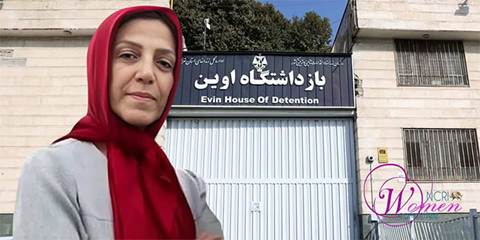
On the morning of July 22, 2025, around 40 security agents violently raided the home of Leila Saremi in Borujerd, arresting her and her husband without presenting any judicial warrant, and transferring them under beatings to Borujerd prison.
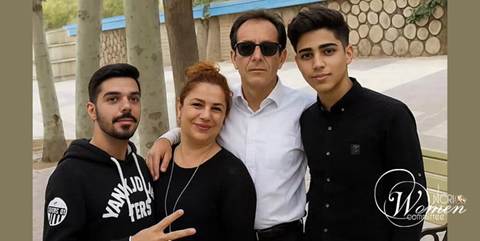
Leila is the daughter of Ali Saremi, a well-known PMOI member who, after spending 24 years in the prisons of both the Shah and the clerics, was executed in Evin prison in December 2010. Leila is also the mother of 27-year-old political prisoner Farzad Moazami, who is being held in Fashafouyeh’s Ward 2 on charges of “assembly and collusion against national security.” He has been subjected to severe physical and psychological torture, including periods of confinement in a cage.
Less than ten days later, at 5 a.m. on August 7, 2025, security forces raided Leila’s home again—this time attempting to arrest her daughter Rozita Moazami Goodarzi, but the operation failed as she was not at home.
The purpose of Leila’s arrest and torture was to force Rozita into surrender and to pressure her son Farzad into cooperating with the regime.
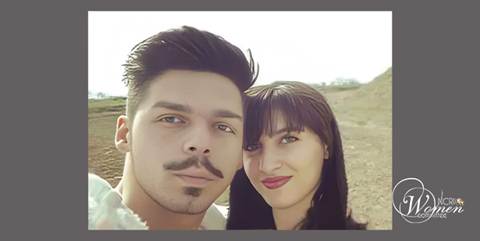
In another case, the wife and three children of Arab political prisoner Masoud Jameii, who is under a death sentence, were arrested and prosecuted to intensify pressure on him.
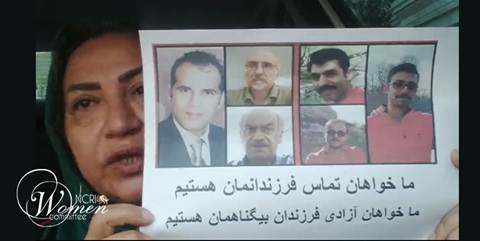
Escalating Pressure on Families of Political Prisoners
The execution of PMOI political prisoners Behrouz Ehsani and Mehdi Hassani on July 27, 2025, has deepened the anxiety and pressure on families of death row political prisoners. Despite threats and security intimidation, these families continue to join the “No to Executions Tuesdays” campaign, protesting weekly to demand the cancellation of death sentences and the release of political prisoners.
On August 18, the sister of political prisoner Akbar Daneshvarkar (Shahrokh), who is under a death sentence, released a video message revealing that her family has had no news of him since his forcible transfer to Ghezel Hesar. She called on the international community to be the voice of families who are “tortured twice: once in prison and again at home.”
She disclosed that since August 6, the family has had no information about Shahrokh’s fate. The uncertainty triggered a heart attack in their mother, while their father has been hospitalized in intensive care in critical condition.
Shahrokh Daneshvarkar, 58, a civil engineer, was arrested in December 2023. He was among five political prisoners who were violently separated from others during a transfer from Fashafouyeh to Evin, and instead moved to Ghezel Hesar in Karaj. This separation—widely condemned as a deliberate tactic to sow fear, cut communications, and increase pressure ahead of possible executions—has added to concerns.
His sister condemned the regime’s cruelty, saying:
“This is extreme injustice. Our loved ones are being punished for crimes they never committed, with the harshest sentences imaginable. I urge the international community to be our voice. My brother and his fellow prisoners are highly educated, noble people whose only concern is the homeland, life, and ensuring that our people can live in peace.”
She stressed the double suffering inflicted on families, adding:
“I ask everyone—the international community and my fellow Iranians—to be our voice. Our loved ones endure immense suffering inside prison, while we, their families, are tortured in another way outside.”
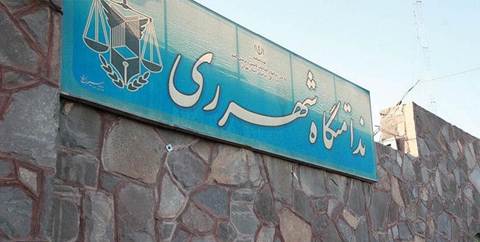
Qarchak Prison: A Furnace for the Gradual Destruction of Women Prisoners
Reports from Qarchak prison reveal a shocking humanitarian crisis. Daily power outages lasting up to five hours during peak summer heat, no cooling systems, and unlivable conditions are among the reported atrocities.
Prisoners face not only suffocating heat and electricity cuts but also severe shortages of drinking water and a lack of basic hygiene. With only three showers and three toilets for dozens of women, the prison yard’s sewage system is contaminated, attracting insects and rodents. Many women spend their days in this filthy, insect-infested environment, while many others suffer from chronic illnesses, old age, and severe physical weakness. No trusted doctor or emergency care is available.
Even healthy prisoners have fallen sick, and the condition of the ill has worsened—especially as an unknown virus has spread in recent weeks, causing severe bone pain, loss of voice, acute respiratory infections, physical weakness, and oxygen deficiency.
On August 18, power and water outages prevented prison authorities from preparing and distributing food. This left many women—particularly those unable to buy from the prison store—hungry and severely weakened.
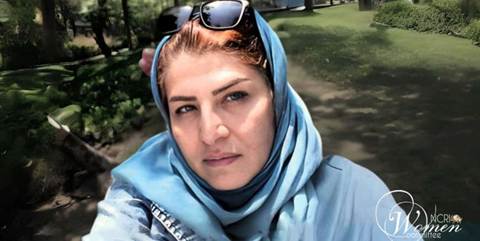
Inhumane Pressure on Political Prisoners in Qarchak
On July 27, 2025, two political prisoners—Masoumeh Asgari, a teacher and family breadwinner, and Masoumeh Nassaji (Farah), 62—were thrown into solitary confinement as punishment for protesting Qarchak’s inhumane conditions. They had raised concerns about dire health and sanitation, poor food, and threats by prison officials.
Mrs. Nassaji suffers from chronic respiratory illness and acute bronchitis. Although forensic doctors recently confirmed she is medically unfit for imprisonment, she continues to be held due to the obstruction of the case prosecutor.
Masoumeh Asgari suffers from diabetes, kidney and liver problems, and neurological disorders—exacerbated by previous leg fractures. Despite her serious illnesses, she is denied essential medical care.
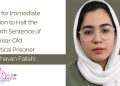
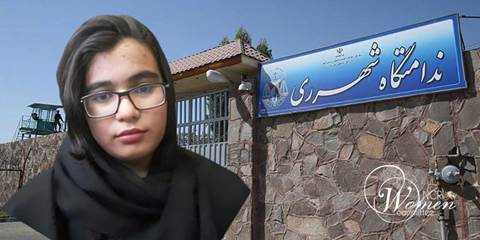
Another political prisoner, Arghavan Fallahi, 24, a PMOI supporter, was transferred to Qarchak after 200 days of torture and uncertainty. She endured months of brutal interrogations, psychological and physical torture, two months in solitary confinement at Fashafouyeh, and a period of enforced disappearance before being brought to Qarchak’s women’s ward.
On August 12, 2025, political prisoner Raheleh Rahimi Pour, from the justice-seeking families of the 1980s executions, fell in Qarchak and was diagnosed with suspected internal bleeding. She was rushed from Mofatteh Hospital in Varamin to Pakdasht Hospital, where she was admitted to ICU.
Over 70 years old, Raheleh suffers from a brain tumor, heart disease, and high blood pressure. Despite earlier medical warnings that she cannot endure prison, she was only transferred to hospital in shackles and has now been returned to prison despite her critical condition.
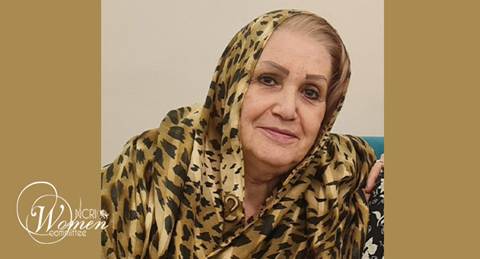
Political prisoner Maryam Akbari Monfared has been held in Qarchak since November 2024, in violation of the principle of separating prisoners based on their offenses. In early August, a bloody fight among common-crime inmates—during which an Afghan woman’s carotid artery was slashed—exposed once again the deadly risks posed to political prisoners like Maryam.
Now in her 16th year of imprisonment, Maryam has never been granted a single day of leave. She faces constant danger from violent inmates and deteriorating health due to medical neglect. She suffers from thyroid disorder, rheumatoid arthritis, spinal disc problems, and liver issues, yet is deprived of specialized care.
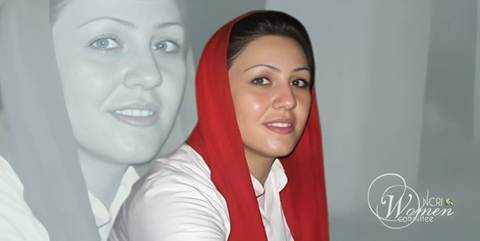
Another political prisoner, Elaheh Fouladi, suffers from severe heart disease.
Born in 1978 in Khalkhal, she is married and the mother of one child. Arrested at a Tehran Airport in January 2020 with her husband, she was initially held in Evin. After being released on bail, she was later sentenced by the Revolutionary Court to eight years in prison for “assembly and collusion through contact with the PMOI” and “propaganda against the state.” On June 23, 2025, she was transferred from Evin to Qarchak with other political prisoners.
Prison authorities recently transferred Elaheh Fouladi in handcuffs and shackles to a hospital, where an order was issued for her compulsory admission to a psychiatric facility. The transfer, carried out with violence by Qarchak prison guards, has sharply heightened concerns over Fouladi’s fate.
In Iran, the forced transfer of political prisoners to psychiatric institutions often entails the administration of unidentified medications and coercive treatments, leaving irreversible damage to their physical and mental health.
Fouladi had previously been subjected to unlawful pressure during her initial detention in the city of Khalkhal, where, according to relatives, intelligence agents injected her with unidentified substances. The renewed threat of such measures now raises serious concerns once again about her safety and well-being.
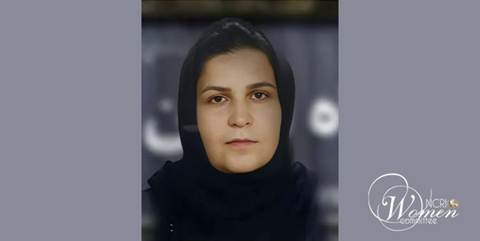
In Qarchak, other political prisoners are also in dire health: Azar Korvandi suffers from heart disease and cervical disc problems; Mowlud Safaei urgently needs hernia surgery; Parvin Mir Asan and Maryam Banou Nassiri suffer from chronic debilitating illnesses yet remain untreated.
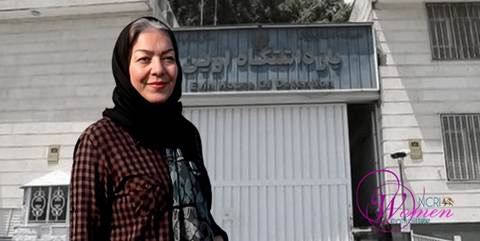
White Torture of Women Political Prisoners in Dowlat Abad Prison, Isfahan
Meanwhile, the transfer of all female inmates in Isfahan province to Dowlat Abad prison has turned it into a new hub of systematic abuse, particularly against women political prisoners.
The prison has two sections—one controlled by the IRGC and the other under the “morality police” and security forces. Yet in neither section is the principle of separating inmates by crime observed. Political prisoners are held alongside violent offenders, including murderers and armed robbers, in flagrant violation of international human rights conventions.
When political prisoners protest these conditions, prison officials mock and belittle them, calling them “criminals like the rest.” The only group kept separately are financial offenders.
Credible reports confirm that women political prisoners in Dowlat Abad are subjected to systematic harassment and escalating pressure. At times, common-crime inmates with violent records and unstable mental health are provoked or even hired by authorities to assault political prisoners or file fabricated reports against them. These acts not only endanger their physical and psychological safety but also pave the way for new fabricated charges.
A former inmate testified confidentially:
“In this prison, you must always expect an attack. Even your breathing is monitored.”
Living conditions are alarmingly inhumane. Families are banned from sending basics like blankets, clothing, or hygiene items. The prison is infested with lice and insects, and prisoners sleep on filthy, worn-out blankets. In a secret letter, one prisoner wrote:
“Every night we fall asleep in fear of insect bites. Our clothes stink, and we have no way to wash them.”
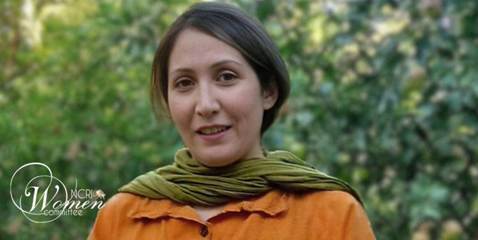
Supreme Court Confirms Death Sentence of Labor Activist Sharifeh Mohammadi
On August 16, 2025, Sharifeh Mohammadi’s lawyer announced that the regime’s Supreme Court upheld her death sentence, despite its earlier annulment over legal flaws. The Kurdish labor activist had been subjected to extreme pressure and forced confessions during interrogations.
The confirmation of her sentence demonstrates the regime’s readiness to openly violate judicial norms to instill fear. Sharifeh is currently held in Lakan Prison in Rasht, awaiting the implementation of a sentence issued not in the name of justice, but solely to silence dissent.
Call to the International Community
This wave of repression cannot be separated from the regime’s deepening political, economic, and social crises. Beset by international isolation, economic collapse, endemic corruption, and rising social unrest, the clerical regime is trapped in a deadlock, teetering on the edge of overthrow.
The policy of repression and executions is not a sign of strength, but of weakness and instability. The deeper the regime sinks into crisis, the more it intensifies suppression, especially targeting supporters of the Resistance and their families—in a futile attempt to prevent nationwide uprisings.
Now more than ever, urgent action by international institutions and defenders of women’s rights is needed.
The NCRI Women’s Committee calls on the UN High Commissioner for Human Rights, the Human Rights Council, the Special Rapporteur on Iran, and all human rights advocates to:
- Take immediate action to cancel the death sentences of political prisoners and halt executions in Iran.
- Dispatch an international delegation to visit Iranian prisons and meet with political prisoners.
- Condemn the wave of executions and systematic torture as crimes against humanity and refer the case of the clerical regime to the International Court of Justice.
Silence in the face of these atrocities amounts to complicity with the misogynist dictatorship ruling Iran. Today, the voices of families are clear and urgent: unless the world acts in time, tomorrow will bring more victims.