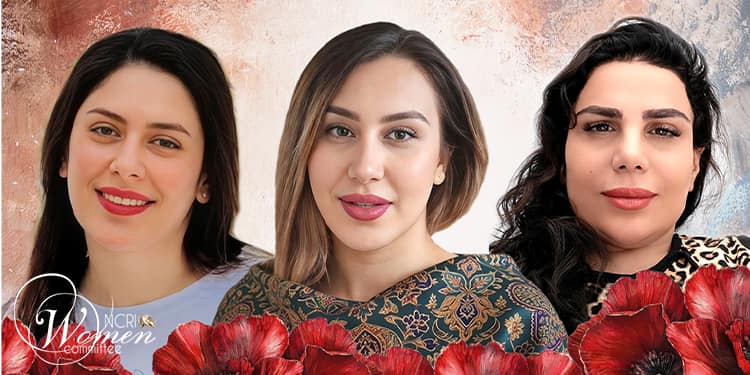
In the blood-stained annals of the January 2026 uprising, Iran’s healthcare professionals stood witness to a stark battle between human dignity and sheer depravity. As the clerical regime, with chilling defiance, sought to turn medical centers into extensions of their detention cells—redefining crimes against humanity by sabotaging life-support systems and seizing the wounded from the very midst of surgery—the medical community, and most notably the female Iranian nurses, stood as a resolute fortress of self-sacrifice.
Those who were trained to sustain the flicker of life within the confines of Intensive Care Units, instead found themselves in the “ICU of the Streets,” shielding the people with their own chests against a hail of bullets.
The Stars in White: A Chronicle of Nurses Who Forged Remedies from Their Own Blood
The epic saga of nursing during the January 2026 uprising was written through the defiance of women who honored their healing oath even at the cost of their lives. The luminescent stars of this struggle stand as a living testament to this truth:
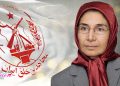
Samin Rostami: The Awakened Conscience of Karaj
A 42-year-old mother of two and a dedicated nurse at Aram Hospital of Karaj, west of Tehran. Samin transformed January 8, 2026, into a defining milestone of her commitment to saving lives.
Samin, whose very hands carried the scent of healing, could not stand by as she witnessed a young girl being subjected to the brutal assault of security forces. She stepped into the line of fire, and with empty hands, offered her own life as a ransom for another’s survival, ensuring that the beating heart of resistance in Karaj would not falter. On the evening of Friday, January 9, 2026, while rushing to the aid of another woman during the protests, she was struck by live ammunition fired by security forces, falling alongside her sisters-in-arms.
Her body was finally released to her family four days later.
Mansoureh Heidari: A Symphony of Love and Sacrifice in the Coastal City of Bushehr
The story of Mansoureh and her husband, Behrouz, is a harrowing chronicle of devotion. On January 8, 2026, as Ashouri Street in Bushehr came under heavy fire from forces stationed near the mosque, Mansoureh did not merely react as a wife; she charged toward the danger with the stature of a healer. While desperately administering aid to her husband’s fallen body, she was struck down by live ammunition, her blood mingling with his in a final act of courage.
Parvin Azizi: Resilience in the Heart of Andisheh
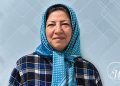
A 51-year-old Kurdish Yarsani woman originally from Qasr-e Shirin, Parvin became a living symbol of Iran’s ethnic solidarity. On January 8, 2026, in the city of Andisheh, her life was cut short by live ammunition. In the wake of her martyrdom, reports emerged of intense security crackdowns on her funeral rites and relentless pressure exerted upon her grieving family.
Hospitals as Occupied Zones: When Operating Rooms Became Frontlines of Repression
The regime did not confine its assault to the streets; it waged an asymmetric war against the “White Coats” within the very corridors of hospitals. The brutal raid on Khomeini Hospital in Ilam on January 3, 2026—characterized by the siege of inpatient wards and the discharge of tear gas through the hallways—was but a single chapter in this campaign of repression. Security forces, through the physical assault of medical staff, sought to abduct wounded protesters directly from their hospital beds. In the wake of these incursions, doctors and nurses who fulfilled their oath to treat the injured have been subjected to threats, interrogations, and arbitrary detention.
Additionally, on January 6, special units and plainclothes agents launched a violent incursion into Sina Hospital in Tehran. The deployment of tear gas canisters within the wards caused severe respiratory distress for hospitalized patients and the medical staff attending to the wounded of the uprising. Despite the immediate threats to their own safety, nurses fought to shield the injured from arbitrary arrest. The images of their bravery, emerging through the haze of smoke and chemical gas, have become an enduring symbol of the medical community’s defiance during the January 2026 Uprising.
Security forces pressured female medical staff to log the national ID numbers and personal details of gunshot victims into online government databases. However, numerous reports have surfaced of female nurses systematically sabotaging registration systems or documenting cases under pseudonyms. These acts of digital defiance were a desperate measure to shield the identities of protesters from plainclothes agents and prevent their imminent arrest.
Consequently, many of these women were hauled before disciplinary committees, facing charges of “disrupting hospital order” and “collusion with rioters.” These accusations served as a pretext for their summary dismissal, stripping these dedicated professionals of their livelihoods as retribution for their integrity.
Furthermore, during the January 2026 uprising, the resistance of female nurses at emergency room entrances was profoundly striking. They stood their ground to block security forces who, in a chilling violation of medical neutrality, attempted to use ambulances as “Trojan horses” to abduct the wounded. In cities across the country, such as Rasht and Shiraz, many Iranian nurses faced immediate suspension and the freezing of their salaries for refusing to collaborate with hospital “Herasat” (security) in identifying protesters.
Following these events, female medical professionals took to the streets in protest, raising their voices with slogans that resonated as a direct indictment of the regime’s tactics: “The Hospital is a Sanctuary, Not a Dungeon,” “Our Oath is Honor; Your Answer is Crime,” and “Ambulances are for Saving Lives, Not Transporting Oppressors.” Through these cries, they sent a definitive message: they would not succumb to threats or intimidation.
Underground Hospitals: The Secret Medical Network Led by Female Health Professionals
The martyrdom of nurses during the uprising, along with the systematic arrests and threats against medical staff, was not the end of the road. Instead, it became a pivotal turning point, transforming these “Angels in White” into the architects of an organized resistance structure.
In this uprising, female healthcare workers utilized encrypted social networks to organize a network of “safe houses” dedicated to performing emergency outpatient surgeries and providing critical care away from the regime’s watchful eyes.
By pooling their expertise, nurses and doctors established “Clandestine Relief Networks” within the heart of private homes, specifically designed to prevent the abduction of protesters from hospital emergency rooms. They transformed ordinary living rooms into makeshift operating theaters, treating wounded protesters by covertly transporting medicine and surgical supplies. At the constant risk of dismissal and imprisonment, these professionals smuggled critical equipment—including dressing kits, IV fluids, and anesthetics—out of hospitals to sustain these hidden lifelines.
Security forces eventually began identifying these makeshift clinics, launching violent raids on civilian sanctuaries. In Ardabil, an assault on the home of a medic who had sheltered 20 wounded protesters—resulting in the total destruction of medical equipment—revealed the depth of the regime’s malice toward “expertise in the service of the uprising.”
One such healthcare professional, a nurse from a hospital in Karaj identified as “Raha A.”, was arrested in mid-January 2026. She was charged with the “illegal removal of blood bags and life-saving medications.” Reports indicate that she was subjected to intense psychological torture during interrogation to force her to reveal the locations of the “safe houses” where the wounded were being hidden. Despite the immense pressure, she refused to break her silence, maintaining her defiance until the moment she was transferred to the women’s ward of Kachoui Prison.
The resilience of women like Mansoureh and Parvin, alongside the selfless sacrifices of those like Samin, proved that during the January 2026 Uprising, the white medical coat was no longer merely a symbol of healing. It became a scarlet banner of resistance against tyranny—a defiance whose pulse will continue to throb in every home and on every street until the ultimate liberation of Iran.