

December 2025 Report: A Year in Review: Iranian Women’s Resistance Against Religious Dictatorship
In 2025, Iranian women faced escalating challenges and deepening injustices. Yet, they never surrendered in their struggle against the ruling religious dictatorship. Once again, they stood firm, carrying the banner of resistance.
The final 2025 issue of the monthly publication of the NCRI Women’s Committee is dedicated to reviewing the most significant developments of the year, focusing on the resistance of women and political prisoners sentenced to death across Iran, despite crushing economic pressure, widespread poverty, and entrenched structural discrimination.

January 2025: Nationwide Protests Intensify with Women at the Forefront
The year 2025 began with a dramatic surge in near-daily protests across Iran, with women playing a leading role. From Tehran to Sanandaj and Ilam, women of all ages and social backgrounds took to the streets demanding social justice, improved living conditions, and an end to discrimination. Their widespread presence across multiple provinces reflected growing public anger toward the policies of the Iranian regime.
Women teachers, nurses, retirees, and female university students were particularly prominent. Protests by retired educators evolved into a cohesive and sustained movement, continuing almost weekly in Tehran and several major cities. These demonstrations met with repression by security forces, including the use of pepper spray on January 20, 2025. Despite the crackdown, women consistently remained on the front lines, chanting, “Our rights are won only in the streets.”
February 2025: Resistance by Women Political Prisoners and Families of Political Prisoners
A group of women political prisoners in the women’s ward of Evin Prison were denied visitation rights after staging a sit-in and chanting anti-government slogans to protest the transfer of two political prisoners sentenced to death, Behrouz Ehsani and Mehdi Hassani. The warden of Evin Prison formally communicated the punitive order, which remained in effect for three weeks.
At the same time, families of political prisoners sentenced to death held protest gatherings outside Evin Prison for the second consecutive week. Chanting slogans such as “No to executions” and “Abolish the death penalty,” they voiced their opposition to the implementation of death sentences.

March 2025: Deepening Economic Crisis and Crushing Inflation on Women’s Lives
Iran’s economy has faced severe inflation in recent years. In March, coinciding with the ancient New Year of Nowruz, runaway inflation made it nearly impossible for families to afford basic necessities such as food, clothing, housing, education, and healthcare.
Women, particularly female heads of household and those responsible for managing household expenses, bore the heaviest burden. According to domestic media, soaring prices and pre-New Year inflation placed the greatest strain on lower-income and middle-class families. (Rokna, March 11, 2025)
Corruption and mismanagement of national resources fueled liquidity growth and inflation. As national wealth is plundered, the government resorts to printing money to cover budget deficits, further driving up prices. Women, often employed in low-income or informal self-employment such as street vending, have suffered disproportionately from this vicious cycle.
Mohammad Bahrinian, a government-affiliated researcher, reported that 42.5 percent of employment in Iran consists of self-employment, with many women surviving on meager incomes eroded daily by inflation. (Khabar Online, March 19, 2025)
April 2025: Rising Executions of Women and New Revelations of the 1988 Massacre
In April, the clerical regime set a new record for executions of women. At least five women were executed in Isfahan, Qazvin, and Mashhad during the month.
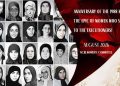
April also witnessed shocking new revelations from within the regime itself. The BBC released a newly uncovered audio file exposing further details of the 1988 prison massacre. In the recording, Hossein Ali Montazeri, then Khomeini’s designated successor, explicitly condemns the mass execution of women members of the People’s Mojahedin Organization of Iran (PMOI/MEK) during the summer of 1988.
The tape documents Montazeri’s meeting with members of the so-called “Death Commission” in Evin Prison, revealing crimes in which the primary victims were young women executed solely for adhering to their political beliefs.
Montazeri specifically refers to the execution of approximately 300 women PMOI members, including two French nationals, whose potential diplomatic value was deliberately ignored.
He recounts the case of a young female PMOI supporter sentenced to death merely for holding dissenting views. Montazeri challenges the religious legitimacy of executing women, citing Shiite jurisprudence to argue that such executions are unjustifiable even under Islamic law. He emphasizes that many of these women were imprisoned merely for reading or distributing leaflets.

May 2025: Denial of Medical Care to Women Political Prisoners
Silencing dissent under the regime of Velayat-e Faqih is not a policy choice but an institutionalized mechanism for maintaining power. Arrests, torture, and prolonged imprisonment of human rights defenders are only part of the repression apparatus. One of the most brutal tools of abuse is the systematic denial of medical care to political prisoners, placing women on a path toward slow death.
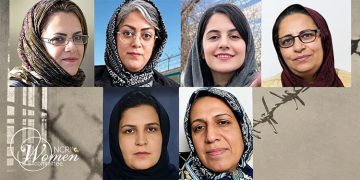
Among the women prisoners whose voices remain unbroken despite severe illness are:
• Maryam Akbari Monfared, 50, imprisoned for 15 years, presently in Qarchak Prison
• Marzieh Farsi, 60, suffering from cancer, imprisoned in Evin Prison
• Zeynab Jalalian, 44, serving a life sentence, exiled to Yazd Prison
• Hoda Mehrganfar, 38, imprisoned in Adelabad Prison, Shiraz
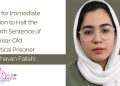
• Arghavan Fallahi, 25, from Parand, detained despite suffering from a chronic illness
These cases represent only a fraction of the critical situation facing women political prisoners in Iran and underscore the ongoing, systematic violation of their fundamental rights.
June 2025: Institutionalized Violence Against Women and a 14-Year Legislative Failure
In June, it was announced that the long-delayed bill to prevent violence against women had still not been passed after 14 years. The regime’s Vice President for Women and Family Affairs also revealed that official statistics on violence against women remain classified.
Zahra Behrouz-Azar stated: “We are still in a situation where the rate of violence and spousal abuse against women is 30 times higher than against men. Unfortunately, these data remain classified. When we raise the bill on violence against women in parliament, we are told: ‘Where is the violence? Does violence against women even exist? If it does, it’s equal.’”
She added that honor killings and domestic violence are not limited to marginalized regions or specific ethnic groups but are prevalent even in urban, modern, and educated communities. (ISNA, June 7, 2025)
July 2025: Organized Repression of Women Political Prisoners and Their Continued Resistance
Psychological pressure, denial of medical care, “white torture,” and inhumane prison conditions remained core components of the regime’s strategy to crush resistance and physically eliminate dissidents, policies openly supported by state-controlled media.
Women political prisoners, particularly in Qarchak, Evin, and Fardis (Karaj) prisons, endured deplorable conditions: unsanitary wards, severe restrictions on family contact, denial of medication and medical care, and constant physical and psychological pressure. Their deteriorating health constitutes a form of slow torture and a grave violation of international human rights standards.
On July 4, 2025, UN Special Rapporteurs issued a statement expressing grave concern over the “critical and inhuman” conditions of prisoners transferred from Evin Prison to Qarchak and Greater Tehran Prison.
Repression also extended to prisoners’ families. Reports from Greater Tehran Prison (Fashafuyeh) indicate that female relatives—mothers, wives, sisters, and teenage daughters—were subjected to “abusive, degrading, and unlawful” body searches before visits, clearly intended to intimidate and humiliate.

August 2025: Dual Repression of Prisoners and Their Families
In August, the regime intensified its crackdown on political prisoners, particularly PMOI supporters, and their families. Qarchak, Greater Tehran, Evin, and Ghezel Hesar prisons saw escalating use of white torture and severe legal and medical deprivations.
Families were also targeted through arrests and intimidation. Dozens were detained under the pretext of protesting water and electricity outages.
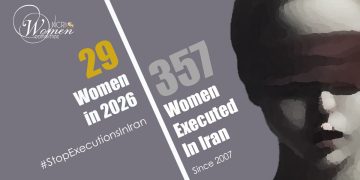
During this period, eight women prisoners were executed, bringing the total number of women executed in 2025 by August to 32.
Widespread Arrests of Former Political Prisoners and Their Families
Fatemeh Ziaei Azad, 68, was rearrested. The targeting of Leila Saremi and her son, Farzad Moazami, along with attempts to arrest her daughter Rozita, exemplified the regime’s systematic pressure on prisoners’ families. The families of imprisoned PMOI members Massoud Jamei and Shahrokh Daneshvarkar were also subjected to severe intimidation and constant anxiety.
Qarchak Prison: Inhuman Conditions Endangering Prisoners’ Lives
Conditions in Qarchak Prison were life-threatening. Prolonged power outages lasting up to five hours, lack of adequate cooling systems and safe drinking water, poor ventilation, severe sanitation deficiencies, and the infestation of insects and rats created an environment of extreme danger. Many women sufferings from chronic illnesses, advanced age, or severe physical weakness were denied access to medical care.
Massoumeh Asgari and Massoumeh Nassaji were transferred to solitary confinement for protesting these inhuman conditions. Arghavan Fallahi, after a prolonged period of uncertainty and torture, was transferred to Qarchak Prison. Maryam Akbari Monfared and Elaheh Fouladi were also held under extremely harsh conditions and deprived of necessary medical treatment.
Dowlatabad Prison (Isfahan): Severe Threats to Women Political Prisoners
In Dowlatabad Prison in Isfahan, women political prisoners were held alongside inmates convicted of serious violent crimes. Authorities deliberately subjected political prisoners to pressure and provocation by criminal inmates, creating a grave threat to their physical safety and psychological well-being. Basic living conditions and hygiene facilities in the prison were severely inadequate and fundamentally inhuman.

September 2025: Record-Breaking Repression Against Women
In September, repression against women reached unprecedented levels. Qarchak Prison emerged as a symbol of systematic white torture and a killing ground for women prisoners.
• Within just ten days, between September 16 and 25, at least three women, Somayeh Rashidi, Jamileh Azizi, and Soudabeh Asadi, lost their lives due to medical neglect and inhumane detention conditions.
• Maryam Shahraki died on September 12 in Fardis Prison (Karaj) after being denied urgent medical treatment.
• Dozens of elderly or seriously ill women prisoners, including Shiva Esmaili, Fatemeh Ziaei, Marzieh Farsi, Parvin Mirassan, and Zahra Safaei, were systematically denied access to specialized medical care.
These deaths and life-threatening conditions constitute clear cases of slow torture and gross violations of international human rights norms.

October 2025: Death Sentence Issued Against a Woman Political Prisoner
On October 25 (Aban 3), Zahra Shahbaz Tabari, a 67-year-old woman political prisoner, was sentenced to death by Branch One of the Revolutionary Court in Rasht. The charge against her was “supporting the People’s Mojahedin Organization of Iran (PMOI/MEK).”
Her trial lasted less than ten minutes. The court-appointed lawyer offered no meaningful defense. The so-called evidence consisted solely of a piece of cloth bearing the slogan “Woman, Resistance, Freedom” and an “unpublished audio message,” which her family has categorically rejected as baseless.
Resistance Against Executions and Protests Over Prisoner Deaths
Between October 13 and 19, approximately 1,500 prisoners sentenced to death in Unit Two of Ghezel Hesar Prison (Karaj) launched an unprecedented hunger strike to protest the sharp rise in executions. This marked the largest collective hunger strike in the history of prisons under the clerical regime.
Families of prisoners held repeated protests outside Ghezel Hesar Prison and in front of Iran’s parliament in Tehran, publicly supporting their loved ones.
Earlier, on September 29 and 30, women political prisoners launched a hunger strike to protest the death of their fellow inmate Somayeh Rashidi, who had died due to denial of medical care.
Horrific Transfer of Women Political Prisoners to Evin Prison
In the early hours of Thursday, October 9, 2025, more than 60 women political prisoners, along with four women imprisoned on financial charges, were transferred under heavy security to Ward 6 of Evin Prison. The transfer involved multiple layers of invasive inspections and was carried out with a long convoy of security vehicles.
At the onset of autumn cold, the women were denied beds, blankets, and heating equipment. Many were forced to sleep on cold concrete floors. Lighting was inadequate, access to hot water was severely limited, and families were barred from visits or from delivering warm clothing. Prisoners’ phone calls were restricted to only a few minutes per week.
This transfer applied only to women who had been moved to Qarchak Prison after the July attack on Evin. Other women political prisoners—including Maryam Akbari Monfared—remained in Qarchak Prison under inhuman conditions.
November 2025: Femicide with Total Impunity
According to the Women’s Committee of the National Council of Resistance of Iran, from the beginning of 2025 through the end of November, at least 176 women were killed by male family members. By the end of December, this figure reached 192.
This represents a sharp increase compared to 160 femicides in 2024 and 105 in 2023.
A report by the UN Independent International Fact-Finding Mission on Iran, released on October 30, 2025, underscored the existence of “systemic impunity” for perpetrators of violence against women. It concluded that the legal framework of the Velayat-e Faqih regime effectively shields killers from prosecution and punishment.
Most killings occurred in the context of forced marriage, child marriage, domestic violence, or women’s resistance to discriminatory laws.
The clerical regime’s Civil Code, including Articles 1105, 1108, and 1114, legally subordinates women to men, restricting their freedom of movement, autonomy, and financial independence.
Women subjected to violence are often forced by law to return to their abusers. Through its laws, media, and judiciary, the regime systematically reproduces and legitimizes violence.
Inverted justice prevails: women receive harsh prison sentences for protesting or “removing their headscarves,” while male killers often face only a few years in prison or buy their freedom. Fathers, as “guardians,” are typically exempt from punishment.
Notorious examples include the murderers of Romina Ashrafi and Mona Heydari, who received sentences of only two to eight years, while women protesting compulsory hijab face up to ten years in prison.
December 2025: One Hundred Weeks of the “No to Executions” Campaign
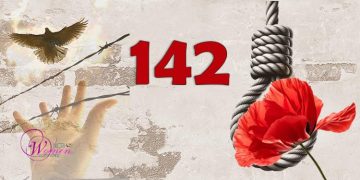
By the end of December 2025, more than 2,200 prisoners had been executed in Iran, including 19 political prisoners and 13 public executions. Over 1,000 executions occurred in just three months: October, November, and December.
Executions of women, one of the most extreme forms of organized state violence, rose dramatically. At least 64 women were executed in 2025, an 88 percent increase compared to the previous year. Between July 30 and December 30 alone, 40 women were hanged.
The nationwide “No to Executions Tuesdays” campaign entered its 100th consecutive week in late December, becoming one of the most enduring and widespread protest movements against capital punishment in Iran. Prisoner hunger strikes continued across 55 prisons, and the women’s ward of Yazd Prison officially joined the campaign.
Families of political prisoners sentenced to death played a pivotal role. Through weekly public presence, holding photos of their loved ones and recounting stories of repression, they became a driving force behind the campaign’s persistence and expansion.
Further Deterioration of Conditions for Women Prisoners in Evin
In December, women political prisoners in Evin Prison were transferred to a damp underground facility located 40 steps below ground level, with conditions far worse than those they had previously endured in Qarchak Prison.
Prisoners reported that corridors and rooms were heavily contaminated. Large numbers of rats and insects infested the ward, with the rat population reportedly reaching nearly 100. The risk of infectious disease outbreaks and serious physical harm increased sharply.
International Alarm Over the Death Sentence of Zahra Shahbaz Tabari
Eight UN Special Rapporteurs issued an urgent appeal to the regime, demanding the immediate halt of the execution of Zahra Shahbaz Tabari, the 67-year-old political prisoner held in Lakan Prison in Rasht.
At the same time, more than 400 prominent women worldwide, including Nobel laureates, former presidents and prime ministers, members of parliament, UN Special Rapporteurs, leading journalists, renowned athletes, and prominent human rights defenders, endorsed an urgent public statement calling for the immediate release of a women’s rights defender facing execution in Iran.
Zahra Tabari, a 67-year-old Iranian engineer and mother, faces imminent execution solely for displaying a banner reading “Woman, Resistance, Freedom.”

Women’s Voices in Tabriz Stadium: A Clear Political Message
On December 18, 2025, during a football match in Tabriz, the presence and voices of young Azerbaijani women turned the stadium into a powerful scene of political and social protest. They chanted: “Azerbaijan has honor; Pahlavi has no honor.”
The bold action of these young women at Sahand Stadium once again demonstrated that women stand at the forefront of Iran’s social and political transformation. They are not merely victims of repression but conscious agents of change.
By entering spaces long denied to them, and transforming those spaces into platforms of protest, they shattered imposed boundaries.
The message was unmistakable: there is no return to the past. Iranian society, especially its women and youth, has chosen its path. A future in which neither the clerical regime nor the reproduction of monarchical dictatorship has any place. A future defined by freedom, equality, and democracy—already approaching with the voices of today’s daughters.