
Iranian Female Protesters Flogged and Imprisoned for Joining 2026 Uprising
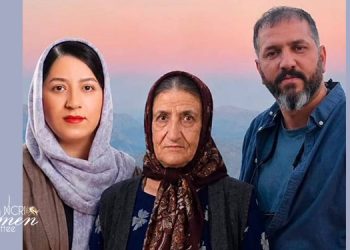
Iranian regime authorities flogged two female protesters detained during the January 2026 uprisings before sending them ...
Read moreDetails

Iranian laws and constitution promote violence against women
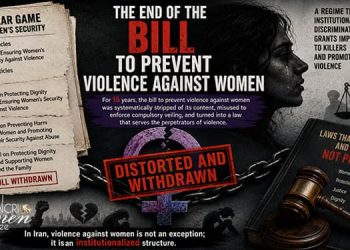
Iran has one of the highest statistics on violence against women. However, the regime has hampered the adoption of the VAW bill for nearly ten years. This led to a drastic rise in violence against women in Iran to the extent that the regime’s experts and officials have been acknowledging it.
The clerical regime’s constitution and laws promote violence against women including cruel punishments, early marriages, child abuse, domestic violence, and honor killings. 66% of Iranian women experience violence in their life time, double the world’s average which is one in every three women, or 35%.
The most common form of violence inflicted on women in Iran is brutalizing women while enforcing them to observe the mandatory hijab. This is committed by the State Security Force, guidance patrols, morality police, and other agents who are in charge of enforcing the compulsory veil.
A report published by the Research Center of the mullahs’ parliament in July 2018, indicated that more than 70% of Iranian women oppose the mandatory Hijab, observe it only by coercion. At least 2,000 women are arrested in Iran every day because of flouting the mandatory dress code.
Child abuse is the most common social harm in Iran taking over domestic violence against women. The Child Protection bill is still in a state of limbo after ten years, being passed back and forth between the parliament and the Guardians Council. Girl children make up most victims of child abuse. (The state-run ISNA news agency – April 16, 2019)
Domestic violence and honor killings are promoted by misogynistic laws and violence enforced by official state agencies.
Early marriages are considered the worst form of oppression of and violence against Iranian girl children. Early marriages have been on the rise in recent years due to growing poverty among the populace.
Iranian regime authorities flogged two female protesters detained during the January 2026 uprisings before sending them ...
Read moreDetailsOver 15 years, Iran’s proposed Anti-Violence Against Women bill was systematically gutted, hijacked by hijab-enforcement clauses, ...
Read moreDetailsMisogynistic laws lie at the root of violence against women in Iran Victims at Home: Report ...
Read moreDetailsA member of the clerical regime’s parliament, in a recent interview with a state-run media outlet, ...
Read moreDetailsJustice Undermined and State-Sanctioned Impunity for Honor Killings in Iran The sentencing of Fatemeh Soltani's father ...
Read moreDetailsSexual Apartheid in the Medieval Laws of the Clerical Regime At a time when the world ...
Read moreDetailsMaryam Aslani, Somayeh Tavakkoli, and Mehdi Tavakkoli were killed in state killing, after being directly targeted ...
Read moreDetailsExploitation of widows in Iran Introduction: The survival of the mullahs' regime rests on two fundamental ...
Read moreDetailsIntroduction: In the political and legal structure governing Iran, misogyny and gender discrimination have been institutionalized ...
Read moreDetailsThe war and intensifying economic crises in recent months have exerted the greatest and most direct ...
Read moreDetails
We work extensively with Iranian women outside the country and maintain a permanent contact with women inside Iran. The Women’s Committee is actively involved with many women’s rights organizations and NGO’s and the Iranian diaspora.
The committee is a major source of much of the information received from inside Iran with regards to women. Attending UN Human Rights Council meetings and other international or regional conferences on women’s issues and engaging in a relentless battle against the Iranian regime’s misogyny are part of the activities of members and associates of the committee.