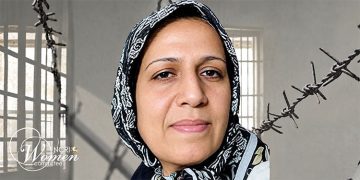


Qarchak Prison in Varamin has once again drawn public and international attention, as more than 60 female political prisoners endure inhumane conditions far removed from international human rights standards.
Over the past three weeks, an unidentified virus has spread among inmates, causing severe bone pain, voice loss, acute respiratory infections, physical weakness, and oxygen deprivation—further deteriorating their already dire situation.
Unbearable Conditions in the Section of Political Prisoners
These women, abruptly transferred from Evin Prison to Qarchak prison in the summer of 2025, are now held in a section known as the “Club.” This ward lacks ventilation and basic hygiene, and is infested with rodents and insects. More than 60 inmates are crammed into seven small rooms and a narrow corridor, with insufficient beds forcing many to sleep on the floor. Only three bathrooms and three toilets serve the entire group—a clear example of degrading treatment, even by the Iranian regime’s own legal standards.
International Condemnation
On August 19, the U.S. State Department issued an official statement labeling Iranian prisons, including Qarchak, as “examples of systematic mistreatment.” The statement cited unsafe drinking water, lack of medical care, unsanitary conditions, psychological torture, violence by prison guards, and extreme overcrowding. It called for urgent medical intervention and international monitoring of prisoners’ conditions.

Examples of Female Political Prisoners in Critical Condition
- Azar Korvandi: Suffers from heart disease and cervical disc issues; denied treatment.
- Mowlud Safaie: Requires immediate surgery for a diaphragmatic hernia but has been denied hospital access.
- Parvin Mirasan & Maryam Banou Nassiri: Both suffering from chronic, debilitating illnesses without medical attention.
- Elderly inmates: On the brink of physical collapse due to unbearable conditions.
Such deprivation constitutes a blatant violation of Article 10 of the International Covenant on Civil and Political Rights (ICCPR), which emphasizes humane treatment and respect for the dignity of prisoners.
Broken Promises of Return to Evin
Despite Evin Prison’s reported readiness to readmit these women, judicial authorities have repeatedly postponed their return. Families see this delay as a punitive, retaliatory measure intended to break the spirit of women whose only “crime” is their political activism and demand for freedom.

Food and Water Crisis Intensifies Pressure
On August 18, power and water outages led prison authorities to halt food preparation and distribution. This left many women—especially those unable to purchase from the prison shop—facing hunger and extreme weakness. Such treatment is a clear violation of Article 7 of the ICCPR, which prohibits torture and inhuman or degrading treatment.