
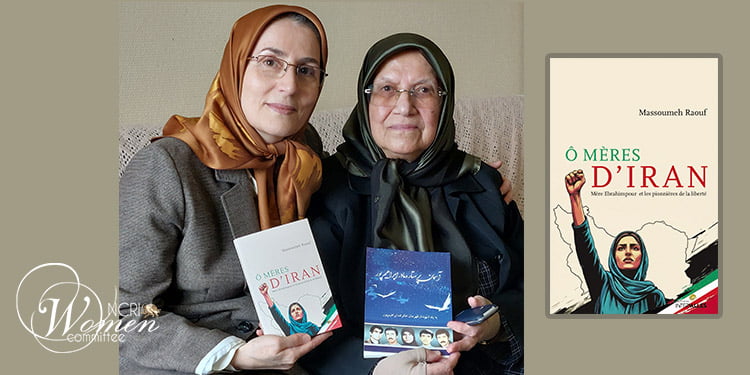
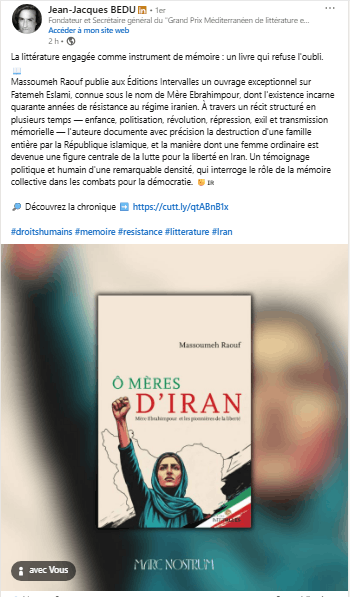
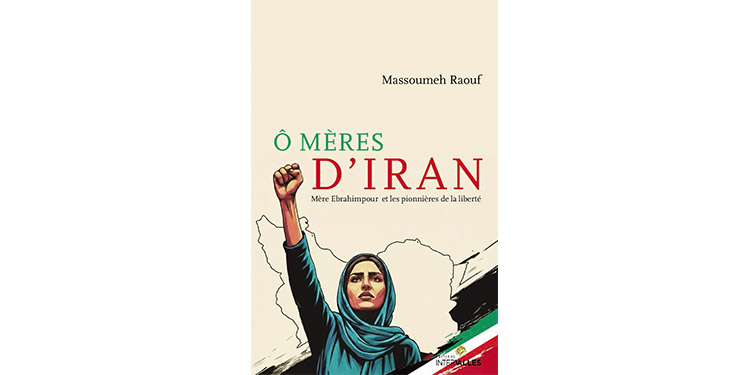
Through the deeply moving story of the Ebrahimpour family, Massoumeh Raouf delivers, with Ô Mères d’Iran (O Mothers of Iran), a masterful work that transforms grief into an act of political resistance.
By the Women’s Committee of the National Council of Resistance of Iran
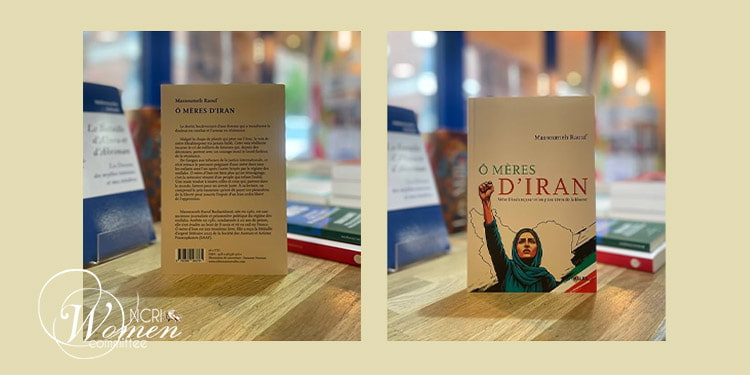
Published by Éditions Intervalles in Paris, Massoumeh Raouf’s latest work, Ô Mères d’Iran (O Mothers of Iran), reaches far beyond the bounds of a simple testimony to assert itself as a major political and moral statement in the face of religious dictatorship.
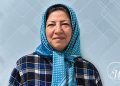
At once a life narrative, a document of contemporary history, and a rallying cry, the book is rooted in the brutal reality of Iran under both monarchical rule and the regime of the mullahs. It explores a space where the maternal figure ceases to be merely a symbol of affection, becoming instead the meeting point between individual memory and a collective tragedy orchestrated by the state. Through the fate of Fatemeh Eslami, better known as Mother Ebrahimpour, the author brings to light a truth the regime is desperately attempting to erase from public consciousness.
In contrast to the patriarchal and reductive vision imposed by those in power, one that seeks to confine women to the role of passive victims or grieving mothers, this book reveals how mourning can be transformed into a powerful instrument of resistance. The narrative is grounded in the tragic and real story of a family from Gorgan, whose home was systematically shattered by political repression.
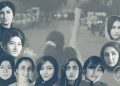
Four of the family’s children, committed members of the People’s Mojahedin Organization of Iran, fell victim to the regime’s repression: Mohammad-Mehdi and Ali-Akbar were executed in its prisons for their political activities; Abolfazl and their sister Assieh were killed in clashes with the Pasdaran, the latter while she was pregnant.
Confronted with such immeasurable loss, Mother Ebrahimpour did not retreat into silence. On the contrary, she rose as a pillar of unyielding resistance, transforming every site of suffering, from visiting prison rooms to mass graves, into spaces of defiance and living memory.
A Style at the Crossroads of Testimony and Historical Transmission
The work stands as an unflinching indictment, carried by prose of almost surgical precision. Massoumeh Raouf, former journalist, former political prisoner, and recipient of the silver medal from the Société des Auteurs et Artistes Francophones (SAAF 2025), writes with the authority of one who has witnessed horror from within. Her deliberately restrained, unembellished style allows the facts to speak for themselves, free of any artificial dramatization.
This narrative sobriety only heightens the impact of the testimony: the author meticulously documents the systemic mechanisms of repression: from arbitrary arrests and deadly pursuits in the streets to their culmination in the 1988 massacre. The book makes clear that these mass executions were not isolated incidents, but the expression of a deliberate will to crush any aspiration for freedom, marked by a particular hatred directed at politically engaged women.
Mothers: Guardians of the Nation’s Conscience
In O Mothers of Iran (Ô Mères d’Iran), the maternal figure transcends the private sphere to emerge as a universal historical symbol. Mothers are portrayed as the sacred custodians of the memory of the disappeared—those who refuse the erasure of all traces. Their role extends far beyond mourning; they embody a continuity of conscience in the face of institutionalized oblivion and the rewriting of history by its perpetrators.
The book thus draws a direct and inspiring line between the pioneers of the 1980s and the mothers of those who fell in more recent uprisings. It demonstrates that the leadership of Iranian women, and their determination to dismantle state misogyny, is the result of four decades of conscious sacrifice and intergenerational transmission.
A Weapon of Truth Against Erasure
By breaking the wall of silence and documenting the transformation of intimate suffering into collective political strength, this work establishes itself as an essential reference. For the NCRI Women’s Committee, O Mothers of Iran (Ô Mères d’Iran) is far more than a necessary read; it is a weapon of absolute truth.
This testimony stands as living proof that as long as the flame of justice burns in the hearts of the mothers of the Resistance, the overthrow of religious fascism and the emergence of a free Iran remain a historically inevitable horizon.
To access the book: https://editionsintervalles.com/catalog/o-meres-diran/