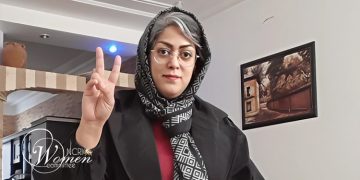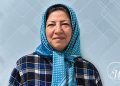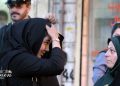


Political prisoner Arghavan Fallahi has been transferred to Qarchak Prison, following months of solitary confinement and torture.
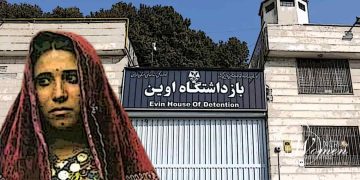
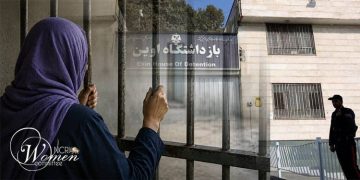
Arghavan Fallahi, a political prisoner who endured over six months of intense interrogations and both psychological and physical torture, has been transferred to the notorious Qarchak Prison in Varamin (46 kms southeast of Tehran), among other female political prisoners taken there from Evin Prison.
This follows two months in solitary confinement at Fashafouyeh Prison and an additional period held in an undisclosed location.
Arghavan Fallahi was arrested in Tehran on January 25, 2025. The charges brought against her include “propaganda against the state” and “supporting an opposition organization.” Her arrest and interrogations were conducted directly under the supervision of the Intelligence Organization of the Revolutionary Guard Corps (IRGC) and the Intelligence Department of the Judiciary.
In the initial months following her arrest, Arghavan Fallahi was held in total solitary confinement in Ward 241 of Evin Prison, where she was subjected to continuous interrogation. She was later transferred to solitary confinement in Fashafouyeh Prison—an infamous facility known for dire sanitary conditions and systemic violence against inmates. During this period, she was completely denied contact with her family and lawyer. Her father, political prisoner Nasrollah Fallahi, reported that authorities had set an unpayable bail of 2 billion tomans for her temporary release, effectively ensuring her continued detention.
While her transfer to Qarchak Prison marks the end of prolonged solitary confinement and allows limited interaction with other inmates, Qarchak remains one of the most notorious detention centers in Iran. Overcrowding, unsanitary conditions, lack of access to clean water, poor-quality food, and the absence of the “separation of crimes” principle leave political prisoners exposed to severe health and safety risks.
Sources from inside the prison report that Ms. Fallahi continues to face security restrictions, is denied regular contact with her family and access to legal counsel. Signs of psychological trauma, as well as the effects of prolonged interrogations, remain evident in her condition.