
How Iranian Women Are Shaping the Resistance
March 2026 Report – The struggle of Iranian women has long moved in step with the country’s broader fight for freedom. Over time, their role has expanded, helping to shape both the direction and resilience of this nationwide movement.
In February, following the January uprising and the deadly crackdown on protesters, that role entered a new phase. The activities of the Iranian Resistance and its Resistance Units reached a turning point, one in which women’s participation proved both visible and decisive.
A Defining Operation in the Heart of Power
At dawn on February 23, Resistance Units of the People’s Mojahedin Organization of Iran (PMOI/MEK) and the Liberation Army carried out a bold operation targeting the central headquarters of Ali Khamenei, the regime’s Supreme Leader.
This unprecedented operation struck at the very core of the regime’s command structure, demonstrating a level of organization, courage, and coordination that sent shockwaves through the ruling establishment.
Women on the Front Lines
Among the 250 Resistance Unit members who took part in the operation were dozens of women, an unmistakable sign of their integral role in the struggle.
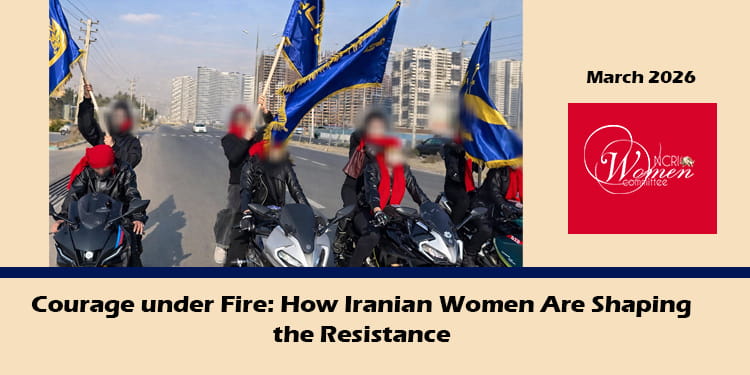
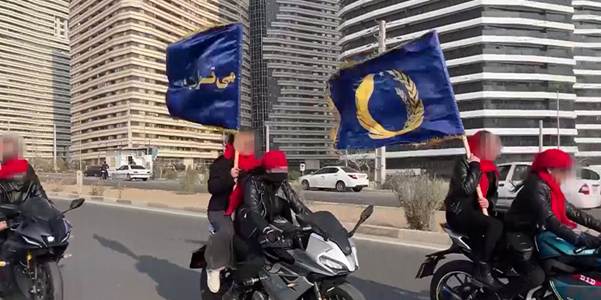
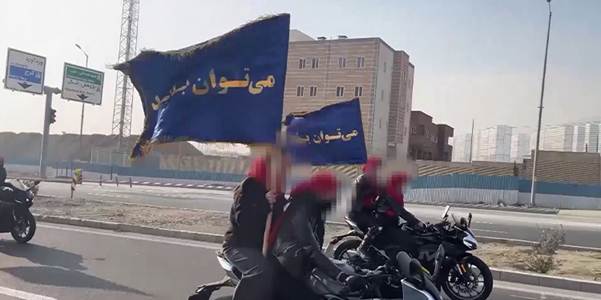
Eyewitness accounts shared on social media describe women riding motorbikes, throwing grenades into the compound, and confronting security forces in the streets. These accounts point to a notable reality: women are not only participating in protests but are also actively engaged in high-risk resistance activities shaping its course.
Casualties and Sacrifice
The operation came at a high cost. About 100 participants were killed, arrested, or remain missing. At the same time, roughly 150 others managed to leave the area with the help of local residents, highlighting the connection between the Resistance Units and the broader population.
Among those reported killed were four women:
- Zahra Vahdati, 37, Tehran
- Gita Zamanpour, 44, Tehran
- Afsaneh Fard, 46, Tehran
- Flora Seifzadeh, 62, Tehran
Their deaths highlight the extent of women’s involvement and the risks they are taking in the ongoing confrontation.
The PMOI/MEK has submitted the names of those killed, arrested, or missing to the UN Special Rapporteur on Iran and other international human rights organizations, calling for access to detainees and to the bodies of those killed.
The Targeted Complex Housed Several Key Institutions
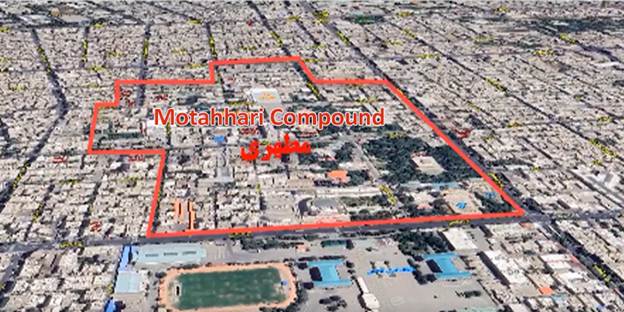
The compound targeted in the operation known as the Motahari Complex houses several key institutions. In addition to the office of the Supreme Leader, it includes the office and residence of Mojtaba Khamenei, the Guardian Council, the Assembly of Experts, the central offices of the judiciary and the Ministry of Intelligence, the Supreme National Security Council, and the Expediency Council.
The Motahari Complex covers an area of roughly 620 by 770 meters and is protected by extensive security infrastructure. Nearly 8,000 personnel, including members of the IRGC’s Vali-e Amr Protection Corps and the Ansar al-Mahdi Corps, are tasked with guarding the site.
The complex is enclosed by four-meter-high reinforced concrete walls topped with metal barriers designed to counter drones and other projectiles.
Despite these defenses, the PMOI Resistance Units were able to disable several rotating surveillance cameras at dawn with assistance from individuals inside the headquarters. The clashes caused significant casualties and led to a heavy movement of ambulances in and out of the compound under armed escort until midday.
A Story the Authorities Seek to Contain
Authorities have made efforts to limit public awareness of the attack, amid concerns about its potential impact, especially the powerful example set by women. However, increased security around the targeted site since February 23, along with reported internal discussions, suggest the incident has not gone unnoticed within official circles.
What unsettles the regime most is not only the operation itself, but what it represents: the emergence of a deeply rooted, self-sacrificing force within Iranian society—one in which women play a central and indispensable role.
Inspiring a New Generation
Coming just weeks after the January uprising and the subsequent violent crackdown, the operation appears to have sent a broader message, particularly to the new generation.
For younger Iranians, especially young women, it demonstrated that resistance is not only possible, but organized, determined, and growing stronger.
It sent a powerful message: a formidable force has risen at the heart of repression, capable of challenging the regime’s foundations.
An Expanding Role in a Continuing Struggle
Over the past year, the Resistance Units have carried out around 3,000 anti-repression operations. During the January 2026 uprising, they played a decisive role in organizing and expanding protests, confronting security forces, and protecting demonstrators.
Women have been part of these efforts at every level, often leading initiatives on the ground.
The human toll remains significant. During the January uprising, more than 2,000 members of the Resistance Units—men and women alike—went missing. More than two months later, there is still no confirmed information about their fate.
Women Shaping the Future of Iran
Today, the Iranian regime faces not only widespread opposition among its people, but also a transformative force at its very core: women who are organized, courageous, and unyielding.
For nearly half a century, the central struggle has remained one between the illegitimate ruling establishment and the people of Iran, alongside its organized resistance. That the clerical regime, even amid external conflict, resorts to executing members of the Mojahedin organization and young protesters who took part in uprisings reveals a deeper fear—of popular revolt and of the movement that organizes and leads it.
For over four decades, a nationwide resistance movement has been led by a woman. The leadership, sacrifice, and resolve of women have redefined the frontlines of the struggle for freedom in Iran. They embody a force capable of transforming the country and shaping its future.