

On the eve of International Women’s Day 2026, the NCRI Women’s Committee presents its Annual Report 2026, offering a recap of events in 2025 as related to women’s rights in Iran.
The Annual Report 2026 of the NCRI Women’s Committee “has been prepared in a period of profound transformation, as our country, Iran, stands on the threshold of a historic turning point,” noted Sarvnaz Chitsaz, the NCRI Women’s Committee chair in the foreword to the report.
From Protests to Uprising: Iran’s Nationwide Resistance
In the first section of the Annual Report 2026, we have a glance on 2025 as a year of accumulated anger and conscious resistance, the role of the Resistance Units of the People’s Mojahedin Organization of Iran (PMOI/MEK) and the central role of women in organizing the protests, and finally a review of how these protests evolved and erupted as the January 2026 uprising, which was crushed by the organized massacre of tens of thousands of demonstrators, men, women and children.


State Violence Against Women Political Prisoners in Iran
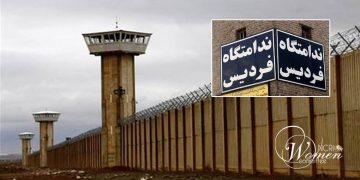
In the second section of the Annual Report 2026, we review prison conditions in Iran and specifically the denial of medical treatment to women prisoners, which has resulted in many deaths over the past year.
From Streets to Homes: Stories of Survival and Resilience
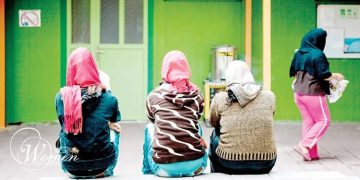
In Section Three of the Annual Report 2026, we delve into the conditions of the various strata of women, their dire livelihood, and their stories of survival and resilience.

Women, Victims of State-Violence and Injustice
Section Four deals with victims of state-sanctioned violence against women. From 91% increase in the executions of women in 2025 compared to 2024, to the surge in domestic violence and the growing number of child marriage and femicides in Iran.

The Depth of Gender Gap in Iran and the Human Cost of Economic Decline in Iran
Sections Five and Six go over the whopping gender gap in Iran and the consequent social harms that weight heavily on women.

Following is foreword by Ms. Sarvnaz Chitsaz, Chair of the NCRI Women’s Committee:
This annual report of the NCRI Women’s Committee has been prepared in a period of profound transformation, as our country, Iran, stands on the threshold of a historic turning point.
In the war that ignited on February 28 over the nuclear and missile programs of the clerical regime, the most brutal criminal of the century, who bore responsibility for three decades of murder and repression against the Iranian people, died.
His final atrocity was the massacre of the great popular uprising in January 2026, during which tens of thousands were slaughtered to quell the protests. Tens of thousands more were injured, and over 50,000 were arrested and thrown into prisons. Among the victims, the names of more than 250 women and hundreds of youths under eighteen have so far been documented.
This crime, whose details only partially reached the outside world, contributed to the designation of the Revolutionary Guard Corps (IRGC), the regime’s primary instrument of repression, executions, and killings, as a terrorist organization by the European Union.
The death of Ali Khamenei is the death of religious despotism and the end of the regime of absolute clerical rule. The time has come for freedom and the sovereignty of the people of Iran.
After 47 years of suffering and the blood of Iran’s courageous children, the era of freedom has finally arrived, on the condition that we do not allow this revolution to be stolen, as happened to the 1979 Revolution.
In the January 2026 uprising, the people of Iran demonstrated their desire for a future based on a democratic republic and their rejection of all forms of lifelong dictatorship, whether the dictatorship of the Shah or that of the clerics.
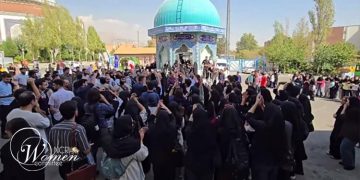
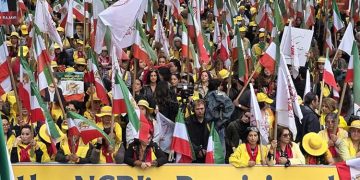
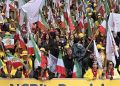
Iranian women once again proved that they are not powerless victims but the principal force for change. Their presence was visible and decisive; from Bandar Abbas and Mashhad to Tehran, Shiraz, Rasht, Kermanshah, Zahedan, and dozens of other cities and towns, women stood at the forefront of the protests, chanting: “Death to the oppressor, whether it be the Shah or the (mullahs’) leader.” They opened new paths and paid a heavy price.
In her message on the occasion of the International Women’s Day, Maryam Rajavi emphasized: “Freedom and democracy can only be attained through the presence of women in the political leadership of society. For this reason, a genuine alternative is distinguished by the active participation of women in political leadership.”
On February 28, the National Council of Resistance of Iran announced the formation of a provisional government based on Maryam Rajavi’s Ten-Point Plan. In her messages, Mrs. Rajavi stressed: “Only the people of Iran possess the legitimacy to determine the political future of their country. Iran is not its regime. Iran is its people. No future for Iran can be realized from the outside; it can only be built by the Iranian people themselves. I call on all to support the people of Iran.”
Readers of this report, as they turn its pages, are confronted with an ethical and human responsibility: the responsibility not to remain silent and to recognize the legitimacy of the struggle of women and youth in Iran to overthrow the regime, to reject all forms of dictatorship, and to support their determination to establish a democratic republic based on the separation of religion and state, gender equality, and equal rights for all citizens.
Freedom and equality in Iran have come at a heavy price. The people of Iran have sacrificed more than one hundred thousand of their finest sons and daughters. They did not give their lives to move from religious tyranny back to monarchical rule.