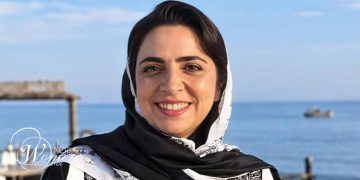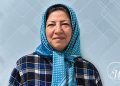
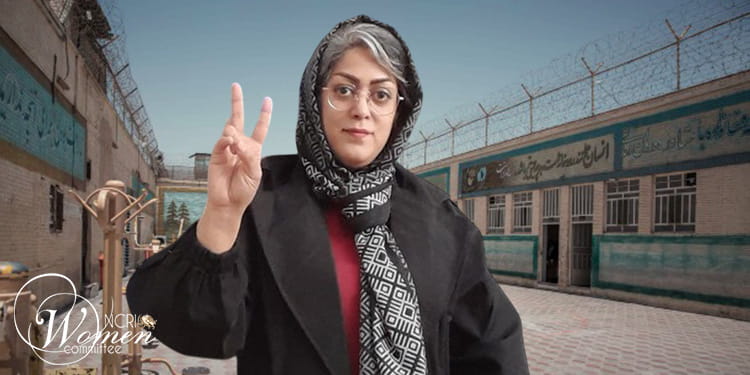
Female political prisoner in Iran, Parisa Kamali, is facing a life-threatening health crisis as Yazd Prison authorities weaponize medical neglect against political prisoners.
Under the hollow pretext of “war conditions,” Yazd Prison authorities are systematically withholding vital medications from Ms. Kamali and blocking her urgent transfer to outside medical facilities, despite her rapidly deteriorating condition.
Ms. Kamali, 40, is currently serving a sentence in Yazd Central Prison on charges of supporting the People’s Mojahedin Organization of Iran (PMOI/MEK). This deliberate denial of essential treatment has not only endangered her life but is being used as a tool of physical and psychological pressure.
Furthermore, authorities have intensified their harassment by threatening to banish her to the remote Khash Prison, a move designed to further isolate her and exacerbate her medical distress. Such an exile would undoubtedly place her life in immediate peril. Despite these inhumane pressures, Ms. Kamali remains steadfast.
In a defiant message marking the fortieth day of remembrance for the victims of the January 2026 uprising, she wrote:
“We will never allow this flag to fall until the day our homeland, Iran, is free. We believe that this blood-stained path will ultimately lead to victory.”
Who is Parisa Kamali Ardakani?
Parisa Kamali Ardakani was arrested on April 29, 2024, in Isfahan and initially held in Dowlatabad Prison. She faces three separate cases brought against her in Isfahan and Ardakan, involving various security-related charges.
In 2025, she was transferred to Yazd Prison. After accepting the court’s ruling (“taslim be ra’y”), her combined sentence was reduced to three and a half years.
Born in 1986 in Abadan, Ms. Kamali is a married geography student.
Systemic Abuse in Yazd Prison
The plight of the female political prisoner is further exacerbated by the inhumane conditions within the women’s ward of Yazd Prison. A number of political detainees, including those arrested during the January 2026 nationwide protests, are being held alongside prisoners convicted of violent crimes and drug-related offenses—a direct violation of the principle of separation of crimes.
Severe overcrowding and a lack of basic facilities have turned the prison into a site of constant suffering. Many women remained in the quarantine section for weeks following their arrest during the uprising, enduring worsening conditions and intensified judicial pressure while left in a state of agonizing legal limbo.
Harsh Sentences and Financial Corruption
The Iranian judiciary continues to hand down heavy sentences to suppress dissent. In one instance, a medical worker was dismissed from her job and exiled simply for social media activities, such as liking or reposting political content. Another case saw an initial 25-year sentence reduced to four years after the consolidation of files, reflecting the total lack of transparency in the regime’s judicial proceedings.
Beyond judicial tyranny, reports highlight widespread financial corruption among prison officials. In several cases, “Golrizan” fundraising events were held to secure the release of a female political prisoner in Iran. However, despite the public donating the full amount required for bail or fines, the funds were embezzled by authorities. Consequently, these prisoners remain incarcerated for years while officials profit from their plight.