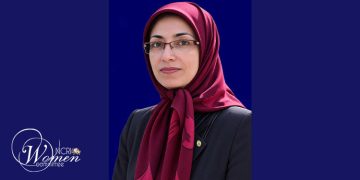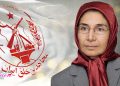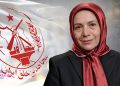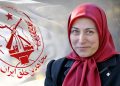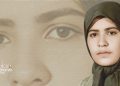

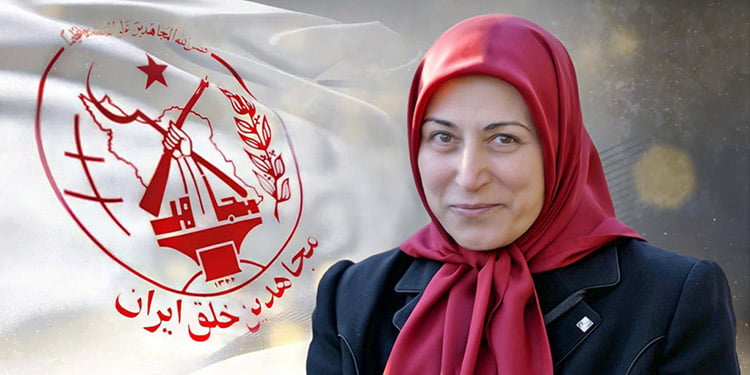
Kobra Mokhtar, known to her comrades Sara Mokhtar, lived a life defined by an uncompromising pursuit of personal liberation and political responsibility.
Born in Tehran in 1956, Sara Mokhtar was a woman ahead of her time. After earning a degree in Computer Science, she secured a prestigious position as a senior administrator for Iran National Airlines (Iran Air) in Tehran. Yet, as the 1979 revolution against the monarchy swept across the country, she found a different calling, aligning her ideals with the People’s Mojahedin Organization of Iran (PMOI/MEK). From that moment until her final breath, and despite a severe, life-threatening heart condition, she never wavered in her commitment to her cause. She was a member of the PMOI’s Central Council.
Sara Mokhtar passed away on March 24, 2026, due to cardiac arrest in Paris, leaving behind a legacy that cemented her status among the prominent figures of the Iranian opposition. Over a four-decade career, she rose to become a commander and a head of directorate in the National Liberation Army of Iran (NLA) in 1989, a member of the coalition National Council of Resistance of Iran (NCRI) in 1992, and a member of the PMOI Leadership Council in 1997.
From Civil Service to the Underground Resistance
In the immediate aftermath of the 1979 revolution, Sara Mokhtar utilized her administrative background to lead the PMOI’s civil servants’ sector, organizing sympathetic government employees across the capital.
Those who worked under her during those volatile years remember an individual of infectious energy. One comrade recalls:
“Sara’s defining trait was her resilient spirit, her vitality, and her revolutionary passion. She possessed immense energy; whenever she entered a room, she transformed the atmosphere. Despite the brutal conditions of facing the regime’s thugs and the daily raids on PMOI centers, no one ever saw a somber or downcast look on Sara’s face. To her, every obstacle could be overcome, and no conflict could ever make her stop.”
Following the bloody crackdown of June 20, 1981, Sara went underground, joining the PMOI’s network of safe houses. Until 1983, she directed daily urban operations in Tehran under the “Hanif Regiment” and managed various covert bases across the city. Later that year, she deployed to the volatile Iran-Iraq border zones to join the group’s front-line combat units.
The Evolution of a Female Commander
The border years were grueling, but colleagues note that Sara Mokhtar adapted rapidly, earning new responsibilities through sheer competence. However, it was the PMOI’s internal “ideological revolution” in 1985, which placed a heavy emphasis on female leadership and emancipation, that she credited with fundamentally reshaping her worldview, introducing her to what she described as a new realm of liberation for women in the movement.
When the National Liberation Army (NLA) was formally established, Sara traded her administrative civilian life for a combat uniform. She went on to command several military units during major border incursions, including Operations Shining Sun, Forty Stars, and Eternal Light. By 1992, she was promoted to a deputy command position within the NLA.
In her later years, Sara Mokhtar transitioned back to diplomacy and administration, serving extensively in the PMOI’s international departments and within the diplomatic offices of the NCRI’s President-elect abroad.
Even as her health deteriorated, requiring successive, high-risk open-heart surgeries, peers note that she refused to step back. Battling agonizing physical pain, she maintained a stark optimism, continuing her daily responsibilities with a trademark smile that colleagues say energized those around her.
Defying the Medical Odds: ‘I Came Here to Fight’
Following a grueling heart transplant and a harrowing medical battle for survival, Sara Mokhtar addressed her colleagues in a deeply personal speech, reflecting on her proximity to death and her motivations for pushing forward:
“I truly thank God. I couldn’t even stand up, but I felt I should truly kiss the ground here because of such an immense blessing God bestowed upon me. After a year, I am finally able to see my sisters and brothers up close again. If I am to name the primary motivation that kept me alive, it comes down to just two things: one is Sister Maryam [Rajavi]’s revolution, and the other is being here with my Mojahed sisters and brothers, advancing the revolution and the cause. Words cannot describe the moments and the feelings I hold inside—how I counted down the hours and seconds just to see you all again and be by your side.
…There is only one motivation, and that is being under the roof of this Organization, under the shade of this leadership, and frankly, at the sharp edge of Sister Maryam’s revolution. Over the past year, I gained something that, despite all my years in the Organization as a Mojahed working and holding responsibilities, I had never felt quite like this before.
One aspect relates to Sister Maryam’s revolution itself—how deeply it can fulfill a person and make them a fighter, to the extent that one can stand tall even in the face of death.
As you know, when someone is told that their heart is operating at only 8 to 10 percent, their kidneys have completely failed, they have only one functioning lung—and even that is working at roughly half capacity—and all other bodily muscles have broken down and can no longer function, meaning they are confined to a wheelchair and can no longer walk, and so on and so forth… the easiest thing to do would be to say, ‘Well, I’ve given it my best shot, nothing more can be done.
I am content with God’s will. I have no fear of death or martyrdom anyway; that’s a settled matter for me. So, I surrender, and I can just wait for whatever God intends or puts before me and submit to it.’ That is one path. But the other path is for a person to say, ‘Granted, I have resolved all these fears, but I have a powerful reason to exist, and to exist longer. And that reason is that I came here to fight.’ When you have come to fight, you must deploy every ounce of your strength for a greater fight. If it is possible, then one must do it.”
A Legacy of Resistance
In an official eulogy marking Sara Mokhtar’s passing, NCRI President-elect Maryam Rajavi praised her enduring resilience and highlighted her role as a blueprint for future generations of Iranian women activists:
“My dear sister Kobra, through the ideological revolution and with a profound understanding of the liberation and responsibility of a Mojahed woman, played her decisive role within the PMOI Central Council until the final moments of her life.
Particularly over the past twenty years, while facing severe physical ailments and heart surgeries, she welcomed every trial with serenity and a perpetual smile, crying ‘bring it on.’ She stood as a role model of responsibility, commitment, integrity, abundance, sacrifice, and selflessness among her peers…
I am certain that her liberating and Mojahed values will multiply among her comrades and will inspire the struggle of rebellious women and young girls within the Resistance Units.
Just as she entered this world in the spring, she departed it in the spring toward eternal life. From now on, we shall see her alive and present in the spring that conquers winter with its greenery, in the blossoming of flowers, in the rainbow, and in the smiles of Iran’s rebellious women and girls on the day of victory.”