
New Generation of Working Iranian Women Being Erased from the Labor Market
June 2026 Report: Behind macroeconomic indicators and the dry labor market statistics lies the painful reality of millions of creative, educated, and hopeful women. Their fundamental right to an independent professional identity and financial autonomy has been plundered by the fundamentalist laws of the ruling clerics.
The reigning religious fascism has transformed the right to employment from a basic human right into a tool of oppression. This misogynistic regime deliberately seeks to purge women from public and professional life by forcefully confining the active female population to the domestic sphere. The latest official data lays bare the systematic erasure of working Iranian women, trapped in the crushing grip of poverty and soaring inflation.
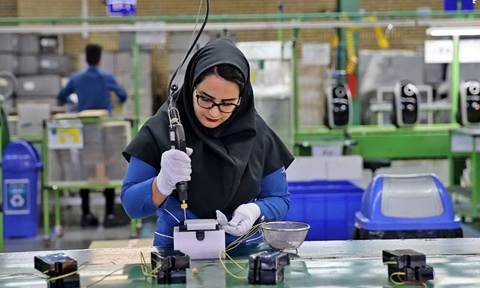
Historical Drop in Labor Participation: The Silent Disappearance of Women from the Workforce
The national economic participation rate has plummeted below 40 percent in 2026, marking its lowest level in a decade. (ILNA, June 27, 2026)
With this unprecedented collapse, Iran now ranks among the countries with the lowest participation rates globally. Sixty-one percent of the working-age population effectively plays no role in the gross domestic product, placing the burden of their livelihood on the shoulders of the employed minority.
However, the true catastrophe lies behind the regime’s superficial 7.5 percent unemployment rate—a disaster that media outlets have labeled the “story of silent despair.” (Zoomon, June 30, 2026)
Analysis shows that while male employment has increased by 228,000 over the past year, the labor market has conversely witnessed the silent disappearance and erasure of nearly 195,000 working Iranian women. This represents a staggering record and a massive drop, unprecedented since 2021. This decline comes despite an increase of over 810,000 in the working-age population, while the total number of employed individuals nationwide has grown by only 34,000. In other words, for every 100 people added to the working-age population, only about 4 have been added to the workforce, meaning the economy’s job-creation engine has effectively stalled. (Jahan-e Sanat, June 30, 2026)
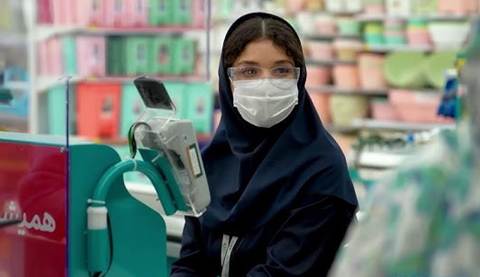
Hidden Unemployment: The Tactic Behind the Systematic Removal of Women from Labor Data
According to Zahra Karimi, professor of economics at the University of Mazandaran, the economic participation rate of women has suffered a dramatic 5% decline in just one year, dropping to a staggering 12%. This recurring catastrophe reflects how the regime utilizes “hidden unemployment” as a tool to systematically exclude terminated women from the denominator of its statistical calculations. (Jahan-e Sanat, June 30, 2026)
Statistical data reveal that while the number of women actively seeking employment increased by a mere 4,600, nearly 190,000 women instead exited the labor market entirely. These women were effectively reclassified under the category of “homemaker” to engineer and manipulate official statistics. (Zoomon, June 30, 2026)
Karimi emphasizes that within the male-dominated structure of the labor market, women are the primary victims of corporate downsizing. Amid severe economic shocks, massive summer blackouts and gas disruptions impacting industries, and the forced closure of enterprises, at least 150,000 primary insured individuals have lost their jobs. The women terminated in these consecutive waves are immediately reclassified in statistical systems under headings such as “homemaker” or “student” to ensure the official unemployment rate shows no significant change. (ILNA, June 27, 2026)
This deceptive mechanism heavily inflates the economically inactive population, completely shattering the job security of many working Iranian women. In contrast, unemployed men are forced by necessity to take up any available work—such as street vending or ride-hailing services—and therefore cannot be categorized as “inactive.” (Jahan-e Sanat, June 30, 2026)
An analysis of quarterly statistics reveals that following the enforcement of severe internet restrictions, female employment numbers dropped to their lowest levels since 2017. By cutting off internet access, the regime severed the lifeline of virtual businesses. Consequently, the services sector—traditionally a primary refuge for female employment that had shown steady growth since 2021—witnessed the exit of over 65,000 women. This situation proved even more catastrophic in the industrial and manufacturing sectors due to structural crises, where approximately 109,000 working Iranian women either lost their jobs or were forced to leave the workforce. (Zoomon, June 30, 2026)
Beyond the destructive impact of internet shutdowns on the digital space, the ongoing economic recession, combined with widespread summer electricity and gas disruptions for production enterprises and the forced closure of industrial parks, has severely crippled the country’s industrial manufacturing capacity and pushed the demand for new labor force into a deadlock. This structural crisis—trapped under a 62% annual inflation rate and point-to-point inflation exceeding the 100% threshold in marginalized provinces—has shattered the livelihoods of low-income households. By triggering rampant, triple-digit inflation in essential goods, this economic pressure has driven vulnerable families, particularly working Iranian women in the informal economy, toward daily wage labor simply to survive. (ILNA, June 27, 2026)
Against this backdrop of livelihood collapse, a breeding ground for double exploitation has emerged with the offer of insulting 10 million toman salaries, which do not even cover basic household expenses. Particularly in provinces and small towns, when female job seekers are faced with a 10 million toman wage offer, they choose forced domestic confinement instead, given the inadequacy of the salary and the exorbitant costs of commuting and childcare. (Jahan-e Sanat, June 30, 2026)
According to available data, 74% of job seekers have been forced to drastically cut their basic living expenses, and this very inadequacy of wages directly targets the economic sustainability of many working Iranian women, pushing them reluctantly into staying at home. Based on this survey, 66% of job seekers complain of a severe shortage of quality jobs and a lack of economic stability, 43% require financial support or loans, and 30% have stated that to re-enter the labor market, they primarily need professional training and skill development. (Job Vision Platform Report, June 27, 2026)
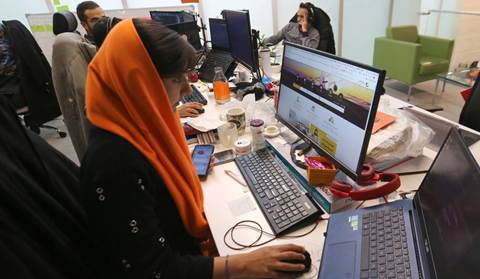
Shattered Ambitions: Critical Unemployment Rates for Iranian Female Graduates
Female college graduates are the primary casualties of this misogynistic system. The unemployment rate for young women has surged to a shocking 32.2%, with higher education graduates accounting for 63.5% of all unemployed women in the country. This represents a deliberate squandering of the aspirations and human capital of half of society by the ruling religious fascism. Meanwhile, the unemployment rate for youth aged 15 to 24 has reached 20.3%—more than 2.7 times the national average—and stands at 15% for the 18 to 35 age group. (Jahan-e Sanat, June 30, 2026)
This educated and semi-skilled middle class faces a structural void; low-wage positions in traditional sectors are not as readily available to them as they are to unskilled labor, nor do their qualifications align with the reality of the market’s meager wages. As a result of these blocked aspirations, 30% of job seekers have turned to learning new skills to adapt, while 17% see emigration as their only path to survival. Consequently, the long queue of specialized professionals and working Iranian women seeking to leave the country grows longer by the day. (ILNA, June 27, 2026)
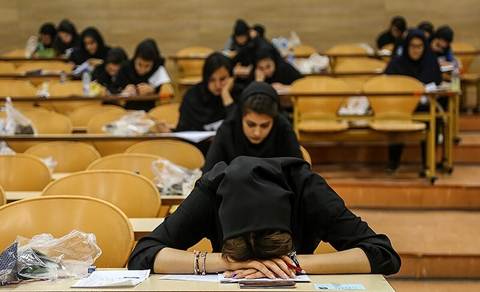
Double Exploitation in the Fields: Pushing Women into the Fragile Informal Economy
The pressure of poverty and the collapse of traditional livelihood models have driven a new generation of women toward highly precarious, daily wage, and contract less jobs. In marginalized regions like Kurdistan, seasonal female agricultural workers—ranging from young 13-year-old girls to 60-year-old women—endure grueling planting and harvesting labor under the scorching sun starting at 5:00 AM.
In 2026, these seasonal female workers receive a daily wage of just 800,000 tomans for a full day of strawberry picking—an amount equivalent to the price of a single 5-kilogram tub of cooking oil. This situation represents the raw intersection of workplace exploitation and domestic oppression; after completing their grueling shifts, these women must return home to begin a second, unpaid shift of cooking and cleaning.
Meanwhile, in major cities, the phenomenon of “gender-biased downsizing” and the erosion of formal employment have driven women toward the informal sector and fragile low-resilience services. According to official data, over 50% of female employment is concentrated in micro-services—the sector hardest hit by economic recession. This concentration directly threatens the security of half of the working female population in Iran.
Today, the widespread presence of women in jobs such as ride-hailing drivers, street vendors, and home-based online sellers is not a sign of career diversity, but rather a desperate flight from absolute poverty. This trend is especially stark in a system where the gender wage gap is estimated to be nearly 40%. Within the informal economy, this discrimination deepens and accelerates the cycle of poverty. (Jahan-e Sanat, June 30, 2026)
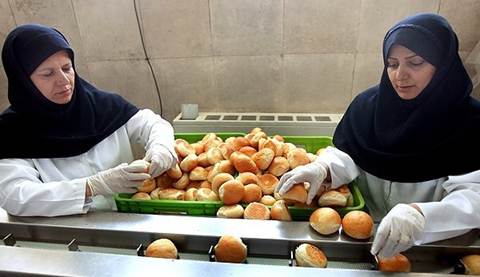
Female Heads of Households: Bearing the Brunt of Urban Poverty and Systematic Exclusion
Amid this crisis, the heaviest blow has fallen upon women-headed households—a demographic estimated at between 3.5 and 6.5 million individuals, accounting for roughly 14% of all household heads, with the vast majority trapped in the lowest income deciles. These women face three simultaneous levers of economic oppression: the continuous and staggering rise in housing and food costs; severe, discriminatory restrictions in accessing formal, insured employment; and a total lack of access to capital, loans, and social support networks.
For this vulnerable population, entering the informal market as street vendors is not a choice, but a matter of sheer survival within a system that deliberately reproduces and reinforces gender inequality during crises to keep a critical segment of working Iranian women marginalized and below the poverty line. (Eghtesanews, June 26, 2026)
The sudden exit of hundreds of thousands of women from the labor market and the sharp drop in their participation rate to 12% point to systematic erasure and intentional disenfranchisement. By severing online livelihoods and driving down the value of female labor, this regime actively seeks to push a new generation of women to the margins of society and into forced domestic confinement.
However, reclaiming the violated rights of working Iranian women and dismantling this barrier of discrimination will only be achieved by overthrowing this misogynistic regime and realizing a charter of true freedom and absolute gender equality.