

Sunday, August 9, 2026
  • English
  • Français
  • فارسی
  • عربى
PODCASTS
NCRI Women Committee Women Resistance Freedom
  • Home
  • NEWS
    • Women’s News
    • Articles
    • Statements
  • PUBLICATIONS
    • Monthlies
    • Documents
    • Reference Library
  • ABOUT US
    • The NCRI Women’s Committee
    • Gender Equality
    • Women’s Platform
  • MARYAM RAJAVI
    • Maryam Rajavi
    • Maryam Rajavi Speeches
    • The Plan on Women’s Rights and Freedoms
    • Ten-Point Plan for the future of Iran
  • VANGUARDS
    • The Fallen for Freedom
    • Heroines in Chain
    • Women of Iranian Resistance
    • Famous Women
    • Women in History
  • EVENTS
    • IWD Conferences
    • Activities
    • IWD Speeches
    • Solidarity
  • VIDEO
    • Videos
    • IWD Videos
  • PODCAST
  • DONATE
  • CONTACT US
No Result
View All Result
NCRI Women Committee Women Resistance Freedom
  • Home
  • NEWS
    • Women’s News
    • Articles
    • Statements
  • PUBLICATIONS
    • Monthlies
    • Documents
    • Reference Library
  • ABOUT US
    • The NCRI Women’s Committee
    • Gender Equality
    • Women’s Platform
  • MARYAM RAJAVI
    • Maryam Rajavi
    • Maryam Rajavi Speeches
    • The Plan on Women’s Rights and Freedoms
    • Ten-Point Plan for the future of Iran
  • VANGUARDS
    • The Fallen for Freedom
    • Heroines in Chain
    • Women of Iranian Resistance
    • Famous Women
    • Women in History
  • EVENTS
    • IWD Conferences
    • Activities
    • IWD Speeches
    • Solidarity
  • VIDEO
    • Videos
    • IWD Videos
  • PODCAST
  • DONATE
  • CONTACT US
No Result
View All Result
NCRI Women Committee
No Result
View All Result
Home Articles
Eight Years in Prison for Killing His Daughter

Fatemeh Soltani

Iran: Eight Years in Prison for Killing His Daughter

August 8, 2026
in Articles, Women's News

Justice Undermined and State-Sanctioned Impunity for Honor Killings in Iran

The sentencing of Fatemeh Soltani’s father to just eight years in prison for murdering his daughter has highlighted what critics describe as deep-rooted injustice and discriminatory laws against women in Iran’s judicial system.

According to the state-run newspaper Donya-ye Eqtesad, July 26, 2026, the father, who fatally stabbed his 17-year-old daughter multiple times outside her workplace in Eslamshahr in 2024, was sentenced to eight years of imprisonment and ordered to pay blood money (diya). This is while under the clerical regime’s law, murder is punished by execution.

The relatively lenient sentence once again demonstrates that under Iran’s system of governance, so-called honor killings are not only inadequately criminalized but are effectively facilitated through legal protections and judicial leniency, creating conditions that may encourage similar crimes in the future.

The central question, they argue, is why Iran’s judiciary closes some of the deadliest cases of violence against women with sentences of only a few years in prison. The answer lies in the nature and legal structure of a system that is founded on discrimination against and repression of women.
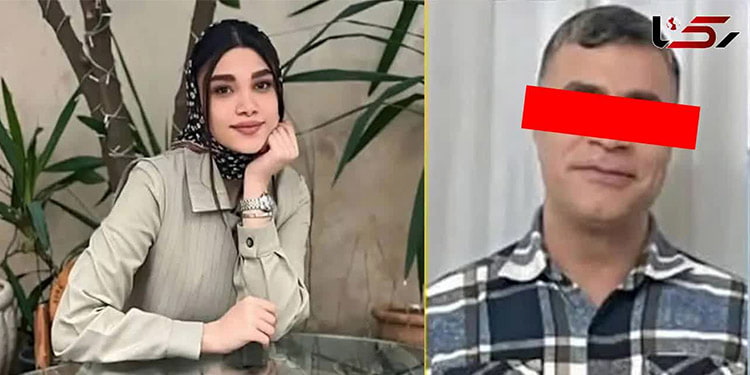
Eight Years in Prison for Killing His Daughter
Fatemeh Soltani (left) was killed by her father (on the right) for wanting to live independently

Inverted Justice: From Fatemeh Soltani to Mona Heydari and Romina Ashrafi

The eight-year prison sentence handed to Fatemeh Soltani‘s father is not an isolated case but reflects a systematic pattern within Iran’s judiciary. Similar outcomes have been seen in several other high-profile cases.

Mona Heydari, who was forced into marriage at the age of 12, was killed by her husband when she was 17. The perpetrator, who was also her cousin, publicly carried her severed head through the streets with a smile after the killing. He was sentenced to eight years of imprisonment, but was released shortly after, with the content of the victim’s father (his uncle).

Honor killers unpunished and set free, reveals injustice under the mullahs' misogynistic regime
Mona Heydari was beheaded by her husband in February 2022

In another widely reported case, the father of 14-year-old Romina Ashrafi, from Talesh, who killed his daughter by beheading her with a sickle, was sentenced to nine years in prison.

The contrast between these relatively light sentences and the punishments imposed on protesters and women’s rights activists illustrates what is described as “inverted justice” in Iran. While perpetrators of so-called honor killings are released after serving only a few years in prison, women arrested during the January 2026 protests have received death sentences, lengthy prison sentences and have been subjected to torture. At the same time, hundreds of women and girls have faced severe security-related charges and long prison terms for violating the mullahs’ mandatory hijab regulations.

Meanwhile, many women executed on murder convictions were themselves victims of forced child marriage and were sentenced to death after being accused of killing their husbands in self-defense.

World reacts to Romina Ashrafi's murder in Iran honor killings and femicide
Romina Ashrafi, beheaded by her father

In an interview with the state-run newspaper Shargh published on October 11, 2025, Zahra Eftekharzadeh, the founder of one of Tehran’s safe houses for women, acknowledged that the law lacks a deterrent effect. “When the punishment is not proportionate to the crime, perpetrators of violence see that they have little to fear,” she said. “In many of these cases, the sentences handed down by the judiciary are not only ineffective as a deterrent but, in a way, encourage offenders.” Referring to the Romina Ashrafi case, she added: “Her father openly said that if he killed his daughter, he would receive, at most, a 10-year prison sentence.”

Misogynistic Laws Give Killers a Green Light

The root causes of these crimes cannot be reduced solely to individual or family prejudices. The clerical regime’s Civil Code and Islamic Penal Code effectively grant men broad authority over the lives of women. Under the regime’s law, a father, as the victim’s legal heir (wali al-dam), is exempt from qisas (retributive punishment) for killing his child.

Provisions of the Civil Code reinforce male authority within the family. Article 1105 designates the husband as the head of the household, Article 1108 makes a wife’s entitlement to financial maintenance conditional on her obedience to her husband, and Article 1114 gives the husband the authority to determine the family’s place of residence.

Within this legal framework, the testimony of two women is considered equivalent to that of one man in certain legal proceedings. Also noteworthy is the fact that women subjected to severe domestic violence must prove that their lives are in danger in order to obtain a divorce—a burden of proof that, they argue, is often disregarded by judges until after a woman has been killed. This legal structure encourages some men to believe they can resort to violence against women with limited legal consequences.

These laws have contributed to a steady rise in so-called honor killings in Iran. Estimates in 2020 indicated that at least eight such killings occur each day across the country and that, on average, about 450 women are killed each year by male relatives or their husbands.

According to data compiled by the Women’s Committee of the National Council of Resistance of Iran (NCRI) from reports published in Iranian state media—which the committee says represent only a minimum estimate because of extensive censorship and families’ reluctance to report such cases—the number of reported killings of women rose from 105 in 2023 to 160 in 2024. During 2025, at least 192 women were reported killed.

The Political Roots of the Crisis and the Proposed Solution

The social tragedies unfolding in Iran have deeply political roots. Iran is among the few countries that have refused to ratify the Convention on the Elimination of All Forms of Discrimination against Women (CEDAW) and that the country’s ruling system has built its power on the structural subordination of women.

In a system where violating the mandatory hijab law is treated as a threat to national security, and where thousands of women are detained and humiliated each day because of their clothing, violence against women in both the home and society is allowed to flourish.

The father of Fatemeh Soltani, Mona Heydari’s husband, and Romina Ashrafi’s father are products of a legal system whose laws and judicial institutions treat women as second-class citizens. The lenient sentences imposed on such offenders not only fail to address the problem but also help sustain a broader system of violence and repression.

Many Iranians see the country’s governing system and its legal framework as the principal cause of these tragedies. The issue extends beyond individual prejudice to a political system that has institutionalized violence against women. As long as the current legal and political structure remains in place, women and girls in Iran will continue to face insecurity.


Tags: Honor killingsViolence against women
ShareTweetPinShareSendShareShare

Related Posts

Sexual Apartheid in the Laws of Iran’s Clerical Regime – part 1

August 6, 2026
Sexual Apartheid in the Laws of Iran’s Clerical Regime – part 1

Sexual Apartheid in the Medieval Laws of the Clerical Regime At a time when the world is moving toward the abolition of the death penalty, and when the...

Read moreDetails

State Killing in Iran: 3 Members of a Family Killed in Arbitrary Shooting

July 29, 2026
State Killing in Iran: 3 Members of a Family Killed in Arbitrary Shooting

Maryam Aslani, Somayeh Tavakkoli, and Mehdi Tavakkoli were killed in state killing, after being directly targeted in an arbitrary shooting carried out by intelligence forces of the Revolutionary...

Read moreDetails

The Hidden Victimization and Exploitation of Widows in Iran

July 23, 2026
The Hidden Victimization and Exploitation of Widows in Iran

Exploitation of widows in Iran Introduction: The survival of the mullahs' regime rests on two fundamental pillars: overt suppression in society and institutionalized misogyny within its laws. The...

Read moreDetails

Widows in Iran: An Analysis of Legal Challenges and the Structure of Discrimination

July 17, 2026
Widows in Iran: An Analysis of Legal Challenges and the Structure of Discrimination

Introduction: In the political and legal structure governing Iran, misogyny and gender discrimination have been institutionalized as a fundamental principle, heavily impacting the fabric of family and society....

Read moreDetails

Iranian Women Trapped by War, Poverty, and Domestic Abuse

July 14, 2026
Iranian Women Trapped by War, Poverty, and Domestic Abuse

The war and intensifying economic crises in recent months have exerted the greatest and most direct pressure on Iranian women, placing them on the frontline of vulnerability as...

Read moreDetails

Documents

Call for Immediate Action to Halt the Death Sentence of Arghavan Fallahi

Sign our Statement to Halt the Death Sentence of 25-Year-Old Political Prisoner Arghavan Fallahi

July 10, 2026

Statement Calling for Immediate Action to Halt the Death Sentence of 25-Year-Old Political Prisoner Arghavan Fallahi We express our profound...

The Ineffectiveness of Population Policies in Iran: Economy, Aging, and the Overlooked Rights of Women

The Ineffectiveness of Population Policies in Iran: Economy, Aging, and the Overlooked Rights of Women

July 10, 2026

Abstract: A compilation of official data, media reports, and disclosures published in April, May, and June 2026 demonstrates that Iran...

Crushed by Design: Structural Crises and Inequitable Policies Push Female-Headed Households to the Edge

Crushed by Design: Structural Crises and Inequitable Policies Push Female-Headed Households to the Edge

May 18, 2026

Introduction Life for the Iranian people under the religious dictatorship is fraught with hardship and peril from every perspective. Whether...

Monthlies

July 2026 Report: Death Sentences for Women Rising Up to Overthrow the Mullahs' Regime
Monthlies

July 2026 Report: Death Sentences for Women Rising Up to Overthrow the Mullahs’ Regime

July 31, 2026
June 2026 Report: Working Iranian Women Erased from Labor Market
Monthlies

June 2026 Report: Working Iranian Women Erased from Labor Market

July 5, 2026
May 2026 Report: The Enduring Resistance of Iranian Women
Monthlies

May 2026 Report: The Enduring Resistance of Iranian Women

May 31, 2026
April 2026 Report: Mass Arrests of Women: Targeted Repression in Time of Crisis
Monthlies

April 2026 Report: Mass Arrests of Women in Iran

April 30, 2026

Articles

Eight Years in Prison for Killing His Daughter

Iran: Eight Years in Prison for Killing His Daughter

August 8, 2026

Justice Undermined and State-Sanctioned Impunity for Honor Killings in Iran The sentencing of Fatemeh Soltani's father to just eight years...

Sexual Apartheid in the Laws of Iran’s Clerical Regime – part 1

Sexual Apartheid in the Laws of Iran’s Clerical Regime – part 1

August 6, 2026

Sexual Apartheid in the Medieval Laws of the Clerical Regime At a time when the world is moving toward the...

Women's Sports Clubs Sealed amid the Unemployment Crisis in Iran

Women’s Sports Clubs Sealed amid the Unemployment Crisis in Iran

August 5, 2026

Four women's sports clubs in the city of Yazd have been sealed off by the Public Places Supervision Police. This...

The Fallen for Freedom

Shiva Bordbar Javid
The Fallen for Freedom

Shiva Bordbar Javid

August 4, 2026
Fatemeh Alizadeh, a 28-year-old pregnant woman
The Fallen for Freedom

Fatemeh Alizadeh

July 29, 2026
Sahar Bayat was killed on January 8, 2026
The Fallen for Freedom

Sahar Bayat

July 23, 2026
Saba Negahban, known as "Venus," was killed on Friday, January 9, 2026, by direct fire from the regime’s suppressive forces
The Fallen for Freedom

Saba Negahban

July 22, 2026

ABOUT US

NCRI Women Committee

We work extensively with Iranian women outside the country and maintain a permanent contact with women inside Iran. The Women’s Committee is actively involved with many women’s rights organizations and NGO’s and the Iranian diaspora.
The committee is a major source of much of the information received from inside Iran with regards to women. Attending UN Human Rights Council meetings and other international or regional conferences on women’s issues and engaging in a relentless battle against the Iranian regime’s misogyny are part of the activities of members and associates of the committee.

CATEGORIES

  • Activities
  • Articles
  • Documents
  • Famous Women
  • Heroines in Chain
  • IWD Conferences
  • IWD Speeches
  • IWD Videos
  • Maryam Rajavi
  • Maryam Rajavi Speeches
  • Monthlies
  • Podcast
  • Reference Library
  • Solidarity
  • Statements
  • The Fallen for Freedom
  • Videos
  • Women in History
  • Women in Leadership
  • Women of Iranian Resistance
  • Women's News

BROWSE BY TAG

Child marriage coronavirus education execution forced hijab Gender Gap Generation Equality Honor killings Iran Teachers Maryam Akbari Monfared Nurses Plan on Women's Rights and Freedoms Poverty Prisoners Protests rural women Saba Kord Afshari The girl child Violence against women Women's Leadership Women Heads of Household Zeinab Jalalian

The copyright of all the material published on this website has been registered under © 2016 the Women’s Committee of the National Council of Resistance of Iran. To obtain permission to copy, redistribute or publish the material published on this website, you should write to the NCRI Women’s Committee. Please include the link of the original article on our website, women.ncr-iran.org.

Welcome Back!

Login to your account below

Forgotten Password?

Retrieve your password

Please enter your username or email address to reset your password.

Log In

Add New Playlist

No Result
View All Result
  • Home
  • News
    • Women’s News
    • Articles
    • Statements
  • Publications
    • Monthlies
    • Documents
    • Reference Library
  • About Us
    • The NCRI Women’s Committee
    • Gender Equality
    • Women’s Platform
  • Maryam Rajavi
    • Maryam Rajavi
    • Maryam Rajavi Speeches
    • Ten Point Plan for Iran
    • The Plan on Women’s Rights and Freedoms
  • Vanguards
    • The Fallen for Freedom
    • Heroines in Chain
    • Women of Iranian Resistance
    • Famous Women
    • Women in History
  • Events
    • IWD Conferences
    • Activities
    • IWD Speeches
    • Solidarity
  • Video
    • Videos
    • IWD Videos
  • Podcast
  • DONATE
  • Contact us
  • فارسی
  • عربی
  • Français

The copyright of all the material published on this website has been registered under © 2016 the Women’s Committee of the National Council of Resistance of Iran. To obtain permission to copy, redistribute or publish the material published on this website, you should write to the NCRI Women’s Committee. Please include the link of the original article on our website, women.ncr-iran.org.