
Religious Fascism Terrified of Women’s Vanguard Role in Uprisings
From Death Sentences on Charges of “Armed Rebellion” to the Execution of Mothers with Multiple Children
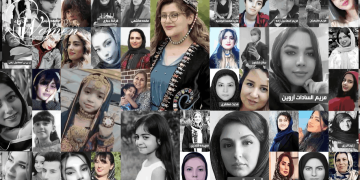
July 2026 Report: The clerical regime’s killing machine continued to take human lives throughout July, sending at least three women, all of whom were mothers, to the gallows. At the same time, terrified of women’s vanguard role in the uprisings, the regime’s criminal judges issued death sentences for several women who rose up to overthrow this religious fascism.
In July, at least 72 prisoners, including 3 women, were executed. Among those executed were 7 political prisoners:
- Mehdi Khankhi, 26, a law graduate, executed on charges of membership in the People’s Mojahedin Organization of Iran (PMOI/MEK) and active participation in the January 2026 uprising.
- Erfan Esfandiari, 18, executed on charges of participating in the January 2026 uprising.
- Gol Mohammad Mohammadi, 23, executed on charges of participating in the January 2026 uprising.
- Aref Khoshkar, 28, executed on charges of participating in the January 2026 uprising.
- Mohammad Amin Dehaghani, executed on charges of participating in the January 2026 uprising.
- Abolfazl Sepahi Badjani, 24, executed in public on charges of participating in the January 2026 uprising.
- Amirhossein Safari Hosseinabadi, 28, executed in public on charges of participating in the January 2026 uprising.
In total, so far in the year 2026, 980 people—including 37 political prisoners, 18 women, and one juvenile offender—have been executed. Among these executions, 3 were carried out in public.
The total number of executions during the presidency of Pezeshkian has reached 3,959 so far. The number of women executed during the first seven months of the year 2026 has reached 18.
The successive executions of rebellious young protesters are yet another sign of the clerical anti-human regime’s terror of the eruption of another uprising that, in synergy with the organized leadership of the Resistance Units, will put an end to its rule of oppression and tyranny.
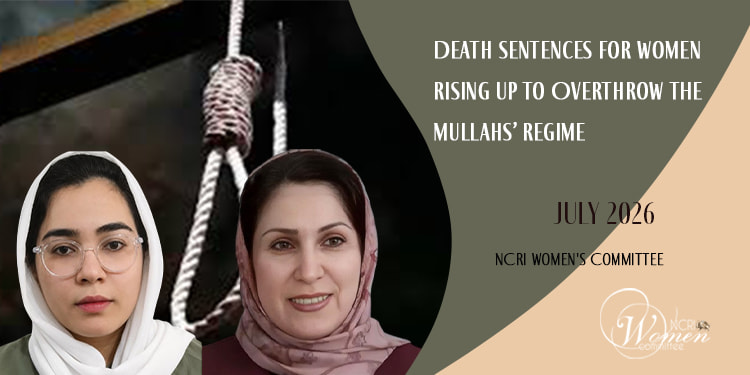
Death Sentences Issued for Women Who Rose Up to Overthrow the Regime
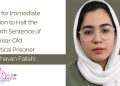
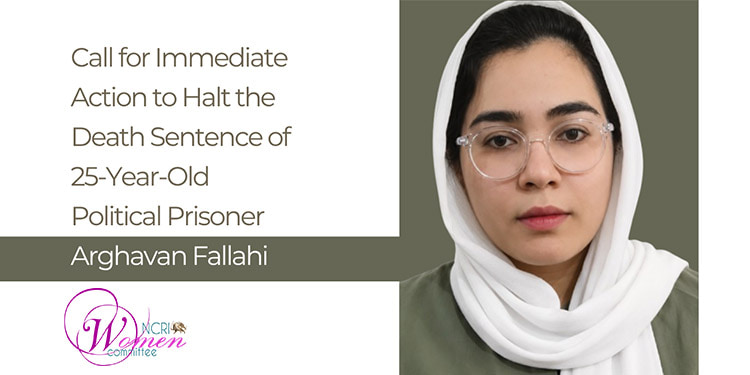
- Handing Down and Upholding the Death Sentence for Arghavan Fallahi: The latest death sentence for political prisoner Arghavan Fallahi, 25, was handed down by the Tehran Revolutionary Court on July 1, 2026, for supporting the People’s Mojahedin Organization of Iran (PMOI/MEK). Arghavan Fallahi was arrested for the second time on January 25, 2025, in the city of Parand and subsequently transferred to Ward 241 of Evin Prison. She spent about five months in solitary confinement, during which she was subjected to physical and psychological interrogation and torture. Following the bombing and evacuation of Evin Prison on July 14, 2025, she was transferred to solitary confinement in Fashafouyeh Prison (Greater Tehran Penitentiary). She is currently incarcerated in the women’s ward of Evin Prison. Arghavan Fallahi had previously been arrested in Shiraz on November 4, 2022, along with her brother and father, and after enduring one year and four months in prison, was finally released on bail in March 2024.
- Handing Down the Death Sentence for Mahnaz Chardouli: The Tehran Revolutionary Court sentenced Mahnaz Chardouli, a detainee of the January 2026 uprising, to death. The trial took place in early July 2026. In addition to the death penalty, Mahnaz Chardouli was also sentenced to 10 years in prison. Her fiancé, Mehdi Nazer, was similarly sentenced to death, and his sister, Atefeh Nazer, received a 10-year prison sentence. The regime’s judiciary cited the charges against Mahnaz Chardouli as attacking a mosque with Molotov cocktails, attending illegal gatherings, and “assembly and collusion” during the January 2026 uprising. These three protesters were arrested on January 11, 2026—a day when no reports whatsoever of a mosque being set on fire in that area had been recorded. Mahnaz Chardouli’s family is currently under severe pressure from the regime to remain silent and withhold any information regarding the legal proceedings and the sentences handed down.
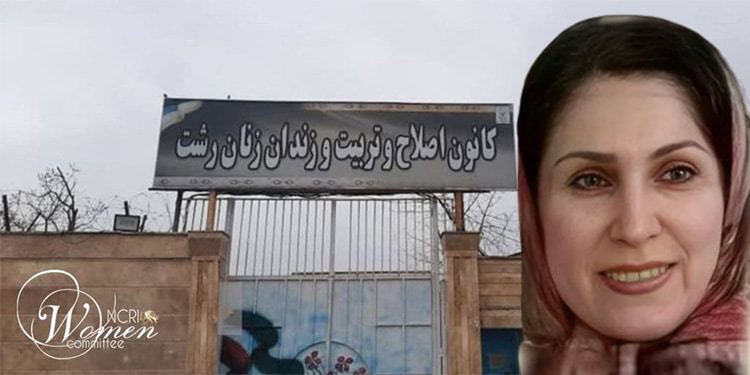
- Upholding the Death Sentence for Zahra Tabari: Last month, the Rasht Revolutionary Court also upheld the death sentence of Zahra Tabari, a political prisoner charged with “armed rebellion” (baghi) through membership and activities in the People’s Mojahedin Organization of Iran (PMOI/MEK). Zahra Tabari, 68, is an electrical engineer holding a master’s degree in sustainable energy from the University of Borås, Sweden. She was initially arrested in June 2022 and sentenced to 18 months in prison. Security forces raided her home in Rasht again in April 2025 and arrested her. Zahra Tabari was first tried in November 2025 at the First Branch of the Rasht Revolutionary Court and sentenced to death. The trial lasted a mere 10 minutes, conducted via video conference and without the presence of her chosen defense counsel.
- Previous Death Sentences for Women Protesters: Previously, Maryam Hodavand, 45 and a mother of two, who was arrested during the January 2026 uprising, was sentenced to death in late April. Additionally, Bita Hemmati, another protester arrested during the January 2026 uprising, was sentenced to death in mid-April.
Three Mothers Sent to the Gallows in July
The mullahs’ regime holds the highest per capita execution rate in the world and maintains the record for executing women.
The women executed by the mullahs’ regime are predominantly victims themselves of domestic violence and discriminatory family laws, with many committing homicide in self-defense. Women executed for drug-related offenses are frequently forced into this cycle by male family members to transport narcotics, while the primary drug trafficking networks and cartels are controlled by gangs affiliated with the Revolutionary Guard Corps (IRGC), who pocket massive profits and enjoy complete impunity.
The names of the women executed by the mullahs’ regime in July are as follows:
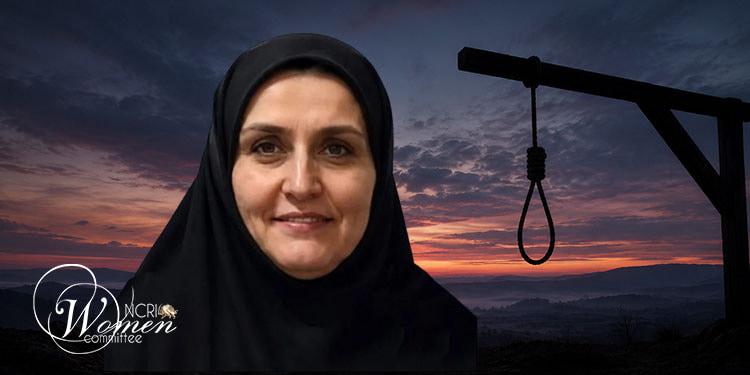
- Setayesh Mohammadpour, 51, was executed on July 12, 2026, in Adel Abad Prison, Shiraz. Setayesh Mohammadpour was a mother of two children, aged 8 and 11. She had been sentenced to death about three years ago on drug-related charges.
- Parvin Chardoli, 39, was hanged on July 15, 2026, in Qezel Hesar Prison, Karaj. Parvin was a mother of several children. She was arrested on December 15, 2019, on charges of murdering her stepson. The court was aware that Parvin had not committed the murder, but because she refused to reveal the name of the actual perpetrator, she was sentenced to death, and the sentence was ultimately carried out.
- Azam Gerami, 58, was hanged on July 18, 2026, in the Central Prison of Yasuj. She had been sentenced to death 8 years prior on murder charges. Azam was a mother of 3 children before the regime’s prison guards sent her to the gallows.
Flogging Sentences for Protesting Women in the January 2026 Uprising
Throughout July, in addition to handing down death sentences and lengthy prison terms for female political and protesting prisoners, the mullahs’ regime issued flogging sentences for two female prisoners named Neda Dadehjani and Setayesh Sarabi. These two protesting women were each sentenced to one year in prison, 31 lashes, and two years of internal exile to the city of Nikshahr.
Neda Dadehjani, a theater artist, had previously won an award at the Regional Disabilities Theater Festival.
Resistance in Prison and Women’s Active Participation in the “No to Executions Tuesdays” Campaign
In July, the “No to Executions Tuesdays” campaign marked its 131st week of hunger strikes against the regime’s widespread use of the death penalty. To date, 59 prisons across Iran have joined this campaign.
A significant portion of the striking prisoners consists of female political prisoners serving their sentences in the women’s ward of Evin Prison, Qarchak Prison of Varamin, the women’s ward of Sepidar Prison in Ahvaz, the women’s ward of Adel Abad Prison in Shiraz, the women’s ward of Zahedan Prison, the women’s ward of Yazd Prison, and the women’s ward of Rasht Prison.
Simultaneously with the 130th and 131st weeks of the “No to Executions Tuesdays” campaign, prisoners in Unit 2 of Qezel Hesar Prison—home to more than 1,500 prisoners facing death row—went on a hunger strike. On the seventh day of this strike, over 500 family members of the prisoners gathered in front of Qezel Hesar Prison, demanding the annulment of the death sentences. The prison guards stationed at the facility attempted to prevent the protest gathering, but the families—many of whom were the mothers, sisters, and wives of the striking prisoners—continued their protest by chanting defiant slogans.
Families of death-row prisoners outside Qezel Hesar Prison
Finally, after 16 days of a hunger strike, the prisoners of Unit 2 of Qezel Hesar Prison achieved victory through their resilience and steadfast stance on their righteous demand.
On Tuesday, July 28, a delegation sent by the regime’s judiciary and prison system, in a meeting with prisoner representatives, promised that pending the amendment of the anti-narcotics law, the execution of death sentences in Unit 2 of Qezel Hesar Prison would be suspended, and six death-row prisoners who had been transferred to solitary confinement for execution would be returned to the general wards.
While congratulating the striking prisoners, the Iranian Resistance once again calls upon the international community to support the prisoners’ demand for a halt to executions and to take immediate action to save the lives of death-row inmates in various prisons across Iran.
International Call to Condemn Executions in Iran
Executions are the primary tool of repression and a means to instill terror in a society that, due to intense public discontent, exists in an explosive state.
Since the 1980s, the anti-human mullahs’ regime has proven by executing tens of thousands of dissenting and protesting men and women that it will stop at nothing to preserve its rule. The foundations of the clerics’ sovereignty rest upon an ocean of blood belonging to Iran’s finest children. Hundreds of prisons across Iran are bursting at the seams with overcrowded populations, and inmates endure catastrophic conditions in every respect.
After the world has witnessed several consecutive uprisings in recent years spearheaded by the courageous women of Iran, leaving no doubt that the Iranian people reject this regime, the time has come for the international community to make any dealings and diplomatic engagement with the Iranian regime conditional upon an immediate halt to executions and the horrific violations of human rights in Iran.
The international community must pressure the Iranian regime and compel it to grant the UN Special Rapporteur on Human Rights in Iran and the international fact-finding mission access to Iranian prisons and permission to meet with political prisoners.
Furthermore, the United Nations, member states, and international human rights organizations must take immediate and effective action to secure the annulment of death sentences for all inmates on death row in Iran, particularly female political prisoners.