Monday, June 29, 2026
  • English
  • Français
  • فارسی
  • عربى
PODCASTS
NCRI Women Committee Women Resistance Freedom
  • Home
  • NEWS
    • Women’s News
    • Articles
    • Statements
  • PUBLICATIONS
    • Monthlies
    • Documents
    • Reference Library
  • ABOUT US
    • The NCRI Women’s Committee
    • Gender Equality
    • Women’s Platform
  • MARYAM RAJAVI
    • Maryam Rajavi
    • Maryam Rajavi Speeches
    • The Plan on Women’s Rights and Freedoms
    • Ten-Point Plan for the future of Iran
  • VANGUARDS
    • The Fallen for Freedom
    • Heroines in Chain
    • Women of Iranian Resistance
    • Famous Women
    • Women in History
  • EVENTS
    • IWD Conferences
    • Activities
    • IWD Speeches
    • Solidarity
  • VIDEO
    • Videos
    • IWD Videos
  • PODCAST
  • DONATE
  • CONTACT US
No Result
View All Result
NCRI Women Committee Women Resistance Freedom
  • Home
  • NEWS
    • Women’s News
    • Articles
    • Statements
  • PUBLICATIONS
    • Monthlies
    • Documents
    • Reference Library
  • ABOUT US
    • The NCRI Women’s Committee
    • Gender Equality
    • Women’s Platform
  • MARYAM RAJAVI
    • Maryam Rajavi
    • Maryam Rajavi Speeches
    • The Plan on Women’s Rights and Freedoms
    • Ten-Point Plan for the future of Iran
  • VANGUARDS
    • The Fallen for Freedom
    • Heroines in Chain
    • Women of Iranian Resistance
    • Famous Women
    • Women in History
  • EVENTS
    • IWD Conferences
    • Activities
    • IWD Speeches
    • Solidarity
  • VIDEO
    • Videos
    • IWD Videos
  • PODCAST
  • DONATE
  • CONTACT US
No Result
View All Result
NCRI Women Committee
No Result
View All Result
Home Heroines in Chain
mass execution of PMOI prisoners Simin Hozhabr, Simin Hojabr Unbroken in the Face of Torture

Simin Hozhabr, Unbroken in the Face of Torture

The Mass Execution of PMOI Prisoners in Evin Prison

June 29, 2026
in Heroines in Chain

Prison Memoirs of Azam Haj Heydari from the book The Price of Being Human — Part Eleven

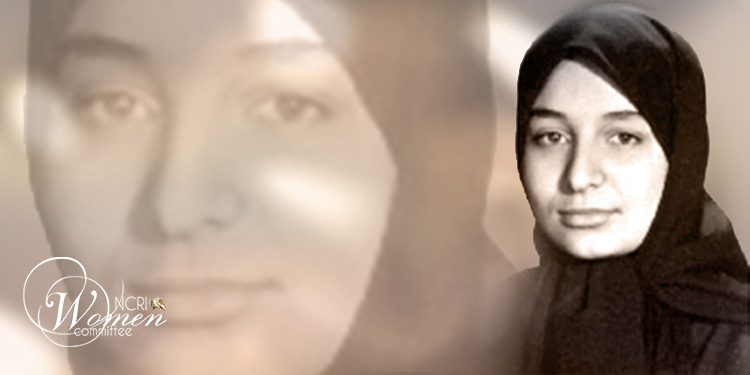
In this installment of the prison memoirs of Azam Haj Heydari, published in The Price of Being Human, she recounts the mass execution of PMOI prisoners in Evin Prison following the demonstrations on September 27, 1981, and remembers a resilient teenage girl, Simin Hojabr, who endured torture with an unwavering smile.

At the time, Azam was a young teacher in her early twenties who had chosen the path of resistance. She spent five years in the Judiciary’s temporary detention center, Evin, Qezel Hesar, and Gohardasht prisons, where she endured savage torture at the hands of Khomeini’s Guards.

Late September 1981 Inside Evin

One day my name was called for interrogation, and I was taken to the corridor of the interrogation section. But no interrogation ever took place.

The corridor was packed with prisoners sitting shoulder to shoulder. Yet every few minutes they would disappear. I could not understand what was happening or where they were being taken.

Determined to find out, I deliberately moved around whenever groups were returned to the wards so that I would not be sent back myself.

Several times an elderly man who escorted prisoners to and from the wards walked through the corridor calling my name. I pretended not to hear him and spent the night there.

At one point the corridor filled up again. I turned to one of the young prisoners beside me.

“Who are you?” I asked.

“What difference does it make?” she replied.

“What’s your name?”

“I was just arrested.”

“For what?”

“For taking part in the September 27th demonstration.”

“Were all the others arrested for the same reason?”

She looked at me curiously.

“Who are you?”

I introduced myself and told her I was from Ward 240.

“I really want to know where these people are being taken,” I said.

She answered:

“I’ll tell you only this,” she said. “Every one of them is being taken to be executed. They will go to join Hanif and the martyred founders of the PMOI, shouting, ‘Long live Rajavi! Long live freedom!’”

A few minutes later my interrogator, Esmail, noticed that I had been speaking with the prisoners. Threatening me in the coarse manner typical of Khomeini’s thugs, he sneered:

“In a few minutes all your friends will be singing and celebrating their way to hell.”

I froze.

So those groups of fifteen or twenty prisoners who had been arriving and disappearing all night were being taken for execution?

Before I could process it, the interrogator shouted:

“Haji! Come take this hypocrite away. It’s not her turn yet!”

Then he turned to me and said mockingly:

“Now do you understand? Next time just ask me and I’ll tell you.”

As that cursed guard led me away, I counted the prisoners standing in line through the edge of my blindfold.

There were forty-five of them.

My legs were trembling and my heart was pounding.

I kept thinking:

How can they execute them without even interrogating them? Without even finding out who they really are? Many of them were arrested simply because they looked suspicious while walking down the street.

When I finally returned to the ward, many of the women were still awake.

“Where have you been?” they asked. “Why were you gone so long? Did something happen?”

I did not feel like talking, but they insisted.

“There was no interrogation,” I said. “I managed to trick them.”

Everyone laughed.

Yet they were puzzled that I was not laughing with them.

Simin Hojabr looked at me and asked:

“Azam, what’s wrong? Why aren’t you smiling?”

So, I told them what I had witnessed.

A few hours after midnight I lay down, but sleep would not come.

I waited.

Then suddenly the thunder of gunfire shattered the silence of Evin Prison.

The sound stopped my breath.

A moment later came the individual shots.

One. Two. Three. Four…

I counted past fifty.

Then silence returned.

I turned around and saw that everyone else was awake as well, lying silently in their places.

I was still in shock when I heard Simin’s gentle voice.

She had begun singing a Lori folk song.

At first, I thought she was singing from her own place. When I turned around, I saw that she had quietly moved behind me and was lying there.

When she finished the song, she said:

“Azam, I wanted to sing that only for you.”

“And for those who just left,” she added. “I’m happy for them.”

I stared at her.

“Happy? Why?”

“Because I’ll be joining them soon.”

The words shook me.

“Simin, couldn’t you have said anything else?”

But Simin spoke seriously, while still wearing the warm smile that never seemed to leave her face.

Then she got up and returned to her own place.

Inside me, however, a storm was raging.

We never cried in front of the prison guards, the interrogators, or their collaborators inside the prison.

But that night I pulled the blanket over my head and wept silently.

I cried for those young prisoners who had just been executed.

And I cried for Simin, because I knew that she, too, would soon be executed.

The Girl Who Never Stopped Smiling

Simin Hojabr[1] was a beautiful young woman with olive skin who looked no older than sixteen or seventeen. She had a warm and captivating voice.

Her family came from Lorestan, though she had grown up in Tehran.

She had been arrested for supporting the PMOI.

There was something extraordinary about her spirit.

It was as if she simply did not understand the meaning of fear. She was fearless.

Every day Simin was taken away for interrogation. Every day, without exception, she was whipped. The prisoners called it her daily “ration.”

Yet whenever she returned to the ward, the moment she stepped through the door she would begin singing Lori songs with her usual bright smile.

You would have thought nothing had happened to her.

One day I said:

“Simin, when you come back singing and smiling like this, they’ll only torture you more. At least stay quiet for a few minutes.”

She burst out laughing.

“Either I’ll break them,” she said, “or they’ll break me.”

Then she grinned.

“But they’re mistaken if they think it’ll be me. Whether they hit me with a hundred cables or a thousand, I’ll keep singing.”

One day I was waiting in the interrogation section when another prisoner from a different ward, whom I knew, asked:

“Azam, is Simin in your ward?”

“Yes.”

“She’s incredible,” the woman said.

“One day she had been whipped for two straight hours. Later they sat her next to me before taking her back to the ward. She was laughing.”

“She asked me, ‘Did you get your ration too?’”

“What ration?” I asked.

“She laughed and said, ‘I get one every day, just like food. First, I get that, then I go back to the ward and eat my meal.’”

Just then a guard came over.

“Girl,” he said to Simin, “don’t you ever get tired of being beaten?”

Then he hauled her away.

Everyone in the interrogation section knew her. Wherever she sat, she immediately started talking to people, asking questions, gathering news, and exchanging information. With her vibrant spirit, she drew everyone to her. All the prisoners loved her.

Her older brother, Sirous Hojabr, had already been tortured to death in a prison in Sari.

Some prisoners had managed to bring one of his sweaters to Simin. She wore it constantly. She would kiss it and say:

“I’m proud of my brother. He kept his promise. I will do the same. I’ve already made my decision.”

The regime did not send Simin directly from Ward 240 to her execution. Instead, they transferred her to Ward 311 and subjected her to severe torture for an entire month.

By then, information was no longer the issue. The interrogators were furious that they had failed to break the will of a teenage girl. But Simin defeated them there, as well. Like a lion, she roared until her final moment and secured her place among the PMOI’s fallen heroes.

One morning, after we had heard the dawn volley of executions, the prison radio announced the names of those who had been put to death. Simin Hojabr’s name was among them.

The radio was only broadcast over the ward loudspeakers on days when executions were announced. Once the names had been read, it was switched off again.

The authorities foolishly believed that announcing the names of executed prisoners would break our spirit. Instead, every time we heard the name of a PMOI man or woman who had been executed, our own resolve only grew stronger.

That day, after Simin’s name was announced, the women in the ward decided to hold a memorial for her. We prayed and distributed halva in her memory.

The image of brave, steadfast, humble, and kind Simin remains so vivid in my mind that it feels as though she is sitting beside me even now.

Recently, while reviewing documents collected by the Martyrs Research Unit, I came across accounts from other former prisoners describing Simin’s final days.

One wrote that Simin, a spirited student at Hashtroodi High School, never lost her smile, no matter how difficult the circumstances became.

She was arrested in August 1981 while distributing material opposing the presidential election of Mohammad-Ali Rajai.

Although she possessed a great deal of information, she never revealed a single word. On the night before her execution, she was placed in a cell next to theirs.

In a loud voice she told a mother that she expected to be executed that night or the following one, and asked that if the woman were ever released, she should take Simin’s shirt to her mother as a keepsake.

Her entire body was covered with wounds from torture. Even her thumbnails had fallen off.

She would say:

“Look what they did to my feet, my hands, my face, and my body. Yet I still worry that I may not have done enough.”

Another former prisoner, Mrs. Javaherian, who spent Simin’s final night in the same cell, recalled that Simin’s body was covered in injuries.

On the afternoon before her execution, she began reciting Ziyarat Ashura (a Shi’a prayer honoring Imam Hussein’s martyrdom at Karbala and the values of resistance and sacrifice.) and later sang the song Mara Bebous (“Kiss Me Goodbye”) beautifully.

She laughed and talked so much that the other prisoners watched her in amazement.

When they finally called her name, she was ready.

Smiling and cheerful, she said:

“Goodbye. Bye-bye!”


[1] Simin Hojabr was 20 years old when she was executed in Evin Prison on December 21, 1981.
ShareTweetPinShareSendShare

Related Posts

The Unbroken Smile: How a Former Airline Executive Became the Vanguard of the Iranian Resistance

June 28, 2026
The Unbroken Smile: How Sara Mokhtar, a Former Airline Executive Became the Vanguard of the Iranian Resistance

Kobra Mokhtar, known to her comrades Sara Mokhtar, lived a life defined by an uncompromising pursuit of personal liberation and political responsibility. Born in Tehran in 1956, Sara...

Read moreDetails

Iran: Students Hold Protest Rallies in Tehran and 20 Other Cities

June 27, 2026
Iran: Students Hold Protest Rallies in Tehran and 20 Other Cities

Protest rallies took place in Tehran and twenty other cities on Saturday, June 27, 2026, as groups of school and university students demonstrated over educational grievances and policies....

Read moreDetails

Iran: Regime Continues Arbitrary Arrests and Imprisonments

June 27, 2026
Iran: Regime Continues Arbitrary Arrests and Imprisonments

Arbitrary arrests, prison sentences, and serious criminal charges against women continue under Iran's clerical regime. In the latest cases, Faezeh Salehabadi has been sentenced to prison, Hanieh Sarborzi...

Read moreDetails

Iran: Teachers’ Rights Activist Sentenced to a Year in Prison

June 24, 2026
Teachers' rights activist Kowkab Badaghi and Her Husband Brutalized in Front of Their Young Child

Kowkab Badaghi Pegah, a history teacher, a teachers’ rights activist, and a prominent member of the Khuzestan Teachers' Trade Association, has been sentenced to one year of imprisonment...

Read moreDetails

Day 2 of Free Iran 2026: Broad Support for 10-point plan and Criticism of Western Appeasement

June 23, 2026
Day 2 of Free Iran 2026: Broad Support for 10-point plan and Criticism of Western Appeasement

On Sunday, June 21, 2026, the second day of the “Free Iran 2026 – Supporting the Democratic Alternative” conference was held at the headquarters of the National Council...

Read moreDetails

Documents

Crushed by Design: Structural Crises and Inequitable Policies Push Female-Headed Households to the Edge

Crushed by Design: Structural Crises and Inequitable Policies Push Female-Headed Households to the Edge

May 18, 2026

Introduction Life for the Iranian people under the religious dictatorship is fraught with hardship and peril from every perspective. Whether...

A Report to CSW70: Gender-Based Discrimination Under Iranian Law

A Report to CSW70: Gender-Based Discrimination Under Iranian Law

March 8, 2026

Structural Inequality and State-Sanctioned Oppression of Women Gender-Based Discrimination Under Iranian Law” is the title of the NCRI Women’s Committee’s...

Annual Report 2026: From Protests, to Uprising, and the Role of Iranian Women

Annual Report 2026: From Protests, to Uprising, and the Role of Iranian Women

March 3, 2026

On the eve of International Women’s Day 2026, the NCRI Women’s Committee presents its Annual Report 2026, offering a recap...

Monthlies

May 2026 Report: The Enduring Resistance of Iranian Women
Monthlies

May 2026 Report: The Enduring Resistance of Iranian Women

May 31, 2026
April 2026 Report: Mass Arrests of Women: Targeted Repression in Time of Crisis
Monthlies

April 2026 Report: Mass Arrests of Women in Iran

April 30, 2026
March 2026 Report: How Iranian Women Are Shaping the Resistance
Monthlies

March 2026 Report: Courage Under Fire

April 3, 2026
January 2026 Report: Women at the Core of the Uprising
Monthlies

January 2026 Report: Women at the Core of the Uprising

January 31, 2026

Articles

Day 2 of Free Iran 2026: Broad Support for 10-point plan and Criticism of Western Appeasement

Day 2 of Free Iran 2026: Broad Support for 10-point plan and Criticism of Western Appeasement

June 23, 2026

On Sunday, June 21, 2026, the second day of the “Free Iran 2026 – Supporting the Democratic Alternative” conference was...

45 Years of Resistance for a Free Iran; A Future Built on a Democratic Republic

45 Years of Resistance for a Free Iran; A Future Built on a Democratic Republic

June 21, 2026

Free Iran 2026 Summit Brings Together International Political Figures to Emphasize thePath Toward a Democratic Iran On Saturday, June 20,...

Iran's Water Crisis: Energy Imbalance, Popular Protests, and the Role of Women- Part 2

Iran’s Escalating Water Crisis: Energy Imbalance, Popular Protests, and the Role of Women

June 19, 2026

The water crisis in Iran has transcended a mere natural challenge, evolving into a human, environmental, and economic catastrophe. While...

The Fallen for Freedom

The Unbroken Smile: How Sara Mokhtar, a Former Airline Executive Became the Vanguard of the Iranian Resistance
The Fallen for Freedom

The Unbroken Smile: How a Former Airline Executive Became the Vanguard of the Iranian Resistance

June 28, 2026
Shilan Salehi: Iran Regime Extorted 150 Million Tomans for Return of Her Body
The Fallen for Freedom

Shilan Salehi: Iran Regime Extorted 150 Million Tomans for Return of Her Body

June 13, 2026
Parnia Shad Bejarkenari: 23-Year-Old Woman Killed for Freedom in Iran
The Fallen for Freedom

Parnia Shad Bejarkenari: 23-Year-Old Woman Killed for Freedom in Iran

June 13, 2026
Nasim Pouraghaei was killed on the evening of January 8, 2026
The Fallen for Freedom

Nasim Pouraghaei

June 6, 2026

ABOUT US

NCRI Women Committee

We work extensively with Iranian women outside the country and maintain a permanent contact with women inside Iran. The Women’s Committee is actively involved with many women’s rights organizations and NGO’s and the Iranian diaspora.
The committee is a major source of much of the information received from inside Iran with regards to women. Attending UN Human Rights Council meetings and other international or regional conferences on women’s issues and engaging in a relentless battle against the Iranian regime’s misogyny are part of the activities of members and associates of the committee.

CATEGORIES

  • Activities
  • Articles
  • Documents
  • Famous Women
  • Heroines in Chain
  • IWD Conferences
  • IWD Speeches
  • IWD Videos
  • Maryam Rajavi
  • Maryam Rajavi Speeches
  • Monthlies
  • Podcast
  • Reference Library
  • Solidarity
  • Statements
  • The Fallen for Freedom
  • Videos
  • Women in History
  • Women in Leadership
  • Women of Iranian Resistance
  • Women's News

BROWSE BY TAG

Child marriage coronavirus education execution forced hijab Gender Gap Generation Equality Honor killings Iran Teachers Maryam Akbari Monfared Nurses Plan on Women's Rights and Freedoms Poverty Prisoners Protests rural women Saba Kord Afshari The girl child Violence against women Women's Leadership Women Heads of Household Zeinab Jalalian

The copyright of all the material published on this website has been registered under © 2016 the Women’s Committee of the National Council of Resistance of Iran. To obtain permission to copy, redistribute or publish the material published on this website, you should write to the NCRI Women’s Committee. Please include the link of the original article on our website, women.ncr-iran.org.

Welcome Back!

Login to your account below

Forgotten Password?

Retrieve your password

Please enter your username or email address to reset your password.

Log In

Add New Playlist

No Result
View All Result
  • Home
  • News
    • Women’s News
    • Articles
    • Statements
  • Publications
    • Monthlies
    • Documents
    • Reference Library
  • About Us
    • The NCRI Women’s Committee
    • Gender Equality
    • Women’s Platform
  • Maryam Rajavi
    • Maryam Rajavi
    • Maryam Rajavi Speeches
    • Ten Point Plan for Iran
    • The Plan on Women’s Rights and Freedoms
  • Vanguards
    • The Fallen for Freedom
    • Heroines in Chain
    • Women of Iranian Resistance
    • Famous Women
    • Women in History
  • Events
    • IWD Conferences
    • Activities
    • IWD Speeches
    • Solidarity
  • Video
    • Videos
    • IWD Videos
  • Podcast
  • DONATE
  • Contact us
  • فارسی
  • عربی
  • Français

The copyright of all the material published on this website has been registered under © 2016 the Women’s Committee of the National Council of Resistance of Iran. To obtain permission to copy, redistribute or publish the material published on this website, you should write to the NCRI Women’s Committee. Please include the link of the original article on our website, women.ncr-iran.org.