
Wednesday, May 13, 2026
  • English
  • Français
  • فارسی
  • عربى
PODCASTS
NCRI Women Committee Women Resistance Freedom
  • Home
  • NEWS
    • Women’s News
    • Articles
    • Statements
  • PUBLICATIONS
    • Monthlies
    • Documents
    • Reference Library
  • ABOUT US
    • The NCRI Women’s Committee
    • Gender Equality
    • Women’s Platform
  • MARYAM RAJAVI
    • Maryam Rajavi
    • Maryam Rajavi Speeches
    • The Plan on Women’s Rights and Freedoms
    • Ten-Point Plan for the future of Iran
  • VANGUARDS
    • The Fallen for Freedom
    • Heroines in Chain
    • Women of Iranian Resistance
    • Famous Women
    • Women in History
  • EVENTS
    • IWD Conferences
    • Activities
    • IWD Speeches
    • Solidarity
  • VIDEO
    • Videos
    • IWD Videos
  • PODCAST
  • DONATE
  • CONTACT US
No Result
View All Result
NCRI Women Committee Women Resistance Freedom
  • Home
  • NEWS
    • Women’s News
    • Articles
    • Statements
  • PUBLICATIONS
    • Monthlies
    • Documents
    • Reference Library
  • ABOUT US
    • The NCRI Women’s Committee
    • Gender Equality
    • Women’s Platform
  • MARYAM RAJAVI
    • Maryam Rajavi
    • Maryam Rajavi Speeches
    • The Plan on Women’s Rights and Freedoms
    • Ten-Point Plan for the future of Iran
  • VANGUARDS
    • The Fallen for Freedom
    • Heroines in Chain
    • Women of Iranian Resistance
    • Famous Women
    • Women in History
  • EVENTS
    • IWD Conferences
    • Activities
    • IWD Speeches
    • Solidarity
  • VIDEO
    • Videos
    • IWD Videos
  • PODCAST
  • DONATE
  • CONTACT US
No Result
View All Result
NCRI Women Committee
No Result
View All Result
Home Heroines in Chain
One Night in Evin Prison: We Counted 60 Execution Shots

A Young Life Taken for Loving Freedom

May 13, 2026
in Heroines in Chain

Prison Memoirs of Azam Haj Heydari from the Book The Price of Being Human — Part Six

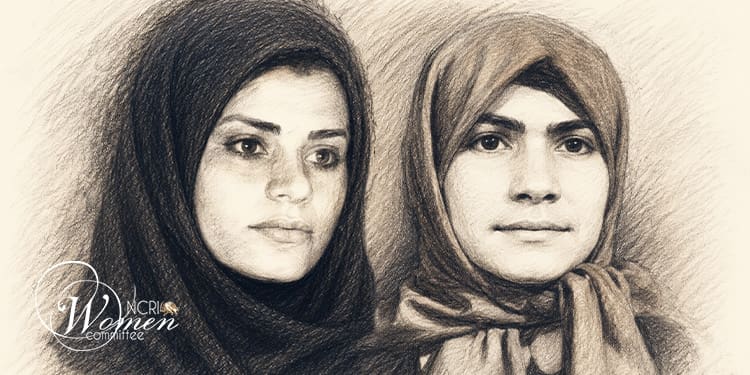
In this installment of the prison memoirs of Azam Haj Heydari, published in The Price of Being Human, she recounts how she met Atiyeh Moharrer Khansari and shares her memories of her and of Dr. Masoumeh Karimian.

At the time, Azam was a young schoolteacher in her early twenties who had joined the struggle for freedom. She spent five years imprisoned in the Judiciary Detention Center, Evin Prison, Qezel Hesar Prison, and Gohardasht Prison, where she endured brutal torture at the hands of the Revolutionary Guards.

A Soul Too Beautiful for Their Prison

It was in September 1981, while I was being held in the old Ward 240 of Evin Prison. I had only recently arrived and still did not know many of the women there.

Suddenly the ward door opened and a tall girl of sixteen or seventeen entered. She had a strikingly beautiful and gentle face, yet there were also an unmistakable dignity and determination about her. Despite her youth, her bearing was so poised and self-assured that everyone was instinctively drawn to her.

I watched her for a few moments, then stood up and introduced myself.

“What is your name?” I asked.

With a warm smile, she answered softly, “Atiyeh Moharrer Khansari.”

“Is Tahereh your sister?”

“Yes.”

I remembered having seen her once or twice with her sister, Tahereh Moharrer Khansari, though at the time she had seemed much younger.

“Why were you arrested?” I asked.

“For loving freedom,” she replied.

I laughed and said, “That is something you and I have in common.”

She gestured toward the other women in the ward and said, “It is what all of us have in common.”

I was struck by her quick wit.

“How were you arrested?” I asked.

She sighed and said, “By my father. When I came home, he handed me over to the Guards.”

I said, “Then we share another thing in common—and a bitter one at that. My own brother was the one who turned me in.”

That was how my friendship with Atiyeh began.

I felt deeply connected to her—not only because of our shared experience of betrayal by our families, but because of her extraordinary character and inner strength. Atiyeh was truly exceptional. Her kindness, compassion, and selflessness made her, despite her young age, a source of support for many of the prisoners.

The ward where we were held had only three rooms. One, near the entrance, was reserved for monarchists, whom the Guards did not allow to interact with us. The remaining political prisoners—about 150 women in all—were crammed into the other two rooms.

Under such conditions, every aspect of daily life—from washing our faces to using the toilet to finding a place to sleep—became a challenge. Situations like these reveal a person’s true character. They demand the ability to put another’s needs before one’s own.

That was exactly what made the calm, patient, and steadfast character of this seventeen-year-old girl so remarkable. At the same time, her fierce anger towards the Guards, collaborators, and informers, and her unwavering commitment to the struggle, were awe-inspiring.

Atiyeh Moharrer Khansari, a Fighter from an Affluent Family

Atiyeh cared for her fellow prisoners like a loving mother. She met both their emotional and practical needs. She helped those who were elderly or physically weak, often setting aside her own needs to care for others. Those who felt lonely found comfort in her embrace and affection. In every way, she seemed far older and wiser than her years.

When prisoners from the Judiciary Prison, including me, were transferred to Evin, the horrific sanitary conditions there brought lice and skin diseases into the prison.

Atiyeh patiently helped the women who were suffering. She would say, “It gives me joy to do something for my friends.”

Sometimes she would spend an entire morning picking lice, one by one, from the hair of other prisoners—lice that were themselves a product of the regime’s prison conditions. As she worked, she would kiss their heads and say, “These are the sweetest moments of my life.”

She loved the women around her with all her heart.

Atiyeh would be taken to interrogation and return with astonishing calm. Like a seasoned fighter, she never complained about what had happened to her. On the contrary, she seemed to come back even more vibrant and full of life.

There was a serenity about her that gave me strength whenever I looked at her face. Her dignity and courage filled me with pride and joy.

She was very much like her sister, Tahereh Moharrer Khansari, who had been wounded when the Guards opened fire on her in the streets during the first weeks after June 20, 1981, and who later died under torture in Evin Prison.

Atiyeh embodied discipline, tenderness, and love for others. She was a center of compassion and strength.

Some realities are almost impossible to accept.

Atiyeh’s execution[1] was one of them. All of us in that ward searched for reasons not to believe it.

It couldn’t be true.

She was so young. She had done nothing. There was nothing in her case file. Only a few days had passed since her arrest.

But at midnight on September 15, 1981, they called Atiyeh’s name for interrogation.

My heart nearly stopped.

What if they were taking her to be executed?

In an instant, the ward fell silent, though everyone tried to convince themselves it was only another interrogation.

From the moment she walked out, my heart beat wildly. I stared at the door, leaping to my feet each time it opened.

I counted every second and prayed that the door would open and Atiyeh would appear in the doorway.

But she did not return.

At four in the morning, the deafening sound of machine-gun fire shattered the silence of Evin. It felt as though the bullets were being fired directly into my heart.

The entire ward was plunged into mourning.

We did not know how many had been taken before the firing squads that night.

Silence filled the air.

My heart seemed to rise into my throat.

We waited for the final shots.

When they began, each of us counted inwardly, tears caught in our throats.

One… two… three…

The single shots continued.

That night they reached sixty.

Then silence returned.

Was one of those bullets fired into the head of my beloved Atiyeh?

I cried out inwardly:

God, what was her crime?

Was it simply that she loved freedom?

For those bloodthirsty men, that alone was enough.

I remembered what Atiyeh had said.

Yes, the common bond among those sixty and among the hundreds executed on other nights was that they loved freedom—so deeply that they were willing to pay for it with their lives.

Then, from somewhere in the ward, the crushing silence was broken by the anthem of the Mojahedin.

At once, everyone joined in:

Mojahed! Mojahed!
Mojahed, by the command of your God.
Mojahed, remain faithful to your pledge.
You are the focus of the people’s hopes,
You are the flame lighting their tomorrow…

When the song ended, we embraced one another, kissed, and swallowed our tears.

But I remained awake until dawn.

I lay in my place, unable to sleep. A faint hope still flickered inside me that Atiyeh might somehow return.

Suddenly I felt a hand on my shoulder.

It was Shouri,[2] who slept beside me.

“Azam, are you awake?” she whispered.

“I’m waiting for Atiyeh,” I said. “She still hasn’t come back.”

Dr. Massoumeh Karimian massacred in 1988
Dr. Massoumeh Karimian

Shouri and I stayed awake until six in the morning, our eyes fixed on the door.

But there was no sign of Atiyeh.

Then, suddenly, the door opened.

For a moment I thought it was her.

I jumped up and ran toward the entrance in joy.

But it was not Atiyeh.

It was her niece, who had been taken away with her.

At that moment I knew with certainty that Atiyeh had been one of the sixty executed that night.

Even so, I asked, “Where is Atiyeh?”

She was silent for a moment, staring into the distance.

Then she said:

“Atiyeh sang the Mojahedin anthem—and went to her death.”


[1] Atiyeh Moharrer Khansari was born in 1963 in Isfahan and was 18 years old when she was executed. Another political prisoner wrote about the night of her execution: “When they called her name, I knew she would never return. As she was leaving, she said, ‘Forgive me.’ I told her, ‘Don’t say that. You’ll come back.’ She replied, ‘I don’t think so.’”

In her final moments, she told the executioner Mohammad Mohammadi Gilani: “I haven’t even been tried yet. I can’t believe you are going to execute me.” Gilani replied, “In two hours, you will believe it.”

[2] Martyred Mojahed Dr. Masoumeh Karimian, known to many prisoners as Shourangiz, or simply Shouri, was one of the great symbols of resistance in Khomeini’s prisons, according to dozens of eyewitness accounts.

She was born in Karbala and reportedly completed her studies in orthopedic medicine in Germany. She worked for the Iranian Red Crescent Society and was imprisoned from 1981 until the 1988 massacre of political prisoners.

She was executed at the age of 30 as one of the 30,000 Mojahedin prisoners killed during the 1988 massacre.


ShareTweetPinShareSendShare

Related Posts

120th Week of the “No to Executions Tuesdays” Campaign

May 12, 2026
120th Week of the “No to Executions Tuesdays” Campaign: Continued Pressure on Female Political Prisoners in Iran

Continued Pressure on Female Political Prisoners in Iran In the 120th week of the “No to Executions Tuesdays” campaign, political prisoners across 56 prisons in Iran once again...

Read moreDetails

Iran: Female Political Prisoner Sentenced Again to Imprisonment

May 11, 2026
Female Political Prisoner Sentenced Again to Imprisonment by the Iranian Regime

Maryam Derisi, a female political prisoner from Kazerun, has once again been sentenced to prison amid the Iranian regime’s ongoing judicial and security crackdown on dissidents. In a...

Read moreDetails

Iran: Two Sisters of Executed Political Prisoner Moved to Unknown Location

May 11, 2026
2 Sisters of Executed Political Prisoner Moved from Qarchak Prison to Unknown Location

Azam and Akram Daneshvarkar, two sisters of executed political prisoner Akbar Daneshvarkar, were transferred from Qarchak Prison in Varamin to an undisclosed location on Thursday, May 7. Since...

Read moreDetails

The Commercial Complex Death Trap: When Corruption and Rente Burn Iranian Women to Ashes

May 10, 2026
The Commercial Complex Death Trap: When Corruption and Rente Burn Iranian Women to Ashes

On the evening of Tuesday, May 5, 2026, the Arghavan commercialcomplex in Shahriar County, west of Tehran, became a death trap for dozens of citizens who found themselves...

Read moreDetails

January 2026 Protesters Remain in Arbitrary Detention Without Due Process

May 10, 2026
Iranian Regime Continues Arrests Following January 2026 Protests

More than three months after the January 2026 Protests, a wave of Iranian citizens remains trapped in a judicial "black hole," held in prolonged detention without clear charges...

Read moreDetails

Documents

A Report to CSW70: Gender-Based Discrimination Under Iranian Law

A Report to CSW70: Gender-Based Discrimination Under Iranian Law

March 8, 2026

Structural Inequality and State-Sanctioned Oppression of Women Gender-Based Discrimination Under Iranian Law” is the title of the NCRI Women’s Committee’s...

Annual Report 2026: From Protests, to Uprising, and the Role of Iranian Women

Annual Report 2026: From Protests, to Uprising, and the Role of Iranian Women

March 3, 2026

On the eve of International Women’s Day 2026, the NCRI Women’s Committee presents its Annual Report 2026, offering a recap...

Iranian women Who Lost Their Lives in Iran’s January 2026 Uprising

Iranian Women Who Lost Their Lives in Iran’s January 2026 Uprising

January 25, 2026

Names That Must Not Be Forgotten Iranian women played a central and courageous role in the January 2026 uprising, standing...

Monthlies

April 2026 Report: Mass Arrests of Women: Targeted Repression in Time of Crisis
Monthlies

April 2026 Report: Mass Arrests of Women in Iran

April 30, 2026
March 2026 Report: How Iranian Women Are Shaping the Resistance
Monthlies

March 2026 Report: Courage Under Fire

April 3, 2026
January 2026 Report: Women at the Core of the Uprising
Monthlies

January 2026 Report: Women at the Core of the Uprising

January 31, 2026
December 2025 Report: A Year in Review: Iranian Women’s Resistance Against Religious Dictatorship
Monthlies

December 2025 Report: A Year in Review: Iranian Women’s Resistance Against Religious Dictatorship

January 5, 2026

Articles

The Commercial Complex Death Trap: When Corruption and Rente Burn Iranian Women to Ashes

The Commercial Complex Death Trap: When Corruption and Rente Burn Iranian Women to Ashes

May 10, 2026

On the evening of Tuesday, May 5, 2026, the Arghavan commercialcomplex in Shahriar County, west of Tehran, became a death...

Iranian nurses’ defiance in January 2026 uprising

Iranian Nurses Braved Fire with Defiance During January 2026 Uprising

May 3, 2026

In the blood-stained annals of the January 2026 uprising, Iran’s healthcare professionals stood witness to a stark battle between human...

O Mothers of Iran: A Manifesto of Unyielding Resistance

O Mothers of Iran: A Manifesto of Unyielding Resistance to Misogynistic Barbarity

April 28, 2026

Through the deeply moving story of the Ebrahimpour family, Massoumeh Raouf delivers, with Ô Mères d’Iran (O Mothers of Iran),...

The Fallen for Freedom

Fereshteh Azhadi: A Life of Resistance, Sacrifice, and Unyielding Commitment
The Fallen for Freedom

Fereshteh Azhadi

May 1, 2026
Mahin Khiabani: A Life of Defiance Until the Final Breath
The Fallen for Freedom

Mahin Khiabani

May 1, 2026
Sholeh Sotoudeh (Pregnant)
The Fallen for Freedom

Sholeh Sotoudeh “Shot Dead Alongside Her Unborn Child”

April 19, 2026
Ghazal Aghaei Lindi was killed on January 9, 2026
The Fallen for Freedom

Ghazal Aghaei Lindi

April 16, 2026

ABOUT US

NCRI Women Committee

We work extensively with Iranian women outside the country and maintain a permanent contact with women inside Iran. The Women’s Committee is actively involved with many women’s rights organizations and NGO’s and the Iranian diaspora.
The committee is a major source of much of the information received from inside Iran with regards to women. Attending UN Human Rights Council meetings and other international or regional conferences on women’s issues and engaging in a relentless battle against the Iranian regime’s misogyny are part of the activities of members and associates of the committee.

CATEGORIES

  • Activities
  • Articles
  • Documents
  • Famous Women
  • Heroines in Chain
  • IWD Conferences
  • IWD Speeches
  • IWD Videos
  • Maryam Rajavi
  • Maryam Rajavi Speeches
  • Monthlies
  • Podcast
  • Reference Library
  • Solidarity
  • Statements
  • The Fallen for Freedom
  • Videos
  • Women in History
  • Women in Leadership
  • Women of Iranian Resistance
  • Women's News

BROWSE BY TAG

Child marriage coronavirus education execution forced hijab Gender Gap Generation Equality Honor killings Iran Teachers Maryam Akbari Monfared Nurses Plan on Women's Rights and Freedoms Poverty Prisoners Protests rural women Saba Kord Afshari The girl child Violence against women Women's Leadership Women Heads of Household Zeinab Jalalian

The copyright of all the material published on this website has been registered under © 2016 the Women’s Committee of the National Council of Resistance of Iran. To obtain permission to copy, redistribute or publish the material published on this website, you should write to the NCRI Women’s Committee. Please include the link of the original article on our website, women.ncr-iran.org.

Welcome Back!

Login to your account below

Forgotten Password?

Retrieve your password

Please enter your username or email address to reset your password.

Log In

Add New Playlist

No Result
View All Result
  • Home
  • News
    • Women’s News
    • Articles
    • Statements
  • Publications
    • Monthlies
    • Documents
    • Reference Library
  • About Us
    • The NCRI Women’s Committee
    • Gender Equality
    • Women’s Platform
  • Maryam Rajavi
    • Maryam Rajavi
    • Maryam Rajavi Speeches
    • Ten Point Plan for Iran
    • The Plan on Women’s Rights and Freedoms
  • Vanguards
    • The Fallen for Freedom
    • Heroines in Chain
    • Women of Iranian Resistance
    • Famous Women
    • Women in History
  • Events
    • IWD Conferences
    • Activities
    • IWD Speeches
    • Solidarity
  • Video
    • Videos
    • IWD Videos
  • Podcast
  • Donate
  • Contact us
  • فارسی
  • عربی
  • Français

The copyright of all the material published on this website has been registered under © 2016 the Women’s Committee of the National Council of Resistance of Iran. To obtain permission to copy, redistribute or publish the material published on this website, you should write to the NCRI Women’s Committee. Please include the link of the original article on our website, women.ncr-iran.org.