Tuesday, March 10, 2026
  • English
  • Français
  • فارسی
  • عربى
PODCASTS
NCRI Women Committee Women Resistance Freedom
  • Home
  • NEWS
    • Women’s News
    • Articles
    • Statements
  • PUBLICATIONS
    • Monthlies
    • Documents
    • Reference Library
  • ABOUT US
    • The NCRI Women’s Committee
    • Gender Equality
    • Women’s Platform
  • MARYAM RAJAVI
    • Maryam Rajavi
    • Maryam Rajavi Speeches
    • The Plan on Women’s Rights and Freedoms
    • Ten-Point Plan for the future of Iran
  • VANGUARDS
    • The Fallen for Freedom
    • Heroines in Chain
    • Women of Iranian Resistance
    • Famous Women
    • Women in History
  • EVENTS
    • IWD Conferences
    • Activities
    • IWD Speeches
    • Solidarity
  • VIDEO
    • Videos
    • IWD Videos
  • PODCAST
  • DONATE
  • CONTACT US
No Result
View All Result
NCRI Women Committee Women Resistance Freedom
  • Home
  • NEWS
    • Women’s News
    • Articles
    • Statements
  • PUBLICATIONS
    • Monthlies
    • Documents
    • Reference Library
  • ABOUT US
    • The NCRI Women’s Committee
    • Gender Equality
    • Women’s Platform
  • MARYAM RAJAVI
    • Maryam Rajavi
    • Maryam Rajavi Speeches
    • The Plan on Women’s Rights and Freedoms
    • Ten-Point Plan for the future of Iran
  • VANGUARDS
    • The Fallen for Freedom
    • Heroines in Chain
    • Women of Iranian Resistance
    • Famous Women
    • Women in History
  • EVENTS
    • IWD Conferences
    • Activities
    • IWD Speeches
    • Solidarity
  • VIDEO
    • Videos
    • IWD Videos
  • PODCAST
  • DONATE
  • CONTACT US
No Result
View All Result
NCRI Women Committee
No Result
View All Result
Home Heroines in Chain
Face to Face with the Beast (19)

Dr. Shurangiz Karimian

Face to Face with the Beast (19)

October 1, 2025
in Heroines in Chain

From the memoir by Hengameh Haj Hassan – Part 19

In the previous four parts of Hengameh Haj Hassan’s memoir Face to Face with the Beast, she described the harrowing conditions of the Cage—a nine-month ordeal she personally endured. This project was designed to force mass repentance from political prisoners but ultimately failed. Beginning with this installment, she recounts her observations of another form of torture, known as the Residential Unit, which drove many prisoners into psychological breakdowns. Here we also encounter the resilient spirit of women who endured unimaginable suffering yet defied the cruelty of their tormentors.

The Residential Unit: Mental Illness

Dark days lay ahead. Prisoners with mental breakdowns made life unbearable for everyone. This was a new form of psychological torture that began in quarantine. Farideh would pace back and forth, cursing at everyone—and at herself—sometimes even hitting herself. She was one of the products of the “Residential Unit.”

The method was this: a prisoner would be tortured, and the guards would stage a scene, telling her that one of her friends had betrayed her— “so-and-so informed on you, said you did this or that” (almost always a lie). The torture continued until the prisoner began to believe in the fabrication, convinced that her friend had indeed betrayed her. Then they would demand that she also denounce others in writing. Under prolonged torture, they would force “confessions” from her, which were then used to exert pressure on others. Prisoners were then confronted with one another, deepening mistrust and suspicion.

In this way, the guards created a climate of paranoia and hatred among the inmates. Prisoners became so terrified that they were afraid to even look at one another, because sometimes someone would be savagely tortured for merely admitting that another prisoner had looked at her or greeted her. Out of fear, women would spend hours sitting against the wall, avoiding all eye contact to escape the torture chamber.

Farideh became increasingly abusive, shouting and cursing constantly, shattering the nerves of everyone around her.

I first met Shahin Jalghazi in quarantine. She roared like a lion, always serious and fierce. She, too, had spent months in the Cage—I think she had been transferred there from Ward 8. Shahin was later executed during the 1988 massacre, after years of surviving torture in Evin’s punishment wards.

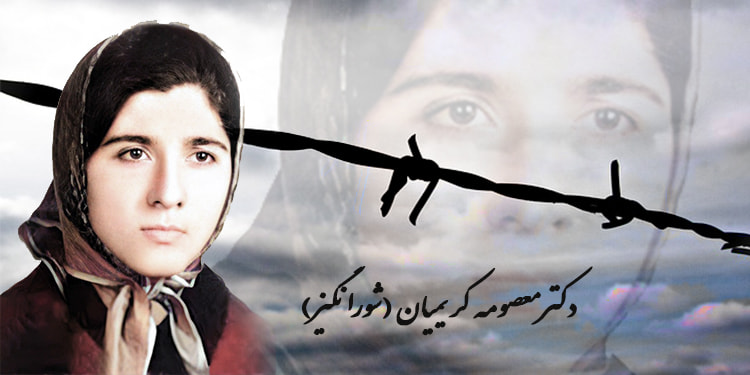
Shurangiz Karimian was also in quarantine. At first, I did not recognize her. Before prison, she had been a young, vibrant medical student. But now, three years later, she looked thirty years older—her eyes sunken, her back bent, one arm hanging limp at her side.

One day, “Haji” came to quarantine, as usual spewing nonsense. Suddenly he asked, “Where is the Doctor? Where’s Shouri?” And then I remembered: this frail woman was Shurangiz, the same young woman who had once visited our home. When Haji left, I asked her, “Are you Shurangiz?” She nodded with a faint smile.

Usually, those prisoners whom the regime considered especially dangerous tried to keep their distance, so others would not be punished for associating with them. Sometimes they would even warn the others: “I’m under a death sentence, it’s better not to be seen with me.”

Shurangiz had been tortured so savagely that her arm was permanently dislocated after being suspended in qapani position for days. She was now half-paralyzed, yet she still insisted on fulfilling her labor shifts—sweeping, cleaning, and carrying out chores with one arm. She never allowed anyone to take her place. She radiated a calm dignity, a composed strength that unnerved her tormentors. That was why Haji was fixated on her: despite everything, Shurangiz remained proud, defiant, unbroken. She never returned to the regular wards, always kept in punishment cells, until she was executed in the 1988 massacre.

One day, a cleric named Ansari came to quarantine, claiming: “We are here on behalf of Mr. Montazeri to investigate conditions in the prisons. Complaints have been made about unauthorized actions, which Imam [Khomeini] did not know about…” He was lying through his teeth. Khomeini himself had signed the execution orders and given free rein to his interrogators and torturers, declaring the lives, property, and dignity of the Mojahedin fair game. Yet this deceitful mullah thought he could fool us, as though we were gullible Hezbollah loyalists.

He continued: “You are all Muslims. We want to release you. All we ask is that you don’t take up arms. Even now, don’t the people insult the Imam? Does anyone arrest them? Just put down your weapons!”

One of the women—I can’t remember who—asked: “Excuse me sir, which one of us has ever had a weapon to put down?”

The cleric stammered: “Yes, yes, we know many of you don’t have such charges. We are reviewing these cases…” and went on with his sermon.

We realized then that there were internal conflicts within the regime about prison policy. After so many pointless cruelties, after months in which nearly all of us had been cut off from family visits, public outrage and family protests had mounted. The issue had become too visible, too political. The rift within the regime was beginning to show.
Face to Face with the Beast (19)
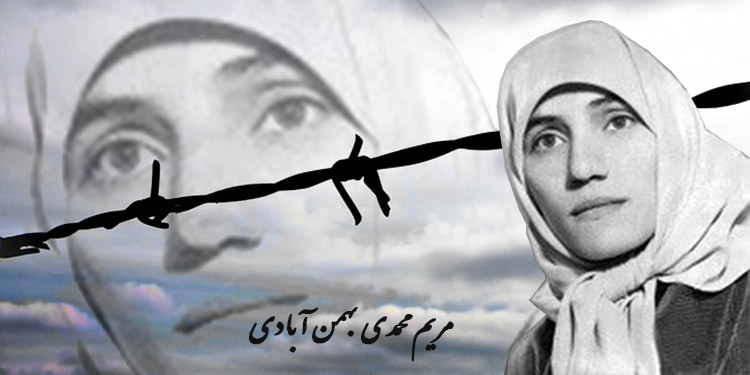
Maryam Mohammadi Bahmanabadi

One day they called in Maryam Mohammadi Bahmanabadi. When she returned, she was beaming with joy, hugging and spinning around the other women. We asked, “What happened?” She said: “I got amnesty!”

We all cheered— “You mean you’ll be released?”

She laughed and said: “No! My life sentence was reduced to fifteen years!”

We were stunned. “That’s not something to celebrate!” we said. But Maryam explained:

“Do you really think I’m so naïve as to believe they would actually release me? No, not at all. I’m happy because this shows they were waiting for me to break, but now they’re the ones defeated. Think about the Gestapo and these other scums who expected my surrender—now their faces are slapped instead.”

Maryam, too, was executed in the 1988 massacre.

To be continued…

Shahin Jalghazi — a fellow prisoner Hengameh encountered in quarantine. Hengameh describes Shahin as fierce and protective of other inmates; Shahin was executed during the 1988 mass executions.

Shurangiz (Shourangiz Karimian) — a medical-student prisoner who, according to Hengameh, endured savage torture (including prolonged suspension that left her arm dislocated) and became semi-paralyzed but continued to work and help others despite her injuries. Hengameh reports that Shurangiz remained in punishment wards and was ultimately executed in 1988.

Maryam Mohammadi Bahmanabadi — another prisoner mentioned by Hengameh. In the memoir Maryam is briefly told she has been “amnestied” (which turned out to mean a change in sentence length rather than immediate release); Hengameh records Maryam’s defiant reaction and later notes she too was executed in 1988.

Qapāni: a form of suspension torture used in Iranian interrogation/prison settings. In practice the victim’s arms are bound so that one arm is brought over the shoulder and the other behind the back, then the wrists are locked together (often with a heavy metal cuff) and the person may be left hanging or otherwise supported in that stress position. Prolonged qapāni causes extreme, often permanent, damage to the shoulders, arms, and upper back (dislocations, nerve damage, excruciating pain), and can be life-threatening if combined with suspension. This is the technique Hengameh refers to when she describes prisoners’ arms being “out of their sockets” after prolonged hanging.
ShareTweetPinShareSendShare

Related Posts

Rosa Romero at IWD 2026: Iranian Women: Not Victims of Discrimination, but Leaders on the Frontlines of Freedom

March 9, 2026
Rosa Romero at IWD 2026: Iranian Women: Not Victims of Discrimination, but Leaders on the Frontlines of Freedom

On Saturday, February 21, 2026, on the eve of March 8, International Women’s Day, the NCRI Women’s Committee hosted an international conference in Paris entitled “Women’s Leadership: An...

Read moreDetails

Elisabetta Zamparutti at IWD 2026: The Courage of Iranian Resistance Women to Sacrifice Their Lives for Freedom

March 9, 2026
Elisabetta Zamparutti at IWD 2026: The Courage of Iranian Resistance Women to Sacrifice Their Lives for Freedom

On Saturday, February 21, 2026, on the eve of March 8, International Women’s Day, the NCRI Women’s Committee hosted an international conference in Paris entitled “Women’s Leadership: An...

Read moreDetails

Karen Smith at IWD 2026: The Future of Iran: Rule of Law, Gender Equality, and Women’s Leadership

March 8, 2026
Karen Smith at IWD 2026: The Future of Iran: Rule of Law, Gender Equality, and Women’s Leadership

On Saturday, February 21, 2026, on the eve of March 8, International Women’s Day, the NCRI Women’s Committee hosted an international conference in Paris entitled “Women’s Leadership: An...

Read moreDetails

A Report to CSW70: Gender-Based Discrimination Under Iranian Law

March 8, 2026
A Report to CSW70: Gender-Based Discrimination Under Iranian Law

Structural Inequality and State-Sanctioned Oppression of Women Gender-Based Discrimination Under Iranian Law” is the title of the NCRI Women’s Committee’s report to CSW70, as it focuses on “Ensuring...

Read moreDetails

Maryam Rajavi Discusses Iran’s Transitional Roadmap in Interview with Frankfurter Rundschau

March 8, 2026
Maryam Rajavi Discusses Iran’s Transitional Roadmap in Interview with Frankfurter Rundschau

Maryam Rajavi, the President-elect of the National Council of Resistance of Iran, said in an interview with the German newspaper Frankfurter Rundschau that political change in Iran must...

Read moreDetails
Next Post
Estelle Sylvia Pankhurst: The Trailblazing Suffragette and Social Reformer

Estelle Sylvia Pankhurst: The Trailblazing Suffragette and Social Reformer

Documents

A Report to CSW70: Gender-Based Discrimination Under Iranian Law

A Report to CSW70: Gender-Based Discrimination Under Iranian Law

March 8, 2026

Structural Inequality and State-Sanctioned Oppression of Women Gender-Based Discrimination Under Iranian Law” is the title of the NCRI Women’s Committee’s...

Annual Report 2026: From Protests, to Uprising, and the Role of Iranian Women

Annual Report 2026: From Protests, to Uprising, and the Role of Iranian Women

March 3, 2026

On the eve of International Women’s Day 2026, the NCRI Women’s Committee presents its Annual Report 2026, offering a recap...

Iranian women Who Lost Their Lives in Iran’s January 2026 Uprising

Iranian Women Who Lost Their Lives in Iran’s January 2026 Uprising

January 25, 2026

Names That Must Not Be Forgotten Iranian women played a central and courageous role in the January 2026 uprising, standing...

Monthlies

January 2026 Report: Women at the Core of the Uprising
Monthlies

January 2026 Report: Women at the Core of the Uprising

January 31, 2026
December 2025 Report: A Year in Review: Iranian Women’s Resistance Against Religious Dictatorship
Monthlies

December 2025 Report: A Year in Review: Iranian Women’s Resistance Against Religious Dictatorship

January 5, 2026
November 2025 Report: Under the Clerical Regime, Nowhere Is Safe for Women in Iran
Monthlies

November 2025 Report: Under the Clerical Regime, Nowhere Is Safe for Women in Iran

November 30, 2025
October 2025 Report: Death Sentence for a Female Political Prisoner The Resistance of Female Political Prisoners Inspires Iranian Women and Girls in Their Struggle Against the Regime of Executions and Massacre
Monthlies

October 2025 Report: Death Sentence for a Female Political Prisoner

October 31, 2025

Articles

Maryam Rajavi Discusses Iran’s Transitional Roadmap in Interview with Frankfurter Rundschau

Maryam Rajavi Discusses Iran’s Transitional Roadmap in Interview with Frankfurter Rundschau

March 8, 2026

Maryam Rajavi, the President-elect of the National Council of Resistance of Iran, said in an interview with the German newspaper...

March 8: International Women's Day and the Leading Role of Iranian Women in the Struggle for Freedom

March 8: International Women’s Day and the Leading Role of Iranian Women in the Struggle for Freedom

March 6, 2026

March 8 is celebrated worldwide as International Women's Day, a day that honors over a century of women's fight for...

A Free Iran Starts with Women in Charge

A Free Iran Starts with Women in Charge

March 5, 2026

Maryam Rajavi’s movement puts women in leadership and demands equality as a foundation, not a slogan — a direct assault...

The Fallen for Freedom

Sonya Salehi-Rad was killed on January 8, 2026, during the nationwide popular protests in Shiraz
The Fallen for Freedom

Sonya Salehi-Rad

February 10, 2026
Arezoo Abedi was killed on January 9, 2026, during the nationwide popular protests
The Fallen for Freedom

Arezoo Abedi

February 10, 2026
Arnika Dabbagh, from Gorgan, was killed on January 9, 2026
The Fallen for Freedom

Arnika Dabbagh

February 7, 2026
Maedeh Moradi Kia, a resident of Tehran, was killed on January 9, 2026
The Fallen for Freedom

Maedeh Moradi Kia

February 7, 2026

ABOUT US

NCRI Women Committee

We work extensively with Iranian women outside the country and maintain a permanent contact with women inside Iran. The Women’s Committee is actively involved with many women’s rights organizations and NGO’s and the Iranian diaspora.
The committee is a major source of much of the information received from inside Iran with regards to women. Attending UN Human Rights Council meetings and other international or regional conferences on women’s issues and engaging in a relentless battle against the Iranian regime’s misogyny are part of the activities of members and associates of the committee.

CATEGORIES

  • Activities
  • Articles
  • Documents
  • Famous Women
  • Heroines in Chain
  • IWD Conferences
  • IWD Speeches
  • IWD Videos
  • Maryam Rajavi
  • Maryam Rajavi Speeches
  • Monthlies
  • Podcast
  • Reference Library
  • Solidarity
  • Statements
  • The Fallen for Freedom
  • Videos
  • Women in History
  • Women in Leadership
  • Women of Iranian Resistance
  • Women's News

BROWSE BY TAG

Child marriage coronavirus education execution forced hijab Gender Gap Generation Equality Honor killings Iran Teachers Maryam Akbari Monfared Nurses Plan on Women's Rights and Freedoms Poverty Prisoners Protests rural women Saba Kord Afshari The girl child Violence against women Women's Leadership Women Heads of Household Zeinab Jalalian

The copyright of all the material published on this website has been registered under © 2016 the Women’s Committee of the National Council of Resistance of Iran. To obtain permission to copy, redistribute or publish the material published on this website, you should write to the NCRI Women’s Committee. Please include the link of the original article on our website, women.ncr-iran.org.

Welcome Back!

Login to your account below

Forgotten Password?

Retrieve your password

Please enter your username or email address to reset your password.

Log In

Add New Playlist

No Result
View All Result
  • Home
  • News
    • Women’s News
    • Articles
    • Statements
  • Publications
    • Monthlies
    • Documents
    • Reference Library
  • About Us
    • The NCRI Women’s Committee
    • Gender Equality
    • Women’s Platform
  • Maryam Rajavi
    • Maryam Rajavi
    • Maryam Rajavi Speeches
    • Ten Point Plan for Iran
    • The Plan on Women’s Rights and Freedoms
  • Vanguards
    • The Fallen for Freedom
    • Heroines in Chain
    • Women of Iranian Resistance
    • Famous Women
    • Women in History
  • Events
    • IWD Conferences
    • Activities
    • IWD Speeches
    • Solidarity
  • Video
    • Videos
    • IWD Videos
  • Podcast
  • Donate
  • Contact us
  • فارسی
  • عربی
  • Français

The copyright of all the material published on this website has been registered under © 2016 the Women’s Committee of the National Council of Resistance of Iran. To obtain permission to copy, redistribute or publish the material published on this website, you should write to the NCRI Women’s Committee. Please include the link of the original article on our website, women.ncr-iran.org.