

A Crime in Progress: The Looming Threat of Another Massacre of Political Prisoners in Iran
Executive Summary
July 2025 Report: In recent months, the repression of political prisoners in Iran has escalated to unprecedented levels. Numerous reports from inside the country indicate that enforced disappearances, violent transfers to unknown locations, torture during interrogations, denial of contact with family members, and deprivation of medical care are being systematically carried out against political detainees.
These developments closely resemble the patterns seen prior to the 1988 massacre of 30,000 prisoners in the jails of the clerical regime.
Among the most alarming cases is the forced transfer of dozens of female political prisoners from Evin Prison to Qarchak Prison, as well as the relocation of hundreds of political detainees to the notorious Greater Tehran Prison. These prisoners are being held in dire, unsanitary conditions without access to healthcare or basic human rights. Many suffer from chronic illnesses and face immediate threats to their lives. Alongside this, degrading treatment of prisoners’ families—such as humiliating body searches of women and children before visits—has become a routine part of this widespread crackdown.
Taken together, these signs point to the preparation of a grave atrocity—one the international community must not ignore. This report, focusing on the situation of political prisoners—particularly women—calls for urgent international action, including the dispatch of an independent fact-finding mission and intervention by human rights bodies to prevent the repetition of yet another historic crime in Iran’s prisons.

Introduction
More than three decades after the massacre of some 30,000 political prisoners in the summer of 1988, alarming signs are once again emerging of a similar crime unfolding inside Iran’s prisons. In recent months, the Iranian regime has revived a familiar pattern of systematic repression: enforced disappearances, violent transfers to undisclosed locations, torture to extract forced confessions, and detention under life-threatening conditions.
These are not isolated incidents, but part of a deliberate policy aimed at crushing resistance and physically eliminating dissidents behind bars.
State-run media in Iran have openly defended the 1988 massacre and are now openly calling for its repetition. For instance, on July 8, 2025, the IRGC-affiliated Fars News Agency proudly referred to the 1988 killings as a “brilliant legacy” and explicitly stated:
“…Today is the time to repeat this successful historical experience… Contrary to the propaganda of hostile networks portraying the 1988 executions as anti-human rights… public opinion now understands the necessity of such proper measures against domestic terrorism and values it.”
This official stance is not an attempt to sanitize the past—it is a clear warning of the regime’s intent to repeat such atrocities, this time in prisons like Qarchak, Fardis, Greater Tehran, and Ghezel Hesar.
In response to this alarming trend, a group of female political prisoners in Qarchak Prison issued a statement warning of ongoing plans to abduct and forcibly transfer prominent detainees such as Saeed Masouri, Ali Younesi, and other political prisoners. They stressed that these actions are a prelude to a new crime within the prison system and urged international bodies not to remain silent. Addressing the mullahs, their statement declared:
“Resistance has taken root in the blood of martyrs and the suffering of prisoners across the homeland; you cannot exile it!”
Political prisoners—including women, the elderly, and mothers—are facing a wave of targeted violence. Forced transfers, severed contact with family, pressure to extract confessions under torture, and dire medical and sanitary conditions all signal the approach of a looming catastrophe.
This report, drawing on available evidence and with a focus on the plight of female political prisoners, aims to document these serious warnings and calls for urgent, decisive, and coordinated action by international bodies—before it is too late.

Situation Analysis
Forced Transfers and Torture for Forced Confessions
One of the clearest signs that the Iranian regime is preparing to commit an organized atrocity is the sharp rise in enforced disappearances, interrogations involving torture, and the forced transfer of political prisoners to unknown locations. These actions have intensified particularly in recent weeks, echoing the preparatory phase of the 1988 massacre of political prisoners.
A prominent case is that of Arghavan Fallahi, a 25-year-old political prisoner who is currently being held in solitary confinement under severe physical and psychological pressure at the Greater Tehran Penitentiary.
Following her arrest at her home in Parand, she was initially transferred to Ward 241 of Evin Prison, where she spent several months in solitary confinement. Brief phone calls and a complete severing of contact with her family have fueled serious concerns about torture and attempts to extract forced confessions.

In the same case, three other political prisoners—Bijan Kazemi, Amirhossein Akbari Monfared, and his father, Mohammad Akbari Monfared—are also being held in solitary confinement alongside Arghavan Fallahi, reportedly under torture. Security agents have accused them of involvement in the assassination of two notorious judges of the clerical regime, Mohammad Moghisseh and Ali Razini, on January 18, 2025.
These accusations appear to be part of a broader security scenario aimed at fabricating forced confessions and manufacturing propaganda cases against regime opponents.
Another concerning case is that of Ali Younesi, a gifted student from Sharif University of Technology, who has been in detention for years. In mid-June, he was violently removed from Ward 4 of Evin Prison and taken to an undisclosed location. No official information has since been released regarding his whereabouts.
In a separate incident, Saeed Masouri—one of Iran’s longest-held political prisoners, incarcerated for over 25 years without a single day of furlough—was violently assaulted on July 16 by prison guards in Ghezel Hesar in an attempt to transfer him to an unknown location. The move was temporarily halted due to collective resistance by fellow inmates. From prison, Masouri wrote:
“This kidnapping under the guise of a transfer does not only concern me… A crime is in progress, and for that reason, we must resist forced exile so that, unlike in 1988, the massacre does not happen in silence and secrecy. Let the world hear this time: a crime is unfolding—and so is resistance.”
This deeply troubling trend—actively supported by state-controlled media using threatening rhetoric—reveals that the clerical regime is laying the psychological and security groundwork for a broad crackdown and the physical elimination of political dissidents. All of this is happening behind prison walls, far from international scrutiny.
In this context, United Nations Special Rapporteurs issued a statement on July 4, 2025, expressing grave concern. They reported that prisoners transferred from Evin Prison to Qarchak and Greater Tehran prisons are being held in “deteriorating” conditions. The experts warned, “The fate and whereabouts of some prisoners remain unknown, placing them outside the protection of the law—a situation that amounts to enforced disappearances.”
Another section of the statement reads:
“Following the ceasefire, the world is watching closely to see how Iranian authorities treat their own people. This will be a defining measure of the country’s commitment to human rights and the rule of law,” the experts said.
“Iran must not allow history to repeat itself by resorting to the same dark patterns of repression that have devastated its people in previous post-conflict periods.”
Such explicit warnings from international bodies underscore the critical and urgent nature of the current crisis—and the need for immediate action to prevent yet another tragedy unfolding within Iran’s prison system.
Systematic Repression of Female Political Prisoners in Qarchak Prison
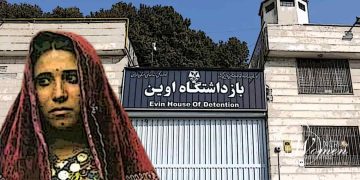
One of the most glaring manifestations of the regime’s policy of repression and elimination is the inhumane treatment inflicted on female political prisoners. In recent weeks, dozens of women who were previously held at Evin Prison were suddenly and without prior notice transferred to Qarchak Prison in Varamin—a notoriously abusive facility, known for conditions that are unacceptable even by Iran’s own official standards.
Currently, around 60 female political prisoners are being held in a dilapidated, unsanitary quarantine ward of Qarchak. This area was previously used to house drug addicts and lacks the most basic living conditions: filthy walls, floors littered with garbage and human waste, a constant stench, infestations of rats and insects, and the complete absence of proper ventilation are just some of the reported problems. While the prisoners have tried to clean the space on their own, the overall conditions remain catastrophic and pose a serious threat to their physical and mental health.
These women are almost entirely cut off from the outside world. Phone calls, in-person visits, access to books, medications, medical care, and even personal belongings have been banned or severely restricted. Some of the women—particularly the elderly and those with chronic illnesses—are forced to sleep on the floor, as there are no beds or even basic accommodations. There are only three toilets and three showers available for the entire group, and the poor ventilation system only spreads the pervasive stench throughout the ward.
Such treatment not only constitutes a clear case of “white torture” (the gradual psychological destruction of prisoners) but also represents a blatant violation of international conventions—including the International Covenant on Civil and Political Rights and the United Nations Standard Minimum Rules for the Treatment of Prisoners (the Nelson Mandela Rules).
The primary goal of these violent transfers and imposed conditions is to break the spirit of resistance among female political prisoners and sever their connection with society and activists outside prison walls. Nevertheless, the women’s defiance in the face of this blatant repression has not been extinguished. Even within the confines of Qarchak Prison, they continue to show signs of resilience and maintain a living link to the broader struggle for freedom across the country.

Denial of Medical Care: A Direct Threat to the Lives of Female Political Prisoners
The physical condition of many female political prisoners has reached a critical state due to the denial of medical care, lack of access to essential medication, and the deliberate neglect of prison authorities. This situation amounts to a form of prolonged torture and silent execution, especially for those suffering from chronic illnesses, physical injuries, advanced age, or the lasting effects of torture. Some of the most alarming individual cases include:
- Azar Korvandi, who suffers from severe heart problems, hearing loss, and cervical disc issues, is deteriorating by the day without any specialized care.
- Mowlud Safaei urgently requires surgery for a diaphragmatic hernia and suffers from significant vision loss due to cataracts. Despite medical recommendations, she has not been granted medical leave.
- Parvin Mirasan, who has diabetes, Parkinson’s disease, intestinal disorders, and joint problems, is being held without any access to medical services.
- Raheleh Rahemipour and several other women over the age of 70 are being kept without medication or medical supervision. For them, mere exposure to Qarchak’s unsanitary conditions poses a serious risk to their lives.
- Maryam Banou Nasiri suffers from sleep apnea, lung disease, and stomach ulcers. Her condition has become critical due to the lack of access to necessary medications.
- Narges Mansouri, a civil rights activist and political prisoner, went on hunger strike after being punitively transferred to solitary confinement in Qarchak. She developed severe heart palpitations and is now being held in life-threatening physical condition. Narges is the mother of a 15-year-old child.
These cases highlight a systematic policy of medical neglect that directly endangers the lives of women imprisoned for their political beliefs and peaceful activism.
Additionally, a significant number of female prisoners suffering from chronic illnesses—such as diabetes, high blood pressure, heart disease, vision, kidney, and respiratory conditions—are in critical condition due to lack of access to medication and medical care. This blatant neglect is not the result of limited resources but a deliberate policy by the regime aimed at physically and psychologically wearing down political prisoners—a form of gradual torture designed to break their will and silently eliminate them.
Moreover, Hoda Mehreganfar, a political prisoner and electronics engineer held in indefinite detention at Adelabad Prison in Shiraz, urgently requires an ultrasound and treatment for an abdominal cyst. Yet, she has been denied not only access to medical services outside the prison but also any treatment within the facility. Her situation, like that of dozens of other women, clearly constitutes “deliberate denial of medical care,” which under international law is recognized as a form of torture.

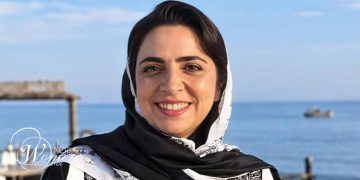
Electronics engineer, Hoda Mehreganfar
Humiliation and Harassment of Political Prisoners’ Families: Expansion of Repression Beyond Prison Walls
The Iranian regime’s policy of repression is not limited to inside the prisons. In recent months, families of political prisoners—especially during visitation sessions—have also been subjected to humiliating and violent treatment. This method aims to transfer psychological pressure outside the prison walls and to break the emotional and social support network around the prisoners.
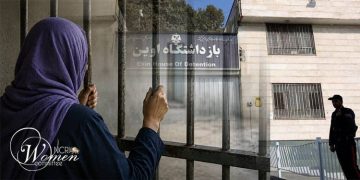
Reports from the Greater Tehran Penitentiary (Fashafouyeh) indicate that women family members of prisoners—mothers, wives, sisters, and teenage daughters—are subjected to “unusual, shameless, and insulting” body searches before meeting their loved ones. These searches lack any legal justification and are explicitly intended to humiliate and intimidate.
In one of the most shocking cases, a 13-year-old girl was completely stripped and subjected to humiliating body searches before meeting her father. The child was deeply traumatized, unable to speak during the visit, and could only silently shed tears while looking at him.
The wife of one political prisoner reported: “The behavior of some female officers during the searches included verbal violence, unnecessary touching, and physical humiliation, which led to verbal clashes between families and officers and created a highly tense atmosphere during the visits.”
In response to these inhumane behaviors, a group of political prisoners protested by refusing to participate in the daily prisoner count and holding a sit-in protest in the prison yard, warning that if this situation continued, they would escalate their protests.
These actions not only represent a blatant violation of the human dignity and rights of families but are also part of the Iranian regime’s multi-layered strategy to completely isolate political prisoners and instill fear and suffocation in the society around them.
Ongoing Resistance Inside Prisons
Women prisoners, through holding ceremonies such as the commemoration of July 9, 1999 student uprising and chanting protest slogans, serve as a living and powerful symbol of continued resistance against the Iranian regime’s repression. Despite the heavy security environment and severe restrictions, these symbolic actions demonstrate their indomitable spirit and strong will to defend their human rights and freedoms.
One of the most notable examples of this resistance was the July 9 ceremony held in Qarchak Prison — marking the anniversary of the bloody suppression of the student uprising on July 9, 1999. Women political prisoners recalled the bitter memories of that day, celebrated and honored the students’ resistance, and expressed solidarity with the families of the victims.
Additionally, in Fardis Prison near Karaj, on July 6, 2025, a group of women prisoners, after a religious Ashura ceremony, openly voiced their opposition to the clerical regime by chanting slogans such as “Death to Khamenei” and “Curse on Khomeini.” This courageous act, in the face of government threats and violence, once again displayed the fighting spirit of women prisoners.

In response to these protests, the head of the women’s ward in Fardis Prison, named Kolivand, summoned Massoumeh Senobari—identified as one of the main organizers of the movement—to his office and brutally beat her. Reports indicate that after returning to the ward, Ms. Senobari was severely bruised on her face and body and could barely stand without assistance.
Massoumeh Senobari, 37 years old and mother of a teenage daughter from Tabriz, is one of the prominent faces of women prisoners’ resistance. She was arrested during the nationwide uprising in 2022 in Karaj and sentenced to nine years in prison on charges of “membership in the People’s Mojahedin Organization,” “participation in illegal gatherings,” and “propaganda against the state.” Ms. Senobari, accused of leading the protests, has spent at least one year in isolated conditions, under tight control and severe restrictions.
Demands
- International bodies, including the United Nations, the Special Rapporteur on human rights, and the Human Rights Council, must urgently take action by sending the Independent Fact-finding Mission to the regime’s prisons to thoroughly and impartially investigate the human rights situation in Iran.
- There must be an immediate call for the release of all political prisoners or, at the very least, unrestricted access for them to healthcare, legal, and humanitarian services, pursued seriously and continuously.
- The global community should apply diplomatic and economic pressure on the Iranian regime to stop all violence, systemic human rights violations, torture, and executions, creating conditions for improving prisoners’ situations and reducing repression.
- Support for human rights defenders and political prisoners should be increased through international, media, and legal actions so their voices can be heard worldwide, preventing the clerical regime from continuing its disregard for human rights.
- Help amplify the voices of women in chains in Iran and support the women fighting on the frontlines against the misogynistic regime by supporting and contributing to the Women’s Commission website and its publications.