
Sunday, June 21, 2026
  • English
  • Français
  • فارسی
  • عربى
PODCASTS
NCRI Women Committee Women Resistance Freedom
  • Home
  • NEWS
    • Women’s News
    • Articles
    • Statements
  • PUBLICATIONS
    • Monthlies
    • Documents
    • Reference Library
  • ABOUT US
    • The NCRI Women’s Committee
    • Gender Equality
    • Women’s Platform
  • MARYAM RAJAVI
    • Maryam Rajavi
    • Maryam Rajavi Speeches
    • The Plan on Women’s Rights and Freedoms
    • Ten-Point Plan for the future of Iran
  • VANGUARDS
    • The Fallen for Freedom
    • Heroines in Chain
    • Women of Iranian Resistance
    • Famous Women
    • Women in History
  • EVENTS
    • IWD Conferences
    • Activities
    • IWD Speeches
    • Solidarity
  • VIDEO
    • Videos
    • IWD Videos
  • PODCAST
  • DONATE
  • CONTACT US
No Result
View All Result
NCRI Women Committee Women Resistance Freedom
  • Home
  • NEWS
    • Women’s News
    • Articles
    • Statements
  • PUBLICATIONS
    • Monthlies
    • Documents
    • Reference Library
  • ABOUT US
    • The NCRI Women’s Committee
    • Gender Equality
    • Women’s Platform
  • MARYAM RAJAVI
    • Maryam Rajavi
    • Maryam Rajavi Speeches
    • The Plan on Women’s Rights and Freedoms
    • Ten-Point Plan for the future of Iran
  • VANGUARDS
    • The Fallen for Freedom
    • Heroines in Chain
    • Women of Iranian Resistance
    • Famous Women
    • Women in History
  • EVENTS
    • IWD Conferences
    • Activities
    • IWD Speeches
    • Solidarity
  • VIDEO
    • Videos
    • IWD Videos
  • PODCAST
  • DONATE
  • CONTACT US
No Result
View All Result
NCRI Women Committee
No Result
View All Result
Home Articles
Iran's Water Crisis: Energy Imbalance, Popular Protests, and the Role of Women- Part 2

Iran’s Escalating Water Crisis: Energy Imbalance, Popular Protests, and the Role of Women

June 19, 2026
in Articles, Women's News

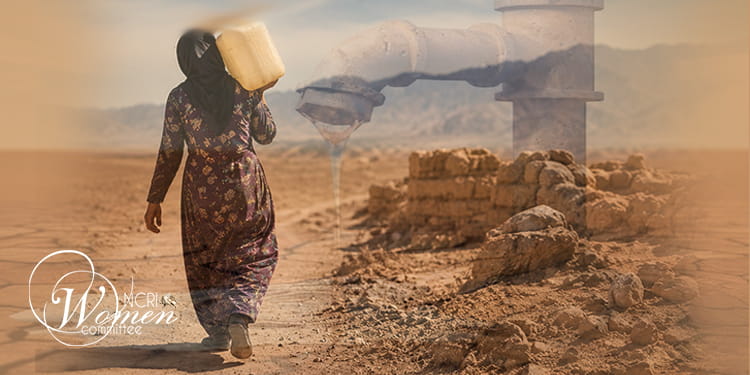
The water crisis in Iran has transcended a mere natural challenge, evolving into a human, environmental, and economic catastrophe. While the regime has for years attempted to attribute the water shortage solely to declining rainfall and climate change, international researchers and observers emphasize that more than 70 to 80 percent of the current crisis in Iran stems from decades of mismanagement, excessive dam construction, structural corruption, and the unsustainable policies of the clerical regime—decisions that have left the land thirstier and the future of Iranian society darker.

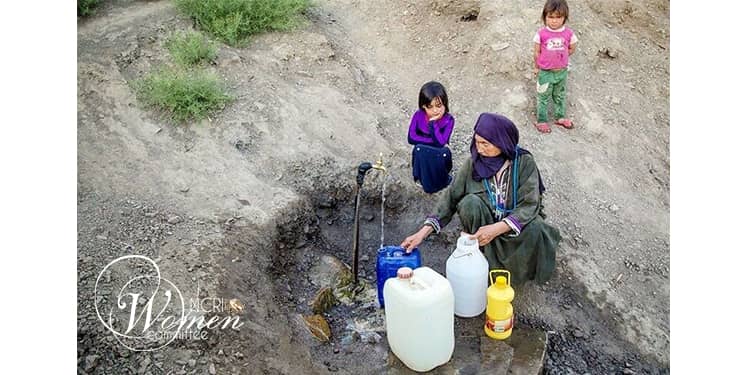
However, the consequences of this disaster are not borne equally across all sectors of society. Due to their pivotal role in securing hygiene, managing households, and caring for families, women are the first and primary victims of the country’s escalating drought and water scarcity.

At a time when millions face severe water shortages, Iranian women are forced to bear the heavy burden of livelihood, health, and social insecurities caused by the misogynistic and predatory policies of the mullahs’ regime.

In the first part of this article, we examined the dimensions of the deep imbalance in water resources, the catastrophic depletion of dam reserves, and the initial challenges women face in confronting this crisis. Now, in this second part, we explore the devastating impacts of this disaster on the collapse of agriculture, the widening class divide, the threat to public health, and ultimately, the leading role of women at the forefront of popular protests against the clerical regime.
Iran's Water Crisis: Energy Imbalance, Popular Protests, and the Role of Women- Part 2

Collapse of Agriculture and Food Insecurity


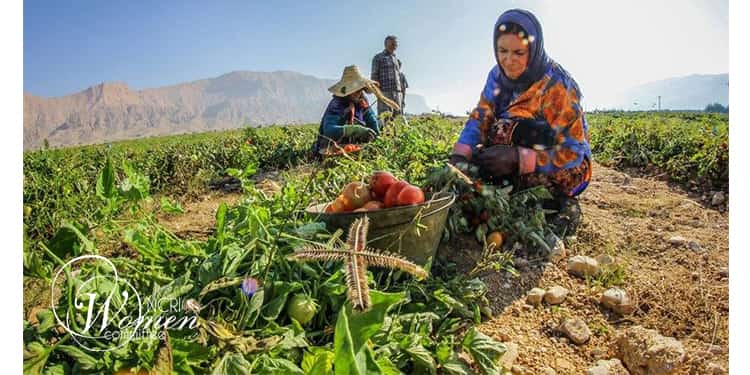
The water crisis has directly destroyed the livelihoods of millions of Iranian farmers and jeopardized the country’s food security. According to a report by Borna News Agency on December 18, 2024, widespread drought in 2025 has reduced agricultural production to zero in many regions.

This situation has been especially catastrophic in areas such as Khuzestan, once known as the “granary of Iran.” Farmers, unable to cultivate their lands due to the lack of water, now face massive debts and extreme poverty. The decline in agricultural production has not only driven up food prices but also turned Iran into a major importer of grains.

Rising Inequality and Widening Class Divide


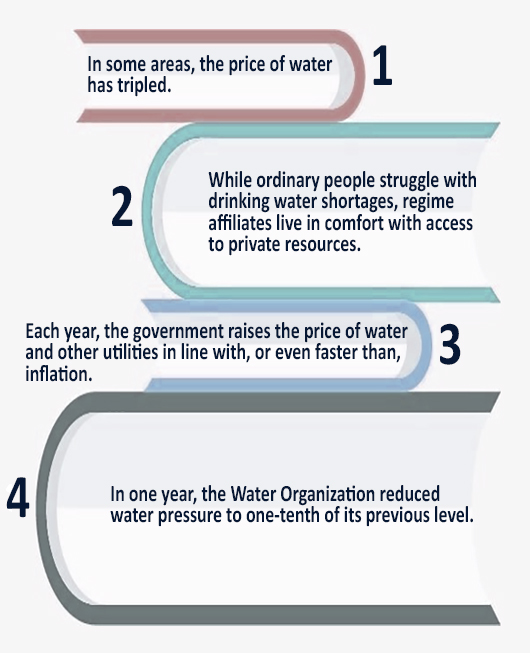
The water crisis has deepened social inequalities in Iran and widened the class divide. While ordinary people in deprived areas struggle with shortages of drinking water, regime affiliates and the wealthy continue to live comfortably, enjoying access to private resources such as deep wells or expensive water supplies.

This inequality is also evident in Tehran: affluent northern districts are supplied by private water tankers, while the southern parts of the city face severe rationing. The regime, responsible for fueling these disparities through discriminatory policies, has taken no steps toward equitable resource distribution. Instead, it has chosen to silence the voices of the deprived through repression. (IranPedia, May 2, 2025)
Iran's Water Crisis: Energy Imbalance, Popular Protests, and the Role of Women- Part 2

The price of water in some areas of Iran has risen to two to three times its previous rate. This increase has created more psychological and economic pressure for household consumers than it has acted as a deterrent. According to Mohammad Emami-Kurandeh, a legal expert, when subsidies were targeted, energy carriers were prioritized: water, gas, electricity, and anything recognized as energy.

The goal was for the government not to pay subsidies for these carriers and to charge people the actual cost of providing them. In return, the additional income from these bills was supposed to be used to support vulnerable, low-income, and deprived segments of society, in other words, the same subsidies paid to the people.

However, this policy caused widespread discrimination and disorder. Today, the number of subsidy recipients, which was supposed to include about 50 to 70 million people in those years, has dropped to less than 20 million. In fact, under the pretext of targeting subsidies and aiding the deprived, the government has excluded over 60 to even 80 percent of the population from legally receiving subsidies and now provides all energy carriers at market rates.

As a result, costs have risen, government revenue has increased significantly, and most importantly, each year, when the government faces a budget deficit, additional subsidy recipients are arbitrarily removed under flimsy pretexts.

Every year, alongside inflation, or even faster, the government raises the prices of water, electricity, gas, and other energy carriers multiple times. Over the past year, the Water Organization has reduced water pressure to one-tenth of its normal level, effectively depriving people of natural access to water for which they are paying substantial amounts. (Jahan-e Sanat, July 19, 2025)

 Threat to Public Health and the Spread of Diseases


The shortage of clean water has had serious consequences for public health and has increased the risk of disease outbreaks. A report by Euronews on March 13, 2025, titled “Iran’s Harsh Winter Is Over: Will the Water Crisis Hit People in Summer?” highlights health problems in Khuzestan, where residents, lacking access to safe water, have been forced to use contaminated sources. This situation has led to a rise in diarrhea and gastrointestinal infections.
Iran's Water Crisis: Energy Imbalance, Popular Protests, and the Role of Women- Part 2

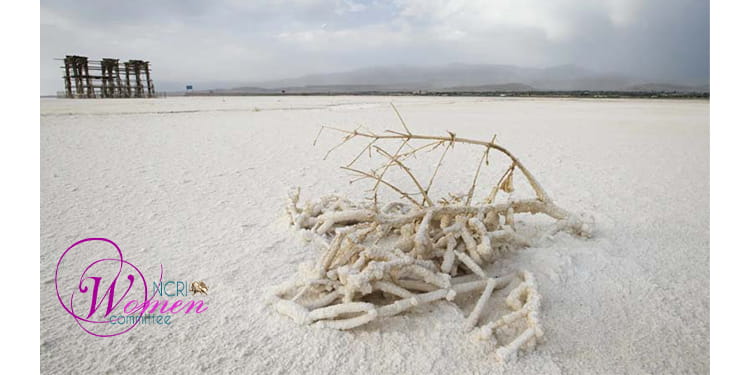
In the northwest, a large part of the once-beautiful Lake Urmia has turned into a salt flat. The salt rising from this lake can be carried thousands of kilometers away, reaching the northeast of the country. According to available data and studies conducted years ago by Western environmental experts, these particles can cause respiratory, cardiovascular, and kidney diseases, as well as immune system disorders.

The impact extends beyond the provinces of Azerbaijan, Kurdistan, and Zanjan, even affecting neighboring countries. Moreover, studies by Tabriz University of Medical Sciences indicate that some of these health effects are already manifesting. (Jahan-e Sanat Newspaper, July 22, 2025)

Eisa Kalantari, the former head of the Environmental Protection Organization, admitted last year: “In 2015, a series of skin and blood pressure-related illnesses occurred among citizens, which are among the hazards of the lake’s drying.” (Jahan-e Sanat Newspaper – July 22, 2025)
Iran's Water Crisis: Energy Imbalance, Popular Protests, and the Role of Women- Part 2

 Women at the Forefront of Popular Protests


Water scarcity, as a driving factor, has escalated social tensions in Iran to unprecedented levels. The prominent presence of women in these protests is notable. Large-scale demonstrations in Khuzestan, which emerged in recent years due to water shortages and the drying of wetlands, continued in the summer of 2025. Instead of addressing the problem, the regime labeled protesters as “rioters” and, using military force, killed or arrested dozens of people. (Euronews – March 13, 2025)

Similar protests took place from May to August 2025 in various cities across Iran, including Shahr-e Kord and provinces in the south and center, with slogans such as “Water, electricity, life; it is our undeniable right” being chanted. (Wikipedia – August 11, 2025)

In Tehran, residents of Nasimshahr took to the streets on July 21 due to water shortages and three days of complete water cuts during the scorching heat of July.

Additionally, on July 23 and 24, Tehran and Eslamshahr witnessed anti-government protests in response to water and electricity cuts. In Tehran on July 23, protesters in several districts expressed their anger over the country’s disastrous situation with slogans such as “Death to Khamenei, curse on Khomeini,” “All these years of crimes, death to this regime,” and “Death to the dictator.” In Eslamshahr on July 24, the slogan “Death to Khamenei” echoed in response to repeated power outages. Similar protests were also reported on the same day in Marvdasht and Torbat Jam.

On Friday, July 25, the residents of Barzanun, Nishapur, also protested the ongoing water shortage by blocking the road. Villagers stated, “If there is no water, and if there is no response from the regime’s authorities, then the road should not be open either!” (Secretariat of the National Council of Resistance of Iran – July 25, 2025)

Groups of women in Borazjan, Ahvaz, Karaj join water protests in Khuzestan
Women in Borazjan, southern Iran, stage protest over water shortage

Final word

The crisis currently referred to as an energy imbalance is neither sudden nor the result of climate change; rather, it is the cumulative outcome of corruption and policies imposed on the people, intertwined with the nature of a religious dictatorship. The water crisis is yet another of the countless reasons behind the political instability and the lack of legitimacy of the clerical regime.

Kaveh Madani, head of the Water, Environment, and Health Institute at the United Nations University, says: “If we pay attention to our country, we can see the signs of a serious, hard-to-treat disease, a severe infection, or even cancer in various sectors.

One day we can’t breathe because of Tehran’s air pollution, another day it’s dust storms, another day the water situation, the status of an educational institution, the price of the dollar and the economy, the stock market, or industry. If we look closely, the signs of crisis are appearing across all sectors. Many of these issues share common roots. We must admit our failure.” (Etemad, July 26, 2025)

Repeated protests in Khuzestan, Isfahan, and other provinces, triggered by water shortages, reflect the growing anger of the people at the regime’s incompetence. The suppression of these protests, which has resulted in the deaths of demonstrators, has further fueled public outrage and weakened the foundations of the regime’s power.

Signs of a nationwide uprising aimed at overthrowing this illegitimate regime are visible everywhere. What concerns the international community and awakened consciences, however, is assisting the people of Iran in this critical endeavor. Recognizing the organized alternative of the Iranian people, who have fought for Iran’s freedom for decades, will not only accelerate the liberation of the Iranian people from dictatorship but will also bring peace and friendship to the free world.
Tags: PovertyProtestsViolence against women
ShareTweetPinShareSendShare

Related Posts

Iran: Baluch Protest Suppressed in Kerman; Women Beaten and Arrested

June 17, 2026
Iran: Baluch Protest Suppressed in Kerman; Women Beaten and Arrested

KERMAN, Iran _ Baluch Protest — On Wednesday, June 17, 2026, the Iranian regime’s repressive military forces violently attacked a peaceful protest by Baluch residents in Pashmoki village,...

Read moreDetails

Water Crisis in Iran: Women Bear the Brunt of Escalating Shortages

June 16, 2026
Water Crisis in Iran: Women Bear the Brunt of Escalating Shortages

From securing family water to coping with poverty and migration, women are the primary victims of Iran’s escalating water crisis. The water crisis in Iran is no longer...

Read moreDetails

125th Week of the “No to Execution Tuesdays” Campaign: Hunger Strike Across 56 Prisons

June 16, 2026
125th Week of the “No to Execution Tuesdays” Campaign: Hunger Strike Across 56 Prisons

The “No to Execution Tuesdays” campaign continued into its 125th week on Tuesday, June 16, 2026, with political prisoners in 56 prisons across Iran participating in a hunger...

Read moreDetails

Feminization of Poverty in Iran Under War and Inflation

June 15, 2026
Feminization of Poverty in Iran Under War and Inflation

Iranian Women's Share of the International Day of Family Remittances; Feminization of poverty in Iran under the shadow of inflation. June 16 has been designated by the United...

Read moreDetails

Iranian Women on the Hidden Front of the War in Iran

June 12, 2026
Iranian Women on the Hidden Front of the War in Iran

Bearing Unequal Burdens Across Livelihoods, Health, and Education in the Recent Conflict The recent war in Iran does not unfold only on the front lines. Its impact is...

Read moreDetails
Next Post
Iran: Justice Seeking Mother Sentenced to 5 Years in Prison

Iran: Justice Seeking Mother Sentenced to 5 Years in Prison

Documents

Crushed by Design: Structural Crises and Inequitable Policies Push Female-Headed Households to the Edge

Crushed by Design: Structural Crises and Inequitable Policies Push Female-Headed Households to the Edge

May 18, 2026

Introduction Life for the Iranian people under the religious dictatorship is fraught with hardship and peril from every perspective. Whether...

A Report to CSW70: Gender-Based Discrimination Under Iranian Law

A Report to CSW70: Gender-Based Discrimination Under Iranian Law

March 8, 2026

Structural Inequality and State-Sanctioned Oppression of Women Gender-Based Discrimination Under Iranian Law” is the title of the NCRI Women’s Committee’s...

Annual Report 2026: From Protests, to Uprising, and the Role of Iranian Women

Annual Report 2026: From Protests, to Uprising, and the Role of Iranian Women

March 3, 2026

On the eve of International Women’s Day 2026, the NCRI Women’s Committee presents its Annual Report 2026, offering a recap...

Monthlies

May 2026 Report: The Enduring Resistance of Iranian Women
Monthlies

May 2026 Report: The Enduring Resistance of Iranian Women

May 31, 2026
April 2026 Report: Mass Arrests of Women: Targeted Repression in Time of Crisis
Monthlies

April 2026 Report: Mass Arrests of Women in Iran

April 30, 2026
March 2026 Report: How Iranian Women Are Shaping the Resistance
Monthlies

March 2026 Report: Courage Under Fire

April 3, 2026
January 2026 Report: Women at the Core of the Uprising
Monthlies

January 2026 Report: Women at the Core of the Uprising

January 31, 2026

Articles

Iran's Water Crisis: Energy Imbalance, Popular Protests, and the Role of Women- Part 2

Iran’s Escalating Water Crisis: Energy Imbalance, Popular Protests, and the Role of Women

June 19, 2026

The water crisis in Iran has transcended a mere natural challenge, evolving into a human, environmental, and economic catastrophe. While...

Water Crisis in Iran: Women Bear the Brunt of Escalating Shortages

Water Crisis in Iran: Women Bear the Brunt of Escalating Shortages

June 16, 2026

From securing family water to coping with poverty and migration, women are the primary victims of Iran’s escalating water crisis....

Feminization of Poverty in Iran Under War and Inflation

Feminization of Poverty in Iran Under War and Inflation

June 15, 2026

Iranian Women's Share of the International Day of Family Remittances; Feminization of poverty in Iran under the shadow of inflation....

The Fallen for Freedom

Shilan Salehi: Iran Regime Extorted 150 Million Tomans for Return of Her Body
The Fallen for Freedom

Shilan Salehi: Iran Regime Extorted 150 Million Tomans for Return of Her Body

June 13, 2026
Parnia Shad Bejarkenari: 23-Year-Old Woman Killed for Freedom in Iran
The Fallen for Freedom

Parnia Shad Bejarkenari: 23-Year-Old Woman Killed for Freedom in Iran

June 13, 2026
Nasim Pouraghaei was killed on the evening of January 8, 2026
The Fallen for Freedom

Nasim Pouraghaei

June 6, 2026
Setayesh Shafiei, The Girl Who Was the Sun
The Fallen for Freedom

Setayesh Shafiei, The Girl Who Was the Sun

June 4, 2026

ABOUT US

NCRI Women Committee

We work extensively with Iranian women outside the country and maintain a permanent contact with women inside Iran. The Women’s Committee is actively involved with many women’s rights organizations and NGO’s and the Iranian diaspora.
The committee is a major source of much of the information received from inside Iran with regards to women. Attending UN Human Rights Council meetings and other international or regional conferences on women’s issues and engaging in a relentless battle against the Iranian regime’s misogyny are part of the activities of members and associates of the committee.

CATEGORIES

  • Activities
  • Articles
  • Documents
  • Famous Women
  • Heroines in Chain
  • IWD Conferences
  • IWD Speeches
  • IWD Videos
  • Maryam Rajavi
  • Maryam Rajavi Speeches
  • Monthlies
  • Podcast
  • Reference Library
  • Solidarity
  • Statements
  • The Fallen for Freedom
  • Videos
  • Women in History
  • Women in Leadership
  • Women of Iranian Resistance
  • Women's News

BROWSE BY TAG

Child marriage coronavirus education execution forced hijab Gender Gap Generation Equality Honor killings Iran Teachers Maryam Akbari Monfared Nurses Plan on Women's Rights and Freedoms Poverty Prisoners Protests rural women Saba Kord Afshari The girl child Violence against women Women's Leadership Women Heads of Household Zeinab Jalalian

The copyright of all the material published on this website has been registered under © 2016 the Women’s Committee of the National Council of Resistance of Iran. To obtain permission to copy, redistribute or publish the material published on this website, you should write to the NCRI Women’s Committee. Please include the link of the original article on our website, women.ncr-iran.org.

Welcome Back!

Login to your account below

Forgotten Password?

Retrieve your password

Please enter your username or email address to reset your password.

Log In

Add New Playlist

No Result
View All Result
  • Home
  • News
    • Women’s News
    • Articles
    • Statements
  • Publications
    • Monthlies
    • Documents
    • Reference Library
  • About Us
    • The NCRI Women’s Committee
    • Gender Equality
    • Women’s Platform
  • Maryam Rajavi
    • Maryam Rajavi
    • Maryam Rajavi Speeches
    • Ten Point Plan for Iran
    • The Plan on Women’s Rights and Freedoms
  • Vanguards
    • The Fallen for Freedom
    • Heroines in Chain
    • Women of Iranian Resistance
    • Famous Women
    • Women in History
  • Events
    • IWD Conferences
    • Activities
    • IWD Speeches
    • Solidarity
  • Video
    • Videos
    • IWD Videos
  • Podcast
  • Donate
  • Contact us
  • فارسی
  • عربی
  • Français

The copyright of all the material published on this website has been registered under © 2016 the Women’s Committee of the National Council of Resistance of Iran. To obtain permission to copy, redistribute or publish the material published on this website, you should write to the NCRI Women’s Committee. Please include the link of the original article on our website, women.ncr-iran.org.