
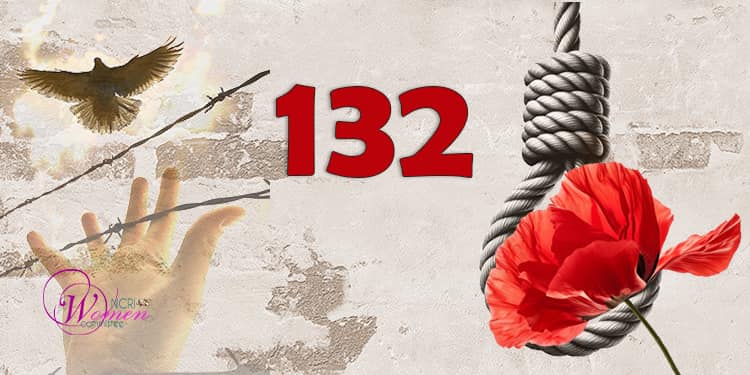
The “No to Execution Tuesdays” campaign marked its 132nd week on Tuesday, August 4, 2026, with political prisoners in 59 prisons across Iran participating in a coordinated hunger strike.
In a statement marking the campaign’s 132nd week, participants criticized the execution of protesters and the use of public executions, raising concerns about the judicial processes behind these cases. The statement said:
“Mojtaba Khamenei, the unseen authoritarian leader, is carrying out his father’s will, invoking the spirit of the 1980s and bringing execution cranes into the streets to take the lives of Amirhossein Safari and Abolfazl Sepahi in public. He also executes 19-year-old Arvin Kheirkhahan in Shahroud, a young man full of life, continuing the killings and mass repression that began in January. In this way, he seeks to prevent any form of protest aimed at fundamental and revolutionary change. Meanwhile, his representatives praise the results of executions during Friday prayers and in the state media, celebrating the executioners. Any awakened conscience must ask: if these young protesters were truly criminals and murderers deserving of public execution, why were their trials not held openly, and why were they allegedly tortured and tried in secret?”
Call for Broader Opposition to the Death Penalty
The statement further noted that, over the past 132 weeks, prisoners have continued their protests despite being transferred to solitary confinement, subjected to physical abuse, and, in some cases, facing the execution of fellow campaign participants. The authors called on opponents of the death penalty to use all available means to take practical action aimed at halting executions.
The statement also argued that threats and punitive measures directed at anti-execution activists reflect the growing influence and reach of the movement. It urged all opponents of capital punishment to make opposition to the death penalty a universal demand, regardless of the charges or political affiliations of those sentenced.
The statement concluded by emphasizing the importance of collective solidarity, continued resistance, and organization as essential tools for confronting authoritarianism and executions and reaffirmed the need to sustain these efforts.
Background
Now in its third year, “No to Execution Tuesdays” campaign has become the largest and most enduring protest movement inside Iranian prisons. Despite intensified security pressure, ongoing threats, communication restrictions, and punitive measures imposed on participating prisoners, the campaign has persisted and expanded, with prisoners from additional facilities joining its weekly actions.
A significant portion of these striking prisoners consists of female political prisoners serving their sentences in the women’s wards of Evin Prison, Qarchak Prison in Varamin, Sepidar Prison in Ahvaz, Adelabad Prison in Shiraz, Zahedan Prison, Yazd Prison, and Lakan Prison in Rasht.