
Sexual Apartheid in the Medieval Laws of the Clerical Regime
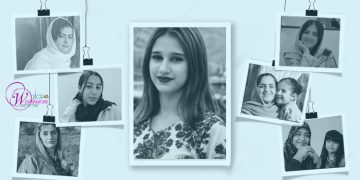
At a time when the world is moving toward the abolition of the death penalty, and when the number of women executed in other countries remains in the single digits, the religious dictatorship ruling Iran set a new record of brutality in 2025 by executing 65 women.
The fundamental question is why the fate of these women ends at the gallows.
The answer cannot be found solely in the solitary confinement cells of Qarchak or Evin prisons, nor in the psychological condition of the victims themselves. Rather, it must be sought in legal texts that define “woman” not as a free human being, but as the property of men and a matter of so-called religious expediency. Every knot tightened on the noose of an Iranian woman was first woven into the most foundational laws of this regime.
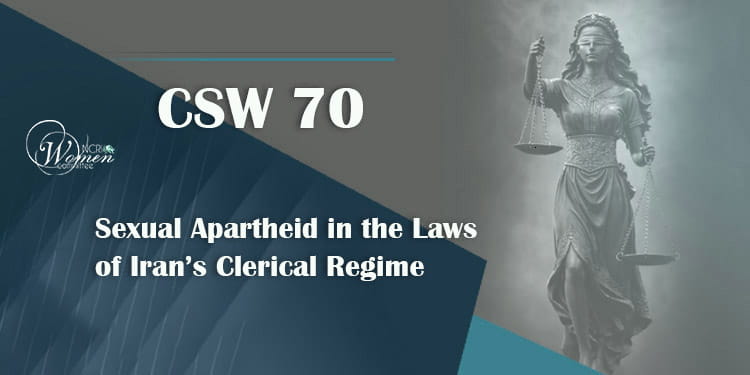
In this booklet, prepared for CSW70, the NCRI Women’s Committee demonstrates, through a meticulous examination of the clerical regime’s laws, how the mullahs have systematically sealed off access to justice for Iranian women through layers upon layers of misogynistic legislation.
Introduction
The religious dictatorship ruling Iran is one of the few political systems in the world to have institutionalized discrimination against women systematically across all levels of its legislative framework.
The execution of 65 women in 2025 is the logical outcome of a structure in which “being a woman” is not recognized as a human identity but rather treated as an existence subordinate to men.
The constitution of the religious dictatorship blocked the path to equality from the very outset. The Civil Code sidelines women by cutting their economic worth and legal credibility in half. Family law endorses child marriage and enforces dead-end divorce regulations to keep women dependent, while the Penal Code, monstrous in nature, takes revenge on women who challenge these barriers, condemning the weakest and most isolated among them to death.
To substantiate this argument, we will examine step by step the obstacles embedded in the clerical regime’s laws that prevent women from accessing justice.
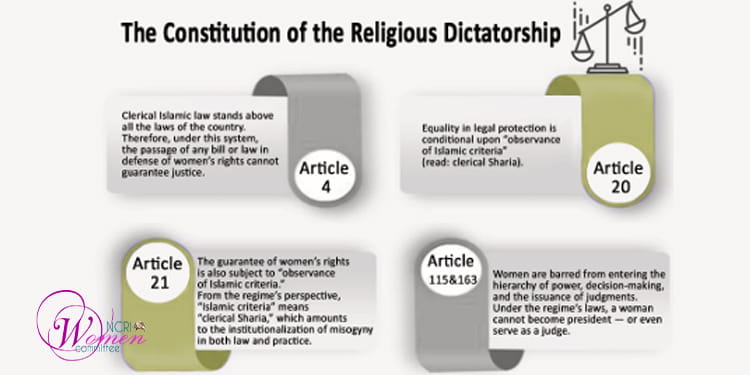
Step 1: The Ideological Foundation
The Constitution: Discrimination Embedded in the Structure of Power and Governance
The Constitution of the mullahs’ regime is a document that transforms “discrimination” into a state duty. This body of laws forms the foundation and architecture of structural discrimination against women.
Principle 4 places the unfounded dogmas of clerical Sharia above all other laws, declaring: “All laws and regulations … must be based on Islamic criteria (i.e. the mullahs’ Sharia laws). This principle governs all principles of the Constitution, as well as all other laws and regulations.”
As a result, any effort toward gender equality is rendered futile from the outset, since the interpretation of “Islamic criteria” is monopolized by clerics appointed to the Guardian Council, all of whom are directly selected by Khamenei.
This layer of turbaned fossils has consistently used every platform to promote their most misogynistic, outdated beliefs—such as legitimizing child marriage and enforcing compulsory hijab—under the pretext of “Sharia.”
Consequently, the passage of any bill or law in defense of women’s rights, even if it occurs, would, in practice and under this regime, open no real avenue for women to access justice.
Within the same Constitution, Principle 20 conditions legal equality on “observance of Islamic criteria (i.e. the mullahs’ Sharia laws),” while Principle 21, which ostensibly obliges the state to guarantee women’s rights, is immediately nullified by the caveat “in accordance with Islamic criteria,” effectively wielding the clerical stick to override any protections.
The phrase “observance of Islamic criteria” effectively means that equality exists only so far as it does not step even one inch beyond laws from 1,400 years ago among primitive Arabs, whose origins are sometimes only loosely connected to Islam itself. Although the 1,400-year-old laws codified by the Prophet, such as granting women inheritance and testimony rights or prescribing “an eye for an eye” in retaliation, were originally intended to prevent women from being buried alive and to curb tribal massacres, in their time they represented significant steps toward equality, peace, and security.
Principles 115 and 163 of the regime’s Constitution prevent women from entering the hierarchy of power, decision-making positions, and the judiciary. The Guardian Council has consistently interpreted the term “rejal” to mean “men.”
Recently, the regime’s Judiciary Chief, mullah Gholamhossein Mohseni Ejeii, reaffirmed this exclusivity regarding the presidency and the judiciary, stating: “According to our jurists, a judge cannot be a woman and cannot issue rulings in any case or at any level.” (Mizan News Agency, December 22, 2025)
Thus, at all high levels of government and the judiciary, it is men who make decisions and issue rulings, a ruthless, male-dominated system in which women have no effective voice whatsoever.
Step 2: Red Lines in Everyday Life
After sealing off the higher-level principles, the clerical lawmakers block the next lines of access to justice for women by embedding discrimination into everyday life.
Articles 907, 913, and 946 of the Civil Code grant women only half the inheritance of men. This deprives women of financial independence, keeping them in perpetual dependence on male family members. The long-term result under this regime has been widespread “female poverty,” which even state-controlled media openly acknowledge.
Discrimination in the transmission of nationality is another barrier the clerical regime imposes on women in daily life. Articles 976 and 987 of the Civil Code recognize the transfer of Iranian nationality to children, except in rare and difficult cases, only through the father’s bloodline. Moreover, an Iranian woman who marries a foreign national faces severe restrictions on maintaining her civil and property rights.
This provision has left thousands of Iranian children stateless, depriving them of all basic rights due to the lack of official identification. Under the regime’s laws, access to justice for these women and their children is effectively stamped as zero.
In the culture of the ruling clerics, blatant discrimination against women is always wrapped in the guise of “family” and placed squarely on their shoulders. In recent years, policies aimed at increasing and “rejuvenating” the population have only added to this burden of oppression.
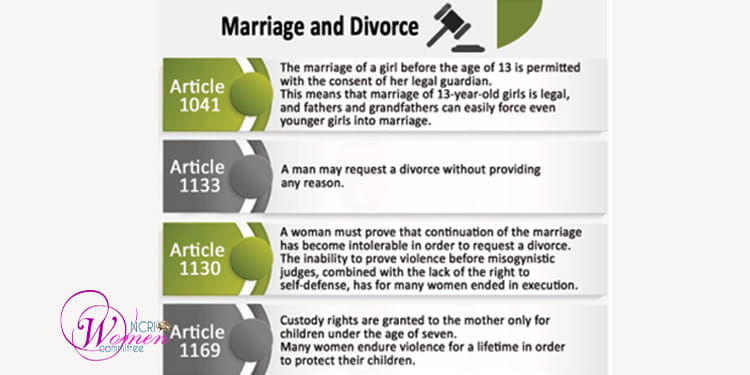
According to Article 1041 of the Civil Code, “The marriage of a girl under the age of 13 and a boy under the age of 15 is contingent upon the permission of their guardian.”
In practice, this means that the marriage of 13-year-old girls is legally sanctioned, and fathers or grandfathers can easily force even younger girls into the violence and abuse of child marriage.
This law is the root cause of most women’s executions in Iran. A girl forced into marriage at 13 or younger is, in effect, a victim of legally sanctioned sexual slavery. Many of the 65 women executed in 2025, and dozens of others in previous years, were child brides who, after years of torture, abuse, or exploitation by their so-called spouses or some male relative, and denied access to justice or divorce, ultimately committed acts deemed criminal in moments of extreme desperation.
Denied fair adjudication, they are repeatedly victimized, as under the prevailing laws, the right to divorce is unilaterally reserved for men.
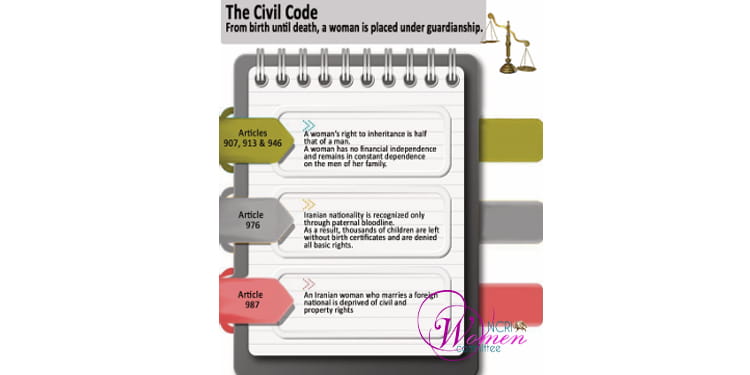
Article 1133 of the clerical Civil Code states: “A man may, in accordance with the conditions stipulated in this law, request a divorce from his wife through the court,” with no requirement to provide any reason.
By contrast, under Article 1130, a woman seeking a divorce must prove ‘hardship and unbearable difficulty’ in court, and the testimony of a female witness carries no legal weight in the regime’s courts.
Women seeking to escape violent marriages must endure months or even years before misogynist judges, struggling to prove that life with their “husband” is intolerable. A significant number of the women who ultimately end up on the gallows had, in desperation, repeatedly approached the clerical courts to request a divorce, only to have the courts side with the men and force them back into the home.
Under Articles 1105 and 1108, the man is inherently the head of the household, and “if a wife refuses to fulfill her marital duties (sexual and general obedience),” the husband may beat her and even withhold financial support for her and the home in which she works from morning to night.
Even if a woman succeeds in obtaining a divorce, she is effectively forced to endure the psychological torment of having her children remain with a violent or addicted father, as Article 1169 grants custody to the mother only until the child reaches seven years of age.
Consequently, many women in Iran endure a lifetime of violence and abuse out of fear of losing their children, sacrificing their own lives for their protection.
Step 3: The Penal Code, the Judicial Machinery of Repression
The judicial system of the religious dictatorship is designed not to deliver justice, but to reproduce violence against women.
Seeking justice for women through an institution that values their lives as worth half that of men is nothing more than a bitter irony.
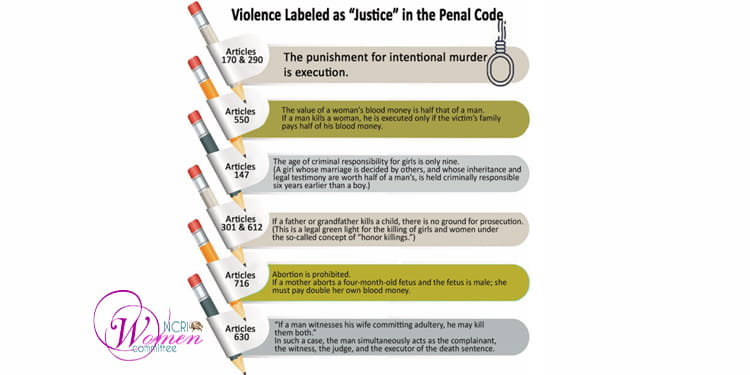
Under Articles 170 and 290 of the clerical Penal Code, the punishment for intentional murder is qisas al-nafs (execution).
In Iran’s legal system, murder is not considered a crime against society, but rather a “private right” of the wali al-dam, that is, the victim’s father, who may demand execution or grant forgiveness in exchange for blood money (diya).
The mullahs’ religious dictatorship that intrudes into the most private details of people’s lives through enforced hijab laws and pervasive security and internet controls, here assumes the role of executor of the victim’s family’s will. In this way, it attempts to evade examining the underlying causes of the crime and to pursue criminal executions, which in reality serve as its instrument for spreading fear and terror throughout society, particularly among women.
In this system, concepts such as self-defense, a history of domestic violence, or psychological conditions that led to the incident are rarely accepted as mitigating factors against execution.
As a result, women who kill their abusive husbands in self-defense find virtually no path to justice. Proving “legitimate self-defense” in Iran’s courts is almost impossible for women, given the inequality in the value of testimony, because alongside the devaluation of a woman’s life, women’s testimony is considered worth half that of a man’s, and in some cases is deemed to have no value at all by criminal judges.
By contrast, when a woman is killed, the perpetrator is rarely sentenced to qisas, because under Article 550 of this law, the value of a woman’s blood is considered half that of a man’s.
This means that if a man kills a woman and her family seeks qisas, they must pay the “difference in blood money” (tafazol-e diya), half the diya of the man, to his family in order for the execution to be carried out.
This degrading outlook permeates the conduct of judges and the judicial system as a whole.
Yet Iranian women and girls, whose lives and testimony are valued at half that of men, are nevertheless deemed fully accountable in the judicial reckoning from early childhood.
Article 147 of the clerical Penal Code, based on the so-called religious age of puberty previously enshrined in the Civil Code, defines the age of criminal responsibility for girls at nine, while setting it at fifteen for boys.
In other words, a nine-year-old girl, who is not allowed to decide on her own marriage or divorce and does not enjoy equal inheritance rights, is suddenly deemed “an adult” by the regime’s misogynistic judges, held more accountable than a man, and may even be sentenced to death.
She may then spend years, until reaching the age of eighteen, waking every night to the nightmare of execution, since the regime claims it does not carry out executions before the age of eighteen, a claim that has been repeatedly contradicted in practice.
This is the same girl whose life and blood are legally owned by her father, and under Articles 301 and 612, if that “father” or paternal grandfather takes her life, it is of little consequence. Even if such fathers are brought before the law, the maximum sentence prescribed is ten years in prison, often reduced in practice to as little as two years.
This law effectively grants a license for so-called “honor killings.” It reveals that the true purpose of legislation written by the religious dictatorship is not “justice,” but the preservation and reinforcement of “male dominance,” thinly disguised under the alias of “family.”
Naturally, the mother has no such rights. According to Article 716, even if she aborts a four-month-old fetus, she is subject to punishment, and if the fetus is male, she must pay twice the diya (blood money) of the child.
The Penal Code has institutionalized the right to kill women not only for fathers and paternal grandfathers, but also for husbands.
Article 630 states: “If a man catches his wife committing adultery with another man with her consent, he may kill both of them on the spot, and in this case, he is exempt from qisas (retribution) and ta’zir (judicial punishment).”
These laws allow a man to simultaneously act as the “complainant,” the “judge,” and the “executor” of death, without the need for a court or even proof of the accusation he has made against his wife. It is no coincidence that cases of women being killed in Iran continue to rise every year.
Another factor that makes the state-sanctioned killing of women permissible is drug-related offenses.
The regime uses execution for drug crimes as a tool for social control. In these cases, the “right to a fair trial” is virtually nonexistent.
Women executed under this pretext are mostly from extremely poor backgrounds and often heads of households, trapped in cycles of poverty and deprivation, and have become victims of large networks connected to government institutions.
These women are executed as “low-level scapegoats,” and it is rarely acknowledged that they were acting under pressure or threats from their husbands, brothers, or fathers to carry drugs.
Meanwhile, the leaders of drug networks, who are mostly linked to the government, are almost never brought to justice.
It is also important to note that if women belong to ethnic or religious minorities, particularly the oppressed and marginalized communities of Baluchistan and Kurdistan, or are staunch political opponents of the regime, these injustices are significantly intensified.
Step 4: Legal Gaps
What Is Deliberately Overlooked
The Iranian regime not only harms women through its “existing” laws, but by “refusing to enact protective legislation,” it creates a safe space for crimes against women.
It should be emphasized, however, that given what has been outlined so far, under the rule of this misogynistic religious dictatorship and the presence of these overarching laws, even if bills or supplementary laws aimed at protecting women were somehow approved, they would, in practice, never be enforced.
Step 5: Enacting New Unjust Laws and Bills
New laws on dowry and compulsory hijab, adding further obstacles to women’s access to justice
5–1. Amendment of the Dowry Law: Reproducing Legal Inequality Against Women
On December 2, 2025, the regime’s parliament hastily approved a bill titled “Amendment of the Dowry Law.”
According to this resolution:
“If the dowry at the time of marriage is up to 14 Bahar Azadi gold coins or their equivalent, its collection shall be subject to the provisions of Article (2) of the Law on the Enforcement of Exemptions from Financial Convictions. If the dowry exceeds this amount, payment of the excess shall be based solely on the husband’s financial ability.”
It further states: “The term imprisonment in this law includes both ‘keeping a person in prison’ and ‘restricting a person through the use of electronic monitoring systems.’” (Asr-e Iran, December 4, 5, and 7, 2025)
This means, first of all, that a husband will not be subject to judicial proceedings for failing to pay more than 14 gold coins. If the dowry exceeds 14 coins, the woman must prove the husband’s financial ability in order to claim the excess amount.
As a result, if a woman, whose testimony, in the view of the clerical judiciary, is considered worth half that of a man, is unable to prove that her husband has the ability to pay more than 14 coins, the remainder of the dowry is effectively nullified altogether.
Prior to this law, if a man’s claim of financial incapacity was accepted, the court would set the dowry in installments, and the man was obligated to pay it gradually.

This law also stipulates provisions regarding the right to divorce: if the spouses have lived separately for at least two consecutive years and the court establishes the woman’s severe aversion to the man, the woman may obtain the right to divorce by relinquishing her dowry. (Asr-e Iran, December 4, 2025)
Previously, under the clerics’ Civil Code, a woman seeking divorce had to prove that continuing life with the man in question was harmful to her; now, she must also forgive her dowry. This means she will have no financial guarantee or means to support an independent life.
This is happening in a context where, as noted earlier, the headship of the family is considered an inherent right of the man, and rights such as divorce, child custody, the authority to prevent a woman’s employment or education, restrictions on her leaving the country, determination of the place of residence, inheritance rights, and even certain medical decisions are all legally vested in the man. Now, dowry, previously the only effective tool available to women to secure a minimum level of financial security, has also been targeted by the clerics.
A woman who loses effective access to her dowry, within a system where the labor market, insurance schemes, social protections, and supportive laws are also systematically designed against her, is pushed toward structural poverty.
This situation, especially for housewives or women without independent income, amounts to a total descent into economic marginalization.
This law, by sending a message of legal insecurity to women, increases the risks of marriage for them and will lead to other social crises, aggravating violence against women in the family and social insecurity for divorced women.

Registering such a law represents a step backward even compared to the very Sharia that the clerics claim to uphold. This is because even in clerical Sharia law, no ceiling has ever been set on dowry, and its amount has been purely a mutual contractual agreement between the spouses.
For the first time under the clerical regime, a limit on dowry was introduced in March 2013, with the passage of the Family Protection Law, which set a maximum amount of 110 gold coins for the husband’s criminal liability in paying the dowry. (ILNA, December 5, 2025)
In the meantime, in Article 1080 of the regime’s Civil Code, “the amount of dowry depends on mutual agreement of the spouses.” Therefore, the adoption of the bill to decrease the dowry is an illegal measure.
5–2. The “Chastity and Hijab” Law: Stripping Women of the Right to Freedom of Dress Through Forced Repression
The “Chastity and Hijab Law 2025”: A Legal Framework for Repression
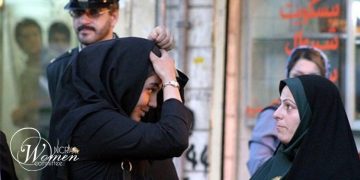
From October 2025, the clerical regime once again began seriously signaling an intensification of the repression of women under the pretext of enforcing compulsory hijab.
What is now being promoted as the “Chastity and Hijab Law 2025” is the very same law that was approved by parliament and confirmed by the Guardian Council last year, but whose implementation was halted by the regime’s Supreme National Security Council out of fear of social unrest and popular uprisings. The regime is now attempting to enforce that same law simply by changing the date. (ILNA, November 11, 2025)
This law criminalizes “unveiling” in public spaces, vehicles, and cyberspace, subjecting women to heavy financial fines, suspension of administrative services, travel bans, and social deprivations. The broad and vague definition of “public space” effectively extends repression into all areas of women’s lives, functioning as a punitive and surveillance-based mechanism for exerting structural pressure on women.
From the Morality Police to “Enforcers of Virtue”: Social Mobilization to Control Women
Alongside repressive legislation, the regime is moving toward a control-oriented social mobilization.
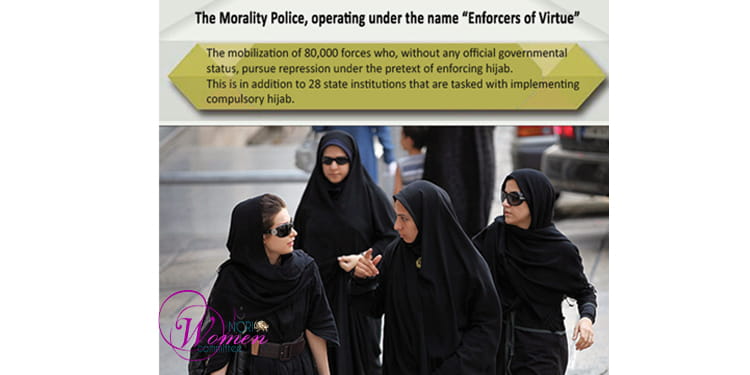
On October 15, 2025, Ruhollah Momen-Nasab, Secretary of Tehran Province’s Headquarters for the Promotion of Virtue and the Prevention of Vice, announced the launch of a “Chastity and Hijab Situation Room” and the activation of 80,000 “enforcers of virtue.” This is an effort to replace the formal morality police with a decentralized, unaccountable, and pervasive network.
Momen-Nasab did not specify the exact duties of these 80,000 forces. What is clear, however, is that their role extends beyond monitoring and reporting to include social pressure and direct interference in people’s everyday lives. Such an approach fuels the spread of psychological insecurity, especially for women who still carry the memory of acid attacks and brutal beatings carried out under the pretext of enforcing hijab.
Securitizing Hijab: From “Improper Veiling” to “Corruption Networks”
In a speech on November 4, 2025, Ali Khamenei stated: “The issue of hijab must be regarded as a religious and Islamic matter.”
Gholamhossein Mohseni Ejei, head of the regime’s judiciary, has likewise emphasized—using security-oriented rhetoric during provincial visits—the enforcement of existing laws to impose hijab.
The repeated use of concepts such as “organized networks of corruption and prostitution,” “foreign enemies,” and “soft war” is a clear attempt to encourage and legitimize regime loyalists tasked with enforcing compulsory hijab.
Similarly, Ali Salehi, Tehran’s prosecutor, noted that 28 executive bodies have specific legal duties in the area of “hijab and chastity,” and claimed that “some organized networks of corruption and prostitution, supported by foreign enemies,” are active. He called for decisive and swift action by law-enforcement and security forces to identify and confront these groups. (IRNA, November 18, 2025)
This securitization has paved the way for arrests, extrajudicial actions, and intensified repression against women, even though there is no clear legal basis for such a level of security intervention.
Within the regime, contradictory statements are made regarding the suspension or enforcement of the hijab law—disputes that both factions raise out of fear of public outrage and potential social uprisings. Yet what is observed on the ground is threat, repression, and a complete lack of security for women.
Step 6: Refraining from Enacting Protective Laws in Favor of Women
The clerical regime has not only institutionalized numerous barriers within its laws that prevent women from accessing justice, but by refusing to enact protective legislation, it has in practice fueled the ongoing cycle of violence against women.
It must, of course, be emphasized from the outset, based on what has already been discussed, that in Iran under this dictatorship, and given the existence of overarching discriminatory laws, even if a bill or supplementary legislation aimed at safeguarding women were somehow to gain approval, it would not be implemented in practice.
Nevertheless, examining the process of the bill to prevent violence against women and the mullahs’ 14-year political game with it remains highly significant.
Playing Games with Women’s Safety
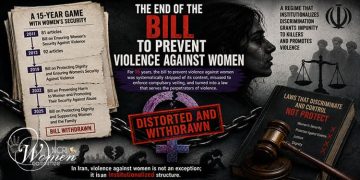
The only bill that, throughout the mullahs’ rule, was claimed by regime officials to be intended in favor of women is the bill to prevent violence against women—a bill that has now been passed back and forth among regime institutions for 14 years.
Every time a crime against women sparks public outrage, this bill resurfaces in state-controlled media. The parliament, the government, or the judiciary then claim to prioritize its review, but in practice they strip away parts of its preventive content, pass it on to another body, and ultimately consign it to deliberate oblivion.
The original text of this bill, titled “The Bill to Ensure the Security of Women Against Violence,” was drafted in 2011 and consisted of 81 articles. In 2013, the number of articles were increased to 92. However, it has since been reduced to just 30 articles.
Even a brief look at the changes in the bill’s title over the years is enough to reveal the lack of any genuine will to ensure women’s safety.
l 2011: The Bill to Ensure the Security of Women Against Violence
l 2019: The Bill for Protection, Dignity and Security of Women Against Violence
l 2020: The Bill of Protection of Dignity and Protection of Women Against Violence
l 2022: The Bill on Preventing Women from Harm and Improving Their Security Against Abuse
l 2025: The Bill to Preserve Dignity and Support Women and the Family
(VokalaPress.ir, June 7, 2025)
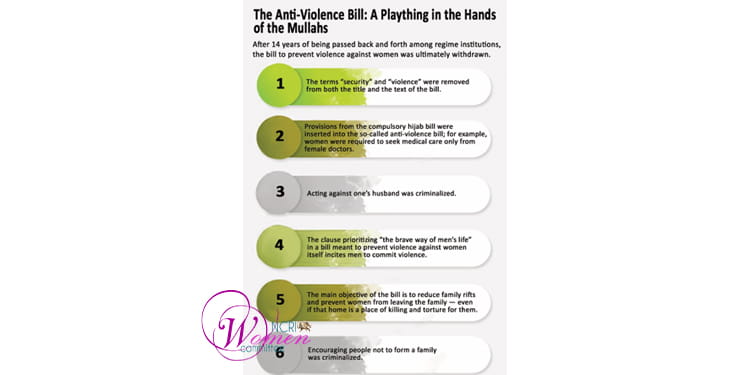
In this way, the most essential substantive terms, “security” and “violence” have effectively been erased from both the title and the text of the bill.
Instead of supporting women against violence, the bill’s content has shifted toward strengthening the family based on the “inherent authority of men,” along with the inclusion of regulations on dress codes for employees of various organizations and ministries.
l Ashraf Geramizadegan, a former legal and parliamentary advisor to the Directorate on Family and Women’s Affairs, says on this matter: “Over all these years, we have seen parts of this bill being cut from both ends under the pretext of ‘protecting the sanctity of the family.’ In my view, this shows that there have always been mindsets that want us women to remain behind and unable to claim our rights.” (Fararu, November 28, 2024)
l Azam Ghadiri, the sister of Mansoureh Ghadiri, an IRNA journalist who was killed by her husband in 2024, says: “It means that when people hear a woman screaming in her own home, they don’t allow themselves to call the police. This is the normalization of violence.” (Fararu, November 28, 2024)
l Mohsen Borhani, a jurist and a professor expelled from Tehran University, states:
“At present, the bill has no concern about violence against women. It has largely turned into a kind of moral or disciplinary outlook toward women, rather than eliminating the factors that produce violence against them. In the 2025 law, actions against the husband are also included as crimes.
“Where is violence against women, and where is criminalization in favor of men? Many of the criminal provisions that existed in the original bill to eliminate violence are removed in the final version.”
He adds: “The legislator presents the existence of this law as a favor to women, while in reality the presence or absence of this law makes no difference at all.” (Vokalapres.ir, June 7, 2025)
l In June 2025, the Pezeshkian government fearing intense social backlash similar to the 2021 uprising, withdrew this heavily mutilated bill from parliament. Zahra Behrouz-Azar, the head of the Directorate for Family and Women’s Affairs, stated: “The bill to support women against violence was withdrawn by the cabinet because serious substantive changes had been made to it.” (Fararu, August 26, 2025)
l Majid Ansari, deputy to the regime’s president in legal affairs, also described the bill as having been “distorted” or “hollowed out.” (Fararu, June 11, 2025)
l Five months after the withdrawal of the violence bill, in May 2025, media outlets reported that sections of the Hijab and Chastity Law had been appended to the bill purportedly aimed at supporting women. (Iscanews, October 21, 2025)
l When misogynistic members of parliament lost hope of enforcing the Hijab and Chastity Law, they resorted to every possible tactic to insert their desired repressive provisions, previously suspended by a decision of the regime’s Supreme National Security Council, into the framework of the bill to prevent violence against women. This maneuver took place despite the government’s explicit request to withdraw the bill. (Entekhab, October 12, 2025)
l Ahmad Fatemi, a member of the parliamentary Social Affairs Commission, openly admitted: “Provisions related to women-only universities and special women’s centers from the Hijab and Chastity Law have been incorporated into the bill to support women.” (Student News Club, Iscanews, October 21, 2025)

l Moreover, phrases such as “the priority of men’s chaste and honor-based way of life” in the bill on preventing violence against women have been imported from the Hijab and Chastity Law. This encourages men to commit violence against women, because gheyrat (male “honor”) in a patriarchal culture means the complete commodification of women as the property of the men in their families. (Khabarfoori, October 18, 2025)
l Zohreh Lajevardi, the daughter of Assadollah Lajevardi, the notorious Butcher of Evin Prison, who heads the Women and Family subcommittee in the Social Commission of the mullahs’ parliament, openly showed indifference toward the killing of and violence against women.
She said: “Our main objective in this bill is to reduce family gaps and prevent the spread of social harms.”
She added: “The family must not be turned into an arena for judicial conflict.”
She also spoke of “preventing the creation of conditions that lead women to flee the family and to situations that pave the way for infidelity within the family environment.” (Khabar Online, October 22, 2025)
l Maryam Baghi, a legal expert and civil rights activist, explains: “The bill includes criminalization of forming, encouraging, and even mandating the non-formation of a family. In other words, if a woman speaks about choosing to remain single, it is considered encouragement of celibacy which has been criminalized.”
She adds: “The bill on preventing violence also contains directives on women’s dress codes; for example, regulations governing the clothing of female medical staff and women who visit medical centers. The requirement that female patients be treated by female doctors and male patients by male doctors is another provision imported into this text from the Hijab and Chastity Law.” (Entekhab, October 12, 2025)
l Zahra Behrouz Azar once again told reporters: “If the government’s proposed amendments are not applied to the text and the bill does not move toward achieving its objectives, it will be definitively withdrawn.” (ILNA, January 3, 2026)
And the gamble with women’s lives and safety continues…