
Saturday, April 25, 2026
  • English
  • Français
  • فارسی
  • عربى
PODCASTS
NCRI Women Committee Women Resistance Freedom
  • Home
  • NEWS
    • Women’s News
    • Articles
    • Statements
  • PUBLICATIONS
    • Monthlies
    • Documents
    • Reference Library
  • ABOUT US
    • The NCRI Women’s Committee
    • Gender Equality
    • Women’s Platform
  • MARYAM RAJAVI
    • Maryam Rajavi
    • Maryam Rajavi Speeches
    • The Plan on Women’s Rights and Freedoms
    • Ten-Point Plan for the future of Iran
  • VANGUARDS
    • The Fallen for Freedom
    • Heroines in Chain
    • Women of Iranian Resistance
    • Famous Women
    • Women in History
  • EVENTS
    • IWD Conferences
    • Activities
    • IWD Speeches
    • Solidarity
  • VIDEO
    • Videos
    • IWD Videos
  • PODCAST
  • DONATE
  • CONTACT US
No Result
View All Result
NCRI Women Committee Women Resistance Freedom
  • Home
  • NEWS
    • Women’s News
    • Articles
    • Statements
  • PUBLICATIONS
    • Monthlies
    • Documents
    • Reference Library
  • ABOUT US
    • The NCRI Women’s Committee
    • Gender Equality
    • Women’s Platform
  • MARYAM RAJAVI
    • Maryam Rajavi
    • Maryam Rajavi Speeches
    • The Plan on Women’s Rights and Freedoms
    • Ten-Point Plan for the future of Iran
  • VANGUARDS
    • The Fallen for Freedom
    • Heroines in Chain
    • Women of Iranian Resistance
    • Famous Women
    • Women in History
  • EVENTS
    • IWD Conferences
    • Activities
    • IWD Speeches
    • Solidarity
  • VIDEO
    • Videos
    • IWD Videos
  • PODCAST
  • DONATE
  • CONTACT US
No Result
View All Result
NCRI Women Committee
No Result
View All Result
Home Documents
The Gendered Dimensions of the Water Crisis in Iran: Impacts on Women’s Health, Livelihoods, and Security

The Gendered Dimensions of the Water Crisis in Iran: Impacts on Women’s Health, Livelihoods, and Security

The Gendered Dimensions of the Water Crisis in Iran: Impacts on Women’s Health, Livelihoods, and Security

October 12, 2025
in Documents

How Iranian Women Shoulder the Heavy Burden of a Deepening Crisis

Download Italian Version

The water crisis in Iran has moved far beyond a simple environmental issue — it has become a humanitarian, ecological, and economic disaster.

While at first the problem seemed to be the result of drought and declining rainfall, its true causes ran much deeper: entrenched corruption and mismanagement at the heart of the ruling establishment. Until these systemic roots are addressed and removed, Iran’s present — and its future — will only become more precarious.

A significant number of researchers and international observers emphasize that 70 to 80 percent of the current crisis stems from mismanagement, unsustainable policies, lack of transparency, and corruption. As one report notes, “Iran’s water crisis is not a crisis of resources; it is a crisis of decisions—decisions that have made the land thirstier and the future darker. This crisis, alongside the erosion of public trust in governance, is a symptom of structural and managerial failure.” (Newsweek, August 1, 2025; The Times, December 8, 2022; Reuters, April 27, 2021)

Water Crisis in Iran_October 2025_ENDownload

Field reports from various districts of Tehran indicate a severe decline in water pressure, to the extent that even residents on the ground floors of buildings are deprived of access to drinking water. In a public statement, the Tehran Regional Water Company urged citizens to use domestic pumps and storage tanks to “strengthen water pressure,” effectively shifting the burden of water supply onto the people, many of whom lack the financial means to afford such equipment. (Ebtekar, July 21, 2025)
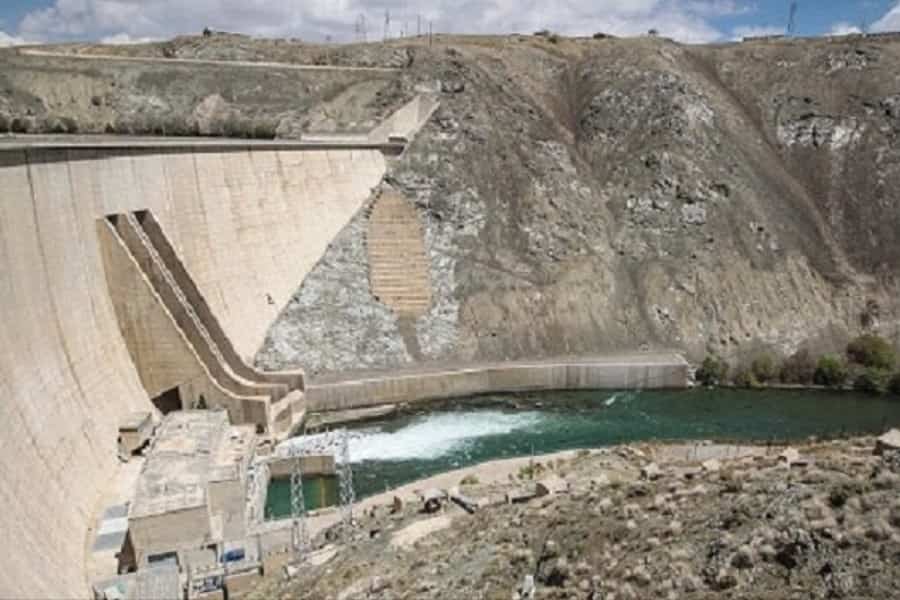
Tehran Dam

Reza Hajikarim, head of the Water Federation, has admitted: “Tehran’s ‘Day Zero’, the day when buildings are completely cut off from water, arrived long ago. Yet the city still holds the world record for land subsidence, caused by excessive extraction of groundwater resources.” (Jahan-e Sanat, August 6, 2025)

The Double Burden on Women

The catastrophe of water scarcity has profound social and economic consequences that affect millions of lives in Iran. Long and unplanned water cuts have paralyzed urban and rural life; agriculture has collapsed, livestock suffer from thirst, and families lack even drinking water.

Signs of water scarcity appear in family relations, household economies, physical and mental health, and the growing wave of internal migration.

Because of women’s traditional responsibilities, such as caring for children or the elderly, preparing food, maintaining hygiene, and managing gardens and livestock, they bear the greatest stress.

It is women who, from morning to night, must manage the crisis of water shortage. The psychological strain caused by repeated water cuts, long queues at water tanks, deteriorating hygiene for children and women, and rising water costs deprive them of learning opportunities, health, and leisure. These conditions lead to depression, chronic anxiety, rising family tensions, and domestic violence.
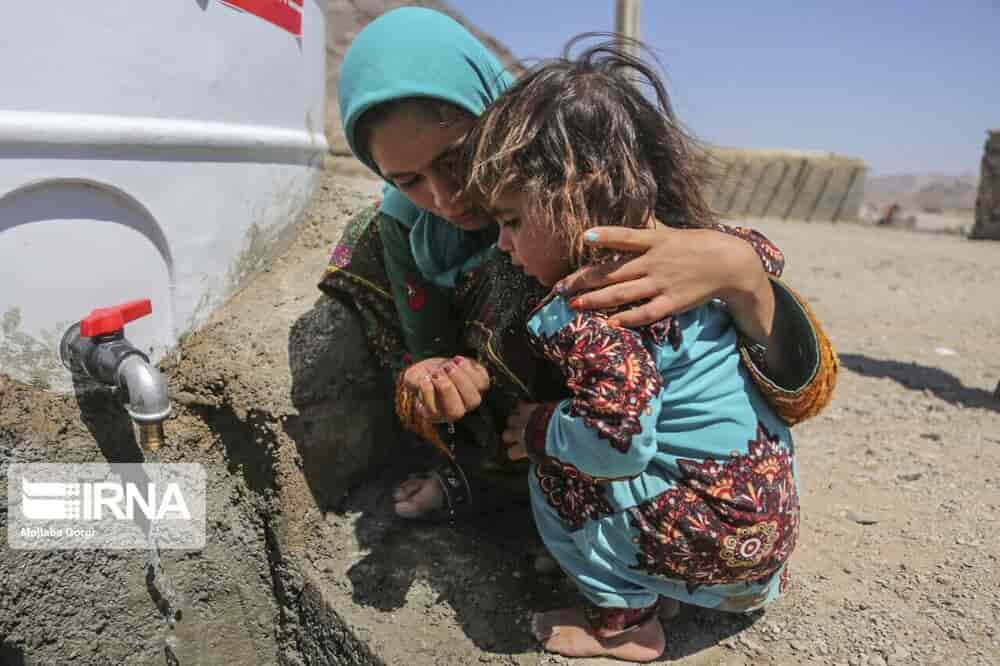
Water Shortage and Violence Against Women

Beyond household hardships, water scarcity also disrupts local economies and livelihoods, leading to widespread poverty. In turn, poverty contributes to child marriage, domestic violence, and various social harms. “One of the main causes of violence against women is poverty,” notes Jame’e 24. (July 31, 2021)

Salomeh explains:

“As our city’s economy worsened, education and healthcare declined too, and child marriage increased. Imagine how hard it is for a 15- or 16-year-old girl, already married, to deal with the water crisis, become pregnant, give birth, and care for her baby in these conditions.” (Radio Zamaneh, October 17, 2024)

This pattern is visible throughout Iran’s water-deprived regions, particularly in rural parts of Sistan and Baluchestan and South Khorasan, where the water crisis fuels school dropouts, child and forced marriages, and the neglect of women’s health and hygiene. (Bahre Vari Website, December 17, 2024)
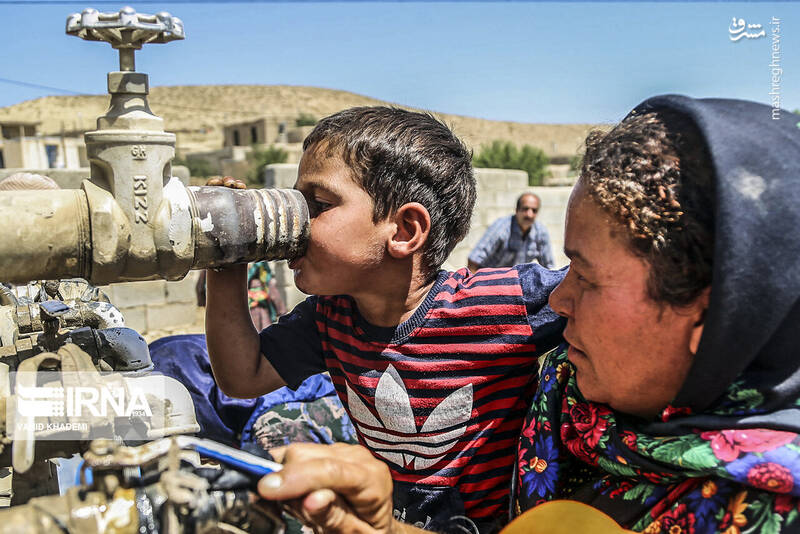
Women at the Forefront of Popular Protests

Water scarcity, as a driving factor, has escalated social tensions in Iran to unprecedented levels. The prominent presence of women in these protests is notable. Large-scale demonstrations in Khuzestan, which emerged in recent years due to water shortages and the drying of wetlands, continued in the summer of 2025. Instead of addressing the problem, the regime labeled protesters as “rioters” and, using military force, killed or arrested dozens of people. (Euronews – March 13, 2025)

Similar protests took place from May to August 2025 in various cities across Iran, including Shahr-e Kord and provinces in the south and center, with slogans such as “Water, electricity, life; it is our undeniable right” being chanted. (Wikipedia – August 11, 2025)

In Tehran, residents of Nasimshahr took to the streets on July 21 due to water shortages and three days of complete water cuts during the scorching heat of July.

Additionally, on July 23 and 24, Tehran and Eslamshahr witnessed anti-government protests in response to water and electricity cuts. In Tehran on July 23, protesters in several districts expressed their anger over the country’s disastrous situation with slogans such as “Death to Khamenei, curse on Khomeini,” “All these years of crimes, death to this regime,” and “Death to the dictator.” In Eslamshahr on July 24, the slogan “Death to Khamenei” echoed in response to repeated power outages. Similar protests were also reported on the same day in Marvdasht and Torbat Jam.

On Friday, July 25, the residents of Barzanun, Nishapur, also protested the ongoing water shortage by blocking the road. Villagers stated, “If there is no water, and if there is no response from the regime’s authorities, then the road should not be open either!” (Secretariat of the National Council of Resistance of Iran – July 25, 2025)
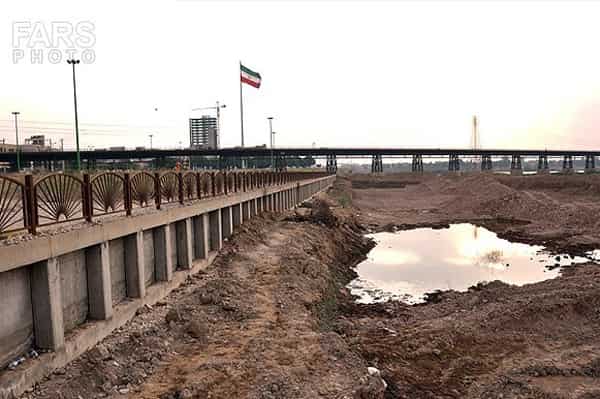
Karun River

Final Word

The crisis currently referred to as an energy imbalance is neither sudden nor the result of climate change; rather, it is the cumulative outcome of corruption and policies imposed on the people, intertwined with the nature of a religious dictatorship. The water crisis is yet another of the countless reasons behind the political instability and the lack of legitimacy of the clerical regime.

Kaveh Madani, head of the Water, Environment, and Health Institute at the United Nations University, says: “If we pay attention to our country, we can see the signs of a serious, hard-to-treat disease, a severe infection, or even cancer in various sectors. One day we can’t breathe because of Tehran’s air pollution, another day it’s dust storms, another day the water situation, the status of an educational institution, the price of the dollar and the economy, the stock market, or industry. If we look closely, the signs of crisis are appearing across all sectors. Many of these issues share common roots. We must admit our failure.” (Etemad, July 26, 2025)

Repeated protests in Khuzestan, Isfahan, and other provinces, triggered by water shortages, reflect the growing anger of the people at the regime’s incompetence. The suppression of these protests, which has resulted in the deaths of demonstrators, has further fueled public outrage and weakened the foundations of the regime’s power.

Signs of a nationwide uprising aimed at overthrowing this illegitimate regime are visible everywhere. What concerns the international community and awakened consciences, however, is assisting the people of Iran in this critical endeavor. Recognizing the organized alternative of the Iranian people, who have fought for Iran’s freedom for decades, will not only accelerate the liberation of the Iranian people from dictatorship but will also bring peace and friendship to the free world.


ShareTweetPinShareSendShare

Related Posts

Iran’s Regime Pressures Imprisoned Women to Halt Anti–Death Penalty Campaign

April 24, 2026
Iran’s Regime Pressures Imprisoned Women to Halt Anti–Death Penalty Campaign 30 Political Prisoners Demand Return of Women Inmates from Qarchak Prison to Evin Execution of Political Prisoner Reza Rasaei Ignites Protests in Evin Women's Ward

Reports from Evin Prison point to a sharp increase in pressure on political detainees, particularly imprisoned women held in the women’s ward. According to these accounts, the prison’s...

Read moreDetails

9-Year-Old Girl’s Murder Exposes Iran Regime’s Failure to Protect Children

April 24, 2026
9-Year-Old Girl’s Murder Exposes Iran Regime’s Failure to Protect Children

The mutilated and charred body of 9-year-old girl, identified as Fatemeh Zahra Hosseinbar, was discovered four days after she was abducted in the city of Gasht, a district...

Read moreDetails

Forced Confessions Lead to 25-Year Sentence for Mother Over Iran Protests

April 23, 2026
Forced Confessions Lead to 25-Year Sentence for Mother Over Iran Protests

Fatemeh Abbasi, a 34-year-old mother and one of the thousands detained during the January 2026 Iran protests, has been transferred to Evin Prison. After being arrested alongside her...

Read moreDetails

Two Women Face 74 Lashes and 7 Years Prison over Iran Protests

April 23, 2026
Two Women Face 74 Lashes and 7 Years Prison over Iran Protests

The Iranian judiciary has sentenced two women to a combined total of seven years in prison and 74 lashes following their involvement in the January 2026 Iran protests....

Read moreDetails

Iran Regime Arrests Women and Girls: Torture and Detention without Legal Clarity

April 22, 2026
Iran detains women and girls: torture and detention without legal clarity

Amid a growing wave of arrests targeting women and teenage girls across multiple Iranian cities, numerous reports have emerged detailing the manner of detention, conditions of confinement, and...

Read moreDetails
Next Post
Face to Face with the Beast (22) From the memoir by Hengameh Haj Hassan – Part 22

Face to Face with the Beast (22)

Documents

A Report to CSW70: Gender-Based Discrimination Under Iranian Law

A Report to CSW70: Gender-Based Discrimination Under Iranian Law

March 8, 2026

Structural Inequality and State-Sanctioned Oppression of Women Gender-Based Discrimination Under Iranian Law” is the title of the NCRI Women’s Committee’s...

Annual Report 2026: From Protests, to Uprising, and the Role of Iranian Women

Annual Report 2026: From Protests, to Uprising, and the Role of Iranian Women

March 3, 2026

On the eve of International Women’s Day 2026, the NCRI Women’s Committee presents its Annual Report 2026, offering a recap...

Iranian women Who Lost Their Lives in Iran’s January 2026 Uprising

Iranian Women Who Lost Their Lives in Iran’s January 2026 Uprising

January 25, 2026

Names That Must Not Be Forgotten Iranian women played a central and courageous role in the January 2026 uprising, standing...

Monthlies

March 2026 Report: How Iranian Women Are Shaping the Resistance
Monthlies

March 2026 Report: Courage Under Fire

April 3, 2026
January 2026 Report: Women at the Core of the Uprising
Monthlies

January 2026 Report: Women at the Core of the Uprising

January 31, 2026
December 2025 Report: A Year in Review: Iranian Women’s Resistance Against Religious Dictatorship
Monthlies

December 2025 Report: A Year in Review: Iranian Women’s Resistance Against Religious Dictatorship

January 5, 2026
November 2025 Report: Under the Clerical Regime, Nowhere Is Safe for Women in Iran
Monthlies

November 2025 Report: Under the Clerical Regime, Nowhere Is Safe for Women in Iran

November 30, 2025

Articles

Iran detains women and girls: torture and detention without legal clarity

Iran Regime Arrests Women and Girls: Torture and Detention without Legal Clarity

April 22, 2026

Amid a growing wave of arrests targeting women and teenage girls across multiple Iranian cities, numerous reports have emerged detailing...

Wave of Arrests Targeting Women and Minors Amid Wartime in Iran

Wave of Arrests Targeting Women and Minors Amid Wartime in Iran

April 10, 2026

Following an intensified crackdown amid the recent war, multiple reports indicate a sharp rise in arrests across Iran, with women...

Mothers Who Gave Their Lives for Freedom during January 2026 Uprising in Iran

They Went Knowing: Mothers Who Died for the Future of All Children

April 6, 2026

Among those killed during the January 2026 uprising in Iran there are mothers whose names stand out—women who took to...

The Fallen for Freedom

Sholeh Sotoudeh (Pregnant)
The Fallen for Freedom

Sholeh Sotoudeh “Shot Dead Alongside Her Unborn Child”

April 19, 2026
Ghazal Aghaei Lindi was killed on January 9, 2026
The Fallen for Freedom

Ghazal Aghaei Lindi

April 16, 2026
Farzaneh Tavakkoli, a resident of Arak, was killed on January 9, 2026
The Fallen for Freedom

Farzaneh Tavakkoli

April 13, 2026
Shabnam Ferdowsi was killed on January 8, 2026, during the nationwide protests
The Fallen for Freedom

Shabnam Ferdowsi

April 12, 2026

ABOUT US

NCRI Women Committee

We work extensively with Iranian women outside the country and maintain a permanent contact with women inside Iran. The Women’s Committee is actively involved with many women’s rights organizations and NGO’s and the Iranian diaspora.
The committee is a major source of much of the information received from inside Iran with regards to women. Attending UN Human Rights Council meetings and other international or regional conferences on women’s issues and engaging in a relentless battle against the Iranian regime’s misogyny are part of the activities of members and associates of the committee.

CATEGORIES

  • Activities
  • Articles
  • Documents
  • Famous Women
  • Heroines in Chain
  • IWD Conferences
  • IWD Speeches
  • IWD Videos
  • Maryam Rajavi
  • Maryam Rajavi Speeches
  • Monthlies
  • Podcast
  • Reference Library
  • Solidarity
  • Statements
  • The Fallen for Freedom
  • Videos
  • Women in History
  • Women in Leadership
  • Women of Iranian Resistance
  • Women's News

BROWSE BY TAG

Child marriage coronavirus education execution forced hijab Gender Gap Generation Equality Honor killings Iran Teachers Maryam Akbari Monfared Nurses Plan on Women's Rights and Freedoms Poverty Prisoners Protests rural women Saba Kord Afshari The girl child Violence against women Women's Leadership Women Heads of Household Zeinab Jalalian

The copyright of all the material published on this website has been registered under © 2016 the Women’s Committee of the National Council of Resistance of Iran. To obtain permission to copy, redistribute or publish the material published on this website, you should write to the NCRI Women’s Committee. Please include the link of the original article on our website, women.ncr-iran.org.

Welcome Back!

Login to your account below

Forgotten Password?

Retrieve your password

Please enter your username or email address to reset your password.

Log In

Add New Playlist

No Result
View All Result
  • Home
  • News
    • Women’s News
    • Articles
    • Statements
  • Publications
    • Monthlies
    • Documents
    • Reference Library
  • About Us
    • The NCRI Women’s Committee
    • Gender Equality
    • Women’s Platform
  • Maryam Rajavi
    • Maryam Rajavi
    • Maryam Rajavi Speeches
    • Ten Point Plan for Iran
    • The Plan on Women’s Rights and Freedoms
  • Vanguards
    • The Fallen for Freedom
    • Heroines in Chain
    • Women of Iranian Resistance
    • Famous Women
    • Women in History
  • Events
    • IWD Conferences
    • Activities
    • IWD Speeches
    • Solidarity
  • Video
    • Videos
    • IWD Videos
  • Podcast
  • Donate
  • Contact us
  • فارسی
  • عربی
  • Français

The copyright of all the material published on this website has been registered under © 2016 the Women’s Committee of the National Council of Resistance of Iran. To obtain permission to copy, redistribute or publish the material published on this website, you should write to the NCRI Women’s Committee. Please include the link of the original article on our website, women.ncr-iran.org.