
Bearing Unequal Burdens Across Livelihoods, Health, and Education in the Recent Conflict
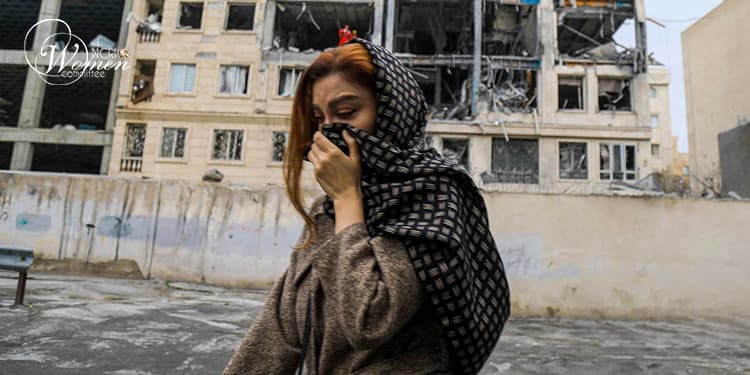
The recent war in Iran does not unfold only on the front lines. Its impact is felt in kitchens, family budgets, classrooms, disconnected phone lines, and exhausted bodies. As insecurity, inflation, and economic instability have intensified, Iranian women have borne a disproportionate share of the costs of the crisis. These costs are not measured in growing poverty; they mean working more, eating less, living with greater insecurity, and becoming increasingly invisible.
Working women who can no longer afford the basic necessities of life despite having jobs, pregnant women whose health, and that of their children, is threatened by the removal of essential foods from household diets, women heads of households who remain constantly at risk of exclusion from the labor market, and mothers and daughters worn down by Internet shutdowns and unstable educational systems all reveal the true face of a crisis that is often described in abstract and impersonal terms.
Taken together, these experiences do not represent a scattered collection of hardships. Rather, they form a chain of interconnected crises that operate along deeply gendered lines. Inflation and war make women’s employment more precarious; declining incomes reduce the quality of nutrition; malnutrition threatens women’s health, particularly that of pregnant women; and Internet shutdowns and education once again place the burden of care and crisis management on women’s shoulders.
The issue is not simply that life has become more difficult. The deeper problem is that pre-existing inequalities become more entrenched during times of war, making women one of the most vulnerable groups in society.
The Feminization of Economic Erosion in the Shadow of War and Inflation
The first layer of this crisis becomes evident in everyday livelihoods. Reports by Shargh newspaper show that even employed women are no longer guaranteed to make it through the month. Their wages cover only a portion of living expenses, and independent living for young women rather than symbolizing autonomy, has increasingly become a constant struggle with debt, austerity, and insecurity.
This is not merely an economic hardship; it reflects the erosion of the ability to plan for the future. When housing, transportation, and food costs exceed people’s means, women, who have long had less access to social and family support networks, are pushed toward exclusion more quickly than others.
Maryam and her two roommates, all young, employed women, have been forced by rising rents and soaring prices to purchase everyday necessities on credit and divide expenses among themselves. After one of them lost her job following the New Year holidays, the financial burden on the remaining two women intensified, highlighting the severe livelihood crisis facing independent young women in Tehran. (Shargh Newspaper, May 30, 2026).
Shrinking Diets, Growing Risks for Women
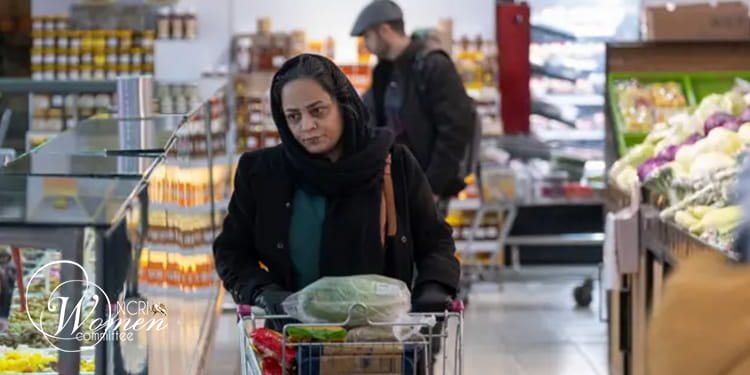
The second layer of the crisis emerges in the areas of health and nutrition. As rising prices force households to remove dairy products, meat, and other nutritious foods from their diets, the consequences are not shared equally. Pregnant women, breastfeeding mothers, and children are among the first groups to bear the cost of these cuts with their own bodies. Reports by Khabar Online News Agency and Toseeirani newspaper warn that the declining nutritional quality of household diets can lead to anemia, physical weakness, pregnancy complications, developmental disorders, and other long-term health consequences. (Khabar Online, May 31, 2026).
Data from the World Health Organization also indicate that anemia among women aged 15 to 49 remains a major public health concern, with the potential to generate consequences that extend across generations.
Additional Evidence and Empirical Context
Supplementary evidence further reinforces this picture. Data from the World Bank shows that women’s labor force participation rate in Iran was approximately 14.1 percent in 2024, indicating that women were already in an unequal position even before the onset of any new crisis. As a result, any economic shock or war can more quickly push women out of the labor market, or at the very least, significantly erode the quality of their employment.
At the same time, UN Women has emphasized in its reports that during crises and conflicts, unpaid care work increases, and this burden falls predominantly on women and girls. This is work that often remains invisible, yet it constitutes a fundamental pillar of survival in times of crisis.
A Labor Market That Excludes Women First
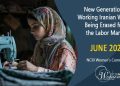
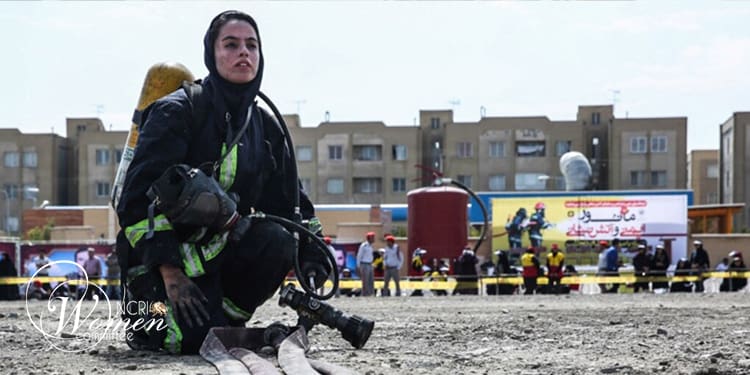
The third layer of the crisis is employment insecurity. In conditions of war and instability, women are typically the first to be pushed out of the labor market and the last to be re-entered into it. Reports on layoffs and shifts in the labor market show that even when support for women heads of households is publicly discussed, such support often remains largely rhetorical and confined to media discourse.
For many women, employment is not only a source of income; it is the last line of defense against falling into absolute poverty. When this protective barrier is removed, the pressure is directly transferred onto nutrition, housing, health, and the future of children. It is at this point that economic crisis goes beyond statistical figures and becomes a form of chronic instability in women’s everyday lives.
Internet, Education, and the Invisible Burden of Crisis on Women and Girls
The fourth layer of the crisis relates to an area that is less visible yet profoundly consequential: access to the internet, education, and the ability to maintain everyday life. Internet shutdowns or disruptions, particularly for low-income women, translate into further exclusion from communication, employment, education, and essential services.
In the field of education as well, each time classes are shifted to unstable online platforms, it is mothers who are left to coordinate their children’s learning, and girls who are more likely than others to fall behind in their education under conditions that are both precarious and costly.
Conclusion
The conclusion of this report is clear: war in Iran is not defined solely by missiles, threats, or diplomatic deadlock. In the lives of Iranian women, war manifests itself through inflation, food deprivation, job insecurity, disruption of education, and psychological exhaustion.
In this context, women are not only victims of the general consequences of crisis; they are also the primary carriers of its hidden costs. The costs of care, survival, sustaining families, and maintaining resilience are burdens that, even with the cessation of war, under an anti-people and misogynistic clerical regime, will never be adequately compensated.
While remnants of the clerical regime attempt to prolong negotiations and buy time, the demand of the Iranian people must once again be voiced clearly: the crisis in Iran can only be resolved by the people of Iran themselves, through uprising and the overthrow of the clerical dictatorship. The responsibility of the international community is straightforward: full support for Iranian women and youth driving the uprising, and for the Resistance Units that represent the only real force of change on the ground.