
Inside Iranian Regime’s System of Discrimination Against Widows
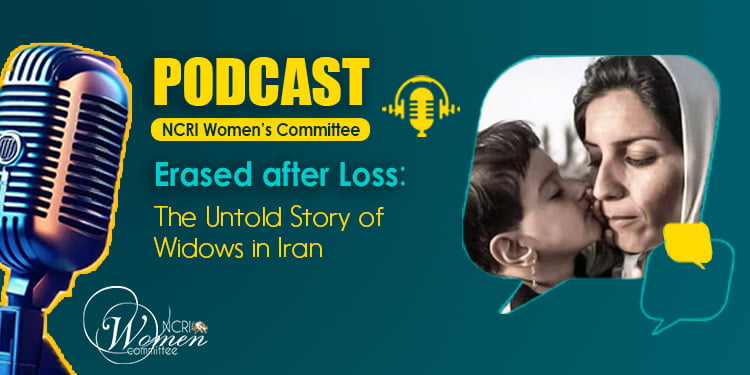
Welcome to another episode of podcasts of the Women’s Committee of the National Council of Resistance of Iran. Imagine waking up, to find your husband has died in a sudden tragic accident. I mean, it’s just unthinkable. Right. In most of the world that is the absolute worst day of your life.
It’s the beginning of this profound grieving process. But in Iran, as a comprehensive new document reveals, that grief is really just step one. Yeah, because step two is the state legally erasing your identity. Exactly.
And I am so glad you’re joining us today for this special investigative deep dive because we are unpacking a profoundly critical, empathetic human rights issue today.
We really are. We’re exploring the real human stories trapped behind these incredibly complex system structures in Iran. Yeah. And for today’s deep dive, we’re pulling from a single exhaustive source. It’s a document from the NCRI Women’s titled Widows in Iran, an analysis of legal challenges and the structure of discrimination.
It is a heavy read, but a vital one. It really is. We’re essentially opening up the hood of this document to see how the authors connect the dots between state law and just, well, socioeconomic devastation. Right. And the core theme tying all those dots together is what the report calls the cost of grief.
The analysis basically argues that state law and economic structures in Iran turn widowhood from devastating personal tragedy into the secondary manufactured crisis of total financial and social erasure. So, I mean, where does this document even begin to quantify a problem like this? Well, what’s fascinating here is the sheer scale of the issue presented in the text. The authors make it very clear early on that we are not talking about some small, marginalized fringe group.
The Hidden Scale of Widowhood in Iran
The document points out there are between five point one million and six million widowed or divorced women in the country. Wait, 6,000,000 women? Yeah, up to 6,000,000. That is the population of a small European country, entirely navigating this specific legal erasure. Yes.
And the demographic breakdown is where the document really forces you to pay attention. The text highlights a statistic showing that 15,000 of those widows were girls under the 15. Wait, 15? 15, yeah. That completely shatters the traditional image of a widow.
We are talking about children who haven’t even finished middle school. How does the system even produce a statistic like that? It comes down to the mechanics of the legal age of marriage. The authors point out that because the law allows girls to be married at 13 or, you know, younger, if a judge and the father permitted, you inevitably end up with a population of teenagers who are suddenly thrust into this systemic erasure of widowhood before they’re even legally adults. Okay, let’s unpack this.
The Laws That Erase Women
The report details a phenomenon it calls the trap of institutional misogyny. The authors note that the regime doesn’t even recognize International Widows’ Day on its calendar. They don’t. But moving past just the symbolism, how does the actual legal framework shift for a woman the exact moment her husband passes away? According to the text, the legal framework essentially treats her as a non entity when it comes to household leadership.
The state simply does not officially recognize these women as heads of households. Wow. Yet to give you context, the document notes there are over 6,000,000 female heads of households operating in reality. Yet half of them lack even basic insurance because their role isn’t legally validated. So if you put yourself in their shoes, you are doing all the labor of keeping the family alive, but legally, your job title just doesn’t exist.
Right. It’s erased. It’s kind of like being trapped in a legal board game where the moment you lose your partner, your player token is just removed from the board, but you’re still expected to pay all the penalties. You’re expected to do all the physical labor of raising the children and maintaining the home, but the male relatives hold the actual keys to the vault. That is a very accurate way to visualize the mechanics described in the report.
The legal framework heavily favors men regarding inheritance, property ownership, and insurance payouts. So she doesn’t just inherit his stuff? No, not seamlessly. When a husband dies, the widow faces a labyrinth of laws designed to strip her of financial autonomy. Which brings up a question you might naturally ask.
The Impossible Choice: Children or a New Life
I mean, if the system is so hostile to single widows, why wouldn’t they try to rebuild their lives and form a new family unit? It makes sense to ask that. But the analysis cites a startling statistic. Over ninety percent of widows do not remarry. When you read that, you have to wonder about the mechanics behind it.
Why are ninety percent of these women staying legally marginalized? Because the text is very clear that this is rarely a personal choice. It is a legally enforced ultimatum. What do you mean? Under Iranian law, a woman loses custody of her children if she remarries.
Oh wow, that is an impossible psychological dilemma. You have to choose between finding a new partner for financial and emotional support or legally keeping your own children. And that is the crux of the institutional trap. Yeah. Motherhood effectively forces them into permanent legal marginalization.
They willingly accept the crushing poverty and the lack of a partner because it’s literally the only way the legal system allows them to keep their kids. So if the state has legally barred them from the formal economy by denying them head of household status and the law penalizes them if they try to form a new family unit, where do they go? How do these women actually put food on the table? Because the socioeconomic realities detailed in this report are just incredibly bleak. They are.
The document cites a sociologist who found that seventy one percent of divorced or widowed women with children are functioning as single parents, yet only sixteen percent of them are employed. Think about that gap. Seventy one percent are raising kids alone, but only 16% have jobs. Yeah. And on top of that, the report states thirty nine percent of them struggle simply to find housing because of deeply entrenched patriarchal attitudes.
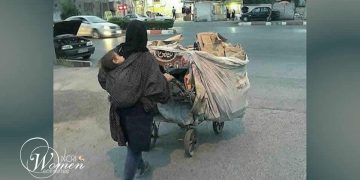
It’s a cascading failure of social safety nets. You know landlords often refuse to rent to women without a husband present on the lease and when you can’t get a formal job and you can’t secure stable housing, you are inevitably pushed into the dark labor market. Which means unregulated, dangerous work. Exactly. A psychologist cited in the text outlines the immense physical and psychological toll this takes.
Without financial independence, these women are forced into non standard unsafe jobs. Like what? They turn to street vending, working in unregulated sweatshops for wages far below the poverty line, or, you know, even begging.
And the analysis points out that this incredible vulnerability leads directly to severe workplace abuse. Because when you are operating in the shadows, you can’t exactly report harassment to human resources.
Right. The fear of unemployment is paralyzing. They remain silent because speaking up means their children go hungry, and the text points out a particularly insidious form of exploitation that arises from this vulnerability inappropriate proposals for temporary marriage. Wait, are you saying the state actually codified temporary marriage into the law to exploit this exact vulnerability? The document points directly to the institutionalization of this practice, known as PSY, under Article eleven fifty two of the Civil Code.
Oh my God. So you have a mechanism where desperate, vulnerable women are actively targeted for temporary marriages by men who know these women have zero legal protections and are just desperate to feed their kids. It is a perfect storm of economic desperation and legal vulnerability. Up to this point, the text paints a picture of severe systemic neglect. But the authors of the NCRI document draw a direct line between state actions and the act of creation of widows.
How State Violence Creates Widows
Yes, they do. They argue that this isn’t just a failure of the system, it is a deliberate feature. They call it systematic widowhood. Mhmm. And the first mechanism they point to is state executions.
The statistics on repression provided in the text are staggering. Ah. The document claims there were eleven fifty three executions in 2024 alone. Over a thousand. Yeah.
And it notes that those rates were sharply rising in early 2025. And the report is explicit in asserting that these executions lack fair judicial process. Right? They aren’t just random enforcement of law. Exactly.
The authors argue these killings are fundamentally designed to instill widespread fear and protect the clerical regimes hold on power. And the immediate byproduct of that state violence is mass instantaneous widowhood. When you look at the human stories included to back up these numbers, it really shifts your perspective. The document brings up Roshanabad village in the Sistan and Baluchistan province. In 2015, a government official actually admitted on the record that every single man in that village had been executed for drug offenses.
Every single man. If you think about the infrastructure of a village suddenly devoid of adult men, in a society where women aren’t legally empowered to work, inherit, or even rent homes, the devastation is absolute. The text states these women and children were left entirely vulnerable to extreme poverty, trafficking and revenge violence with zero state support. And when you read the details of the Mustafa Salehi case in this report, the sheer cruelty outlined by the authors is hard to process. He was a political prisoner from the 2017 protests who the state secretly executed.
The text argues that the regime didn’t just stop at his murder, they actively terrorized his grieving family. The mechanics of the extortion here are vital to understanding the source’s argument. The regime ordered his widow and children to pay roughly $100,000 at the time in what is called blood money, or dia. And according to the document, this massive fee was calculated based on minor scratches and bruises claimed by regime appointed plaintiffs. They threatened to confiscate the family’s home and their orchard if the widow didn’t pay this extortion fee.
I mean, you execute the husband and then the legal system is immediately weaponized to steal the house from the widow and kids. If we connect this to the bigger picture, it illustrates the source’s thesis perfectly. The system is not passively failing to support widows. It is actively extracting wealth and stability from them. Yeah.
Industrial Disasters, Lasting Consequences
Which brings us to the second driver of systematic widowhood detailed in the text: Preventable Industrial Disasters in Monopolized Industries. If state executions are one engine of this crisis, the report points to industrial negligence as the second. And it all seems to tie back to the same financial mechanisms of control. Let’s look at the Tabas coal mine explosion from September 2024 detailed in the text. Fifty three impoverished workers were killed.
Yeah. And the compensation for the survivors. The report notes the wife of a survivor who suffered brain injuries was given a mere $140 for medical leave. That catastrophic lack of support is exactly why the document includes the story of Zinat. She is a widow from a previous mine explosion back in 2017.
Her story is utilized in the text as a chilling warning to the new widows of the Tabas explosion about what the legal system is about to put them through. Why would she need to warn them? What happens after the disaster? She warns them about the ultimate cruelty regarding the Daiya, the blood money paid out for the accidental deaths. Zinat explains that the moment the compensation money was deposited by the company, the fathers in law and brothers in law immediately stepped in.
Wow! And they began fighting to take custody of the children away from the widows. Because if the male relatives get legal Precisely. The patriarchal laws empower the grandfather or the husband’s brothers as the default legal guardians over the actual mother. That’s awful.
So the widows lose their husbands in an entirely preventable industrial disaster and before they can even process the grief, they are dragged into court to fight their in laws just to keep their own children. All because the legal system channels the financial compensation away from the mother. It strips away every conceivable layer of human dignity, and the analysis makes it clear this negligence isn’t isolated to one mining company. The document details a massive catastrophic explosion in Bannar Abbas in April 2025. The scale of this incident is horrifying.
The text links the blast directly to the IRGC, the Revolutionary Guard Corps, and their illegal transport of missile fuel. To give you a sense of the magnitude, the report cites estimates that the blast was equivalent to 50 tons of TNT. Hundreds of people were killed and the report highlights a very specific tragic detail. 23 women from a single neighboring company were killed in the blast. Out of the 30 women who worked there, twenty three died instantly.
Leaving hundreds of families utterly destitute overnight. The text describes the victims as mostly day laborers. They had no formal contracts, no insurance, and absolutely no workplace protections. The poverty described in the wake of this disaster is crushing. You have to imagine the reality these families face.
The report talks about families in Zahedan living in crumbling shacks, widows who couldn’t even afford the basic cab fare to travel to the hospital to identify the burned bodies of their husbands. It’s heartbreaking. There is a detail in the text about a funeral where a single box of tissues was shared among 80 mourners, and the family was so impoverished they couldn’t even afford to offer a cup of tea or water to the guests.
It highlights a staggering scale of powerlessness. These families don’t know their legal rights, they have no idea if they are eligible for any sort of compensation, and they are forced to navigate a bureaucracy that, according to the authors, simply does not care if they survive the winter.
The Human Cost Behind the Numbers
So what does this all mean? We’ve looked at the legal erasure, the forced choices around child custody, the mass executions, and the industrial disasters. The NCRI document pulls all these threads together to make a very firm structural conclusion. The authors argue that minor legal reforms or cultural awareness campaigns cannot fix a system that is operating this way. Right.
The analysis argues that the system is not broken, it is functioning exactly as intended. The authors assert that the judiciary and state actively profit from this systematic repression, financial extortion, and humiliation of women.
Therefore, the document concludes that true liberation for widowed women in Iran can only be achieved through the complete overthrow of the clerical regime and the establishment of a democratic republic based on popular sovereignty. It is a comprehensive indictment of a legal framework, where the loss of a husband is literally engineered to be the beginning of a woman’s complete disenfranchisement.
Which brings me to a final thought for you to ponder today. Imagine the compounding weight of losing your life partner, being forced to fight your own in laws to keep your children, and being entirely erased by your country’s legal and economic system all on the exact same day.
How does a society rebuild when its foundational laws are intricately designed to break the very women who are holding the families together? It is a question that demands an answer, and more importantly, it demands action.
We want to invite you to take action in support of the Iranian people’s resistance and its brave women who are fighting against these exact legal structures every single day.
We strongly encourage you to donate to the NCRI Women’s Committee to directly contribute to the genuine cause of Iranian women’s struggle for equality and freedom.
You can find out exactly how to do that and access so much more information and reporting on these issues by visiting the website, wncri.org. That is wncri.org. From both of us, thank you so much for taking the time to listen and for being willing to engage with these difficult, vital human stories. Take care of yourselves, and we will catch you on the next deep dive.
Goodbye.