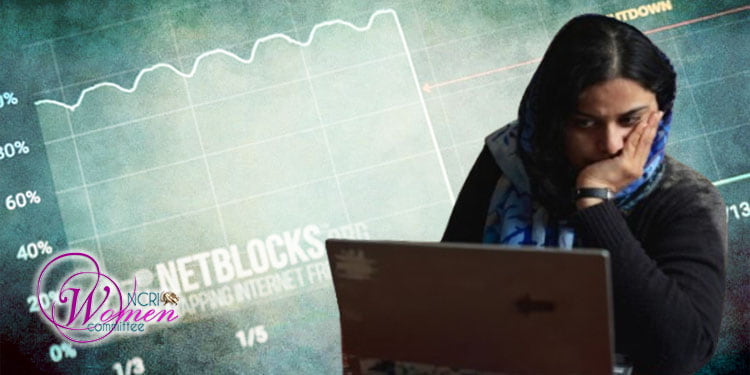
The internet blackout in Iran—which is now entering a phase of drip-fed restoration after nearly three months of absolute blockage—has dealt a devastating blow to society, alongside the economic aftershocks of the recent forty-day war. Although access has been partially restored, the imposition of severe filtering on messaging apps and unprecedented restrictions on app stores compared to the past demonstrate just how fragile and controlled this reopening is.
Beyond its security dimensions, this digital darkness, which intensified since February/March 2026 (Esfand 1404), has effectively functioned as an economic and gender-based tool of suppression against women; a policy that severed the vital lifelines of the “parallel labor market” that hundreds of thousands of Iranian women had built for themselves to escape the formal and discriminatory market. The outcome of this three-month blockage has been the deliberate suppression of women’s financial independence and social agency, particularly in marginalized and border regions.
Crushed Online Market Destroys Women’s Financial Independence
The formal employment structure in Iran is built on promoting gender stereotypes, which has dragged women’s economic participation rate down to 13.4%. (Shargh, May 21, 2026) Amid this deadlock, social platforms like Instagram served as a free marketplace for women who lacked large capital or government licenses. The income generated from these virtual storefronts directly improved family livelihoods.
The scale of the disaster becomes clear when looking at statistics from regime officials. According to data from the Virtual Businesses Association, around one million virtual shops were active on Instagram with an annual turnover of 100 to 120 trillion tomans. Pashtoon Pourpashak, the vice president of this association, stated that women make up more than 60% of Instagram shop owners. (Salamat News, January 20, 2026)
This means that with the recent three-month blockage, at least 600,000 female breadwinners have lost all their assets and income. In the words of domestic sociologists, stripping away this space has targeted women’s morale; to the point where one of these women says: “I feel like they have imprisoned me.” This ongoing internet blackout in Iran acts as a recurring phenomenon that proves the psychological consequences of digital censorship yield nothing but frustration, isolation, and condensed social rage.
Class-Based Internet: A New Trap for Poor Women
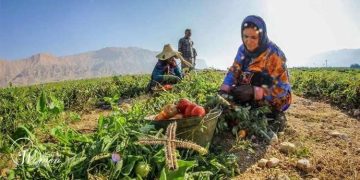
The crisis of digital suffocation devours vulnerable groups even more ruthlessly. These restrictions multiply in border and underprivileged regions, where the livelihood of a rural Kurdish or Baluch woman depended on selling handicrafts online. The situation has worsened with the implementation of the rent-seeking “Internet Pro” scheme. By monetizing network access, the government has established a new digital apartheid.
In fact, with the clever continuation of the internet blackout in Iran, women—due to their systematic isolation from the economy—cannot afford the exorbitant costs of VPNs and special internet packages, reducing their chances of access to nearly zero.
Zahra Behrouz Azar, the regime’s vice president for women’s affairs, confessed to this structural discrimination, stating: “The group that suffers the most from internet disruptions and blackouts is women, because many of their educational, professional, and economic activities depend on the internet.”
Stating that women account for about 60% of university education but their economic participation in the labor market is estimated at only around 14%, Behrouz Azar remarked that the internet blackout in Iran has had a direct impact on reducing women’s benefit from this space. (Mehr News Agency, May 19, 2026)

The Three-Way Hit to Women’s Livelihoods
The digital blackout policy has destroyed women’s employment on three levels: First, women working in micro-home businesses who, according to Ministry of Labor data, “constitute about 80% of home-based workers” and the majority of whom belong to low-income deciles. The second level consists of tens of thousands of women who worked in secondary roles such as content creation, social media management (admin), and graphic design. At the third level, the wave of layoffs has reached tech companies, online platforms, and publishing houses.
Assessments show that due to the market’s misogynistic mindset, the wave of damages from the internet blackout in Iran has pushed the priority of downsizing toward women, because they are still not considered the primary breadwinners. Behrouz Azar has confessed regarding this matter as well, stating that “about one-third of the unemployment insurance claims registered over the past 40 days belonged to women.” (ILNA News Agency, April 30, 2026)
The tangible consequence of this economic terrorism is the forced change in women’s lifestyles and the forced migration of online shop owners to street vending. On the other hand, since statistics show that women spend the bulk of their independent income on children’s education and health, with this financial lifeline severed, the quality of life for the community’s children takes a heavy toll as well.

A Fragile Reopening and the Looming Social Explosion
The internet blackout in Iran and the promotion of a “class-based internet” by the Iranian regime are organized political decisions to deliberately push half of society into absolute marginalization. In a country where the Ministry of Communications had announced the average resilience of online businesses to be only “20 days,” crossing the 80-day mark of communications blackout means a fatal blow to women’s financial independence.
Although the regime, under the pressure of potential popular uprisings, has begun a step-by-step retreat and a round-the-clock restoration of the network, the infrastructure of women’s digital economy is effectively ruined; a discriminatory practice that, by destroying society’s resilience, drastically heightens the potential for a psychological and protest explosion in the lower strata of society and among the younger generations.