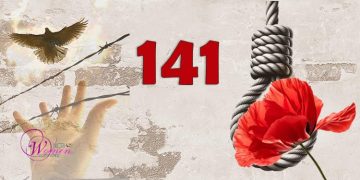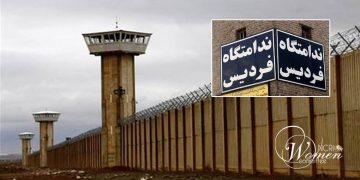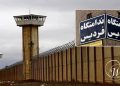

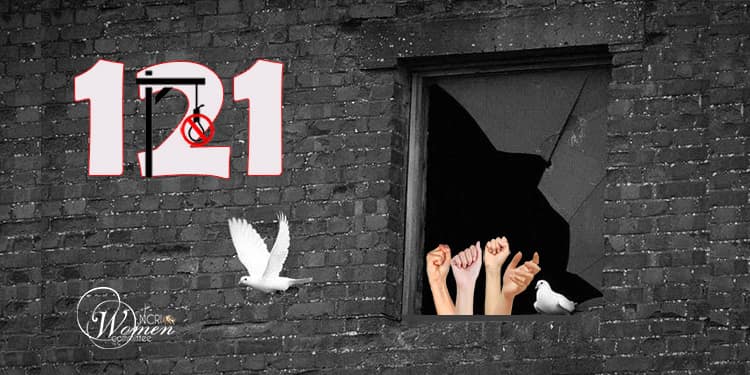
In the 121st week of the “No to Executions Tuesdays” campaign, political prisoners in 56 prisons across Iran launched another hunger strike on Tuesday, May 19, 2026, protesting the continued wave of executions and the intensifying judicial crackdown. The protest took place amid escalating pressure from security authorities and prison officials, who in recent weeks have imposed extensive restrictions and issued threats against prisoners, particularly female political detainees, in an effort to halt the campaign.
This protest movement, now one of the longest-running and most sustained forms of resistance inside Iran’s prison system, reflects the prisoners’ continued opposition to capital punishment.

A significant proportion of these prisoners are women political prisoners, currently serving their sentences in the women’s ward of Evin Prison (Tehran), Qarchak Prison (Varamin), the women’s ward of Sepidar Prison (Ahvaz), the women’s ward of Adelabad Prison (Shiraz), the women’s ward of Zahedan Prison, the women’s ward of Yazd Prison, and the women’s ward of the Lakan Prison in Rasht.
Despite the heightened security atmosphere, political prisoners continued their hunger strike to voice opposition to the growing number of executions and the government’s repressive policies. Female political prisoners held in Evin Prison have reportedly faced increased punitive measures and additional pressure in response to their participation in the campaign.
According to reports, female political prisoners detained in Evin Prison, including Zahra Safaei, Forough Taqipour, Marzieh Farsi, Elaheh Fooladi, Arghavan Fallahi, Shiva Esmaili, and Golrokh Iraee, had previously been sentenced to three weeks of visitation bans for participating in the “No to Executions Tuesdays” campaign. Following their renewed participation in the protests, they have now been subjected to an additional three-week suspension of visitation rights.
At the same time, dozens of other prisoners have faced disciplinary action, new restrictions, and security pressure solely for being present in prison courtyards or observing protest gatherings connected to the “No to Executions Tuesdays” campaign.
Part of the campaign’s statement addressed the intensifying atmosphere of repression across Iranian society, asserting that authorities in recent months have expanded the presence of forces affiliated with state institutions throughout cities while openly promoting weapons training in public spaces.
The statement described these actions as an attempt to normalize violence and deepen intimidation within society. The statement also warned about the increasing use of executions, emphasizing that capital punishment in Iran functions not only as a judicial penalty but also as a political instrument of repression and fear. According to the statement, the authorities use executions as a tool to force society into silence and submission. Nevertheless, prisoners and protesters have continued to emphasize their determination to resist and oppose these policies.