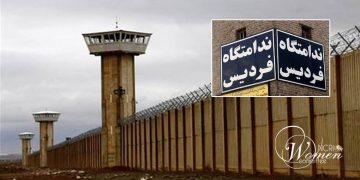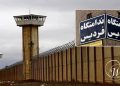

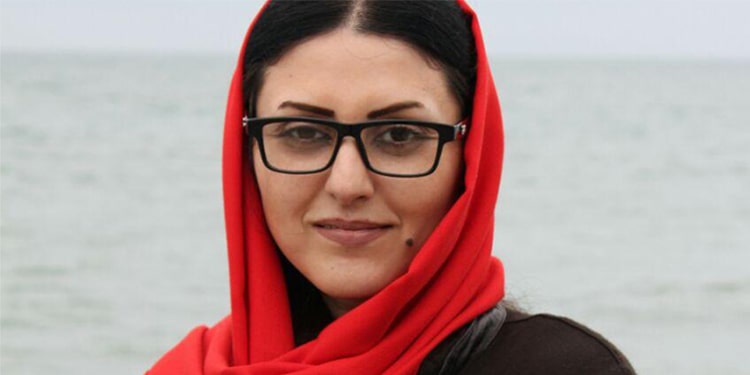
Golrokh Iraee, an imprisoned writer, held in the women’s ward of Evin Prison, has written a letter addressed to PEN America in May 2026, highlighting the critical role of writing and freedom of expression in resisting state repression.
In her letter, Golrokh Iraee emphasizes the authorities’ fear of “the pen” and the exposure of truth, describing writing as a powerful tool for breaking silence and confronting censorship.
This political prisoner also refers to systematic repression, widespread poverty, executions, popular uprisings, nationwide protests, and the suffering endured by families seeking justice for victims of state violence. She further points to the continuing pressure imposed on protesters and government critics.
In another section of the letter, Iraee describes “the pen” as the voice of oppressed people, a reflection of the suffering of marginalized communities, and an effective instrument against erasure, censorship, and repression. According to her, writing has the power to preserve truth and carry the stories of victims to the international community.
It is also noteworthy that PEN America presented its 2026 Freedom to Write Award to Golrokh Iraee, an imprisoned writer and political prisoner held in the women’s ward of Evin Prison, during the organization’s annual literary gala in New York City.
Following is the full text of Golrokh Iraee’s letter:
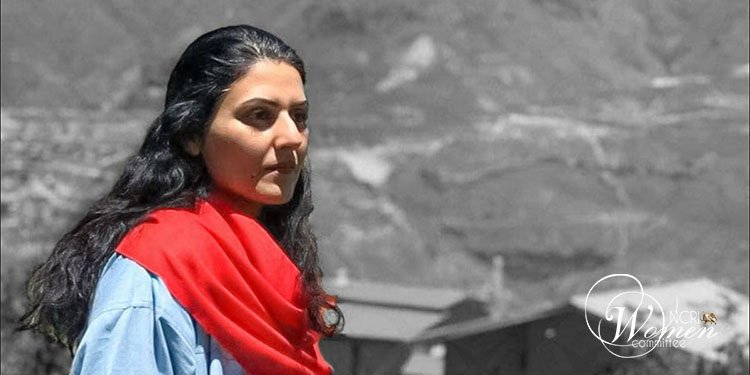
From a distant place, I send my greetings to you who have gathered to honor the “Freedom to Write.” I write from a world where truths are denied the chance to emerge, where breaking the chains of repression and submission is not recognized as a simple right, but becomes possible only through confrontation with rulers whose power depends on fear cast over both speech and action.
Here, to write fearlessly about the suffering of people who rise against oppression is considered a crime. Those who, through the pen, expose devastation and pain before the eyes of the world are worn down in silence, branded as criminals, and deemed deserving of trial.
To write about the suffering of oppressed people, about poverty, inequality, repression, and systematic killing, all of which have long been woven into our lives, is never without consequence. Yet writing remains a narrow opening toward hope, a force that sustains resistance, and a spark for the rising anger of people condemned to live under repression. History bears witness that the conscious and purposeful fury of the oppressed has always been the only path toward dismantling tyranny.
The ruling reactionary order cannot tolerate freedom of thought or the courage of expression when the pen rises against the gallows, when it tells the story of poverty and inequality, when it reflects empty tables and foretells the uprising of the hungry.
And so, they turned to breaking the pen itself. The pen that connects the bitter reality of today to the brighter horizon of tomorrow. The pen that shatters the silence imposed upon us through more than a century of relentless repression under the rule of clerics and kings, replacing silence with social awareness, political consciousness, and class consciousness capable of liberating the oppressed and the dispossessed.
We write to resist the physical erasure of human beings, the dismissal of thought, and the destruction of political, ideological, and social rights and beliefs. We write against the erasure of values and convictions that have long been forced into exile, marginalization, and silence.
We write even if our freedom is chained. Even if we are threatened, restricted, exiled, or forced to sacrifice our lives. Throughout the long years of unrelenting dictatorship, beneath the weight of exploitation and reactionary rule, across mountains, through forests, and in the streets of our cities, in the Middle East plundered by colonialism and assaulted by extremism, we have carried this struggle in our poetry, our slogans, our blood, and our lives.
When the pen begins to write of human suffering, it no longer belongs to borders, race, nationality, gender, or color.
The pen becomes a shared cry against oppression for all of us who entered an unequal battle.
The pen becomes the cry rising from tables without bread. It becomes the voice of grieving mothers as they weep beside the bodies of their defiant children carried toward unmarked graves on the wagons of death.
It becomes the cry of the children of Palestine as they carry the rage of occupation in the burden of displacement, while their dreams vanish into smoke rising from olive trees burned by the hatred of executioners.
It becomes the cry within the final terrified gaze of the girls of Minab, amid dust, blood, and tangled hair clinging to their fragile necks.
It becomes the cry for justice in the voice of Mah Monir Molayi-Rad, the mother of Kian Pirfalak, as she remembers the endless grief hidden behind her son’s childhood games after he was killed during the protests in Izeh, and writes that injustice will not endure and that oppressors will ultimately face the consequences of their crimes.
The pen becomes a cry against every suffering and every act of oppression in every corner of the world. If it serves anything less than truth, if it bends toward expediency, then it has abandoned its purpose.
And to you, my dear friends, whose hearts beat for the revelation of truth, whose commitment is to write reality without fear, you who honor the pen and the struggle for equality and liberation, your conscious and responsible efforts for oppressed people fighting for justice will carry the voices of those who have been silenced.
We will free ourselves from repression, and we know this can only be achieved through collective action.
For justice and equality, until humanity is freed from repression and submission to tyrants.
Golrokh Iraee
May 2026
Women’s Ward, Evin Prison