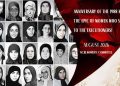


On World Human Rights Day, we have a glance at the conditions of women in Iranian prisons.
The conditions of women in Iranian prisons are deplorable. The clerical regime sends prisoners to exile and deprives them of their minimum rights, making the inhuman prison conditions worse.
The conditions of women in prisons across Iran are particularly dire in the Covid-19 pandemic as most provinces are in the red zone. Prison health is feeble, and the virus has spread uncontrollably in most prisons.
The regime also refused to take the slightest step to provide health and care facilities for prisoners and to grant them leave or furlough.
The concentration of prisoners in prisons prevents social distancing and increases the possibility of disease transmission. And in most prisons, there is no separation between the infected persons and other prisoners.
Many women political prisoners have been infected with Covid-19. They included Zeinab Jalalian, Massoumeh Senobari, Nejat Anvar Hamidi, Forough Taghipour, Parastoo Mo’ini, and Yasaman Aryani. They did not have access to medical treatment throughout their illness.
Amnesty International says it has seen copies of four letters written by officials from the prison organization. The Prisons Organization operates under the auspices of the Judiciary. The officials wrote to the Ministry of Health warning of severe shortages of personal protective equipment, disinfectants, and critical medical equipment and supplies. But the Ministry of Health has ignored these requests, and Iran’s prisons are catastrophically lacking the necessary equipment in the face of the spread of infectious diseases.
The Coronavirus crisis provided an opportunity for the mullahs’ regime to physically eliminate its resilient opponents or torture them through denial of treatment. The daily news of the virus’ deaths worldwide helped prevent sensitizing public opinion and invoking international condemnation.
The Iranian resistance has repeatedly called for the release of prisoners, especially political prisoners, albeit temporarily until the end of the Covid-19 pandemic, and stressed the need to send an international fact-finding mission to visit prisons and meet with prisoners, primarily political prisoners.
Following is a brief review, albeit based on the information available, on the situation of women’s wards in various prisons.
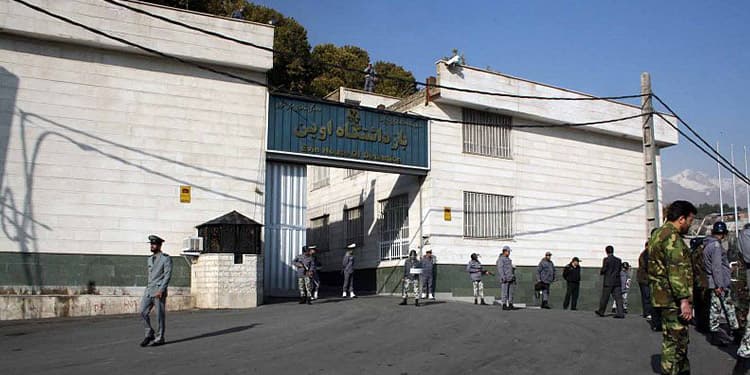
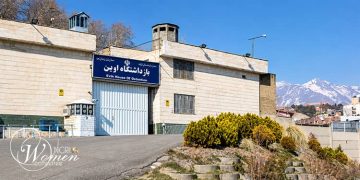
Evin Prison
The women’s ward of Evin Prison consists of two main halls. The first is a place for political prisoners and prisoners of conscience and has three separate rooms.
The principle of separation of crimes is not observed in the women’s ward of Evin Prison. Individuals accused of public crimes, such as human trafficking or fights, are transferred to the women’s ward for several days to several months instead of being transferred to public prisons.
Coronavirus outbreak
With the outbreak of the Coronavirus and the insistence of the inmates of Hall 1, Hall 2 was turned into a temporary quarantine for women. The windows of this hall are covered with iron and plastic talc, which makes the sunlight not come into the hall.
Prisoners are responsible for providing masks and gloves after the outbreak of the Coronavirus. In the prison shop, each mask or pair of gloves is sold to prisoners at a high price. Detergents and disinfectants, which are distributed by the prison in the form of rations, are also insufficient, and prisoners have to buy them from the store at many times the cost at their personal expenses. Alcohol and hand sanitizers are offered at high prices in the prison store, which is why many prisoners collectively buy these items.
The new convicts and defendants will be kept for 14 days in Hall 2 and one room in the administration office of quarantine. But the location of prison phones and shops is shared with other inmates.
Food quality
Due to the poor quality of prison food, most prisoners are forced to buy food at several times the original price from the prison store.
Some of the goods provided by the store at the prisoners’ request are sold to them at a price many times higher than the original price.
Access to medical treatment
Before the outbreak of the Coronavirus, authorities refused to send prisoners to hospitals and medical centers despite being at their own expense. Dispatches are very irregular and take place later than the prisoner needs medical treatment. Even sending patients from prison to medical facilities faced many obstacles. This process worsened after the outbreak of the Coronavirus, and if follow-up is continued, patients will be returned to jail quickly without completing medical treatment.
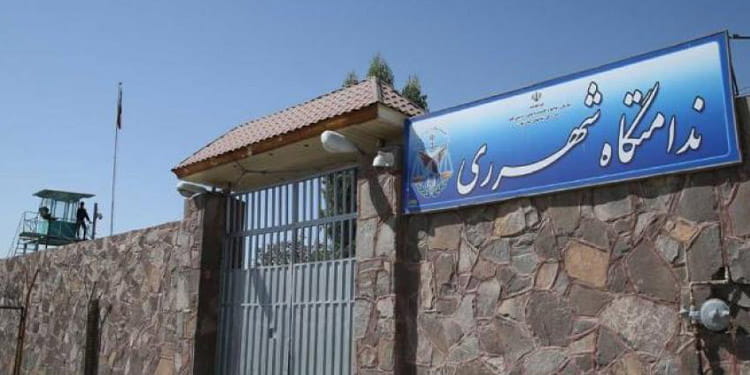
Qarchak Prison of Varamin
Qarchak Women’s Prison holds about 2,000 women. There is no crime segregation in this prison, and political prisoners are kept among ordinary criminals and dangerous prisoners.
Many of the women arrested during the November 2019 and January 2020 uprisings are being held in this prison, and none of them have been allowed to go on leave.
Conditions after the outbreak
According to reports from Qarchak Prison in Varamin, at least 130 prisoners contracted Covid-19. Prisoners with Covid-19 are left without any medical or health care in the Prison Club, an unsanitary environment without proper ventilation.
In early April 2020, two prisoners infected with the Coronavirus died in solitary confinement in Qarchak Prison due to lack of medical care. In July and August, reports of prisoners’ suicides due to Covid-19 were leaked from the prison.
One can add lack of basic amenities, problems with the sewage system, salty water, constant water shortages in the summer, as well as lack of medical and health facilities, high density of prisoners, and unsanitary use of card phones to the reasons for the spread of the virus in this prison.
Lack of care for sick prisoners
The deteriorating health of Qarchak Prison even found its way to the state-run media.
On April 15, 2020, the state-run Khabar Online news agency quoted a prisoner who had just been released from Qarchak Prison as saying that Covid-19 patients were being held in sharia meeting rooms without any special facilities. There are no medicines, doctors, facilities or respiratory devices in these rooms, while many of them have respiratory problems. Sick and non-sick prisoners are all held together.
One hundred eighty-six people are detained in a prison ward that is compartmentalized by beds, and even in one of the wards called the mothers’ ward, a large number of children under the age of two and breastfeeding mothers are kept.
Health care and facilities
In-prison health care clinic has few facilities that have exacerbated the problems after the Covid-19 outbreak.
There are no masks or gloves in prison, and prisoners who go to prison staff with fever symptoms are told to go to their beds and use their scarf as a mask!
The prison store provides only one bar of soap and one laundry detergent per month for each prisoner. Even under normal circumstances, this amount does not meet the needs of a female prisoner. Given that the regime has also banned visits, a prisoner without a visit does not have the money to buy her necessities. Unfortunately, this has further reduced the level of health in prison.
Overcrowding of the wards
In Qarchak, some prisoners sleep on the prison floor, which further contributes to the spread of the Coronavirus. The number of prisoners in the halls and cells is high, and this causes a dangerous situation in the prison if someone is infected. Even addicts who are more susceptible to infection are not separated from other prisoners.
Rape of prisoners in Qarchak
Another reported issue of Qarchak prison is the rape of prisoners. Prisoners convicted of violent crimes have broken the security cameras of the toilets and bathrooms and use the place to beat and rape prisoners. Despite being aware of this situation, the prison authorities do not repair or install new cameras. The prison staff also ignores the phenomenon of rape in prison.

Sepidar Prison of Ahvaz
Ahvaz Sepidar Prison was established in 2009. The prison area is 700 square meters.
The principle of separation of crimes is not observed in this prison. Political prisoners are detained in the same place as ordinary prisoners convicted of dangerous crimes, murder, drug trafficking, and robbery.
The conditions of women in this prison are deplorable. Women have to stay in a closed space without the necessary facilities, in the hot and contaminated air. Many of the inmates are ill and in need of receiving medical treatment. Yet, they are deprived of receiving simple medications. At least one inmate lost her life due to a lack of medical treatment.
The low-quality meals in this prison do not contain enough meat to divide among inmates.
The sanitary conditions in the women’s ward are dire. Women are deprived of warm water for bathing. The water heaters are usually out of order and are not repaired.
In summer and the high temperature in Ahvaz (50 oC), the air conditioning system was broken. Prisoners were even deprived of a fan. Continuous water cuts also add to these problems.
According to a prisoner released from this ward, there is a problem with sewage and sanitation. The cells are full of lice, insects, and beetles. The Women’s Health Center has no doctors or nurses many days of the week.
Suicide attempts are on the rise among women prisoners because they hope to be taken to medical centers after suicide so that they can spend a few days in better conditions or eventually die.
50 Covid-19 cases among inmates
Due to the spread of the Coronavirus in this prison, women are kept in crowded wards. At least 50 women prisoners became infected after the Covid-19 outbreak. The infected prisoners were held in the quarantine ward for a short time and then returned to the public ward.
There is no doctor to treat these patients, and no medical care is provided. Prison authorities do not even deliver the medicines the prisoners’ families brought to them. The room where women with Covid-19 are quarantined is separated from the other wards by just a few bars.
A so-called physician named Mrs. Heydari works in the prison dispensary who does not care for the sick prisoners. She refuses to give them medicines and prevents their dispatch to a civic hospital. She tells the political prisoners that they cannot leave the prison compound because their case is political. Therefore, she has deprived them of receiving their needed medical attention.
On the night of Monday, December 14, 2020, Makkieh Neissi was taken to the quarantine ward of Sepidar Prison in Ahvaz as she was crying out loud from pain, pleading to be taken to a civic hospital. However, the prison guards and authorities did not take her to the hospital and abandoned her in the ward without attending to her.
Tuesday morning, December 15, prisoners in the quarantine ward confronted her lifeless body.
Makkieh Neissi, 35, was married with three children. She was among hundreds of Arab women who were arbitrarily arrested, tortured, and detained after an attack on an Armed Forces parade in Ahvaz on September 22, 2018.

Central Prison of Shiraz (Adelabad)
Coronavirus has spread rapidly in this prison. Instead of releasing the prisoners, the prison authorities put more pressure on them to cause the gradual death of the prisoners.
One of these mental and physical pressures is not delivering medications to patients who need special and vital drugs. Prison officials also make empty promises to the prisoners after they protest and come to get their medicines. The lack of medication for many prisoners poses problems and threatens their lives.
Jammers inside ward rooms
Also, jammers inside the wardrooms have seriously affected the physical and mental health of the prisoners. They suffer from constant headaches and nausea. The continued operation of these devices will cause severe damage to political prisoners.
On November 8, 2020, it was reported that prison officials prevented a female prisoner from being sent to medical facilities. Infected with Covid-19, she was suffering from severe headache and nausea and was in critical condition.

Central Prison of Urmia
The Central Prison of Urmia, also known as Darya Prison, is located on the road from Urmia to Tabriz, 15 km from the center of Urmia. This prison has 17 wards.
The women’s ward of the Central Prison of Urmia has four rooms with 36 beds and no air conditioning. Over 330 women are detained in these four rooms, which have a maximum of 144 beds.
The fresh-air break time has been reduced to two hours. So these women have to spend 22 hours in overcrowded cells that lack air conditioning.
In this prison, political prisoners and the prisoners charged with ordinary crimes are kept together, and the principle of separation of crimes is not observed.
High death rate
The death rate due to illness is high in Urmia Prison and is one of the prisons where many cases of Covid-19 have been reported among prisoners. In April 2020, at least one female Covid-19 prisoner died in the prison.
On August 18, 2020, 140 women prisoners went on a hunger strike to protest the lack of health facilities in the prison, the negligence of the authorities to prevent the spread of Corona virus, and the opposition of prison officials to their temporary release.
Overcrowding and lack of sanitation
According to reports, on October 23, 2020, about 300 women prisoners were transferred from prisons throughout Western Azerbaijan to Urmia Central Prison.
Prior to that, 200 women prisoners were detained in Ward 15.
This place is divided into eight rooms in cubicles with short walls. Each room consists of 16 beds with about 30 women prisoners. As a result, half of the population in each room has no place to rest and sleeps on the floor. And if they can not afford it, they will be deprived of blankets and clothes for a long time.
There are only five toilets and three showers for all the inmates. Most of the time, bathrooms are broken and unusable. Hot water for bathing is usually cut off, and prisoners are forced to bathe with cold water.
In this ward, the children are also in prison with their mothers. Due to this ward’s crowded and dirty situation, children are exposed to various diseases, including gastrointestinal disorders, skin diseases, etc.
Poor quality of food and water
Prison food is very inadequate and of poor quality, and prisoners have often found mice and beetles in their food. Insufficient prison water also causes kidney disease in prisoners. Meat has been completely removed from the prisoners’ diet. Due to the low quality of prison food, prisoners are now forced to prepare food at their own expense and limited prison facilities. Due to the lack of necessary facilities and unsanitary cooking environment in prison, many prisoners have become ill.
Access to medical facilities
Sending patients to hospitals and outpatient treatment centers is done only in exceptional circumstances and with judicial permission. However, prison officials prevent the patients from leaving even after issuing the permit.
Contrary to prison regulations, the prisoner bears the cost of a doctor’s visit and treatment outside the prison.
Only painkillers, neuroleptics, and methadone syrup are prescribed in the prison’s medical clinic. Methadone syrup makes prisoners addicted. If a prisoner has a broken bone, they will refrain from casting. If a prisoner has respiratory problems and asthma, they will deny her illness for not spraying him. Suppose the prisoners protest against this unsanitary and inhumane situation. In that case, the response of the head of the ward and the head of the prison is only insulting and insulting. They tell the prisoner, “You have no right to protest.”
In this prison, methadone is distributed free of charge among prisoners. Prison guards’ justification for doing so is to prevent indiscipline and control the prison environment. Prison guards use only beatings, insults, and humiliation to prevent indiscipline. This method often causes prisoners to break their arms and legs.
The two prison supervisors, named Dehghan and a woman known as Baseri, are acting in a completely arbitrary and illegal manner regarding leave laws, determining the amount and type of bail. Political prisoners are completely barred from contact and visitation. Prison staff treats political prisoners much harsher than ordinary crimes.
The US Treasury Department blacklisted and boycotted two judges and three prisons, including Vakilabad Prison in Mashhad, on September 24, 2020, for their role in brutal, inhuman, and degrading torture, arbitrary detention of individuals for participating in peaceful gatherings.
Birjand Women’s Prison
The quarantine ward of Birjand Women’s Prison is an old gymnasium where about 120 prisoners are being held together. Due to lack of space, it is not possible to observe the social distance between the prisoners at all.
The ward had only two usable toilets and four showers for all inmates, and each inmate had to stand in line for a long time to use them.
In addition to personal hygiene, women prisoners wash their children’s pampers and dishes in the toilets. There is no disinfectant in the hall except liquid soap.
After the corona outbreak and with the follow ups of the families of the prisoners, three more toilets were added for the use of the prisoners and a number of masks and gloves were distributed among them.
In June 2020, a number of women prisoners suffered from fever and chills, sore throats and body aches. But this problem was ignored by the prison authorities. As the number of patients increased, a doctor examined about 80 patients on an outpatient basis and gave them all cold medicines and cough syrup. It was later reported that a large number of prisoners lost their sense of smell and taste.
Central Prison of Tabriz
More than 150 prisoners in the women’s ward of Tabriz Prison are deprived of their minimum rights and facilities.
The medical condition of Tabriz Prison is very unsatisfactory and there is no care for prisoners. There is only one nurse in this prison and the doctor only comes once a week, but they do nothing for the prisoners.
Conditions of Covid patients
Prison officials did not separate and quarantine patients from the beginning. This caused a large number of them to contract Covid-19. In the last week of September, at least nine women prisoners contracted Covid-19.
Soap bar is not given to women for use in the bathroom. There is no response to the protests of inmates in this regard. Women prisoners are forced to use washing powder to wash their hands.
In a situation where many prisoners in this ward have been infected with Covid-19, they were given only one extra meal of prison food and 45,000 Tomans were deducted from their card account.
Low quality of food and theft of rations
Prison food is very bad and store goods are very expensive and of poor quality. These women are not allowed to have a kitchen or a flame. In an illegal act and blatant theft of the prisoners’ meager rations, the Tabriz Prison authorities twice in the third week of November forced the prisoners to buy the oil needed to cook food from the store and give it to the prison official.
According to reports from this prison, a 60-year-old prisoner named Shahin Solhjoo contracted shingles, but instead of being treated and cared for, she was transferred to solitary confinement and then returned to a public ward. And then, in an inhumane act, she was put to sleep in the cold night of autumn in the yard, suffering from the great pain of shingles.
Forced labor
Tabriz prison officials also forced women prisoners to collect blankets and carpets and wash them in the yard in sub-zero temperatures in Tabriz. They also forced the suffering women to take the prison beds to the prison yard, paint them and return them to the prison.
Many of these women became very ill from the cold these days. One of the prisoners, 28-year-old Massoumeh Bahrami, committed suicide by cutting her hand’s vein in the cold.

Mashhad Central Prison (Vakilabad)
Some 700 prisoners convicted of various financial charges, robbery, murder, and political prisoners are detained in the women’s ward of the Central Prison of Mashhad.
The women’s ward has six halls. To torture political prisoners, they deliberately detain them next to ordinary prisoners convicted of murder, kidnapping, and drug-related offenses.
The conditions of women are worse than those of men. They are deprived even of the minimums that male prisoners have.
The punishment ward
The general ward of this prison, which is used as a punishment ward, has no beds and is very unsanitary. This section has only two small windows that are always entirely closed. The door of this ward is entirely closed, and when prisoners have a request, they knock on the door, which the guards generally ignore.
So far, several prisoners have committed suicide in this ward. It is said that the prison authorities did not remove the headscarf used by one of the prisoners to commit suicide so that other prisoners could learn a lesson.
Prisoners face problems such as the poor quality of prison food, the scarcity and high cost of needed goods in the prison store, and the inability to visit medical facilities.
The ward rooms do not have separate toilets, and only at the end of the corridor there is a toilet that all prisoners share.
The Corona outbreak
During the Corona outbreak, dispatch to the prosecutor’s office and the court continued even more than before. Prisoners have not been provided with hygienic and disinfectant materials since the outbreak of the Coronavirus.
Prisoners are deprived of gloves and alcohol and can only buy and use cloth masks sewn in the prison sewing workshop for 4,500 tomans each. But these masks, which are not made in hygienic and standard environments, can be a conduit for spreading the disease.
The prison environment is cleaned twice a week by inmates using a capsule provided by the authorities.
Medical care
There is only one general practitioner and one gynecologist in the health center. If prisoners request to be transferred to out-of-prison medical centers, their requests are answered within 7 to 10 days. Contrary to the rules of the Prisons Organization, the cost of treatment is borne by the prisoners.
Zanjan Prison
Out of a total of 18 women prisoners in Zanjan Prison, at least 12 were infected with Covid-19. Symptoms included extreme fatigue and abdominal pain, diarrhea and vomiting, and loss of sense of smell.
They were left on the beds without medication and proper treatment and nutrition. Lack of access to medical facilities, lack of adequate space for quarantine and maintenance of new entrances, and lack of health control caused the spread of Coronavirus in the women’s ward of Zanjan Prison.

Dolatabad Women’s Prison in Isfahan
The conditions of women in Dolatabad Prison in Isfahan are so harsh and deplorable that many female prisoners imprisoned for common crimes are waiting for an opportunity to commit suicide.
The food quality is horrible. Prison food is inedible. The bread is of poor quality because it is stale and contains a high concentration of camphor oil. For breakfast, prisoners receive a piece of cheese some days; other days, a prisoner might receive a bit of jam.
Lunch is also of poor quality. The amount of soybean in the food renders it inedible. In many cases, prisoners have found insects in their meals.
The prison store sells low-quality goods at high prices, so prisoners cannot purchase tonics or vegetables. Thus, most prisoners suffer from anemia and severe physical weakness.
Prison hygiene is also abysmal. The number of bathrooms is disproportionately low compared to the prison population, at two bathrooms per 40 prisoners. The toilet well is backed up most of the time. Bathwater is always cold. Women are forced to bathe in cold water, and many suffer bone pain or become ill.
Prison clinic
The prison clinic does not maintain even minimal facilities. As a result, if a prisoner’s condition deteriorates, no serious action is taken to save her life.
Persecution of political prisoners
Political prisoners are under the most pressure in this prison. Many of them are transferred to this prison illegally; others arrive without being sentenced. The prison transfers are intended to exert more pressure on the prisoner, keep political prisoners apart, and prevent the news of their condition from the media.
The lives of political prisoners at Dolatabad Prison for women are at risk. Prison authorities often hire prisoners accused of murder to harass political prisoners.
The hired prisoners pass false reports on political prisoners, making the situation more complex. In some cases, incorrect information has caused new claims against the political prisoners.
As with many other prisons, moral corruption is rampant among prison authorities, who often use violence and torture to pressure female prisoners.
The Prison of Semnan
The Prison of Semnan lacks the minimum sanitary infrastructures. Inmates have no water to take a bath, and inmates take turns to bathe at every hour.
The prison’s sewage system has collapsed, but prison authorities have not taken any action to repair the damage. Instead, they have disconnected the siphons, adding to the sanitation problems in this prison. In addition to the health problems it has created for the prisoners, their lives are in danger as the bathrooms could completely collapse.
Skin diseases are also widespread in the Semnan Prison that does not have any health facility and doctors to attend to the inmates.
Prison conditions worsened during the Coronavirus outbreak. New prisoners are sent to the ward without staying in the quarantine for a specific period.
Laken Prison of Rasht
Reports from Lakan Prison of Rasht say that the quarantine protocols are not observed in this prison. Rasht is the capital of Gilan Province, one of the most infected provinces with a high death toll due to the Covid.
Despite the worsening outbreak in Iran and particularly in prisons, the new arrivals are not quarantined before being sent to the wards.
Hot and humid weather in Rasht makes mask-wearing particularly difficult for prisoners whose ward does not have air conditioning for 8 hours.
In response to the protests of inmates, Lakan Prison authorities told them that more arrivals would be sent directly to the women’s ward without being quarantined.
The principle of the separation of crimes is not observed in Lakan Prison, either.
One of the rules in this prison is for the prisoners’ families who come to visit. They must wear a full Hijab, a chador, or a long garb with socks.
The telephone lines of the Lakan Prison of Rasht are frequently cut off, and the inmates are deprived of calling their families. Political Prisoner Atena Daemi went on hunger strike in protest of the situation. But none of the prison authorities accounted for the problem.
In a message from this prison in August 2021, Atena Daemi wrote: “I have been imprisoned in exile in the misogynistic Prison of Rasht for five months. Compared to the men’s prison in this province, (the women’s prison) is full of discrimination. Just like other parts of Iran, only coercion, oppression, injustice, and repression reign in this place.
It is even mandatory to quit smoking here. Despite the compulsory religious ceremonies and classes, lying is also mandatory. For example, prisoners spend long hours weaving all-silk carpets worth 8 billion Tomans. The maximum wage they receive for doing so is one million Tomans a year. They also get to use the phone for 20 minutes, while the cables of the telephones are regularly stolen (and they cannot use them). However, in front of the cameras, the prison authorities tell them to say that they have enough income to support their families.”
Fardis Prison of Karaj (Kachouii)
The women’s ward of Fardis Prison of Karaj has a quarantine ward, four halls, a general corridor, and a kitchen. Currently, between 50 to 60 women are imprisoned in each hall with three toilets and two showers, which are insufficient for these many inmates.
Around 200 women are detained in the Fardis Prison of Karaj, most of whom are convicted of ordinary crimes. Political prisoners are also held with these women in the same place, and the principle of separation of crimes is not observed.
The quarantine ward is very crowded, with only 20 beds. Therefore, many women have to sleep on the floor. There is only one toilet and lavatory in this ward. The shower was out of order for one month, and the inmates took a shower using the toilet’s water hose.
These shortages undermined the conditions during the Coronavirus outbreak. Instead of repairing them, the prison authorities take advantage of the toilets and the shower problems to bring more pressure on women. At the start of winter, the women’s ward did not have a heating system, and many inmates got sick.
The prison’s food is frequently rotten and expired. In many instances, they have given the inmates soured cheese or rotten eggs as food. Many prisoners are hungry most of the time due to the prison authorities’ mismanagement.
One practice that imposes much pressure on prisoners is forcing them to participate in the regime’s programs.
The authorities line up the prisoners three times a day to do the headcount.