

Execution, the regime’s tool for intimidating a discontented society
Execution of Women in Iran: A State-Sponsored Violence
The execution of women in Iran is among the most brutal forms of state-sponsored violence, unmatched by any other government in modern history.
By the end of November 2025, in just eleven months, over 1,800 people had been executed in Iran, among them 22 political prisoners and 12 individuals executed in public. 615 of them were hanged in only two months, October and November—a wave that international organizations have described as an “execution crisis.”
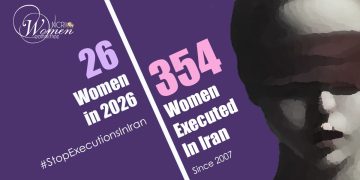
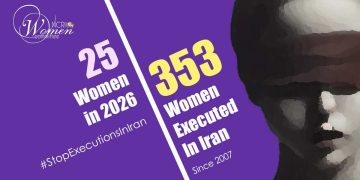
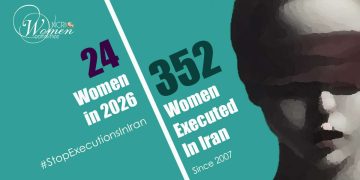
Among the victims were at least 57 women, marking a 70% increase compared to the previous year. Between July 30 and November 30 alone, 32 women were executed.
Since Massoud Pezeshkian took office, the mullahs’ regime has carried out over 2,600 executions in just sixteen months; 78 women were among those killed.
These shocking figures reflect the fear, political crisis, and desperation of a regime that, faced with nationwide protests and repeated political and economic failures, sees no option but to intensify its killings to prevent an uprising that could topple it entirely.

Political Executions: A Tool to Silence Leading Women
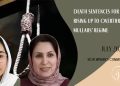
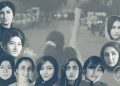
The issuance of death sentences against female political prisoners is a deliberate strategy to silence women who have led and inspired nationwide protests in recent years.
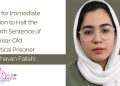
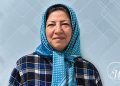
This year, in a blatantly criminal act, the regime sentenced Zahra Shahbaz-Tabari, a 67-year-old political prisoner, to death in a ten-minute online “trial” without access to a chosen lawyer. The only “evidence” against her was a piece of cloth bearing the slogan “Woman, Resistance, Freedom” and a short audio message. Her alleged charge: “supporting the People’s Mojahedin Organization of Iran (PMOI/MEK).”
Sixteen other political prisoners face execution on the same charge.
Saeed Masouri, Iran’s longest-held political prisoner, warned from Ghezel-Hesar Prison:
“A crime is taking place. If we remain silent, another massacre like 1988 will happen again.”
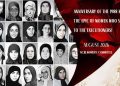
This is not just a warning from inside prison walls. State media openly glorify the 1988 massacre, calling for its repetition. On July 8, 2025, the regime’s Fars News Agency brazenly hailed that atrocity as a “brilliant record”, writing: “Today is the time to repeat this successful historical experience.”
During the 1980s, the mullahs’ regime executed or tortured to death over 100,000 people, including tens of thousands of PMOI women and resistance activists, an act of genocide and a crime against humanity.
What state media openly promote reveals the regime’s true intent: execution remains its core instrument of political repression.

Women Sentenced to Death: Victims of Violence, Poverty, and Systemic Injustice
Most women condemned to death have long been trapped in cycles of violence and vulnerability. They are victims of discriminatory laws, domestic abuse, poverty, and a corrupt judicial system that offers no protection.
Some were driven to kill only when defending their lives and dignity; women who would never have reached such a point if they had access to divorce, legal support, or safe shelters.
Others were executed over drug-related charges; women crushed by poverty, coerced by abusive husbands, or forced to transport tiny quantities of drugs simply to feed their children; all while major trafficking networks tied to the IRGC reap massive profits without consequence.
Some harrowing examples include:
- Marzieh Esmaeili, 39, and mother of one daughter, executed on April 15, 2025, for transporting 600 grams of drugs in exchange for only 10 million tomans ($100).
- Zahra Mir-Ghaffari, mother of two girls aged 9 and 13, executed on November 8, 2025.
- Mina Sadoughi, mother of three children aged 7, 9, and 11, executed on November 26, 2025, along with her husband, without informing the family and without being allowed a final visit with their children.
Families Standing Against the Machinery of Death
Families of those facing execution have repeatedly gathered outside prisons, insisting they will continue their protests until all executions end. Each time, they have been met with violence.

During a rally on October 19, 2025, security forces attacked protesters with batons, severely injuring several women.
One heartbreaking sign held by a child read: “Execution does not end a mistake; it begins the suffering of defenseless children.”

Inside Ghezel-Hesar Prison, more than 1,500 prisoners stitched their lips shut and went on hunger strike to protest the execution surge.
Meanwhile, families of political prisoners have joined the “No to Execution Tuesdays” campaign. For 97 weeks, across 55 prisons, they have taken to the streets each week, chanting, “No to execution” and “Execution for no one.”

The World Must Stand Up: An Urgent Call for International Action
The Iranian regime holds the grim record of being the world’s top executioner of women. This reality demands urgent global action.
Media, human rights organizations, and governments must intensify pressure to stop executions immediately, abolish the death penalty, and condemn the regime’s systematic policy of state murder.
The Women’s Committee of the National Council of Resistance of Iran (NCRI) calls for immediate international intervention to save the lives of prisoners on death row, especially women, and to end this cycle of death.