
Women’s Ward of Yazd Prison Joins the Campaign
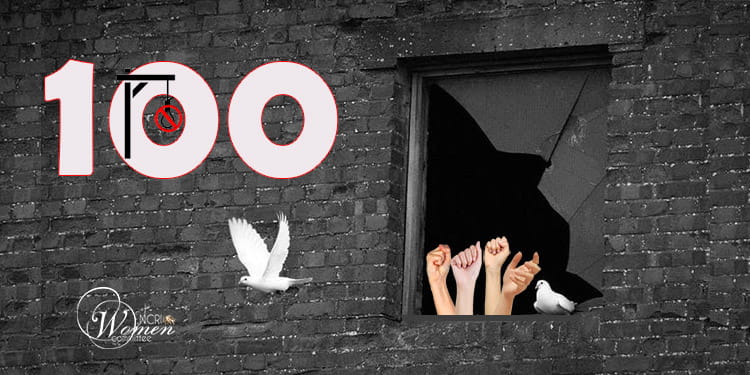
As it enters its 100th consecutive week, the nationwide campaign “No to Execution Tuesdays” has become one of the most enduring and wide-ranging movements opposing the death penalty in Iran. This week, hunger strikes by prisoners continued in 55 prisons across the country, while the women’s ward of Yazd Prison officially announced its participation in the campaign.
One hundred acts of commemoration marking the campaign’s 100th week were held in 80 cities throughout Iran. This milestone represents far more than a symbolic number; it stands as clear evidence of the continuity, resilience, and expansion of an organized resistance against one of the state’s most brutal instruments of repression: the death penalty.
The campaign’s persistence over one hundred consecutive weeks demonstrates that opposition to executions has evolved from a limited protest into a sustained and deeply rooted social demand.
The sharp increase in the issuance and implementation of death sentences, particularly against political prisoners and protesters, has transformed No to Execution Tuesdays into a nationwide outcry against the systematic elimination of human lives.
The simultaneous presence of justice-seeking families, students, political activists, and diverse segments of society underscores that the defense of the right to life and human dignity has become one of the central demands of Iranian society.
Women’s Ward of Yazd Prison Joins the Campaign
In a section of the statement issued for the campaign’s 100th week, organizers announced that the women’s ward of Yazd Prison had formally joined the movement.
The statement emphasizes that the 100th week symbolizes perseverance, courage, and faith in human dignity, noting that one hundred weeks of hunger strikes in dozens of prisons have shown that even in the most closed and repressive spaces, hope can be kept alive, and the voice of justice can be raised.
The statement also reflects on the hardships of this path, recalling the bitter nights marked by the execution of fellow prisoners and companions. It stresses that despite mounting pressure and repression, No to Execution Tuesdays will continue uninterrupted until the complete abolition of the inhumane death penalty. According to the signatories, these one hundred weeks serve as proof that conscious resistance can break imposed silence and bring the possibility of change closer to reality.
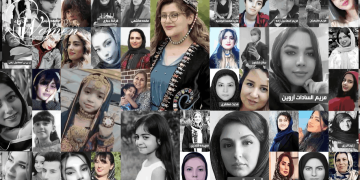
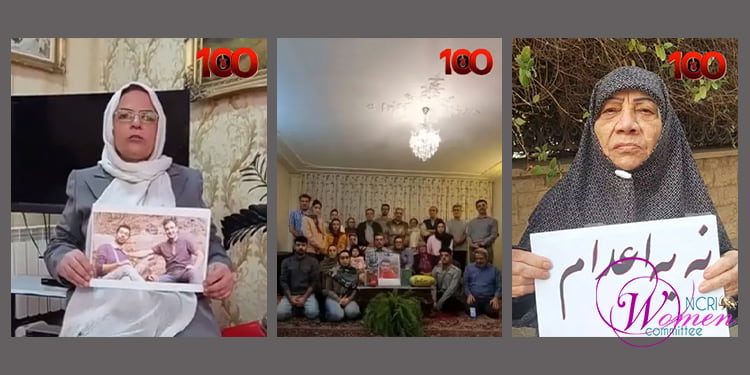
Within this movement, the role of families of political prisoners sentenced to death is highlighted as one of its central pillars. Through their sustained presence in the public sphere, holding photographs of their loved ones and recounting the suppressed narratives of victims, these families have become a driving force in sustaining and expanding the campaign.
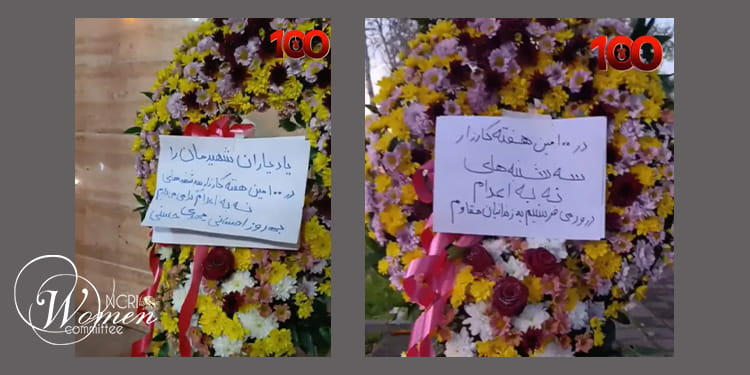
Coinciding with the 100th week, a symbolic flower-laying action was carried out by youth and supporters of No to Execution Tuesdays in public spaces in the city of Dorud. Messages opposing executions and honoring those who lost their lives on this path, including Behrouz Ehsani and Mehdi Hassani, were attached to the wreaths, signaling that the campaign has taken root beyond prison walls and within society at large.
The 100th week of No to Execution Tuesdays has now become a powerful symbol of solidarity, resistance, and collective defiance against the policy of execution, an effort that seeks to unite the actions of prisoners, families, and society in order to transform opposition to the death penalty into a national and global demand.