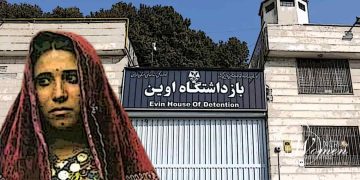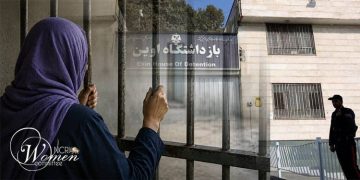


The living conditions of female political prisoners in Evin Prison have worsened after they were moved to a damp and contaminated basement, a place overrun by rats, insects, and severe pollution, which constitutes a clear form of torture.
The situation is especially alarming for prisoners with serious health conditions, including Fatemeh Ziaii and Shiva Esmaeili, whose treatment has prompted renewed calls for urgent international intervention.
The Secretariat of the National Council of Resistance of Iran (NCRI) issued an urgent call on December 6, 2025, calling on the UN High Commissioner for Human Rights, the UN Special Rapporteur on Iran, and international human rights bodies to immediately investigate the conditions in Evin Prison and ensure the release of prisoners who are gravely ill.
After the demolition of Evin Prison in June, female political prisoners were initially transferred to Qarchak Prison in Varamin, a prison notorious for its substandard and degrading conditions.
Although they were returned to Evin Prison on October 9, they have been recently placed in a basement ward located nearly 40 steps below ground level. The ward is described as excessively humid, unhygienic, and overrun with rats, insects, and other vermin, subjecting detainees to conditions tantamount to torture.

Among the prisoners is Fatemeh Ziaii, 68, a prominent political prisoner first jailed in the 1980s. Arrested seven times and having spent a total of 13 years behind bars, she suffers from advanced Multiple Sclerosis (MS), tuberculosis, and a severe internal infection. The lack of medical care has caused irreversible damage and poses a life-threatening risk.
On January 19, 2025, she was released on bail of 300 million tomans after a medical examiner confirmed she was unable to endure prison conditions. Nonetheless, she was rearrested in August 2025 and in October brought before Branch 15 of Tehran’s Revolutionary Court to face new fabricated charges.

Another inmate, Shiva Esmaeili, serving a 10-year sentence in Evin Prison, suffers from chronic and debilitating lower-back pain. Despite her worsening condition, prison authorities continue to deny her access to specialized medical treatment.
In its statement, the NCRI Secretariat described the situation in Evin Prison as a stark example of systematic abuse against female political prisoners and urged the international community to take immediate action to investigate their situation and secure the release of prisoners who are ill.