

Tehran Bazaar strike and protests in Iran entered their third consecutive day on Tuesday, December 30, 2025, marked by the widespread closure of Tehran’s Grand Bazaar and the growing participation of university students and cities across the country.
The Tehran bazaar strike was joined by active student participation and support from major universities in the capital, including the University of Tehran, Sharif University of Technology, Amirkabir University of Technology, Allameh Tabataba’i University, Iran University of Science and Technology, Khajeh Nasir Toosi University of Technology, and the National University (known as Beheshti), as well as Isfahan University of Technology and the University of Yazd.
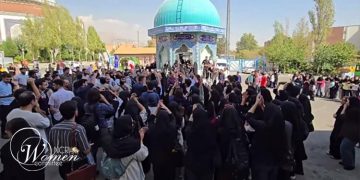
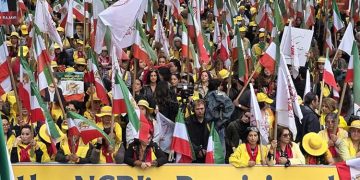
Students organized rallies and marches, chanting protest slogans. At some campuses, students stood their ground against Basij units and plainclothes forces, forcing them to retreat through sustained protest chants. Among the students’ slogans were:
• University of Tehran: “Poverty, corruption, and tyranny—death to this despotism,” “Death to the dictator,” “We will stand, we will die, we will take back our rights.”
• Allameh Tabataba’i University students: “Poverty, corruption, and tyranny—death to this despotism,” “Political prisoners must be freed,” “Neither Pahlavi nor the (Mullahs’) Leader—freedom and equality,” “Neither monarchy nor (the mullahs’) leadership—freedom and equality.”
• K. N. Toosi University of Technology: “Student, be the voice of the people,” “We come from a lineage of blood; we will stand to the end,” “Freedom, freedom, freedom,” “By the blood of our fallen comrades, we stand until the end,” “Student, shout—cry out for your rights,” “This homeland will not be free until the mullahs are shrouded,” “Hardliner or reformist—the game is over.”
• Isfahan University of Technology: “An Iranian may die but will not accept humiliation,” “Dignified students—support, support.”
• National University of Tehran (Beheshti): “Death to the dictator,” “A student may die but will not accept humiliation,” “So many years of crimes—death to this rule,” “Do not be afraid, do not be afraid, we are all together,” “Basiji on a handout—this is the end, enjoy it while you can,” “A student may die but will not accept humiliation.”
• University of Science and Technology: “Do not be afraid, do not be afraid, we are all together,” “Free students—protest, protest,” “Freedom, freedom, freedom—say it.”
• Amirkabir University of Technology: “Student, student—be the voice of the people,” “Basij and IRGC—ISIS, we see you for who you are,” “Death to the dictator,” “I am a free woman,” “A student may die but will not accept humiliation.”
• University of Yazd: “Iranian, raise your voice—cry out for your rights.”
Merchants and shopkeepers in numerous parts of Tehran shuttered their businesses in solidarity with the strike, while central and southern districts of the capital became scenes of protest gatherings.
In Tehran, demonstrations in areas including Mellat Street, Shoosh Square, and the Javadieh neighborhood were met with crackdowns by special security forces.
In Enghelab Square, people chanted, “Death to the oppressor, be it the Shah or the (mullahs’) Leader.”
Security units used tear gas to disperse protesters; however, reports indicate that demonstrations continued, with citizens, particularly young protesters, resisting the repression. At the same time, the heavy deployment of police and plainclothes forces on Ferdowsi, Valiasr, and Sattarkhan streets, as well as around the Tehran Bazaar, failed to contain the spread of protests.
Beyond Tehran, strikes and protests spread to numerous cities, including Shiraz, Isfahan, Kermanshah, Mashhad, Ahvaz, Yazd, Karaj, Hamedan, Qeshm, Zanjan, and Tabriz. Nevertheless, Tehran and particularly its central bazaar have emerged as the epicenter of this protest wave, creating a visible linkage between the bazaar, the streets, and the universities.
At Sahand Stadium in Tabriz, youth chanted, “Azerbaijan Has Honor; Pahlavi Is Dishonorable.”
The Tehran Bazaar strike and the continuation of protests reflect the accumulated public anger over economic collapse, the sharp devaluation of the national currency, runaway inflation, and entrenched systemic corruption within the ruling establishment. Through their slogans and actions, protesters have pointed simultaneously to what they identify as the root cause of the crisis, the clerical regime,and to what they see as the solution: resistance and uprising.