
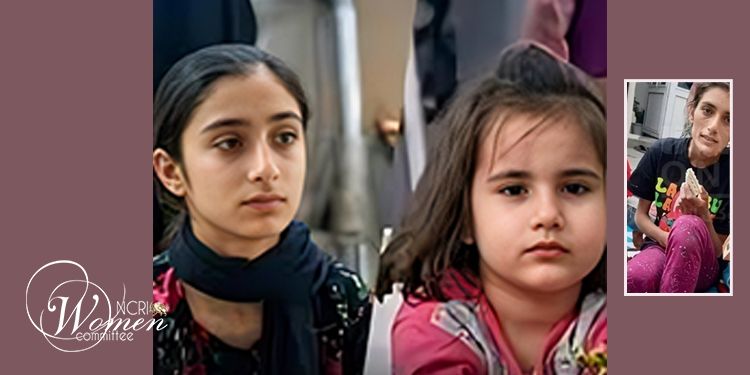
A shocking new case has once again intensified the Iran child abuse crisis, following horrific reports of violence against two girls, aged 15 and 7, in Sanandaj that left the public in shock and outrage. What Narin and Aylin endured is not merely a family tragedy; this case has once again drawn attention to the broader system failures and the inefficiency of child protection mechanisms.
The Sanandaj tragedy demonstrates how the lack of effective social and legal protection, particularly for girls, can leave repeated warnings about violence unanswered for years.
The Details Revealing Months of Torture of 2 Girls
The story of Narin and Aylin, two sisters from Sanandaj, the capital of western province of Kurdistan, entered a bitter phase following their parents’ divorce and the assignment of their custody to the father. According to reports, during the years spent living with their father and stepmother, these two children were repeatedly subjected to physical violence and abuse.
Neighbors had repeatedly reported the matter to the responsible authorities, but the follow-ups yielded no results. They state that the father, while denying the reports, prevented officials from entering the house, which disrupted the process of investigating the children’s living conditions.
On June 1, 2026, after neighbors noticed that the father and stepmother had left the house and there was no sign of the two girls, they reported the issue. Following the receipt of a legal warrant, emergency and judicial forces entered the house through the roof and discovered the two sisters in deplorable conditions.
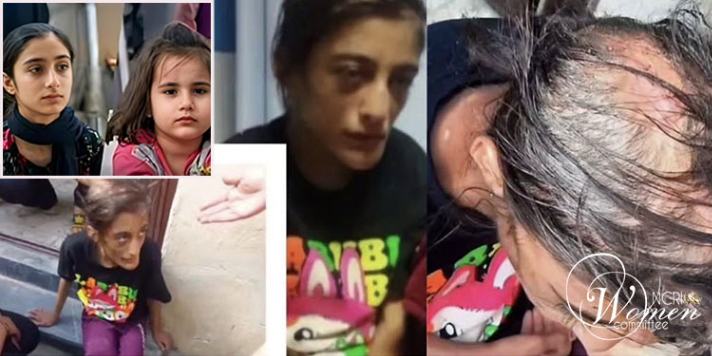
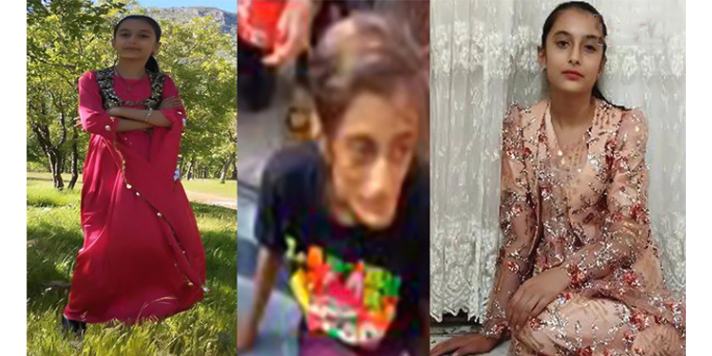
According to reports, 15-year-old Narin had suffered fractures in her jaw, pelvis, and thigh. Additionally, signs of burns, infected wounds, bedsores, severe malnutrition, anemia, and extensive hair loss were observed in her. Published images of the two sisters, when compared to photographs from previous years, also reveal striking changes that testify to years of violence, deprivation, and neglect.
These cases are more than just family tragedies; they highlight the absence of efficient support systems and the lack of legal safeguards for vulnerable children in Iran.
Iran’s Custody Law and How the Judicial System Dismissed a Mother’s Warnings
The courts of the clerical regime ignored the mother’s documented warnings and favored the father’s claims over the submitted reports. While the mother had repeatedly warned of the torture, malnutrition, and life-threatening danger faced by her children, no effective intervention was made to protect the two minors. This case has once again highlighted how mothers face discrimination within the legal and judicial framework of the clerical regime, effectively prioritizing a father’s rights and authority over a child’s safety and well-being.
How Iran’s Gender Apartheid Hides the True Scale of Girls’ Child Abuse
The case of Narin and Aylin is not an exception. Child abuse in Iran is a growing phenomenon and ranks at the top of social anomalies.
According to admissions by regime officials, domestic violence against young girls has become an escalating crisis. Officials of the State Welfare Organization have announced that over one million calls are recorded annually by the Social Emergency Hotline (123), a significant portion of which is related to domestic violence.
Official statistics indicate that girls account for approximately 55 percent of recorded child abuse victims, while boys make up 45 percent. Furthermore, the highest frequency of reported cases is associated with the five-to-ten age group.
These figures reflect only a fraction of reality; within the dominant patriarchal structure, many young girls have no means of exposing violence inside their homes. The regime’s laws not only fail to provide effective protection for them but, in some cases, actively create the conditions for the continuation of violence.
Child abuse in Iran is not confined solely to the family environment. Working children and street children are also among the most vulnerable groups, and many of them face physical, sexual, and psychological abuse, as well as economic exploitation, while having limited access to social and legal support.
The Iranian Regime’s Responsibility for Violating the Convention on the Rights of the Child
While the clerical regime claims adherence to international protocols, in practice, it violates the provisions of Article 19 of the United Nations Convention on the Rights of the Child (UNCRC). Under this treaty, governments are obligated to establish effective protective mechanisms to shield children from all forms of abuse and neglect, even by their parents.
In Iran, due to structural limitations, lack of sufficient authority, and budget shortages, the Social Emergency system lacks the capacity to intervene effectively in many cases. Consequently, rescue forces often step in only after serious harm has already been inflicted on the child.
Narin and Aylin have now been removed from the abusive environment, and their treatment process has begun. However, this case has once again drawn attention to the role of misogynistic laws and the judicial structure of the Iranian regime; a structure that, instead of providing effective protection for children, practically leaves the hands of abusers untied. Under such circumstances, domestic violence is not an exception, but rather the predictable outcome of a system that does not prioritize child protection.