
According to recently surfaced reports, a 22-year-old woman named Afsaneh Zandabadi was executed on May 17, 2026, in the Central Prison of Tabriz. To date, state-run media in Iran have not announced her execution.
Afsaneh Zandabadi had been a victim of rape and abuse by her stepfather since childhood. At just 19 years old, she was sentenced to death on drug-related charges by the courts of the clerical regime. She spent three years on death row before her sentence was carried out.
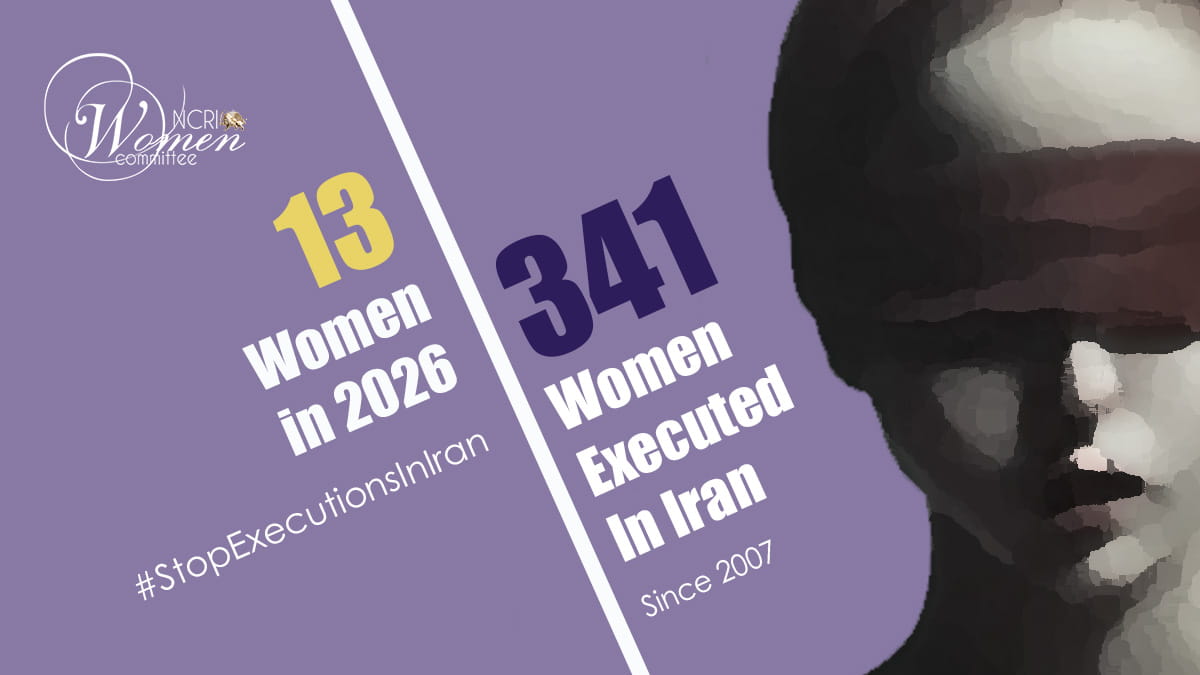
With the execution of Afsaneh Zandabadi in the Central Prison of Tabriz, the number of women executed in the 2026 calendar year has risen to thirteen.
Years of Exploitation: From Age 15 to the Gallows
Afsaneh Zandabadi lost her father years ago. When she was 15, her mother married a tire merchant, forcing Afsaneh to move into his home. Her stepfather immediately halted her education. When she turned 17, he bought her a Peugeot 206 as a birthday gift—but his motives were entirely predatory. Luring her with promises of wealth and buying her a villa, he coerced her into trafficking drugs.
This exploitation continued for two years until the police discovered 25 kilograms of narcotics in Afsaneh’s car and arrested her.
Throughout her interrogation and even during her trial, Afsaneh explicitly testified that her stepfather, Asadollah Khanbeigi, had repeatedly raped her and used threats to force her into silence and cooperation. Fearing her stepfather, she had been unable to confide in her mother. Cellmates who spent time with Afsaneh in prison also confirmed hearing these painful details from her.
While her stepfather was briefly detained, he was released because no drugs were found in his possession at the time of his arrest. Consequently, the entire legal burden of the case fell on the 19-year-old girl, ultimately leading her to the gallows.
A Systemic Cycle of Violence and Injustice
Women sentenced to death by the Iranian regime are often trapped in a continuous cycle of violence and defenselessness. They are the primary victims of discriminatory laws, domestic abuse, poverty, and a corrupt judicial structure that offers them absolutely no legal protection.
Furthermore, women executed for drug-related offenses are frequently forced into trafficking by male family members. Meanwhile, the primary smuggling networks and drug cartels remain under the control of syndicates tied to the Revolutionary Guard Corps (IRGC), which pocket massive profits and enjoy complete immunity.
Iran, the world record holder in executing women
According to data recorded by the Women’s Committee of the National Council of Resistance of Iran, at least 341 women have been executed in Iran since 2007.
Many of the women executed by the Iranian regime are themselves victims of domestic violence and discriminatory family laws. A significant number have acted in self-defense.
Since Masoud Pezeshkian took office, the clerical regime has executed more than 3,750 prisoners, including 101 women.
According to the NCRI sources, in 2025 alone, more than 2,201 executions were recorded in Iran, more than double the number carried out in 2024 (1,006).
Amnesty International stated in its annual report that Iran’s ruling dictatorship carried out at least 2,159 executions in 2025, the highest recorded number of executions in the world. The organization said the figure represents the highest documented annual execution rate worldwide since 1981.
The Women’s Committee of the National Council of Resistance of Iran calls on the United Nations and relevant agencies, the European Union and its member states, as well as all human rights defenders, to take immediate action to halt the rampant executions in Iran.