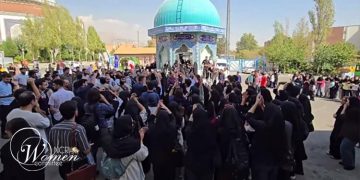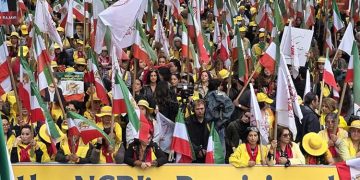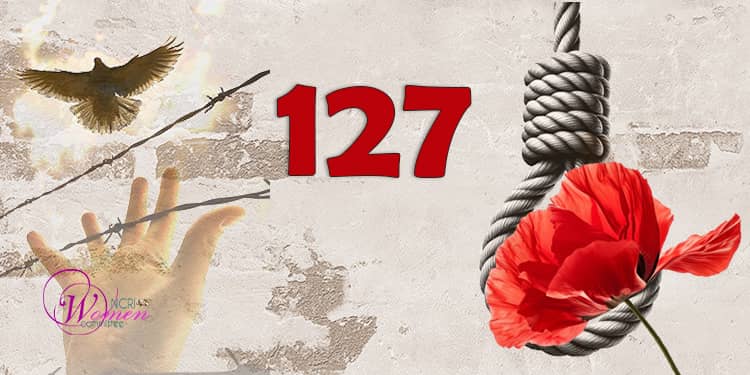
The “No to Executions Tuesdays” campaign marked its 127th week on Tuesday, June 30, 2026, as political prisoners in 57 prisons across Iran continued their weekly hunger strike. Participants once again expressed their opposition to the continued use of the death penalty by the Iranian regime and judiciary.
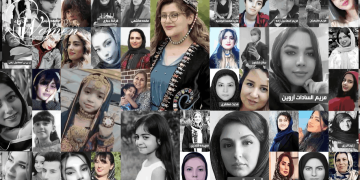
A significant number of the hunger striking prisoners are women political prisoners, currently serving their sentences in the women’s ward of Evin Prison (Tehran), Qarchak Prison (Varamin), the women’s ward of Sepidar Prison (Ahvaz), the women’s ward of Adelabad Prison (Shiraz), the women’s ward of Zahedan Prison, the women’s ward of Yazd Prison, and the women’s ward of the Lakan Prison in Rasht.
The campaign has become the largest and most enduring protest movement inside Iran’s prisons. Despite ongoing security pressure, threats, communication restrictions, and disciplinary measures, it continues to expand, drawing increasing support from prisoners each week.
Participants in the “No to Executions Tuesdays” campaign emphasize that their protest extends beyond defending prisoners sentenced to death. They describe it as an effort to uphold the right to life, human dignity, and justice.
They argue that the death penalty is used as a tool to create an atmosphere of fear and silence critical voices. They believe that the continuation of this movement can draw greater public and international human rights attention to the rising number of executions.
In their view, opposition to capital punishment is part of a broader struggle to defend fundamental human rights and confront the cycle of violence and repression in society.
When Even the Burial Place of Loved Ones Is Concealed
In many execution cases, the suffering of families does not end with the implementation of the sentence. Denying families information about the burial sites of their loved ones or refusing to return their bodies adds another layer of suffering and injustice.
In its latest statement, the “No to Executions Tuesdays” campaign referred to the appeal made by the father of Vahid Bani-Amerian, stating:
“Amid all this, the voice of a father asking, ‘Where is my son’s grave?’ is a voice rising from the depths of suffering and injustice.
The question raised by the father of Vahid Bani-Amerian, a political prisoner who, along with five other political prisoners, was executed at Qezel Hesar Prison last April, and by other families whose children’s bodies were never returned to them, is not merely a personal plea. It is the cry of countless families seeking justice who have been denied even the most basic right to know where their loved ones are buried.
This deprivation amounts to the continuation of punishment after death and constitutes a clear violation of human dignity, where suffering neither ends nor allows families the opportunity to grieve.”