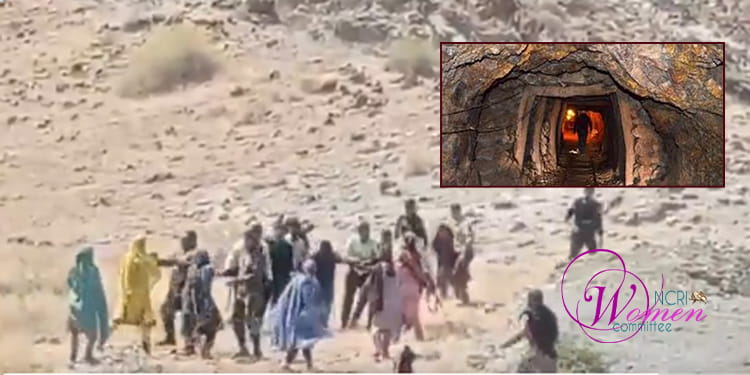
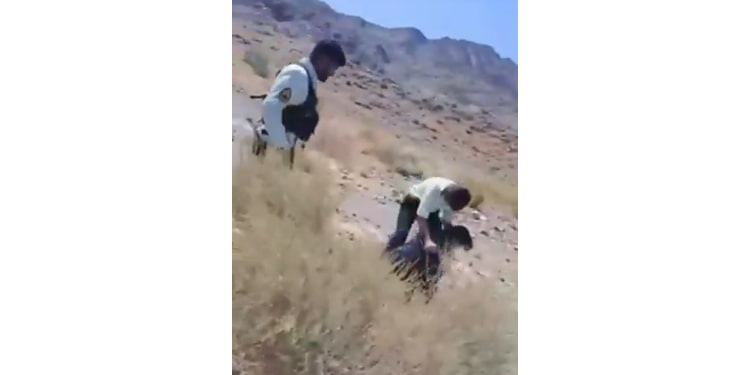
KERMAN, Iran _ Baluch Protest — On Wednesday, June 17, 2026, the Iranian regime’s repressive military forces violently attacked a peaceful protest by Baluch residents in Pashmoki village, located in the Faryab region of Kerman province. The forces brutally beat the protesters, specifically targeting women, and arrested several individuals.
During this violent crackdown, at least seven Baluch women were injured. Furthermore, regime forces arrested six local citizens, including three women, and transferred them to an unknown location.
Local residents were protesting for the second consecutive day against the unjust allocation of the Pashmoki chromite mine, which deprives the indigenous population of the mine’s economic benefits and opportunities. The local population is demanding their basic rights to profit from the natural resources and wealth of their own region. Women played a courageous and active role in this gathering. According to eyewitnesses, instead of addressing the people’s legitimate demands, the regime’s security forces used blatant violence and physical assault to break up the protest and disperse the crowd.
Regime Forces Assault Women at Taftan Gold Mine Protest Within 24 Hours
The regime’s violent crackdown on mining-related protests was not limited to Faryab. According to the human rights organization Haalvsh, on the evening of Tuesday, June 16, 2026, government forces and agents affiliated with the Taftan gold mine raided a gathering of protesting women in Sar-Siah village, Taftan county (Sistan and Baluchestan province). The forces subjected the women to insults, threats, verbal abuse, and physical assault. As a result, at least one 55-year-old Baluch woman, identified as “Bibi Noor Rigi Koteh,” suffered severe head injuries after being struck with a rifle butt.
The repetition of such violent crackdowns against civilians—particularly women—in two different mining regions within less than 24 hours highlights the growing alarms over how the regime treats the socio-economic demands of residents in southeastern Iran.
Why Are the Resource-Rich Provinces of Sistan & Baluchestan and Kerman Trapped in Poverty?
The provinces of Sistan and Baluchestan and Kerman are among the richest regions in Iran, possessing vast mineral reserves, including gold, copper, and chromite. Why, then, do their native populations receive nothing but suppression and severe deprivation?
The answer lies in the structural and discriminatory policies. By transferring control of these wealthy mines to military and security institutions, such as the IRGC, and systematically denying local residents any economic benefits, the regime has deliberately kept these resource-rich provinces among the most impoverished areas in the country.
Background: Plundering of Resources and the “Feminization of Poverty”‘
The clerical regime’s destructive and predatory policies over the past 47 years have driven the vast majority of the Iranian population below the absolute poverty line. Iran’s public wealth and natural resources have been systematically plundered and monopolized by corrupt state institutions, particularly Guard Corps (IRGC).
Deprived regions and provinces, such as the southern parts of Kerman province which are home to the Baluch minority, bear the heaviest burden of this systemic discrimination. The crisis of the “feminization of poverty” a catastrophic reality now openly admitted even by the regime’s state media is the direct product of this cycle of corruption. This ongoing oppression has pushed marginalized women to the frontlines of economic survival, forcing them to protest in order to defend their most fundamental rights and natural resources.