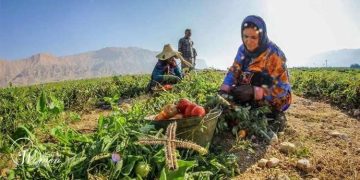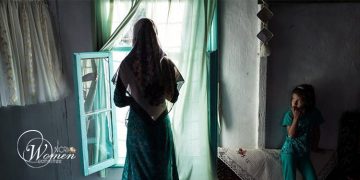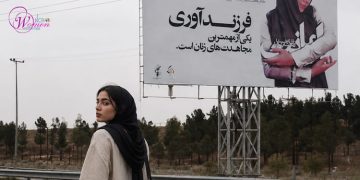


Iranian Women’s Share of the International Day of Family Remittances; Feminization of poverty in Iran under the shadow of inflation. June 16 has been designated by the United Nations as the International Day of Family Remittances; a day when the importance of financial stability and household welfare is emphasized worldwide. However, an examination of the economic realities reveals a completely critical picture, where destructive policies have fueled an unprecedented expansion of the feminization of poverty in Iran.
Systematic Exclusion and Female Poverty
The systematic exclusion of women from the economic cycle and the destruction of household income have directly led to a dangerous phenomenon known as the “feminization of poverty.” In a report titled “When Poverty Takes on a Female Face,” the state-run website Asr Iran quotes the vice-president of the National Union of Female Workers, admitting to the roots of the crisis of women’s poverty in Iran:
“While Iran’s economy has not yet recovered from the shocks of war, stagnation, and long-term internet disruptions, fresh signs of the ‘feminization of poverty’ and the expansion of unemployment among female workers have emerged… These days, we see people who are struggling even to buy bread… In many parts of the country, female workers are the first group to be removed from the workplace at the slightest economic crisis or wartime conditions.” (Asr Iran, May 17, 2026)
This media outlet reveals that millions of female-headed households in Iran still lack insurance coverage and sustainable support. Due to the absence of supportive mechanisms, the main burden of managing empty tables has fallen on the shoulders of women who themselves enjoy the least job security.

Mass Exodus from the Labor Market
According to a report by the state-run website Eqtesadnews, citing the latest labor market report from the Statistical Center of Iran, the continuation of wartime conditions and economic crises has led to widespread discouragement among women in finding jobs, resulting in their mass exodus from the labor market:
“The economically inactive population of women has increased far more severely than that of men, which signals the depth of the gender gap in Iran’s labor market… The decrease in the participation rate simultaneous with the drop in the unemployment rate is a sign of discouragement among the unemployed population regarding finding a job, indicating their complete exit from this market; to the extent that they neither desire to work nor are searching for a job.” (Eqtesadnews, June 8, 2026)
This official report shows that the economic participation rate of women in Iran has plummeted from an already negligible 13.1 percent to 12.2 percent. This means that out of every 100 women of working age, only about 12 are present in the labor market. Eqtesadnews explicitly points to the direct impact of the shadow of war on layoffs and confesses: “A portion of the men who became unemployed have returned to the employment cycle, whereas this has not been the case for women.” This phenomenon means the severing of one of the main income pillars for Iranian families.
Wartime Inflation and the Service Sector Collapse
In an analysis titled “Women: The Losers of Inflation,” the state-run newspaper Shargh, relying on statistics from the Central Bank and the Statistical Center of Iran, provides shocking details of the inflation rate for April 2026. The Statistical Center of Iran announced the annual inflation rate at 53.7 percent and the point-to-point inflation rate at 73.5 percent. According to the Central Bank’s report, the monthly inflation rate was 15.6 percent in the healthcare sector and 8.9 percent in the food and beverage group, illustrating the pumping of poverty into household tables.
Shargh explicitly reveals the link between the regime’s warmongering policies and the dismissal of women from the labor market, writing:
“The steep slope of inflation growth from last winter to this April has caused many services to seem non-essential to consumers; particularly as a war with an uncertain fate cast a shadow over the country and has made many people of the middle and lower classes cautious in their daily expenditures. In the meantime, the service sector has been more vulnerable than other sectors of the country’s economy… Demand for beauty and leisure services, counseling, insurance, childcare, house cleaning, etc., have all decreased significantly.” (Shargh Newspaper, May 3, 2026)
Since a major part of Iranian women’s employment is in the service sector and informal jobs, the sudden stagnation of this sector under the shadow of war has meant the massive dismissal and unemployment of female workers and service providers.
The Path to Fundamental Change
For the people and especially the women of Iran, the International Day of Family Remittances is an occasion to expose a record filled entirely with corruption, suppression, and incompetence. Official statistics and the confessions of the regime’s own media clearly prove that the combination of “wartime adventures, hyperinflation exceeding 53 percent, and structural discrimination” has shattered the institution of the family in Iran.
The plunge of women’s economic participation rate into the 12 percent channel and driving them toward absolute poverty is the direct result of a system that spends national wealth on its own survival and regional terrorism. This livelihood crisis and the ever-deepening poverty of women in Iran will only end with the overthrow of the entirety of this predatory regime and the establishment of a popular sovereignty based on freedom and equality.