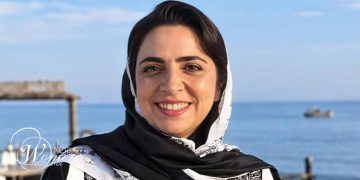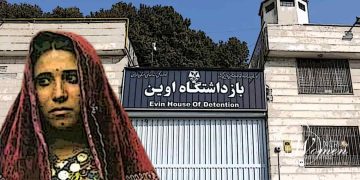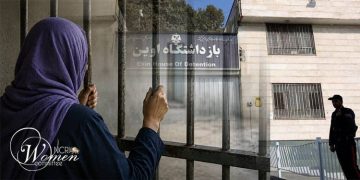

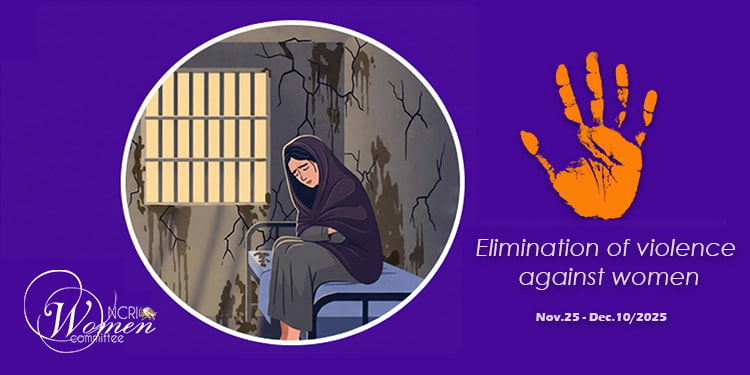
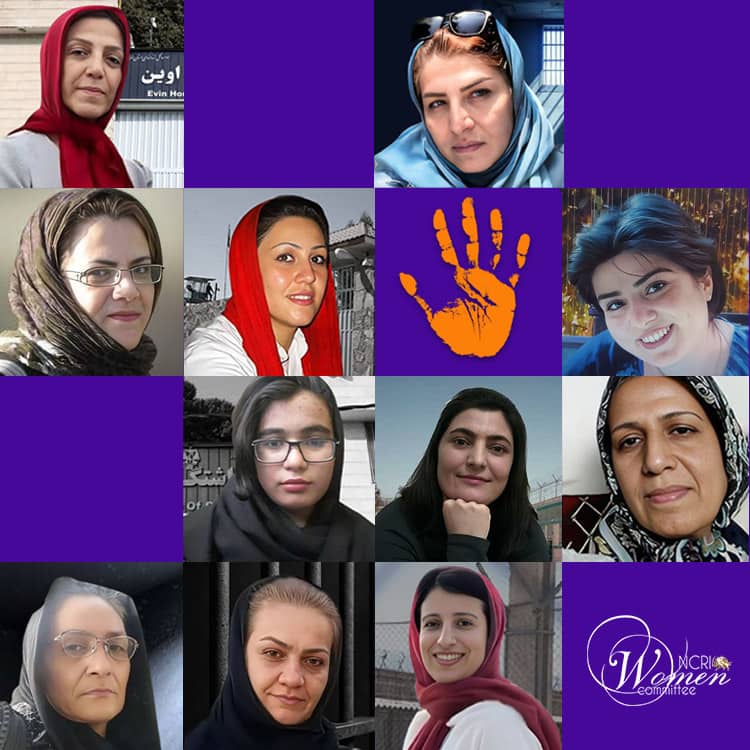
As the two-week global campaign to end violence against women concludes, and on the International Human Rights Day, we turn to the situation of women who have stood up for human rights and the fundamental freedoms of their fellow citizens—women who have paid for this commitment with torture, imprisonment, and profound personal sacrifice.
Female political and conscience prisoners are arbitrarily arrested for exercising their rights to freedom of expression and belief. After enduring harsh interrogations, mistreatment, and torture, and facing unfair judicial proceedings without access to legal counsel, they are handed disproportionate prison sentences on fabricated charges imposed on them by the regime.
These women are held in prisons that lack even the most basic living and sanitary standards. In many facilities, there are not enough beds for prisoners to sleep on. Food quality is extremely poor, and prison clinics operate without the minimum equipment or medication needed to treat patients. The costs of food, hygiene items, and medical care are routinely shifted onto the prisoners themselves.
The substandard and unsafe conditions of these prisons take a severe toll on the bodies and minds of detainees—making healthy prisoners ill and worsening the illnesses of those already unwell. The regime, meanwhile, deliberately obstructs or delays the transfer of political and conscience prisoners to outside hospitals, effectively denying them timely and essential medical treatment.
This is a form of “white torture,” a method that slowly erodes the prisoner’s body and spirit, inflicting a prolonged and painful deterioration that amounts to a gradual death.
Detaining Women Political Prisoners in Extremely Unsanitary Conditions Constitutes Torture
Over the past year, the regime has gone beyond its usual abuses, imposing even harsher conditions on women political prisoners. During the 12-day conflict and the destruction of Evin Prison on June 23, 2025, female political detainees were transferred from Evin’s women’s ward to the notorious Qarchak Prison. They were placed in a derelict hall previously used for housing drug-addicted inmates, a space with minimal sanitation and far below basic hygienic standards.
Upon arrival, the facility was filled with garbage, a foul stench, infestations of vermin, and had no ventilation. Prisoners themselves, without any official support, struggled to clean and partially organize the area. Despite these efforts, the conditions remained unacceptable, violating the most basic human rights.
Contact with other sections of the prison was entirely cut off. Only three toilets and three showers were provided for the entire population. Some rooms, like a 20-square-meter space housing 13 women, left no room for rest or even sitting. Many, particularly the elderly and those with illnesses, were forced to sleep on the floor.
Standing water, swarms of rats, and pervasive insects exacerbated the risk of infection and disease. Ventilation was in critical condition; air conditioners, rather than cooling the space, spread the foul odor, leaving the environment hot, humid, and unsafe.
After persistent protests by the prisoners, female political detainees were finally returned to Evin Prison on October 9, 2025, but not to the women’s ward. They were placed in the lower corridor of Ward 6 and in the prayer rooms, spending nights without beds, blankets, or any heating. With the onset of autumn’s cold, many contracted colds and other illnesses. One prisoner described the conditions: “Many women sleep on the cold, concrete floor. There is insufficient light, the air is heavy, and access to hot water is extremely limited.”
The regime has not stopped there. Recently, women political prisoners were transferred to an underground ward nearly 40 steps below ground level, an area that is extremely damp, unsanitary, and infested with rats, insects, and various pests. This environment constitutes blatant torture. The situation is particularly alarming for prisoners with serious medical conditions, including Fatemeh Ziaii and Shiva Esmaeili.
Denial of Medical Care: A Widespread, Institutionalized Mechanism in Iranian Prisons
Denying medical treatment to political and conscience prisoners has become an institutionalized mechanism within the Iranian prison system. In recent years, this practice has become more widespread, with numerous prisoners losing their lives due to delayed or withheld care.
One of the most prominent cases of death among female prisoners last year due to medical neglect was that of political prisoner Somayyeh Rashidi.
Born in 1983, Somayeh Rashidi Mehrabadi was a garment worker. On April 24, 2025, she was arrested in Tehran’s Javadiyeh neighborhood while painting slogans against the regime and was charged with “propaganda against the state.” According to her close contacts, she was severely beaten during her arrest: officers smashed her head against a wall and sat on her chest. Despite her injuries, the regime took no action to provide medical care.
Somayyeh had suffered from epilepsy for years. Fellow inmates reported that she repeatedly experienced seizures and severe headaches and requested medical attention. Prison doctors, however, dismissed her condition as “feigned” and either sent her back to her cell or gave her psychiatric medications unrelated to her epilepsy.
On September 16, 2025, Somayyeh Rashidi was transferred to the forensic clinic for an assessment of her “incapacity to serve her sentence.” During the transfer, she suffered a severe seizure. Despite the seriousness of her condition, she was initially returned to Qarchak Prison and only taken to a hospital after losing consciousness during a subsequent, severe epileptic attack.
A few days later, doctors reported that her level of consciousness had dropped to 5 on the Glasgow Coma Scale and that recovery was unlikely. After ten days in a coma at Moffatteh Hospital in Varamin, Somayyeh Rashidi passed away.
Qarchak Prison: From a Symbol of Women’s Rights Violations to a Death Trap
Qarchak Prison, one of the most notorious symbols of the regime’s severe violations of women prisoners’ rights in Iran, has become a death trap. Overcrowded and lacking basic necessities such as drinking water, and above all, essential medical care, the facility exposes detainees to extreme risk.
According to internal prison sources, at least 23 women have died in Qarchak since March 21, 2025, without their names or causes of death appearing in any official reports. Many of these deaths were caused by treatable illnesses.
Among the inmates, several women suffer from serious medical conditions, including bilateral ovarian cancer and endometriosis. Doctors have emphasized the urgent need to transfer these women to specialized medical centers. Yet the supervising judge, a woman named Shouli, has blocked their medical referrals, demanding bail ten times the usual amount.
In just ten days, from September 16 to 25, at least three female prisoners—Somayyeh Rashidi, Jamileh Azizi, and Soudabeh Asadi—died due to denial of medical care and delays in hospital transfer. On September 12, Maryam Shahraki had died at Pardis Prison in Karaj for the same reason: lack of treatment.
On the evening of November 11, 2025, Sahar Shahbazian (also known as Tannaz), a 26-year-old woman detained in Fardis Prison, Karaj, died under suspicious circumstances. Informed sources stated that the true cause of her death was cardiac arrest resulting from delayed hospital transfer.
The Plight of Sick Prisoners and the Denial of Medical Care
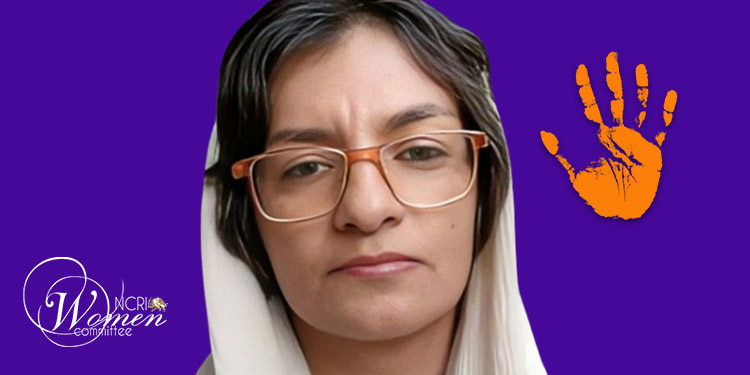
Fatemeh Ziaii, 68, a political prisoner from the 1980s, has spent more than 13 years in the prisons and torture centers of the clerical regime. She suffers from advanced multiple sclerosis, latent pulmonary tuberculosis, and urinary infections related to her illness, and her physical condition is described as fragile.
She is currently facing a critical health situation in Evin Prison. Sources close to her family report that continued detention without access to specialized medical care poses a serious risk to her life.
Fatemeh was temporarily released in January 2025 following a forensic medical assessment confirming her inability to endure imprisonment. However, on August 6, 2025, security forces raided her home, re-arrested her, and transferred her to the Nopou detention center. During the 40 days she spent there, she was denied even minimal medical attention. On several occasions, she suffered medical attacks, but authorities prevented her transfer to proper healthcare facilities.
The physical condition of Marzieh Farsi, a political prisoner held in Evin Prison, has worsened alarmingly in recent weeks. Farsi, who has long battled cancer and serious heart complications, experienced a significant deterioration in her health after being transferred from Qarchak Prison to Evin, including chronic headaches, severe dizziness, and general weakness.
Despite repeated medical recommendations to continue essential medications for controlling cancer cell growth and managing her cardiac condition, Evin Prison authorities have blocked the delivery of her vital drugs. These actions, justified under administrative and security pretexts, have placed her health in serious jeopardy.
Marzieh Farsi, born in 1965 and a resident of Tehran, is a mother of two. She was arrested on August 21, 2023, coinciding with the anniversary of the nationwide protests of 2022, and transferred to Ward 209 of Evin Prison. The Tehran Revolutionary Court sentenced her to 15 years in prison on charges of “enmity against God and association with the People’s Mojahedin Organization (PMOI/MEK).”
Maryam Akbari Monfared, held in Qarchak Prison, has suffered for months from severe back and knee pain, numbness in her legs, and impaired mobility. Despite repeated recommendations from medical specialists and an official forensic medical report confirming her need for daily physiotherapy and treatment, prison authorities have refused to transfer her to external medical centers.
Maryam requires assistance even with simple daily tasks. Doctors have warned that continued neglect could result in permanent nerve damage and urinary incontinence. In October 2025, forensic authorities officially confirmed her daily need for specialized medical services outside the prison.
This political prisoner has spent over 15 years in prison without a single day of leave. She is a mother of three daughters and comes from a family targeted during the brutal crackdowns of the 1980s: two of her brothers were executed in 1981 and 1984, and her younger brother and sister were executed in the summer of 1988.
Maryam was first arrested in 2009 on political charges and served a 15-year sentence that concluded in October 2024. However, the judiciary fabricated new charges and sentenced her to an additional two years in prison.
Zeinab Jalalian, held in exile at the Central Prison of Yazd and serving a life sentence, was returned to prison just 24 hours after undergoing major fibroid surgery in early November 2025, without completing the necessary postoperative care. Despite a specialist doctor’s recommendation for follow-up ultrasounds and continued treatment in a specialized medical center, prison authorities blocked her transfer.
Jalalian’s physical condition is poor, and she suffers from severe pain. Continued medical care requires her immediate transfer to external healthcare facilities.
She has long endured internal bleeding, kidney problems, and chronic pain. In July 2024, despite severe discomfort, she was sent only to the prison clinic, where she received no specialist examination and was returned to her cell after a simple painkiller injection. Following her recent surgery, her condition has worsened due to lack of medical resources, poor nutrition, and unsanitary cell conditions.
According to family sources, repeated requests for urgent hospital transfer have gone unanswered. Prison doctors have warned that continuing this neglect could lead to kidney failure and irreversible complications.
Zeinab Jalalian was arrested in 2007 and, in 2009, was sentenced to one year in prison for illegal departure from the country and to death for “enmity against God” due to her affiliation with opposition groups. Her death sentence was confirmed by both the Appeals Court and the Supreme Court but later commuted to life imprisonment.
Ms. Jalalian has repeatedly stated that during her detention she was subjected to torture, including beatings to the soles of her feet, punches to the abdomen, head-banging against walls, and threats of sexual assault.
Shiva Esmaeili, a political prisoner held in Evin Prison, is in critical condition, suffering from severe lower back pain. Despite the severity of her condition, so intense that even breathing is difficult and she is effectively bedridden, prison authorities have deliberately obstructed her transfer to a hospital for specialized care.
After weeks of neglect and ongoing suffering, prison officials eventually agreed to send her to a hospital. However, during the transfer, guards discovered that her bank card had no funds. On the orders of the prison warden, Shiva Esmaeili was turned away at the prison gate.
Esmaeili insisted that she could contact her family to cover the medical expenses, but prison authorities deliberately prevented her from making the call. This incident highlights how Evin Prison officials use access to medical treatment as a tool of pressure and psychological torture against women political prisoners.
Shiva Esmaeili (Masoumeh), born in 1965 in Tehran and mother of three, holds a degree in agricultural engineering. She was arrested in November 2020 for political reasons without due legal transparency. After several years of uncertainty, she was sentenced to ten years in prison on May 14, 2023.
Hoda Mehreganfar, a 38-year-old electronics engineer and political prisoner, is in critical condition at Adelabad Prison in Shiraz. Security authorities continue to prevent her transfer to a hospital, and this deliberate neglect of medical warnings places her life at serious risk.
According to informed sources, Hoda Mehreganfar suffers from recurrent endometrioma, a condition that carries the danger of rupture and internal infection. Prison doctors have repeatedly emphasized that her condition requires immediate hospitalization. However, prison authorities, citing “direct orders from security agencies,” have blocked the execution of these medical directives.
She currently suffers from chronic pain, high fever, and general weakness, and has not been given the medications prescribed to manage her condition. Family sources report that “Hoda is held in conditions that deny her proper rest and nutrition, and her health deteriorates further each day.”
On October 22, 2024, security forces raided the home of Hoda Mehreganfar and her father in Zarqan, Fars Province, arresting them without a judicial warrant and transferring them to Adelabad Prison. Their interrogation took place via video conference on March 29, 2025, during which they were formally charged with “association with the People’s Mojahedin Organization (PMOI/MEK).”
Ayda Najaflou, a Christian political prisoner, is in critical condition, facing a serious risk of spinal cord injury that could be life-threatening. Her health deteriorated significantly following a fall from a bunk bed and subsequent spinal surgery.
On Sunday, November 1, 2025, Mrs. Najaflou fell from a bunk bed, fracturing the T12 vertebra of her spine. She was initially transferred to Taleghani Hospital, where the fracture was confirmed, but she was returned to prison without receiving any treatment and was unable to move. She later underwent spinal surgery at Shohada Hospital in Tajrish but was sent back to Evin Prison before completing the necessary recovery period.
Unsanitary conditions and lack of adequate medical facilities at Evin led to a post-surgical infection, requiring her readmission to the hospital. Her treating physician warned that returning her to the prison ward under current conditions could directly result in spinal cord damage and permanent paralysis.
Ayda Najaflou was arrested in February 2025 by Ministry of Intelligence forces. After interrogation in Ward 209, she has been held in the women’s ward of Evin Prison since April 2025. She was sentenced to ten years in prison on charges of “propaganda against the state,” “assembly and collusion against national security,” and “establishing a house church.”
Arghavan Fallahi, a 25-year-old political prisoner held in Evin Prison, suffers from severe neurogenic migraines but has been denied access to her medication. She frequently experiences intense headaches that trigger seizures, and the effects of psychological torture and interrogation pressures on her health are evident.
Arghavan Fallahi was arrested on January 25, 2025, in Tehran and spent over six months in solitary confinement in Ward 241 of Evin Prison, subjected to intense interrogations and both psychological and physical torture. After two months in solitary at Fashafouyeh Prison and a period of detention at an undisclosed location, she was transferred to the notorious Qarchak Prison and subsequently returned to Evin.
Masoumeh Asgari, a retired teacher and political prisoner, continues to serve her sentence in Evin Prison despite suffering from multiple physical and mental health conditions. Her detention persists while judicial and prison authorities have taken no steps to provide medical care or improve her health.
Massoumeh Asgari, 60, is a mother and the sole caregiver for her family. She was arrested in August 2024 by the Ministry of Intelligence forces in Tehran. After enduring months of interrogation, she was sentenced to three years in prison on charges of “propaganda against the state through collaboration with anti-regime groups” and “membership in opposition groups.”
She suffers from chronic illnesses, including diabetes, kidney and liver problems, and neurological disorders. These health issues are compounded by previous injuries, including multiple fractures in her legs.
Fariba Khoramabadi, a theology professor, religious researcher, and mother of one, was arrested in August 2025 by security forces at her home without a judicial warrant and transferred directly to Fardis Prison in Karaj. She was sentenced to one and a half years in prison on charges of “propaganda against the state” and “membership in opposition networks.”
Ms. Khoramabadi has a history of heart attacks, and in prison she was given the wrong medication, causing neurological tics and repeated seizures. When her condition deteriorated, guards transferred her to a hospital while handcuffed and shackled, exacerbating her physical distress. In protest against this humiliating treatment, she refused to go to the hospital.
Maryam Zubaidi, 58, a resident of Ahvaz and mother of three, was arrested on November 1, 2025, after being summoned to the Enforcement Branch of the Ahvaz Revolutionary Court and transferred to Sepidar Prison in Ahvaz. She suffers from severe respiratory and gastrointestinal illnesses, and her physical condition has been reported as critical.
Mrs. Zubaidi was first arrested on March 15, 2018, by Ahvaz Intelligence Office forces, subjected to prolonged interrogations and psychological torture, and developed severe respiratory and gastrointestinal conditions due to unsanitary detention conditions. During her imprisonment, she repeatedly requested transfers to specialized medical centers but was ignored by prison authorities.
Local sources confirmed that Sepidar Prison’s clinic provides only general medications and lacks the facilities necessary for specialized medical care.
Call for International Action
Medical denial is a form of gendered and political violence carried out in silence. This policy, which violates the fundamental principles of the Convention Against Torture and the International Covenant on Civil and Political Rights, effectively turns the health and lives of prisoners into instruments of state vengeance. In this context, women political prisoners are not only victims of political repression but also of structurally entrenched, gender-based violence.
On Human Rights Day, the Women’s Committee of the National Council of Resistance of Iran calls for urgent action by the United Nations Human Rights Council, the High Commissioner for Human Rights, special rapporteurs, and European governments to visit prisons and assess the conditions of inmates, particularly women political prisoners and sick detainees.