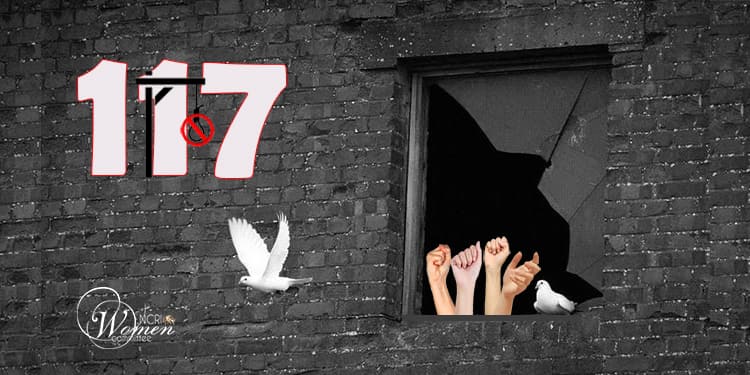
Amid escalating protests over the use of capital punishment and growing public concern about the situation of political prisoners in Iran, the “No to Executions Tuesdays” campaign has released a new statement condemning the expanding issuance and implementation of death sentences. Concurrent reports indicate that, on Tuesday, political prisoners in 56 prisons across the country launched a coordinated hunger strike, marking the 117th consecutive week of protest.
A significant proportion of these prisoners are women political prisoners, currently serving their sentences in the women’s ward of Evin Prison (Tehran), Qarchak Prison (Varamin), the women’s ward of Sepidar Prison (Ahvaz), the women’s ward of Adelabad Prison (Shiraz), the women’s ward of Zahedan Prison, the women’s ward of Yazd Prison, and the women’s ward of Rasht Prison.
This campaign, which has gained widespread support from citizens in recent months, emphasizes the urgent need to immediately halt executions and to address the demands of society.
The full text of the campaign’s 117th weekly statement is as follows:
In remembrance of 12 executed political prisoners,
Following 52 days of widespread internet disruption, digital blackout, and lack of access to information, which has now partially eased, we address the people of Iran.
As we mark the 117th week of the “No to Executions Tuesdays” campaign, authorities carried out the execution of two additional political prisoners yesterday: Hamed Validi and Mohammad Massoum Shahi.
Faced with growing public anger over these executions, the authorities are attempting to justify their actions by accusing these prisoners, along with other detainees and recently executed individuals, of espionage and links to Israel. These allegations are widely regarded as unfounded and appear intended to legitimize executions under wartime conditions. Such claims have further intensified public outrage against individuals who have advocated for equality, freedom, and national independence.
Earlier this year, during the 115th week of the campaign, six members were executed: Vahid Bani Amerian, Pouya Qabadi, Shahrokh(Akbar) Daneshvar Kar, Babak Alipour, Mohammad Taghavi, and Abolhassan Montazer.
On March 29, security forces at Ghezel Hesar Prison, reportedly led by Ashkan Kamali, Hassan Qabadi, and Qasem Sahraei, carried out a violent nighttime raid on Ward 4, which houses political prisoners. Detainees were subjected to severe beatings, transferred to solitary confinement, and six individuals previously sentenced to death by Judge Afshari were executed. These executions reportedly took place before the completion of legal proceedings, without final family visits, and in conditions of complete isolation.
In addition, four political prisoners linked to the January 2026 protests, Amirhossein Hatami, Mohammad Amin Biglari, Shahin Vahedparast, and Ali Fahim, were executed without prior notice or final contact with their families.
Authorities have reportedly withheld the bodies of those executed a practice widely condemned as a form of psychological pressure on families.
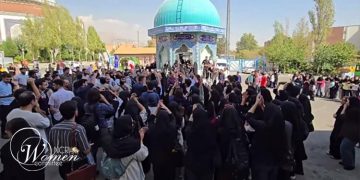
The campaign expresses solidarity with the families of the executed prisoners, many of whom have consistently participated in weekly protests despite difficult conditions, continuing to call for the abolition of the death penalty.
According to the statement, at least 12 political prisoners were executed during March and April. The campaign asserts that these actions are intended to instill fear and suppress dissent at a time when national attention is focused on broader crises.
Reports further indicate that many detainees from the January 2026 protests remain in solitary confinement under conditions of complete isolation. In Ward 35 of Unit 3 at Ghezel Hesar Prison alone, dozens of individuals, many of them young, are reportedly being held in solitary confinement, raising serious concerns about their safety.
The “No to Executions Tuesdays” campaign calls on international human rights organizations and global institutions to take urgent action to prevent further executions and to apply meaningful pressure on Iranian authorities.
The statement concludes with an appeal to human rights advocates, labor activists, civil society groups, political actors, and all opponents of capital punishment to continue protesting despite heightened restrictions and security measures, emphasizing that sustained resistance is essential to confront systematic repression.