


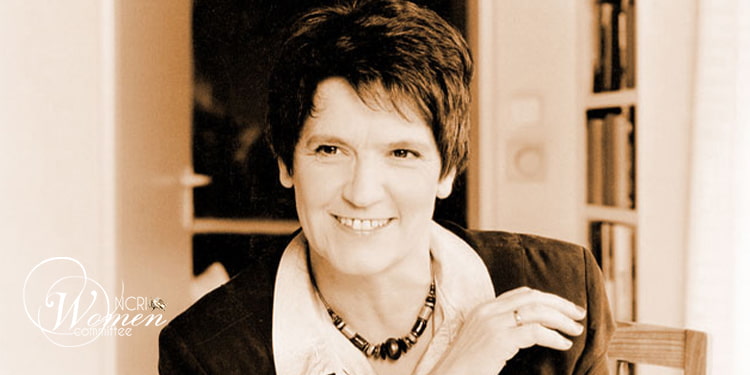
Rita Süssmuth (February 17, 1937 – February 1, 2026) stands as one of the most influential and principled figures in modern German political history—a woman whose career reshaped democratic culture, advanced gender equality, and expanded Germany’s moral voice on the global stage. As a former Federal Minister and President of the German Bundestag, Süssmuth combined intellectual rigor with deep humanity, earning respect across party lines and generations.
Following her passing, tributes poured in from political leaders across Germany, reflecting the rare breadth of her influence. German Chancellor Friedrich Merz described Rita Süssmuth as a “great politician” and a “guiding light for our democratic society,” praising her lifelong commitment to a modern, open, and tolerant Germany. Few public servants have embodied democratic values with such consistency, courage, and credibility.
From Academia to the Heart of Power
Born on February 17, 1937, Rita Süssmuth built her early career as a respected academic before entering politics. A professor of education and social sciences, she brought analytical clarity and ethical seriousness into public life, qualities that would later define her political leadership. When she joined the Christian Democratic Union (CDU), she did so not as a conventional party loyalist, but as a reform-minded thinker determined to modernize society from within.
Her appointment as Federal Minister for Youth, Family, Women, and Health in the 1980s marked a turning point. At a time when women’s political influence remained limited, Süssmuth championed issues that many considered uncomfortable or premature—women’s rights, public health reform, and social inclusion. Her approach was pragmatic yet bold, grounded in evidence but guided by moral conviction.
A Pioneer for Women in Politics
Rita Süssmuth’s legacy is inseparable from her role as a trailblazer for women in German politics. As President of the German Bundestag from 1988 to 1998, she became one of the most powerful women in the country, an achievement that resonated far beyond parliamentary walls.
Chancellor Friedrich Merz emphasized that she was “a role model and a pioneer, not least for gender equality and the political influence of women.” North Rhine-Westphalia’s Minister President Hendrik Wüst echoed this sentiment, calling her “a true pioneer of equal opportunities and a great architect of a fair and open-minded society.”
Bundestag President Julia Klöckner described Süssmuth as an “exceptional political phenomenon,” while SPD leader Lars Klingbeil stated plainly: “She was a role model across all party boundaries.” Such cross-party admiration speaks to her rare ability to rise above partisan politics and represent democratic integrity itself.
Standards of Tolerance and Openness
Throughout the 1980s and 1990s, Süssmuth consistently argued for a Germany that was open to the world. She fought for a modern immigration policy, defended minority rights, and resisted xenophobia long before such positions were politically safe. Chancellor Merz stressed that she “set standards for tolerance and openness to the world,” a legacy that remains deeply relevant today.
Federal Health Minister Nina Warken reflected on Süssmuth’s personal impact, saying, “Personally, I am losing a role model and an important source of inspiration.” Women’s Affairs Minister Karin Prien likewise called her “a great role model,” adding: “Her voice will be missed.”

A Global Advocate for Human Rights and the Iranian People
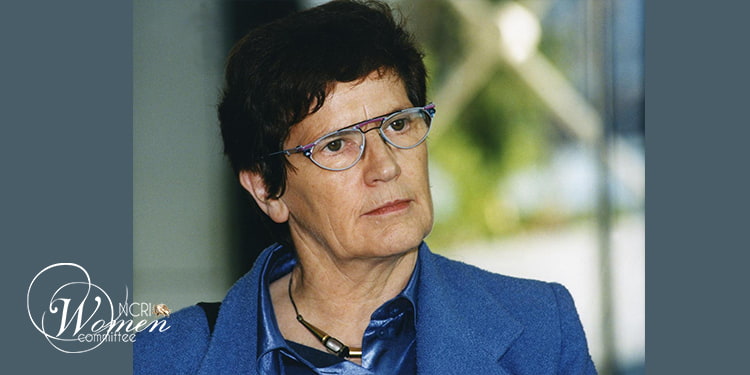
Beyond Germany, Rita Süssmuth earned international respect as a tireless advocate for human rights, particularly for women and oppressed communities. Her commitment extended powerfully to the Iranian people and their struggle for freedom.
Maryam Rajavi, President-elect of the National Council of Resistance of Iran (NCRI), paid tribute with profound emotion, calling Süssmuth “an eminent advocate of human rights and women’s rights” and “a steadfast ally of the Iranian people and their resistance.” Rajavi emphasized that Süssmuth’s integrity and deeply humane approach to politics inspired generations, especially at critical and dangerous moments.
For more than two decades, Süssmuth courageously supported the Iranian Resistance, including members of the People’s Mojahedin Organization of Iran (PMOI/MEK). During the most perilous years, when residents of Camp Ashraf in Iraq faced repeated attacks and grave threats, she stood firmly by them, playing a significant role in their protection and eventual relocation. For Iranians seeking freedom, her name remains synonymous with solidarity, courage, and moral clarity.
An Enduring Moral Compass
In contemporary German history, Rita Süssmuth occupies a singular place. She was not merely a politician of high office, but a moral compass, someone who insisted that power must serve dignity, equality, and truth. Her politics were never about personal ambition, but about responsibility to society.
Her legacy lives on in stronger democratic institutions, greater opportunities for women, and a broader understanding of Germany’s role in defending human rights worldwide. As Maryam Rajavi noted, her name is “inseparably associated with courage, compassion, and political honesty.”
Rita Süssmuth’s life reminds us that democracy depends not only on laws and elections, but on people willing to defend human values with unwavering integrity. In that sense, she remains a guiding star for democratic society.