

Prison memoirs of Mehri Haji-Nejad from the book The Last Laughter of Leila – Part Twenty
In this installment of Mehri Hajinejad’s prison memoirs, published in The Last Laughter of Leila, the author, who at the time was a teenage high-school student, recounts her transfer to Gohardasht and Qezel Hesar prisons and revives the memory of her steadfast and martyred comrades.
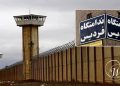
Gohardasht: The Fortress of Silence
One day in June 1985, while I was still in Evin Prison,[1] they read out my name along with the names of about seventy other girls and told us to pack our belongings; we were being transferred. Because our number was large and we had all already been sentenced, we were not overly worried about where they were taking us. Still, we didn’t know our destination. We packed our things, said goodbye to the others, were blindfolded, and taken away.
After several hours, we were finally put on a bus with drawn curtains and set off. Once again, no one told us where we were going. When we left Tehran, we kept wondering whether we were being taken to Qezel Hesar or to Gohardasht.[2]
Some of the girls pulled the curtains aside, and from the route we realized we were headed to Gohardasht. It was unclear what they intended to do with us, or what connection we even had with Gohardasht.
When we arrived, they immediately crammed all of us into one large room. From the atmosphere, it was obvious they had not yet made a clear decision about us.
We spent about a month, perhaps a little more, in Gohardasht, a place sunk into near-absolute silence. We heard no sounds from anywhere. The atmosphere was unbearably bleak. During that entire month, we were taken to the yard only once or twice, and every day we waited to see what would become of us.
Sometimes I wondered how I could possibly find out how far away my situation was from the cell where my only brother, Ali, was being held. I missed him terribly. Once, when they took us to the yard, I kept looking around, at the small window of each cell, with the hope that I might see Ali behind one of them. Unfortunately, I found no trace of him.
The nights in Gohardasht, with their heavy and haunting silence, were only bearable because we were together with fellow PMOI prisoners. Otherwise, the ward itself instinctively conveyed a world of the forgotten. Despite spending about a month in Gohardasht, I never adapted to it. My heart was always with Evin and my friends there. I remembered Evin as if even its walls spoke to you, and I longed for its memory-laden hills, which had become sacred to me.
After about a month in extremely dire conditions, no access to showers, no basic hygiene facilities, and no visits, we were transferred to Ward 3 of Qezel Hesar Prison.
We had barely arrived when we learned that a special assault unit had stormed the adjacent ward and forced everyone to stand facing the wall in the yard. This scene was familiar to me, but I didn’t understand why it was happening in Qezel Hesar. Qezel Hesar was a prison for serving sentences, and such units were not supposed to appear there.
On visiting day, we learned that two PMOI female members, Maliheh Moghaddam and Azam Niakan, had escaped from prison and had quickly managed to leave the country and reach the Mojahedin organization. Because they had been held in the neighboring ward, the assault unit attacked that ward in retaliation and brutally beat and tortured their fellow prisoners.
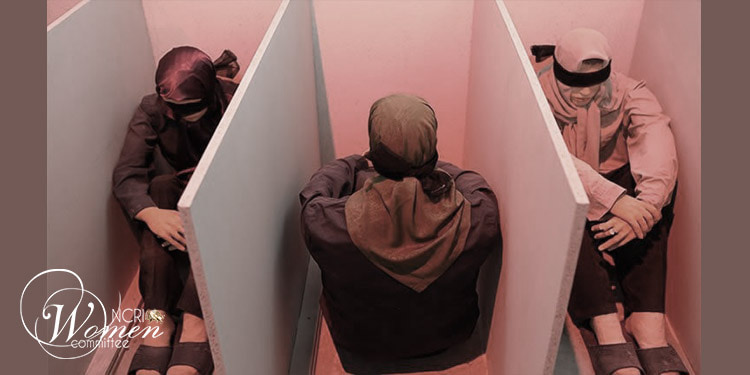
During the few months I spent in Qezel Hesar, I only managed to gather limited information about the events of the Cage,[3] and I had just one in-person visit with my niece, Nasrin, who was now three years old.
The roughly eight months I spent in Qezel Hesar during 1985 were, in some ways, a good time: we could breathe fresh air, walk freely in the yard for long hours, and even play volleyball and other group games. After the dismantling of the residential units and the cages, the space had become relatively open and was very different from Evin.
In the mornings, we would sit on the ground beside the petunias we had planted ourselves and eat breakfast. After that, I spent most of my time talking and debating with Firoozeh, Shahla, and Zahra.
For the first time, one day in Qezel Hesar Prison, we saw Mojahed magazine posted on the bars of the ward door. The regime imagined that by displaying this publication, and the vile accusations against Massoud and Maryam Rajavi,[4] it could negatively influence us. But within hours, we quickly divided up the pages among ourselves and agreed that, at any cost, we would memorize all of them. When the guards saw a long line of prisoners gathering for hours to read the magazine and look at the photos of Massoud and Maryam, they realized they had made a mistake and quickly removed it.
Behind our ward in Qezel Hesar was the men’s ward, and in the mornings, we often heard their voices from the yard. Sometimes even their conversations were audible. At times, I saw some of the girls secretly speaking from the top bunk and through the small cell window with their brothers or other relatives held in the adjacent ward.
The eight months I spent in Qezel Hesar during 1985 were calm and relatively tension-free. Of course, for those who had been there before me, every corner of the ward was filled with horrific memories, which they sometimes shared with us. When we walked beneath the eight-step path,[5] Zahra would point to the spot where Haj Davoud, the notorious prison official,[6] used to stand and call out prisoners to be taken to the residential unit.
When we played volleyball in the yard with Forouzan Abdi,[7] she would laughingly recount how, when resistant prisoners were returned from the residential units after nine months, they had been welcomed by the others. Shiva spoke of the Cage and of how her sister had lost her sanity there…
Now, after all that cruelty and crime, Qezel Hesar had been left to itself for a few months, a period that was, of course, fragile and short-lived.
[1] Evin Prison: A notorious prison in northern Tehran, known internationally for holding political prisoners and for systematic torture and abuse after the 1979 revolution.
[2] Gohardasht and Qezel Hesar Prisons: High-security prisons near Karaj, west of Tehran, infamous for severe repression of political prisoners, including executions.
[3] The “Cage” (Qafas): A psychological and physical torture system in Iranian prisons involving extreme isolation, sensory deprivation, and humiliation.
[4] Massoud and Maryam Rajavi: Leaders of the People’s Mojahedin Organization of Iran.
[5] Eight-step path: A known area inside the prison compound associated with intimidation, interrogations, and transfers to punishment units.
[6] Haj Davoud: Haj Davoud Rahmani, a notorious prison official known for designing and overseeing brutal torture systems in Iranian prisons.
[7] Forouzan Abdi: A physical education student and former member of Iran’s national volleyball team. After the 1979 revolution, she became a supporter of the Mojahedin. Her arrest marked the beginning of years of severe torture, solitary confinement, and exile wards. In late 1981, she and several other resistant prisoners were imprisoned inside a filthy prison toilet as punishment, causing severe skin disease. She was later transferred to solitary cells in Gohardasht, where she remained until late 1983. Despite everything, she remained spirited and devoted to her fellow prisoners. Once yard access was allowed, she immediately organized sports teams, teaching volleyball in the mornings and running with the women in the afternoons. Forouzan Abdi was among the first group of Mojahedin women taken to summary trials during the 1988 prison massacre and was never seen again.