
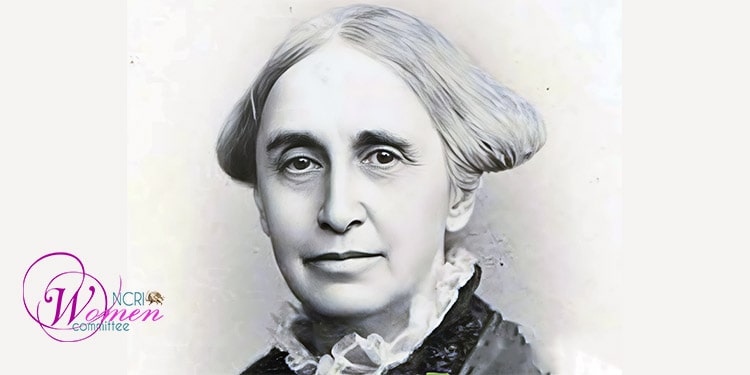
Mary Grew was born on September 1, 1813, in Hartford, Connecticut and died on October 10, 1896, in Philadelphia, Pennsylvania. She was an American abolitionist and suffragist whose career spanned nearly the entire nineteenth century and who played a vital role in both the campaign against slavery and the early women’s rights movement.
Mary Grew emerged as a leader of the Philadelphia Female Anti-Slavery Society and later the Pennsylvania Anti-Slavery Society, advocating tirelessly for the abolition of slavery in the United States. In 1840, she was one of eight American women delegates denied their seats at the World Anti-Slavery Convention in London—an exclusion that strengthened her commitment to women’s rights alongside racial justice.
A gifted editor and journalist, Grew wrote for abolitionist newspapers, including serving as co-editor of the Pennsylvania Freeman, and documented the work of Philadelphia abolitionists for more than three decades. At a time when women rarely spoke publicly on political issues, she was also recognized as a powerful orator who addressed audiences on both anti-slavery and women’s suffrage.
After the Civil War, Grew intensified her efforts in the women’s suffrage movement, helping to found the Pennsylvania Woman Suffrage Association and leading it for twenty-three years. She worked closely with prominent reformers such as Lucy Stone and remained active in the national struggle for women’s voting rights, even amid internal divisions within the movement.
Mary Grew’s life and work connected abolitionism and women’s rights, establishing her as a key figure in nineteenth-century American reform. Her legacy endures as that of a principled activist who dedicated her life to equality, justice, and democratic participation.