
Friday, January 23, 2026
  • English
  • Français
  • فارسی
  • عربى
PODCASTS
NCRI Women Committee Women Resistance Freedom
  • Home
  • NEWS
    • Women’s News
    • Articles
    • Statements
  • PUBLICATIONS
    • Monthlies
    • Documents
    • Reference Library
  • ABOUT US
    • The NCRI Women’s Committee
    • Gender Equality
    • Women’s Platform
  • MARYAM RAJAVI
    • Maryam Rajavi
    • Maryam Rajavi Speeches
    • The Plan on Women’s Rights and Freedoms
    • Ten-Point Plan for the future of Iran
  • VANGUARDS
    • The Fallen for Freedom
    • Heroines in Chain
    • Women of Iranian Resistance
    • Famous Women
    • Women in History
  • EVENTS
    • IWD Conferences
    • Activities
    • IWD Speeches
    • Solidarity
  • VIDEO
    • Videos
    • IWD Videos
  • PODCAST
  • DONATE
  • CONTACT US
No Result
View All Result
NCRI Women Committee Women Resistance Freedom
  • Home
  • NEWS
    • Women’s News
    • Articles
    • Statements
  • PUBLICATIONS
    • Monthlies
    • Documents
    • Reference Library
  • ABOUT US
    • The NCRI Women’s Committee
    • Gender Equality
    • Women’s Platform
  • MARYAM RAJAVI
    • Maryam Rajavi
    • Maryam Rajavi Speeches
    • The Plan on Women’s Rights and Freedoms
    • Ten-Point Plan for the future of Iran
  • VANGUARDS
    • The Fallen for Freedom
    • Heroines in Chain
    • Women of Iranian Resistance
    • Famous Women
    • Women in History
  • EVENTS
    • IWD Conferences
    • Activities
    • IWD Speeches
    • Solidarity
  • VIDEO
    • Videos
    • IWD Videos
  • PODCAST
  • DONATE
  • CONTACT US
No Result
View All Result
NCRI Women Committee
No Result
View All Result
Home Women's News

On Perilous Migrant Trail, Women Often Become Prey to Sexual Abuse

January 5, 2016
in Women's News
Share on FacebookShare on Twitter

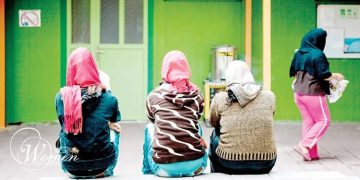
 One Syrian woman who joined the stream of migrants to Germany was forced to pay down her husband’s debt to smugglers by making herself available for sex along the way.

The New York Times

By KATRIN BENNHOLD – JAN. 2, 2016

BERLIN — One Syrian woman who joined the stream of migrants to Germany was forced to pay down her husband’s debt to smugglers by making herself available for sex along the way. Another was beaten unconscious by a Hungarian prison guard after refusing his advances.

A third, a former makeup artist, dressed as a boy and stopped washing to ward off the men in her group of refugees. Now in an emergency shelter in Berlin, she still sleeps in her clothes and, like several women here, pushes a cupboard in front of her door at night.

“There is no lock or key or anything,” said Esraa al-Horani, the makeup artist and one of the few women here not afraid to give her name. She has been lucky, Ms. Horani said: “I’ve only been beaten and robbed.”

War and violence at home, exploitative smugglers and perilous seas along the way, an uncertain welcome and future on a foreign continent — these are some of the risks faced by tens of thousands of migrants who continue to make their way to Europe from the Middle East and beyond. But at each step of the way, the dangers are amplified for women.Interviews with dozens of migrants, social workers and psychologists caring for traumatized new arrivals across Germany suggest that the current mass migration has been accompanied by a surge of violence against women. From forced marriages and sex trafficking to domestic abuse, women report violence from fellow refugees, smugglers, male family members and even European police officers. There are no reliable statistics for sexual and other abuse of female refugees.

Among the more than one million migrants who have entered Europe over the past year, fleeing war and poverty in the Middle East and beyond, men outnumber women by more than three to one, United Nations statistics show. “The men dominate, numerically and otherwise,” says Heike Rabe, a gender expert at the German Institute for Human Rights.

Susanne Höhne, the lead psychotherapist at a center in west Berlin specializing in treating traumatized female migrants, says that almost all of the 44 women in her care — some barely adults, some over 60 — have experienced sexual violence. “We go to our own therapists for supervision twice a month to cope with what we hear,” Ms. Höhne said about her 18 staff members. Together they provide two weekly therapy sessions to each woman and up to seven hours of social work, including home visits, to help them with adjusting to life in Germany.

A 30-year-old Syrian mother of four fled the war with her family early last year. When her husband ran out of money to pay their smuggler in Bulgaria, he offered his wife as payment instead. For three months, she was raped almost daily to earn her family’s onward journey.

Soon her own husband was abusing her, too. A “twisted logic,” Ms. Höhne said. “What her husband made her do ended up tainting his honor. She became the guilty party.”

The woman now has asylum and lives in Berlin with her children. Her husband, who lives elsewhere in Germany but has stalked her on the street in Berlin at least once, is under a restraining order. But she remains too terrified to provide even her first name, for fear of being killed by him or another relative over the perception that she brought “dishonor” to the family.

Ms. Höhne says the woman displays all the symptoms of post-traumatic stress disorder, including flashbacks, insomnia and trouble concentrating. “One moment she will seem perfectly healthy, the next she is in her chair opposite you dodging bullets in Damascus or reliving her abuse in Bulgaria,” she said.

In Greece, one of the main entry points to Europe for migrants, reception centers are often overcrowded and lack adequate lighting and separate spaces for single women, said William Spindler of the United Nations refugee agency. “Men, women and children sleep in the same areas,” he said. Across Europe, he added, “cases of sexual violence and family violence have been reported to our staff in the field.”

Even in the relative safety of Germany, an asylum system struggling with the logistics of accommodating close to one million migrants in 2015 has been cutting corners when it comes to basic protections for women, like lockable bedrooms.

“The priority has been to avoid homelessness,” said Ms. Rabe, the German expert on gender-based violence. “But an environment that inadvertently facilitates violence is a risk factor. We cannot allow standards to slip.”

That is easier said than done, said Jan Schebaum, who manages two homes for asylum seekers in east Berlin. There are two bathrooms per floor, and the rooms are full.

One of the homes he runs is the emergency shelter where Ms. Horani, the makeup artist, stays. Of 120 adults there, most are Syrian and Afghan, and 80 are men.

“The women are in the shadow of the men,” Mr. Schebaum said. “Their voices are drowned out, and it’s a problem.”

At the food counter, where volunteers hand out hot soup and fresh fruit, the women are often last in line. They stay in their rooms a lot and rarely sign up for activities advertised on the notice board, like museum visits or concerts. One Syrian woman has not left the building since arriving two months ago because her husband, who has not yet arrived in Germany, prohibited her from doing so.

In the laundry room, stories of domestic abuse circulate in hushed conversations among the women. There is a violently jealous husband on the fourth floor who has beaten his wife. There is a woman who has been beaten by her husband because they cannot have children. A couple of months ago, two Afghan men harassed an Afghan girl with lewd comments and pushed her off her bike before others intervened, a volunteer at the shelter said. But few incidents of violence are reported.

The asylum claims of married couples are often linked, Ms. Rabe said, making the women more dependent on their husbands and more reluctant to be separated. In theory, German law is well equipped to deal with domestic violence, she said. But in practice, measures like the physical separation of partners are hard to carry out inside a shelter.

The first time Mr. Schebaum learned about a husband beating up his wife he called the police, only to find the wife shouting at him for “stealing her husband.” Since then, he deals with reports of violence mostly through mediation, and by trying to empower the women in his homes.

Last month one of his volunteers started a weekly walk for women. Even husbands who were initially skeptical allowed their wives to go. One woman left the premises for the first time. In the park she played a song on her cellphone and started dancing. “The longer we were outside, the more confident she became,” recalled the volunteer, Vivien Roos, a 34-year-old yoga teacher.

There is now an all-women knitting evening and an aerobics class. On Wednesday mornings, small groups of women go to the house of a volunteer for a private shower, nail-painting and grooming session.

One afternoon a week, female social workers take migrant women to a cafe across the street for a “coffee hour.” The walls are covered in graffiti, and it smells of smoke. But no matter. When Ms. Horani arrived with a large Arabic music selection on her smartphone, the scruffy interior was transformed into a bobbing sea of dancing head scarves.

As some women painted their hands with henna and others traded frustrations about the time it was taking to get refugee status, Samar, a 35-year-old former employee of the Syrian Finance Ministry, opened up about the particular stress of being a woman on the move. Bombed out of her home in Darayya, a suburb of Damascus that early in the civil war became known for antigovernment protests, Samar spent 14 months on the road alone with her three daughters, ages 2, 8 and 13.

“I did not leave them out of my sight for one minute,” she said in Arabic, speaking through an interpreter. She and other single mothers slept in shifts along the way, watching over their daughters and one another.

But in Izmir, Turkey, about to board a boat to Greece, Samar was robbed and left with no money to pay the smuggler. A stocky man who called himself Omar, he offered to take her for free, but only if she had sex with him. Samar had heard him before, at night, in the hostel where she and other refugee women were staying, “going to this room and that.”

“Everybody knows there are two ways of paying the smugglers,” she said. “With money or with your body.”

But she refused, and Omar became angry. That night he burst into Samar’s room, threatening her and her daughters before her screaming chased him away. Samar stayed in Turkey for almost a year to work and save up the 4,000 euros needed for the remainder of the journey.

Sitting with her youngest daughter curled on her lap, Samar concluded: “Almost all men in the world are bad.”

Across town, in west Berlin, Ms. Höhne sympathized, but had a more nuanced view. There are no easy solutions, she said. Female-only shelters are not an option because most families want to stay together. Some women rely on men for protection. And, she added, “We mustn’t forget many of the men are traumatized, too.”

http://www.nytimes.com/2016/01/03/world/europe/on-perilous-migrant-trail-women-often-become-prey-to-sexual-abuse.html?_r=0

ShareTweetPinShareSendShare

Related Posts

The European Parliament Stands with the Iranian People’s Uprising; Condemning Repression and Executions

January 22, 2026
The European Parliament Stands with the Iranian People’s Uprising

At the height of the continuing nationwide uprising in Iran, coinciding with intensified bloody repression, executions, and the systematic shutdown of the internet, the European Parliament adopted a...

Read moreDetails

Organized Massacre of Protesters: Evidence of Crimes Against Humanity

January 22, 2026
Organized Massacre of Protesters: Evidence of Crimes Against Humanity

Reports trickling out of Iran, under conditions of total internet blackout, reveal a systematic and organized massacre of protesters across multiple cities. Accounts describe deliberate arson of gathering...

Read moreDetails

Kimia Khani, Fourth Woman Executed in Iran in 2026

January 20, 2026
Kimia Khani, Fourth Woman Executed in Iran in 2026

A female prisoner identified as Kimia Khani was executed at dawn on Monday, January 19, at Isfahan Central Prison. She is the fourth woman executed in Iran during...

Read moreDetails

Františka Plamínková: Unbowed Voice of Czech Women’s Rights and Resistance

January 20, 2026
Františka Plamínková: Unbowed Voice of Czech Women’s Rights and Resistance

Františka Plamínková (5 February 1875 – 30 June 1942) stands among the most courageous champions of women’s rights in Central Europe — a teacher, journalist, suffrage leader, and...

Read moreDetails

Abigail Kimber: The Radical Quaker Woman Who Challenged Slavery and Silence

January 20, 2026
Abigail Kimber: The Radical Quaker Woman Who Challenged Slavery and Silence

Abigail Kimber occupies a striking yet often overlooked place in early American reform history. A Quaker minister, abolitionist, and religious dissenter in the late 17th and early 18th...

Read moreDetails
Next Post
No coffee shops near girls schools!

Iran: No coffee shops near girls schools!

Leave a Reply Cancel reply

Your email address will not be published. Required fields are marked *

Documents

More than 400 Prominent Women Demand Halt to Iran Execution of Political Prisoner Zahra Tabari

More than 400 Prominent Women Demand Halt to Iran Execution of Political Prisoner Zahra Tabari

December 25, 2025

More than 400 prominent women from across the globe, among them Nobel Prize winners, former presidents and prime ministers, parliamentarians,...

The Gendered Dimensions of the Water Crisis in Iran: Impacts on Women’s Health, Livelihoods, and Security

The Gendered Dimensions of the Water Crisis in Iran: Impacts on Women’s Health, Livelihoods, and Security

October 12, 2025

How Iranian Women Shoulder the Heavy Burden of a Deepening Crisis Download Italian Version The water crisis in Iran has...

The Failure of Iran's Population Growth Law Despite the Repression of Women A Glance at a Costly and Ineffective Policy

The Failure of Iran’s Population Growth Law Despite the Repression of Women

August 24, 2025

A Glance at a Costly and Ineffective Policy The “Youthful Population Law” in Iran vs. Women’s Human Rights Following a...

Monthlies

December 2025 Report: A Year in Review: Iranian Women’s Resistance Against Religious Dictatorship
Monthlies

December 2025 Report: A Year in Review: Iranian Women’s Resistance Against Religious Dictatorship

January 5, 2026
November 2025 Report: Under the Clerical Regime, Nowhere Is Safe for Women in Iran
Monthlies

November 2025 Report: Under the Clerical Regime, Nowhere Is Safe for Women in Iran

November 30, 2025
October 2025 Report: Death Sentence for a Female Political Prisoner The Resistance of Female Political Prisoners Inspires Iranian Women and Girls in Their Struggle Against the Regime of Executions and Massacre
Monthlies

October 2025 Report: Death Sentence for a Female Political Prisoner

October 31, 2025
September 2025 Report: One Woman Executed Every 4 Days in Iran
Monthlies

September 2025 Report: One Woman Executed Every 4 Days in Iran

September 30, 2025

Articles

Organized Massacre of Protesters: Evidence of Crimes Against Humanity

Organized Massacre of Protesters: Evidence of Crimes Against Humanity

January 22, 2026

Reports trickling out of Iran, under conditions of total internet blackout, reveal a systematic and organized massacre of protesters across...

Massacre of Protesters in Iran: A Crime Against Humanity with Organized Impunity

Massacre of Protesters in Iran: A Crime Against Humanity with Organized Impunity

January 19, 2026

When the regime’s Supreme Leader is forced to confess, it means the scale of the crime has exceeded all attempts...

Iran Uprising Enters Day 20 as Resistance Persists Despite Brutal Crackdown

Iran Uprising Enters Day 20 as Resistance Persists Despite Brutal Crackdown

January 16, 2026

The Iran uprising enters its 20th day on Friday, January 16, 2026, with protests, night-time hit-and-run clashes, and acts of...

The Fallen for Freedom

Zahra Bani Amerian, 48, a mother and a retired employee
The Fallen for Freedom

Zahra Bani Amerian

January 16, 2026
Golaleh Mahmoudi Azar, 26, from Mahabad, was killed alongside her husband
The Fallen for Freedom

Golaleh Mahmoudi Azar

January 16, 2026
Zahra Moradi, a native of the village of Hesar in the city of Bukan
The Fallen for Freedom

Zahra Moradi

January 16, 2026
Mansoureh Heydari was a nurse at the Social Security Hospital in Bushehr.
The Fallen for Freedom

Mansoureh Heydari

January 16, 2026

ABOUT US

NCRI Women Committee

We work extensively with Iranian women outside the country and maintain a permanent contact with women inside Iran. The Women’s Committee is actively involved with many women’s rights organizations and NGO’s and the Iranian diaspora.
The committee is a major source of much of the information received from inside Iran with regards to women. Attending UN Human Rights Council meetings and other international or regional conferences on women’s issues and engaging in a relentless battle against the Iranian regime’s misogyny are part of the activities of members and associates of the committee.

CATEGORIES

  • Activities
  • Articles
  • Documents
  • Famous Women
  • Heroines in Chain
  • IWD Conferences
  • IWD Speeches
  • IWD Videos
  • Maryam Rajavi
  • Maryam Rajavi Speeches
  • Monthlies
  • Podcast
  • Reference Library
  • Solidarity
  • Statements
  • The Fallen for Freedom
  • Videos
  • Women in History
  • Women in Leadership
  • Women of Iranian Resistance
  • Women's News

BROWSE BY TAG

Child marriage coronavirus education execution forced hijab Gender Gap Generation Equality Honor killings Iran Teachers Maryam Akbari Monfared Nurses Plan on Women's Rights and Freedoms Poverty Prisoners Protests rural women Saba Kord Afshari The girl child Violence against women Women's Leadership Women Heads of Household Zeinab Jalalian

The copyright of all the material published on this website has been registered under © 2016 the Women’s Committee of the National Council of Resistance of Iran. To obtain permission to copy, redistribute or publish the material published on this website, you should write to the NCRI Women’s Committee. Please include the link of the original article on our website, women.ncr-iran.org.

Welcome Back!

Login to your account below

Forgotten Password?

Retrieve your password

Please enter your username or email address to reset your password.

Log In

Add New Playlist

No Result
View All Result
  • Home
  • News
    • Women’s News
    • Articles
    • Statements
  • Publications
    • Monthlies
    • Documents
    • Reference Library
  • About Us
    • The NCRI Women’s Committee
    • Gender Equality
    • Women’s Platform
  • Maryam Rajavi
    • Maryam Rajavi
    • Maryam Rajavi Speeches
    • Ten Point Plan for Iran
    • The Plan on Women’s Rights and Freedoms
  • Vanguards
    • The Fallen for Freedom
    • Heroines in Chain
    • Women of Iranian Resistance
    • Famous Women
    • Women in History
  • Events
    • IWD Conferences
    • Activities
    • IWD Speeches
    • Solidarity
  • Video
    • Videos
    • IWD Videos
  • Podcast
  • Donate
  • Contact us
  • فارسی
  • عربی
  • Français

The copyright of all the material published on this website has been registered under © 2016 the Women’s Committee of the National Council of Resistance of Iran. To obtain permission to copy, redistribute or publish the material published on this website, you should write to the NCRI Women’s Committee. Please include the link of the original article on our website, women.ncr-iran.org.