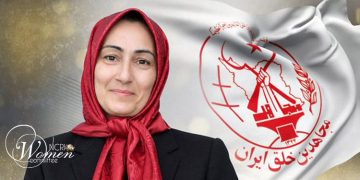

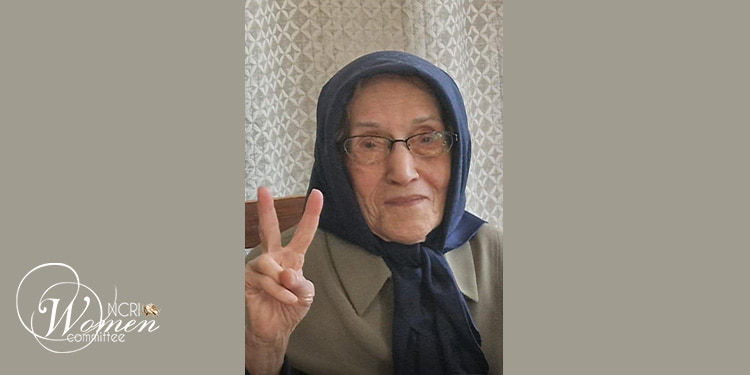
In the contemporary history of Iran, there are names that live not merely as memories, but as paths. The name Aziz Rezaei belongs to a rare category: a woman who, for nearly six decades, has been the living embodiment of the resistance of mothers and women in the People’s Mojahedin Organization of Iran (PMOI/MEK) and the broader Iranian Resistance.
Her life is not a chronicle of sorrow, but a testament to endurance, consciousness, and the deliberate choice of resistance.
At the age of ninety-seven, Aziz Rezaei (who was born Zahra Nowrouzi) still stands firmly by her covenants—covenants forged in the earliest days of struggle against the Shah’s dictatorship and carried forward through the long, bloody confrontation with religious tyranny. She defines herself, at every age and stage of life, as a freedom fighter, harboring no wish greater than a free Iran and the welfare, dignity, and happiness of its people.
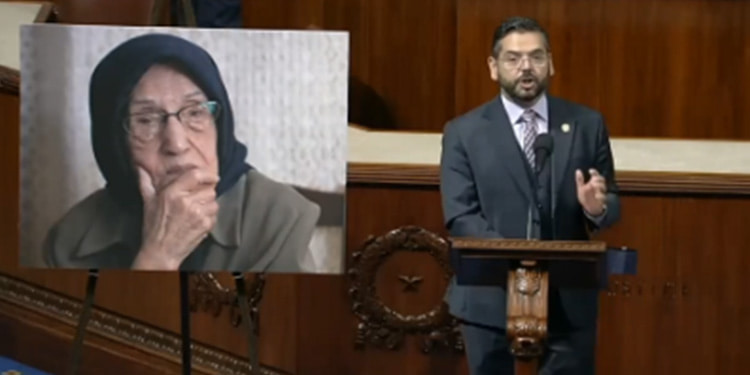
A Mother Who Raised Legends
Aziz Rezaei was not merely a mother; she was a forger of legends.
Her children became towering figures in the history of Iran’s resistance:
- Ahmad Rezaei, the first martyr of the PMOI, whose pure blood spilled on Tehran’s streets heralded the downfall of the monarchical dictatorship.
- Mehdi Rezaei, the unforgettable symbol of revolutionary youth, whom the people named “The Red Rose of the Revolution.” Poet Ahmad Shamlou wrote of him: “A martyr for whom the sky itself prayed.”
- Reza Rezaei, the great Mojahed, who through his heroic escape from prison rebuilt the People’s Mojahedin Organization after the devastating blow of September 1971.
Each of her martyred children became a guiding star for generations of young fighters. Ayatollah Taleghani once told her:
“Blessed are you, for raising such children. By Mehdi’s blood one may swear—these are of a rank higher than the Prophet’s companions.”
A Teacher Who Never Stopped Learning
Though Aziz Rezaei educated generations, one of her most remarkable traits has always been her commitment to learning. She learned from everyone and taught everyone—not merely through words, but through action: through humility, unwavering political and ideological clarity, resolute boundaries, and adhering to principles.
Under the unbearable torture by the Shah’s SAVAK—whippings, suspension, beatings—, she would tell herself: “Remember how Mehdi resisted. Learn from him.” And she would rise again, time after time.
Her body bears the scars: deep wounds on her feet, lasting damage to her hearing. Yet neither torture nor imprisonment broke her will.

The Birth of the Mojahed Mothers
In 1971, alongside other courageous women such as Mother Sadegh, Mother Asgarizadeh and others, Aziz Rezaei helped form the nucleus of what became known as the Mojahed Mothers—women who transformed prisons, courtrooms, markets, and streets into arenas of resistance and revelations against the Shah’s regime.
In Tehran’s Grand Bazaar, in the alleys of Qom, and in front of SAVAK’s prisons, these mothers shattered silence. When news of Ahmad’s martyrdom reached them, it was Aziz who comforted others, saying:
“Why do you weep? If we don’t give blood, we will not be victorious.”
From Revolution to Exile
After the release of political prisoners in January 1979, Aziz Rezaei’s home became the first stronghold of hope and a gathering place for a freedom-seeking generation. Leading PMOI political prisoners Massoud Rajavi and Mousa Khiabani stayed at Aziz’s residence immediately after their release from prison.
Yet with the rise of clerical dictatorship, she once again returned to the front lines—from universities to distant cities, from Behesht-e Zahra cemetery to rallies held under bullets and tear gas.
June 20, 1981, and the years that followed marked another chapter of grief: mass executions and the martyrdom of more loved ones, including Ashraf, Mousa, and Azar Rezaei, as well as the fall of Mahin Rezaei and Ali Zarkesh (son-in-law) during the Eternal Light Operation.
Once again, Aziz became the source of solace—calm, dignified, and unshaken, confident that “this blood will never be wasted.”
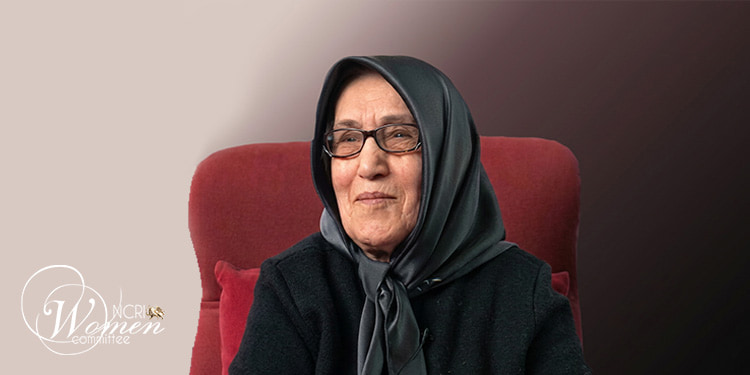
Woman, Resistance, Freedom
Even in exile, Aziz Rezaei never withdrew from struggle.
From Ashraf and Liberty camps to Ashraf 3, from hunger strikes to international campaigns, she remained present in the foremost ranks.
Her home is a living museum of resistance—filled with photographs, handwritten notes, memories of martyrs, and above all, her ever-welcoming smile that continues to inspire hope.
Aziz Rezaei is far more than a mother of martyrs. She is a symbol of the Iranian woman fighter—one who, in the most painful moments of life, chose struggle over surrender, unconditional love over safety, and commitment over comfort.
An Enduring Legacy
Honoring Aziz Rezaei is, in truth, honoring all mothers of martyrs, prisoners, and massacre victims across Iran—women who are the social roots of resistance and the wellspring of Iran’s unrelenting movements for freedom.
Today, the leading role of women in Iran’s organized resistance draws directly from the model forged by Aziz and her generation:
Woman, Resistance, Freedom.
The name Aziz Rezaei is etched not only in history, but in the awakened conscience of Iran—forever.