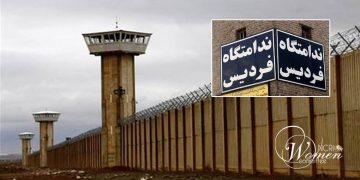

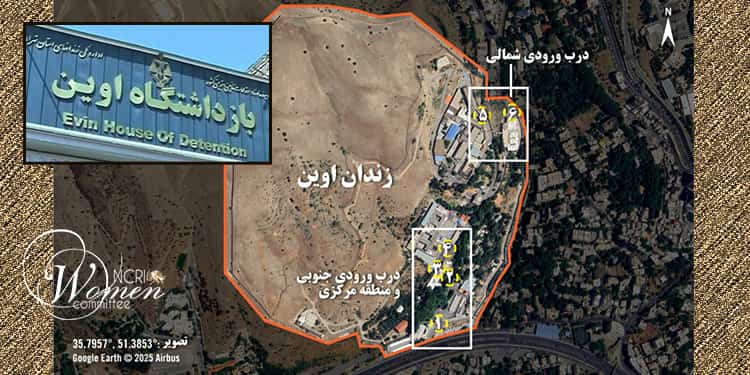
Recent reports from Evin Prison in Tehran indicate that, amid wartime conditions and the risk of unforeseen incidents, the lives of detainees, particularly political prisoners and approximately 200 incarcerated women, are in serious danger.
The absence of official accountability, the deterioration of essential services, and the failure to consider the release or transfer of prisoners have significantly heightened concerns about the emergence of a humanitarian crisis inside the facility.
Continued incarceration under such volatile conditions has heightened concerns for the safety and well-being of detainees, particularly women political prisoners.
Heightened Security Measures and Safety Concerns
According to reports, certain prison doors have been welded shut to prevent potential escapes in the event of an emergency. This measure has raised grave concerns about inmate safety in the case of an attack or other critical incident, as it would severely restrict the possibility of rapid evacuation or transfer to secure locations.
Deterioration of Services and Staff Absenteeism
In recent days, widespread staff absenteeism has led to a marked reduction in prison services. Detainees have reportedly been deprived of access to numerous essential provisions and are facing significant obstacles in meeting their most basic needs, conditions that have compounded the pressure on an already vulnerable population.
Mounting Living and Health Crisis
One of the most pressing issues inside the prison, as previously documented, is the suspension of hot water and a sharp decline in sanitation, medical, and pharmaceutical services. This is occurring despite overcrowded conditions and the fact that many detainees are already struggling with health complications that require urgent medical attention.
In a recent phone call with family members, one prisoner reportedly stated, “In these wartime conditions, we want to get out from behind these doors and walls”, a remark that reflects the profound anxiety among inmates regarding their current circumstances.
Limited Releases and Non-Implementation of Directive 211
Available information suggests that only a small number of prisoners have been released from Evin Prison, including certain political prisoners with less than four months remaining on their sentences and several individuals imprisoned for financial debts under 750 million tomans. Reports indicate that fewer than 20 individuals have been freed, an exceptionally limited figure in light of the current crisis.
Under these conditions, calls have intensified for the full implementation of Directive 211 for all detainees. Such action could play a critical role in mitigating life-threatening risks and preventing the escalation of a humanitarian emergency within Evin Prison.
Resolution No. 211 and the Judiciary’s Legal Obligations
Under Resolution No. 211 of the High Judicial Council, dated January 12, 1987, the judiciary is legally obligated during wartime emergencies to take immediate measures to protect prisoners’ lives. These measures include converting detention orders, granting conditional release, accepting bail or surety, and transferring prisoners to secure locations.
The resolution further authorizes prosecutors, where ordinary safeguards prove insufficient, to release prisoners who do not pose security risks for the duration of the emergency. Political and conscience prisoners, individuals convicted of non-intentional or financial offenses, and those serving sentences for minor crimes are among those eligible for such measures. Provision has also been made for the transfer of individuals convicted of violent offenses to secure facilities.
Legal experts emphasize that implementation of this resolution under current circumstances constitutes an urgent legal obligation and cannot be deferred.
Given the continuation of military threats, any delay in decision-making could carry irreversible human consequences. Prisoners have no capacity for self-defense against air or missile strikes. Responsibility for their protection rests directly with the judiciary and the Prisons Organization.