
A Collision Course in February
Welcome to another episode of the NCRI Women’s Committee Podcast. I am your host and I am thrilled to have our resident expert sitting across the table from me today. Hey everyone, it is great to be back. I am really looking forward to getting into our source material today. Yeah, And we’ve got quite a deep dive ahead of us.
We are looking at a very specific, a very specific window of time, mid February 2026. Right. Specifically, the sixteenth, seventeenth, eighteenth, eighteenth, and twentieth. And, you know, to anyone just glancing at a calendar, those are just normal days in a month. But based on the sources we have in the context of the Iranian uprising, these dates represent a well, it’s essentially a collision course. They absolutely do.
The Power of 40th Day Memorial: When Mourning Is Mandatory
And to really understand why these dates matter so much, we have to look back at the tragedy that set them in motion. We were talking about the fortieth day memorial ceremonies. The Exactly. The Chehellom (40th Day memorial) for the victims of the bloody crackdown that happened in January 2026.
Right. And for our listeners who might not be fully versed in the cultural nuances of this because it’s so central to our deep dive today, can you explain the mechanics of Chehellom (40th Day memorial)? It really seems like the regime is caught in a loop that they just can’t break. It is a massive paradox and arguably it’s the regime’s biggest strategic nightmare right now because in Iranian culture and Shia tradition specifically the fortieth day after a death isn’t just a suggestion it is a mandatory time of mourning. You visit the grave site, you pay your respects.
Right. It is a deeply ingrained religious and cultural obligation. So, the regime is in a serious bind here. I mean, they can ban street protests, they can tear down banners, but they can’t legally or culturally ban a family from visiting a grave without declaring war on the culture itself. Precisely.
And that is exactly the mission of our deep dive today. Okay.
From Tears to Tactical Resistance
We’re going to look at how these quiet, traditional mourning rituals have been completely transformed. Yeah. Because they aren’t just about passive grief anymore.
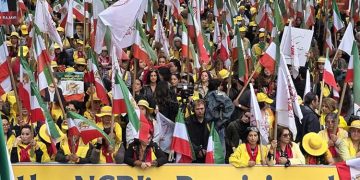
The sources make that very clear. They do. One of the reports explicitly states that these memorials have evolved into operational battlegrounds and vibrant political rallies. The traditional tears have basically turned into sparks. And the fuel for those sparks?
Sustained public anger. And crucially, and this is really the focal point we are exploring today, the leadership of women in all of this. This isn’t just a general leaderless crowd. The sources highlight that this is a movement where women are the visible tactical leaders. Let’s step back for just a second before we get into the specific stories.
We have some incredible profiles of these women to cover, but how did we get to February? Because this didn’t just happen in a vacuum. No, it really didn’t. You have to trace the fuse back a bit. Yeah.
Tracing the Fuse: From Economic Stoppages to Uprising
Back to late December 2025. December 28 to be exact. And when the economic stoppages started. Right. It started as economic unrest.
You had shopkeepers, merchants, regular people who were just fed up. The rial was plunging. The cost of living was astronomical. Which is a story we see often globally. You know, the price of basic goods goes up.
People take to the streets. But in Iran, it never just stays about the economy, does it?
It simply can’t. In a totalitarian system, the economy is inherently tied to the state. If you can’t feed your family, that is viewed as a total political failure.
So very quickly, the chants shifted from “fix the economy” to demands for full “regime change.” Which escalated into the massive January uprising. Yes. And the response from the state was brutal. Thousands were killed or injured.
Over a 100 children dead. The regime’s calculus was that by using maximum violence in January they would terrify the population into silence for February. But the calendar forced their hand. Forty days later, the people are back at the cemeteries. They are back.
And instead of being cowed by the violence, the reports describe the atmosphere not as defeated, but as a time of fire, sparks and light. That is such a vivid phrase from the source material it implies so much energy. It’s the absolute refusal to let the dead become mere statistics and this brings us directly to the who of our deep dive because if you want to understand the resilience of this movement you have to look closely at the women at the forefront. We have several specific names from the reports that really bring this reality to the ground level.
Zahra (Raha) Bahloulipour: Student and Resistance Member
I want to start with Zara Bahloulipour. Yes, Zara, also known as Raha to her friends and family.
Her story is heartbreaking, but it is also incredibly revealing about the demographic of this uprising. She was a university student, right? She was. She was a student of the Italian language at the University of Tehran. Which just immediately paints a picture of a young woman with a broad world view, someone interested in culture, someone who probably had massive dreams.
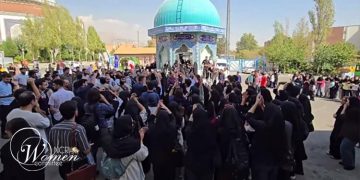
Exactly. Her memorial was held in her hometown of Firouzabad, down in Fars province. The turnout was huge, with a very significant, highly visible presence of women and girls honoring her. But there is a specific detail in her profile from the reports that we absolutely cannot gloss over. What was that?
The sources explicitly identify her as a member of the PMOI resistance units. The PMOI, the People’s Mojahedin Organization of Iran. Okay, so why does that specific affiliation matter so much in this context? It matters because the state narrative constantly tries to paint these protests as chaotic, spontaneous riots. They dismiss it as just angry, unorganized youth.
Right, trying to minimize the threat.
Exactly. But when you have a University of Tehran student who is also an organized member of the resistance and she’s being honored by thousands of women, it completely shatters that narrative. It signals that the organized opposition has very deep roots on the ground. So, the women attending her memorial aren’t just mourning a bright student, they are actively honoring a resistance fighter.
That makes the memorial a deeply political act. It really does.
Nagar Ajam: Reclaiming the Narrative in Gonabad
And we see this exact type of defiance rippling out to other cities in the source material. Let’s look at Nagar Ajam. This is up in Gonabad in Northeastern Iran.
The scene described in Gonabad was incredibly striking. It was. You have this large crowd of women and youth. And instead of keeping their heads down and mourning quietly in the traditional sense, they are holding her photograph aloft. High above the crowd for everyone to see.
Right. And just think about the risk involved there. In a heavy surveillance state, holding up the photo of a victim killed by security forces is a direct indictment. You are essentially holding up the evidence of their crime. Reclaiming the narrative, basically saying, “You killed her, but we won’t let you erase her.”
Precisely. And they were doing this while openly chanting anti-government slogans.
Parisa Lashgari: Solidarity in Nurabad
We saw a very similar dynamic in Nurabad Mamassani at the memorial for Parisa Lashgari. The reports noted something specific about that one. Yeah. The source specifically notes that the strong participation of women and girls transformed the entire ceremony into a powerful expression of solidarity. I think that is a vital takeaway.
When women flood these public spaces, it changes the entire energy of the event. It elevates it from a localized skirmish to a societal stand. It breaks the psychological barrier of fear.
Ayda Heydari: Redefining Martyrdom
And speaking of breaking barriers, we definitely need to talk about Ayda Heydari. The medical student.
Yes. A medical student at the University of Tehran. Again, you are looking at the best and brightest of the country. Her gravesite became a massive focal point. The reports describe a large portrait of her surrounded by flowers.
But what really stands out is the chant that the crowd raised for her. Oh, right. This fallen flower is a gift to the homeland. I have to pause every time I read that. A gift to the homeland.
It’s completely reframing her death. It’s framing it as martyrdom for the nation itself rather than for the state or for religion. It is brilliant because it completely strips the regime of its monopoly on the concept of martyrdom. The regime constantly calls its own fallen forces martyrs. But here, the people are pointing to a young woman and saying, no.
She is the true martyr. She died for Iran. It unites everyone present under a secular national banner. Exactly.
One Woman on Vakilabad Boulevard
Now there is one image from this section of the reports that I think is gonna stick with me for a very long time.
It is the anecdote about the lone woman in Mashad. Oh, on Vakilabad Boulevard. Yes. Can you paint that picture for us based on the sources? So, Mashad is a major, highly conservative city.
Vakilabad Boulevard is a massive main thoroughfare. The sources note there was a heavy lockdown by security forces. We are talking police, anti-riot units, plainclothes militia. The tension would have been suffocating. Just a wall of state power.
Right. And in the middle of all this, a single lone woman stands face to face with the security forces. Just one woman. One woman, staring them down and chanting against the repression completely unbothered by the heavily armed men in front of her. That is just terrifyingly brave.
It is. But strategically it shows that the wall of fear has totally collapsed. When one person dares to do that, it shatters the illusion of the regime’s invincibility. If she isn’t afraid of them, why should the rest of the crowd be? And clearly, they aren’t afraid.
A Nationwide Movement
Because as we move into the where and how of this deep dive, the geography of these events is staggering. It wasn’t just Tehran and Mashhad. Not at all. The spread was genuinely nationwide. The sources document events in Shiraz, Isfahan, Abdanan, Zanjan, Lahijan, Najafabad.
It covers the north, south, center, east and west. And it seems like it wasn’t just happening in the streets or cemeteries. The universities were a specific hub of activity. The universities are basically the engine room of this movement.
You’re looking at Ferdowsi, University of Mashhad, the University of Shiraz, Tehran University. This is the highly educated hyper connected generation and they are completely rejecting the status quo.
Night Protests and Tactical Evolution
There was also a really interesting note in the research about the evolution of the tactics specifically the night protests in Najafabad. Why the shift to nighttime?
It is a smart tactical evolution. Darkness provides cover. It exhausts the security forces because it creates a constant cat and mouse dynamic. They can’t police what they can’t clearly see. And the leaders of these night protests were quite specific.
Right. The sources highlight that grieving mothers and female relatives stood prominently in the dark, and their chant was incredibly pointed. They yelled tanks, cannons, and machine guns no longer work. That is a direct vocal challenge to the hard military power of the state. They are essentially telling the security apparatus, you can bring all the hardware you want, but you cannot kill this idea.
Abdanan: Armor Against a Memorial
But the reality on the ground is that the regime is still bringing that hardware. We have to talk about Abdanan because as inspiring as these acts of defiance are, the state’s response is lethal. It is a grim reality check. Abdanan is a city in Ilam province and the regime didn’t just stand by and watch the memorial happen. The sources report that security forces, specifically the IRGC, deployed armored vehicles.
Armored vehicles to police a memorial service. Yes. For Alireza Seyyedi, who was a 16 year old boy, the state felt so threatened by the community gathering for a teenager that they brought in armor and used live ammunition against the crowd. They also completely cut off the Internet to stop the footage from getting out. And the critical question is, did it work?
Did the brutal tactics disperse the crowd? According to the reports, no. That is the incredible part. Despite the live fire, despite the internet blackout, the people did not go home. They continued protesting deep into the evening, actively chanting “Death to Khamenei” while facing down military armor.
The Slogans: A Vision Beyond the Past
And that brings us perfectly to the message of the uprising. We need to unpack these slogans. In a country with heavy media censorship, these street slogans are essentially the only honest editorial the people have. They are the absolute heartbeat of the movement. You have chants like death to Khamenei and calling the Supreme Leader a murderer leader.
That is a total rejection of the current apex of power. But there is another slogan documented in the sources that is politically highly sophisticated. Neither Shah nor Sheikh. Exactly. Neither Shah nor Sheikh.
Let’s break that down for our listeners just to ensure the historical context is clear. It is a crucial piece of context. Sheikh refers to the mullahs, the current ruling religious theocracy. Shah refers to the monarchy that was overthrown back in 1979. The regime’s propaganda often tries to delegitimize the current protest by telling the public, If we fall, the old monarchy and the old dictatorship will just come back.
It is a fear tactic basically saying, It’s either us or the ghosts of the past. Right. And this specific slogan cuts right through that propaganda. The people are firmly stating we reject the current theocracy, and we reject a return to the past monarchy. They are demanding a third path, they want a democratic republic.
It is a totally forward-looking statement.
Voices from Prison: “We Are the Change”
And we have confirmation from the sources that this isn’t just a catchy street chant, it is a deeply held political stance even among those who are paying the highest possible price for their defiance. You were talking about the messages smuggled out from the prisons. Yes. The reports include statements from inside the jails.
We have the message from Parisa Kamali who is held in Yazd prison. Her words were incredibly powerful.
She sent a message saying, We do not wail or mourn. We are proud of them. We are the change we have been looking for.
We are the change. That is a complete reclamation of agency. She isn’t acting like a victim of the state. She is positioning herself as a protagonist.
It completely flips the power dynamic of a prison. The jailer is supposed to hold all the power, but when the prisoner looks back and says I am the change the physical bars lose their psychological power.
A Zero-Sum Moment
So, drawing all these threads together from the sources what is the strategic outlook here? We have this recurring 40-day cycle, we have women leading on the ground and we this absolute refusal to compromise.
That refusal to compromise is the key takeaway. At the memorial in Mashad for Hamid Madhavi, a firefighter who was killed, the crowd’s chant was very clear. They chanted, “We did not give our lives to compromise.”
Meaning they aren’t interested in small cosmetic reform? Not at all. The sources show it is a zero sum game now. It is a binary choice between a total systemic overhaul and the status quo.
The state is struggling to police this because it has become completely decentralized and embedded in the cultural fabric. By turning the traditional Chehellom (40th Day memorial) into a protest, the resistance has created a recurring, built in mechanism for mobilization.
An Ideological Checkmate
Before we wrap up, I want to leave you, our listener, with a final thought to mull over, something that really struck me while we were reviewing these sources. Go ahead. Because these memorials are a strict religious obligation, the regime’s own foundational ideology, which relies heavily on the reverence of martyrdom in Shia Islam, has been completely weaponized against them. That is a fascinating angle. It is essentially an ideological checkmate.
The state cannot outlaw the concept of mourning martyrs without dismantling their own religious legitimacy. This psychological shift from grieving victims to active agents of change, it alters the DNA of how future generations in Iran will understand their own power. It really does. The fear has truly changed sides. It has.
A Call to Action
Now before we sign off, we want to address you directly. We have shared the stories of Zahra, Nagar, Parisa, and Ayda. We’ve talked about the immense bravery of women standing in front of heavily armed security forces. And this shouldn’t just be a deep dive that you listen to and immediately forget. These are real people fighting for fundamental human liberties as we speak.
So, we invite you to take action in support of the Iranian people’s resistance and its incredibly brave women. A very direct way to make an impact is to donate to the NCRI Women’s Committee. Your contributions go directly to the genuine cause of the Iranian women’s struggle.
They are doing the vital work of documenting these stories and ensuring these voices are amplified. Please visit the website at wncri.org for more information on how you can help.
That is wncri.org. The information is there and the avenue for action is right there. Thank you so much for joining us for this deep dive. It is a heavy subject, but a deeply necessary one. It has been a privilege to go through this material with you all.
We will see you next time. Until then, stay informed and stay engaged. Farewell. Goodbye, everyone.