From Tehran to Berlin: Women, Resistance, and a Nation at a Tipping Point.
We’re looking at a systemic calculated shift in strategy by the regime. Welcome to another episode of the NCRI Women’s Committee Podcasts. We’re diving into a situation that is developing pretty much hour by hour. We really are.
If you’ve been tracking the headlines, you know the basics. Iran is still reeling from that January uprising. The streets are volatile. Right. But the news cycle, it usually just stops at the surface.
You see the chants, the tear gas, maybe some numbers on arrests. Today we need to go deeper. Much deeper. We need to talk about the machinery that kicks in after the cameras turn away. So this isn’t just another recap?
Not at all. We’re looking at a systemic calculated shift in strategy by the regime. We have a stack of reports here, eyewitness accounts, internal docs, all detailing a war on two very specific groups of people. And these aren’t the groups you typically expect. We’re talking about the people who heal, the doctors, and the students who are rising up to protect them.
It’s a specific kind of brutality. And then to balance that out, we’re going to zoom all the way out to Berlin. Because just yesterday, something massive happened that directly challenges that entire machinery. So we’re connecting the dots. Yeah.
From a hospital in Tehran to a huge rally in Germany. That’s the mission. Okay, let’s start with that machinery. There’s a phrase that keeps popping up in these reports: strategic elimination. It sounds incredibly clinical for something so visceral, doesn’t it?
It does. It sounds like corporate jargon. What does it actually look like on the ground? It’s a pivot. It’s a shift from, you know, deterrence scaring people so they go home to straight up eradication.
It’s when the state decides that certain people, dissenters, healers simply cannot be allowed to exist in society. And the first step is making everything uncertain. Exactly. Weaponizing uncertainty. Which brings us to this wave of arbitrary arrests. I was reading the files on the sisters in Tehran and arbitrary feels like an understatement.
It feels chaotic. See, but it’s not chaos. Chaos would suggest a lack of control. This is a calculated randomness. It’s designed to make everyone feel unsafe.
Like the Nakhai sisters. Right. Niusha and Mona arrested about a month ago. And their crime. This is the part I just couldn’t get over. Their car, their private vehicle was reportedly seen on a street during the protests.
Just the car. Not them holding a sign or anything. Just the vehicle’s presence. Wrong place, wrong time. That was enough.
And then you have the Davoudi sisters, Kimia and Tara. Security forces just raid their home. No warrant. No paper trail. None.
And reports say they were beaten during the arrest, but the arrest is just the start. The real weapon is the silence that comes next. Enforced disappearance. Exactly. It’s a black hole for the families.
You don’t get a phone call. You don’t know where they are, what they’re charged with. Nothing. And that silence is strategic. It paralyzes the family.
You’re terrified that speaking out, even hiring a lawyer, will get them killed. Your love for them becomes leverage for the state. It reminds me of the case of Saghar Seyfollahi, the writer. She wasn’t even at a rally. She was just coming home from work.
A classic tragic example of that elimination strategy. A citizen walking home, chased by security forces, accused of being in the uprising, and beaten. The reports say she died from blows to the head with batons. But the real insight here isn’t just the violence. It’s the gaslighting that came after.
The suicide narrative. Right. We see this over and over. Why do they do that? If you’re trying to be brutal, why not just own it?
Well, it serves two purposes. For the international community, it just muddies the waters. It gives their apologists a talking point. But more cruelly, it’s a final act of humiliation for the family. How so?
The security forces pressure the family. They say, if you want the body back for burial, you have to lie about how she died. You force the grieving parents to become part of the cover up. It just breaks their spirits. And all the while, the death certificate itself says, impact with a hard object.
It’s institutional madness. But it works to create despair. And this isn’t just adults. We’re seeing reports of a mother of a 10 year old facing a death sentence. A 14 year old Kurdish child detained.
So no one is off limits. Limits, but if targeting civilians is the baseline, the regime has crossed a new line, the war on healers. Yeah. Yeah. This is where basic human decency just goes out the window.
Historically, even in war, hospitals are supposed to be safe zones. Untouchable. But in Iran, post January, the hospital has been turned into a trap. I read about security forces cutting off ventilators. I mean, we talking about actively stopping life support?
We are. The reports describe agents entering wards, finding injured protesters on machines, and just disconnecting them, or grabbing them right off the operating table. That puts doctors in an impossible position. Your oath is to do no harm, but if you treat a patient, you’re painting a target on their back. And on your own. That’s the bind.
They’re using hospital CCTV not for security but to see which staff members are treating the rioters. So doing your job makes you a criminal? Precisely. The crime is healing. We have a list here.
Doctor Parisa Porkar, an ophthalmologist, arrested with her husband. Doctor Fariba Hosseini, a dentist. Specialists. These aren’t political agitators, they’re just doctors.
But the most telling story might be Khasro Minay. He wasn’t even in a hospital. He was a volunteer first responder. I remember this. He set up a clinic in his home because the hospitals weren’t safe. Exactly.
A safe haven. He treated over 20 people and for that, security forces raided his house. They didn’t just arrest him, they destroyed his personal vehicle. A Pujot pars, the report said. Why do that?
Why smash a car? It’s symbolic. The car is mobility. It’s how he could get someone to safety. By crushing it, they’re saying, you will never help anyone again.
They are stripping him of his tools. It fits perfectly into that strategic elimination idea. Dismantle the entire support network. That’s the logic. If you protest and get hurt and there are no doctors left to treat you, you might die.
It raises the cost of dissent so high they hope no one will pay it. But, and this is the twist in the reports, it seems to be backfiring. The crackdown on doctors has triggered a whole new wave of protests. From the universities at all places, you’d think they would be keeping their heads down. It’s the opposite.
It’s loud defiance and it’s specific defiance directly linked to the medical crackdown. We’re seeing it everywhere. Shiraz, University of Medical Sciences, six days of protest straight, Tehran University, Tabriz, even the dental students. And the slogans they’re using, they’re not just angry, they’re dignified. Students may die, but they will not accept humiliation.
That word humiliation is so important. The regime tries to humiliate them. The students are saying, you can kill us, but you can’t take our dignity. They’re also reframing the narrative around the doctors. Another slogan was, On the front line of saving lives, devoted defenders of Iran.
That’s powerful, isn’t it? The regime calls doctors terrorists and the students call them defenders. They are reclaiming patriotism. There’s another one that stuck with me. This fallen flower is a gift to the homeland.
It’s poetic, but it’s also incredibly savvy politically. How so? It turns the victim into a martyr. A fallen flower is beautiful and innocent. Calling it a gift claims ownership of the sacrifice.
It’s not a waste, it’s an offering for freedom. It takes the power away from the killer. There was that moment at Tehran University right now. The administration tried to stop a memorial for student Aida Heydari. They did and when the Vice Chancellor tried to give a speech to shut them up the students didn’t yell.
They just walked out. At a total rejection of authority. The silence of a walkout can be louder than a scream. It says you are irrelevant to us. Okay. So let’s zoom out.
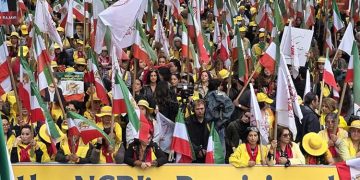
We have this brutal repression on the ground, but we also have this incredible internal resistance. But that can all happen in a vacuum if the world isn’t watching. Which brings us to yesterday, February 7, in Berlin. The images are just I mean, the weather alone Subzero. Freezing. Flights were canceled all over Europe.
And yet a 100,000 people showed up at the Brandenburg Gate. 100,000. That’s staggering number. It shows a level of designation you just don’t see every day.
Who was there? It wasn’t just Iranians. Right? Yeah. It was a very diverse mix.
You had the diaspora, of course, but you also had major Western political figures speaking. You had former European leaders. And the message seemed very targeted. It wasn’t just a generic freedom rally. No.
It was a policy rally. The main slogan was neither crown and nor turban. Let’s unpack that. It’s a rejection of both past and present dictatorships. Exactly.
No turban means no to the current mullahs. No crown means no return to the shah’s monarchy. They are demanding a third way. A secular democratic republic. And that is crucial.
The regime loves to say, without us, it’s chaos. This rally was a giant billboard saying, no. We have a plan, and it’s a republic. And women and youth were front and center. Mirroring the reality on the ground.
And it seems the international community is finally starting to catch up. With the new European Parliament resolution. It is significantly stronger than what we’ve seen before. It explicitly condemns the regime for shifting to this strategic elimination mode. And then the big headline is about the IRGC.
The Revolutionary Guards is blacklisted as a terrorist organization. That’s the nuclear option, diplomatically. It cuts off funding, travel, everything. So no more business as usual while doctors are being arrested.
It really feels like we’re at a tipping point. On one side, you have this brutal, desperate repression.
I mean, arresting dentists. It just wreaks of fear. That’s the key insight. Terror is the weapon of the week. When you have to wage war on your own medical schools, you’ve already lost the moral argument.
And on the other side, you have students chanting about dignity and this huge rally in Berlin outlining a democratic future. It’s a battle of wills. The regime is betting that pain will break the people’s spirit. The people are betting that their solidarity from Tehran to Berlin is stronger. And that’s where we are today.
The situation is heavy, but the clarity of the people’s demands is just undeniable. Absolutely. The courage is the real story here. We want to thank you for listening to this deep dive. It’s not easy to hear these stories, but it is so vital that we bear witness.
Indeed. Understanding is the first step towards solidarity. But we don’t want to leave it there. We want to invite you to take action. You’ve heard about the bravery of these Iranian women and the resistance.
They are fighting a machine of suppression. They need our support. We encourage you to support the Iranian people’s resistance. If you’re able, please consider donating to the NCRI Women’s Committee. Your contribution goes directly to the genuine cause of Iranian women’s struggle.
You can find all the information and other ways you can help by visiting our website at wncri.org. Please go there, read the reports, and see how you can be a part of this movement. Until next time. Goodbye and stay informed.