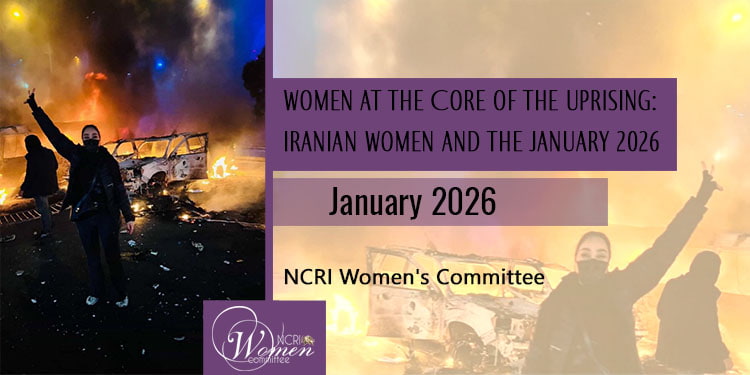
Women at the Core of the Uprising: Iranian Women and the January 2026 Protests
In January 2026, the entire country of Iran became the scene of an uprising that astonished observers with the breadth of popular participation and the courage of protesters living under an atmosphere of absolute repression. It was a storm that would have uprooted the clerical regime from its very foundations had it not been halted by mass killings in the streets of cities across Iran.
Abolfazl Shekarchi, Deputy for Cultural Affairs of the Armed Forces General Staff, explained the reason for this naked violence, stating: “Had there been even a few minutes, even a few hours of delay, we would have faced a completely different situation.” (Daneshjoo News Agency, January 20, 2026)
An Uprising That Spread Like Lightning Across Iran
The nationwide uprising began on December 28, 2025, when Tehran’s bazaar merchants protested the unprecedented collapse of the rial, and it continued through mid-January. The scope of the protests expanded with lightning speed, spreading across all 31 provinces of the country.
Ali Akbar Pourjamshidian, the regime’s Secretary of the Supreme Security Council, formally acknowledged the vast scale of the uprising in remarks made on January 21, 2026, stating that more than 400 cities had been affected by the protests. Referring to the geographical breadth of the uprising, he said: “Nearly 4,000 locations across the country were involved. Tehran was not just one point; at times, there were simultaneous confrontations at 100 locations within the city of Tehran alone.”
In some cities, people succeeded in driving away the regime’s repressive forces and took control of parts of the city for several hours. The peak of the Iranian people’s courageous protests, however, came on the nights of Thursday and Friday, January 8 and 9, 2026, when waves of demonstrators flooded the streets of Iran’s major capitals, including dozens of districts in Tehran, Mashhad, Isfahan, Shiraz, Rasht, Karaj, and others.
The Breadth and Organization of the January 2026 Uprising
This uprising differed markedly from the four previous nationwide uprisings in 2017, 2019, and 2022. People from all walks of life across Iran — women and men, young and old, and in many cases entire families — took part in the protests. The chants of “Death to Khamenei” and “Death to the dictator” echoed from every corner of the country.
The slogan “This year is a year of blood; Seyed Ali (Khamenei) will be overthrown” encapsulated the people’s determination to bring down the regime in this uprising, even at the cost of their lives.
They also underscored their rejection of all forms of dictatorship and their demand for freedom and democracy in Iran by chanting “Freedom, freedom, freedom” and “Death to the oppressor, be it the Shah or the (mullahs’) Leader.”
The most defining feature of this uprising, however, was its organizational structure. The network of the PMOI Resistance Units played a decisive role in expanding the protests, confronting the regime’s repressive forces, and protecting demonstrators, at the cost of the lives of many of their members.
On December 29, 2025, just one day after the protests began, Fars News Agency, affiliated with the Revolutionary Guard Corps (IRGC), wrote:
“Eyewitnesses told Fars that within crowds of around 200 people, there were cells of 5 to 10 individuals present with slogans going beyond economic demands. At the same time as these gatherings, Maryam Rajavi called for the ‘formation of a chain of protests.’”
The network of Resistance Units most effectively linked local protests to a nationwide wave of demonstrations by relaying messages, breaking the climate of fear, sustaining the spirit of resistance, raising the cost of repression, and playing a crucial role in the continuation and deepening of the uprisings, a storm that shook the clerical regime to its core.
The presence of the PMOI Resistance Units on the ground is the product of more than six decades of unrelenting struggle against two dictatorships, the Shah and the clerics, and of the sacrifice of over 100,000 martyrs from among the members and supporters of this movement.
The Courageous Participation of Women and the Younger Generation
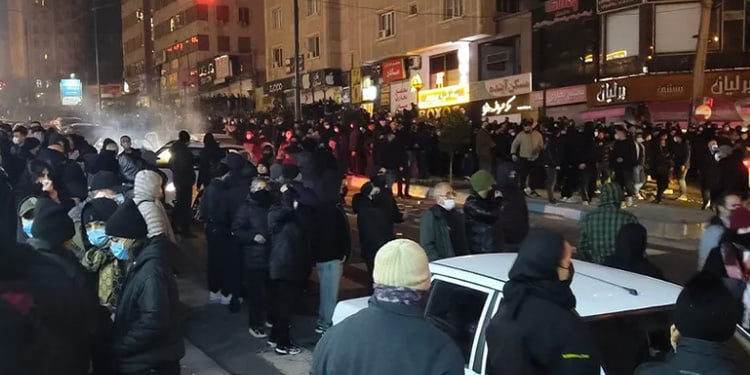
Brave Iranian women, especially women members of the Resistance Units, once again played a prominent, vocal, and unmistakable role in the nationwide uprising. From protest presence in the streets to frontline leadership, from funeral processions for fallen protesters to nighttime demonstrations, they were present on every front and often took the lead in directing chants.
Mothers, elderly women, and teenage girls formed a living bridge between generations. Baluch, Kurdish, and Azerbaijani women played a particularly visible role in their respective regions, highlighting the broad and inclusive nature of women’s participation across Iran.
Due to the active role of female university students in the protests, women’s dormitories were among the first locations to be raided by intelligence agents and plainclothes security forces. At 11:15 PM on Wednesday, December 31, 2025, plainclothes and security forces stormed the women’s dormitory at the Melli University in Tehran, arresting at least three female students.
On the same day, Sarira Karimi, Secretary of the Student Council at the Faculty of Law and Political Science and a member of the University of Tehran’s Central Student Council, was also arrested.
In Isfahan, security forces also attacked protesting women with pepper spray on Wednesday, December 31, 2025, while the women were sitting on the ground in Naghsh-e Jahan Square.
That same evening, six young women who had been arrested in the Tehran protests were transferred to the women’s ward of Evin Prison after spending a day in security detention centers. Later reports indicated that 80 female protesters were being held in Evin Prison.
Despite city and university closures and the eviction of students from some dormitories, the clerical regime failed to extinguish the flames of the uprising, and more cities joined the protests, while an increasing number of bazaar merchants went on strike and demonstrated.
After a week of silence, Ali Khamenei, the regime’s Supreme Leader, was forced to appear on January 3, 2026, and threatened with further killings:
“Talking to rioters is of no use. Rioters must be put in their place.”
Nonetheless, the Iranian people’s uprising continued to surge with increasing intensity.
In Mashhad, clashes between protesters and the police began with chants of “Death to the dictator,” with women and girls making up the majority of demonstrators. In the Nazi-Abad district of southern Tehran, large crowds chanted “Death to the dictator,” and a courageous female protester carried a sign reading “I am not a rioter” in response to Khamenei’s absurd statements.
In Bandar Abbas, groups of people, led by courageous women, began their protests. In Tehransar, 200 girls marched chanting “Freedom, freedom.” On January 7, 2026, women in Shiraz blocked the city’s streets. On January 8, girls in Saravan filled the streets with protest slogans.
A fearless girl in Marlik, Karaj, and a brave woman in Shahrekord stood in front of water cannon trucks to allow the protest lines to advance.
Before the internet shutdown, social media reports indicated that hundreds of women and girls were arrested across various cities in Iran.
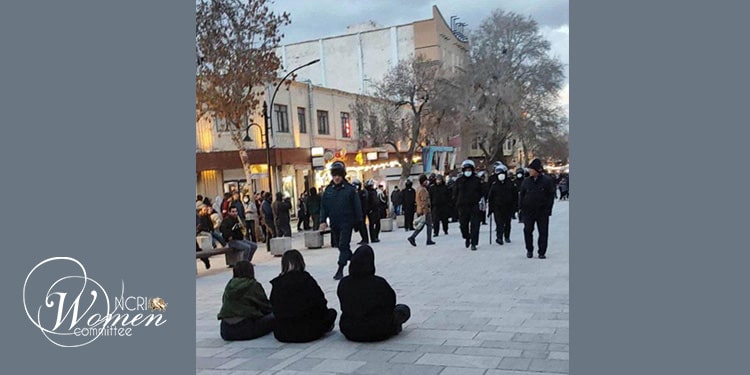
Eyewitness Accounts of the Bravery of Iranian Women and Girls
Numerous reports highlighting the role of women and their courage during the uprising were shared on social media. One eyewitness said:
“Our girls—you have no idea what they’re doing. It’s the girls who are blocking the streets. They’ve torn out all the metal barriers on Enghelab Street and thrown them into the middle of the road. A husband and wife came to the demonstration together. The husband was in a wheelchair, and the wife was taking him to the protest. I had never seen a scene like that in my life. I saw ten children, seven or eight years old, who had come to the protest with their mothers. The mothers were chanting slogans, and the children were repeating them…”
A message from Shiraz reported:
“In Shiraz, despite the killings, people have not lost hope and have decided to stay in the streets until the outcome is determined. In the uprising, girls were moving at the forefront as leaders, chanting ‘Death to the dictator.’ Everyone has an aggressive, defiant spirit. People are no longer leaving the streets.”
These examples, along with hundreds of others, of sacrifice and bravery demonstrate that women are at the forefront of the uprising and are paving the way for a democratic revolution.
Escalation of Protests and Clashes with Repressive Forces
During Thursday and Friday, 8th and 9th of January 2026, the nationwide uprising of the Iranian people continued with full intensity in at least 173 cities across the country. Protesters, largely young people, clashed with repressive forces at around 400 locations. As the protests intensified, the Iranian uprising entered a new phase.
On Thursday night, January 8th, the streets of dozens of Iranian cities were filled with crowds. Women and men, young and old, poured into the streets chanting “Death to Khamenei” and “Death to the dictator.” The cry of “Death to the oppressor, be it the Shah or the (mullahs’) Leader” was heard in various parts of the country, including Tehran University and the neighborhoods of Sattar Khan, Haft-e Howz, Sadeghieh, and Coca-Cola in Tehran, as well as in Tabriz, Sanandaj, and Kermanshah.
In Urmia, people chanted in Azerbaijani Turkish: “Azerbaijan has dignity; Pahlavi has no dignity.”
In the Elahiyeh district of Mashhad, a group of defiant women stood face to face with the regime’s law enforcement forces, chanting, “Death to the oppressor, be it the Shah or the (mullahs’) Leader.” In Saravan, in Sistan and Baluchestan Province, women took to the streets in protest marches, raising anti-government slogans.
On Friday, January 9, the thirteenth day of the uprising, protests and clashes with repressive forces continued in Tehran, Mashhad, Isfahan, Shiraz, Qom, Karaj, Kermanshah, Rasht, and dozens of other cities. In Tehran alone, 28 districts witnessed protests and running battles between young demonstrators and the regime’s security forces.
At noon on Friday in Zahedan, after Friday prayers, courageous Baluchi women took to the streets alongside other worshippers, chanting “Death to Khamenei” and “From Zahedan to Tehran, my life for Iran.” Repressive forces targeted them with live ammunition and tear gas. The presence of Baluchi women in these demonstrations, amid encirclement and gunfire by law enforcement forces, and their chanting of “Poverty, corruption, rising prices—we will march until overthrow,” reflected the firm determination of Iranian women to bring down religious fascism.
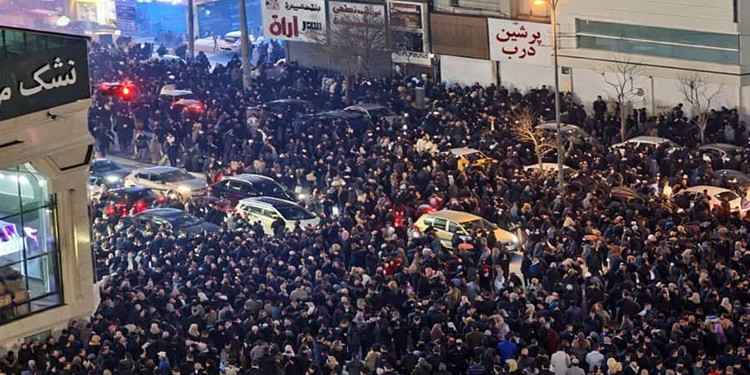
Internet Shutdown and Mass Killing of Protesters: A Crime Against Humanity
Beginning Thursday night, January 8, the regime opened fire on protesters, killing large numbers of people. From 10 p.m. onward, Iran’s internet was completely shut down, giving the authorities a free hand to carry out mass killings of protesters and conduct widespread arrests.
On Friday, January 9, Khamenei delivered a speech in Qom granting authorization for the bloody suppression of so-called “rioters” and “vandals,” declaring: “The Islamic Republic will not back down in the face of those who engage in destruction.”
According to reports that gradually leaked out of Iran, despite Khamenei’s threats and the bloodshed of the previous night, people once again took to the streets in large numbers that evening. This time, however, they were met with horrific massacres in cities across the country.
Field reports indicate that the IRGC and Khamenei’s proxy forces turned the streets into killing fields. Men, women, teenagers, and even defenseless children were gunned down and shot at close range. In addition to automatic weapons, they opened fire on demonstrators using heavy weaponry such as DShK (nicknamed: Dushka) heavy machine guns.
Snipers were positioned on rooftops of buildings, mosques, police stations, and pedestrian bridges, raining live ammunition down on the people. They deliberately targeted the heads, faces, eyes, and hearts of unarmed protesters, firing with intent to kill. They even killed newborn infants in their mother’s arms. The wounded were finished off with execution-style shots. One verified video shows at least ten women and girls lying on the ground in a single scene, killed by fatal gunshots to the head, eyes, and heart. Hundreds of men, women, and children lost their eyesight after being struck by pellet gun fire.
According to some reports, the authorities even used toxic chemical agents instead of tear gas. Security forces reportedly attacked ambulances carrying wounded protesters and, through direct gunfire, killed the injured inside. They raided hospitals filled with wounded, arrested doctors and medical staff, and carried out execution-style killings of injured patients.
Families who went to hospital morgues and washing facilities were forced to search for their loved ones among thousands of black body bags. Images that leaked from the Kahrizak forensic medicine center and Behesht-e Zahra cemetery reveal only a small fraction of the reality concealed under the cover of the internet shutdown.
Reports also confirm that the regime used advanced military-grade reconnaissance drones to identify, track, and arrest protesters, treating unarmed civilians as “enemies.” Raids on private homes and workplaces by security forces have likewise intensified.
What has been reported from various cities indicates a pattern of organized and coordinated repression and mass killing during this uprising. The use of military-grade weapons, shooting protesters in the head and chest, execution-style killings of the wounded, bloodbaths in cities followed by the collection of bodies, and the shutdown of the internet are all recurring elements in reports received from across the country. The deliberate setting on fire of protest gathering sites in Rasht Bazaar, direct fire on unarmed civilians, trapping people amid smoke and flames, and preventing medical assistance all point to deadly repression and crimes against humanity on a massive scale in the streets.
Under the Rome Statute of the International Criminal Court, widespread and systematic killing of civilians constitutes a crime against humanity and entails individual criminal responsibility as well as liability throughout the chain of command.
In a speech on January 17, 2026, Ali Khamenei admitted to the massacre of “several thousand people,” although he immediately attempted to distort the truth by attributing this “massacre” to the United States.
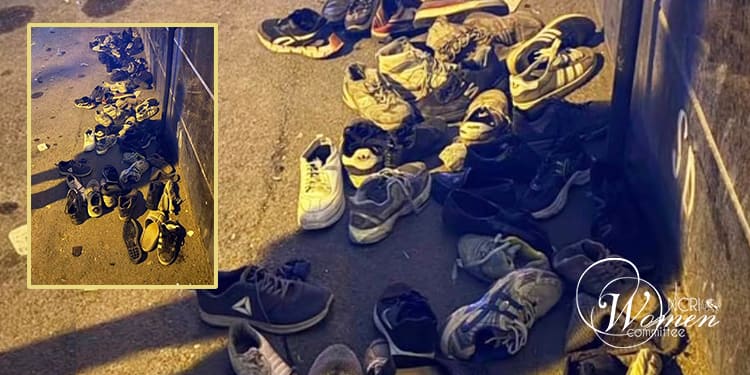
The Enormous Price of Iran’s Freedom
Reliable reports and videos from Iran, amid a severe internet blackout, indicate the extrajudicial killing of thousands of people.
In her report to the UN Human Rights Council’s special session on Iran, the special rapporteur on the situation of human rights in Iran, Dr, Mai Sato, put the death toll at between 5,000 and 20,000. Some media outlets, citing doctors, have put the death toll as high as 30,000.
Amnesty International, citing verified reports and videos, said that the Iranian authorities have carried out “mass unlawful killings on an unprecedented scale.”
What is certain is that thousands of people were killed, tens of thousands were injured, and about 50,000 were arrested during the bloody crackdown on the January 2026 uprising.
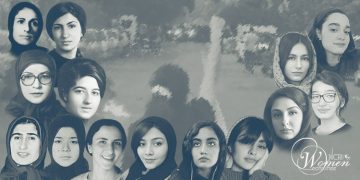
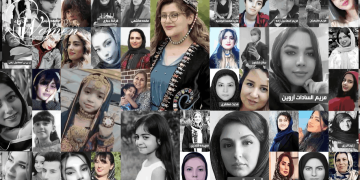
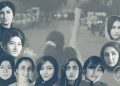
As of the publication of this bulletin, the People’s Mojahedin Organization of Iran (PMOI/MEK) has verified the identities of 1,449 martyrs of the uprising, including 176 women and 100 children and teenagers under 18 years of age.
According to eyewitnesses, in some cities such as Rasht, the number of women killed exceeded that of men, reflecting the depth of hatred harbored by repressive forces toward the leading role played by Iran’s courageous women.
Among the women martyrs, many were mothers of one or two children, and some were pregnant. The list also includes girls aged 13 to 17, as well as mothers aged 64 and 66. From schoolgirls and university students to nurses, office workers, accountants, and homemakers, women from all walks of life are represented among the fallen.
The secret burial of victims’ bodies, extortion of so-called “bullet fees” in exchange for handing over the bodies of the slain to their families, pressure on families to falsely state that their children were members of the Basij, and the prevention of memorial ceremonies are among the human dimensions of this catastrophe. Some families, fearing that security forces would seize their children’s bodies, were forced to bury them in their own home courtyards.
Regime agents compelled the family of Golaleh Mahmoudi Azar to pay 700 million tomans to receive her body and allowed them only three minutes to see their daughter’s face. Her lifeless body was then buried in a bag.
The family of Robina Aminian, a 22-year-old art student who was shot at close range from behind, traveled from Kermanshah to Tehran to identify and retrieve their daughter’s body, but encountered numerous security obstacles. According to Robina’s mother, the facility where bodies were being held contained more than one hundred corpses, mostly young people aged between 18 and 22.
On Thursday, January 15, 2026, the People’s Mojahedin Organization of Iran (PMOI/MEK) announced that it estimates at least 50,000 people have been arrested since the start of the nationwide uprising on December 28, 2025.
According to the organization, these figures are based on information collected from 220 cities, using reports from eyewitnesses, families of detainees, local sources, and prisoners themselves. The People’s Mojahedin Organization of Iran emphasized that obtaining accurate and comprehensive figures is only possible through an independent international fact-finding mission with unrestricted access to all prisons and detention centers of the clerical regime.
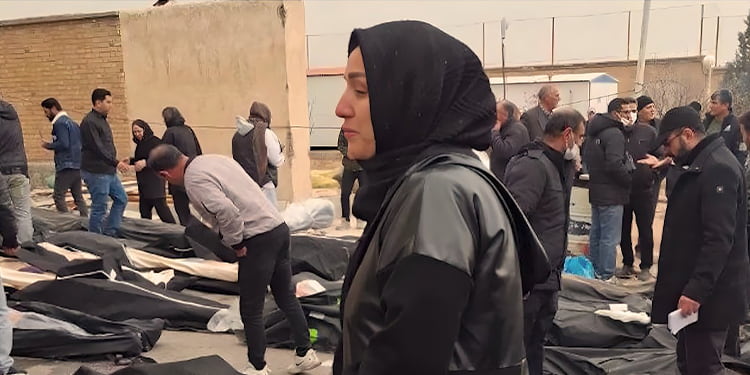
An Uprising That Cannot Be Silenced: The Revolution Continues Until Victory
Despite widespread repression, massacres, an undeclared martial law, mass arrests, and severe censorship, messages from inside Iran indicate that the people’s morale remains high and they continue to resist and protest.
One protester, wounded by pellet gun fire, sent a message:
“We can take a hundred of these pellets, but we will drive out the mullahs. The regime wants to turn the internet and state media into a loudspeaker of fear and terror. Believe me, it has no effect… The revolutionary spirit here is absolute. Everyone is ready for the final blow. Don’t believe any message that says otherwise.”
Another protester said:
“By the blood of the martyrs, the people are all strong and ready. Yes, they have killed many and arrested many, but millions are still free. Be the voice of the people’s great spirit. This uprising has ups and downs, but it cannot be extinguished.”
Funeral processions for the fallen of the uprising serve as focal points of the movement, where mourners, shouting “Death to Khamenei” and “Victory is from God and imminent,” express their determination to continue the path of their children and eradicate this evil regime.
Meanwhile, daily reports of clashes between defiant youth and special units show that the flag of the people’s uprising remains raised high. The people of Iran have no intention of compromising with their gravest enemies, the mullahs’ regime.
The Responsibility of the International Community
This document is an analytical and narrative summary of the nationwide uprising of January 2026 in Iran. It is based on an extensive body of field reports, direct testimonies, internal regime sources, verified images and videos, and information published by grassroots networks, the resistance, and human rights organizations.
The time has long since come for governments and the international community to seriously pursue justice and bring an end to the structural, decades long impunity enjoyed by the leaders of the clerical regime, an impunity that has enabled them to repeatedly commit crimes against humanity in Iran.
While the international community must refrain from military intervention, it nevertheless has both the capacity and the responsibility to raise the cost of lawlessness for the regime.
The European Union’s designation of the Revolutionary Guard Corps (IRGC) as a terrorist organization, albeit belated, was a timely response to the massacre of women and young people who were rebelling against the regime and a necessary step in confronting the terrorist and religious dictatorship that is ruling Iran.
However, this action must be complemented by other urgent measures. Such as lifting the impunity of the regime’s leaders and prosecuting those responsible for crimes against humanity and genocide under universal jurisdiction.
In addition, the world must cut off the regime’s financial lifelines, ensure access to a free and open internet, and, most importantly, recognize the right of Iranian youth and Resistance Units to fight the IRGC as a terrorist force and the regime’s main lever for suppression.