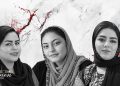

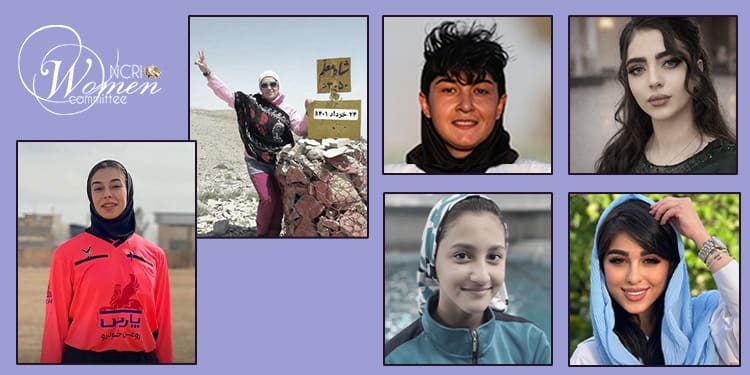
In most countries, when athletes step onto national or international stages, they channel their efforts into fair competition, pursuing medals, records, and championship titles. In Iran, however, a rare and remarkable development unfolded during the nationwide protests of January 2026. A generation of young people and women took to the streets, spanning all ages, professions, and backgrounds, united by a single cry: freedom. With clenched fists, they chanted, “Death to the dictator.”
Among them were champions who, until then, had exemplified discipline and determination in athletic arenas. This time, they gave their lives in the fight for Iran’s freedom. Female athletes, distinguished in disciplines such as football, mountaineering, swimming, and others, became enduring symbols of courage. They became stars, etching a legacy of heroism in Iran’s history.
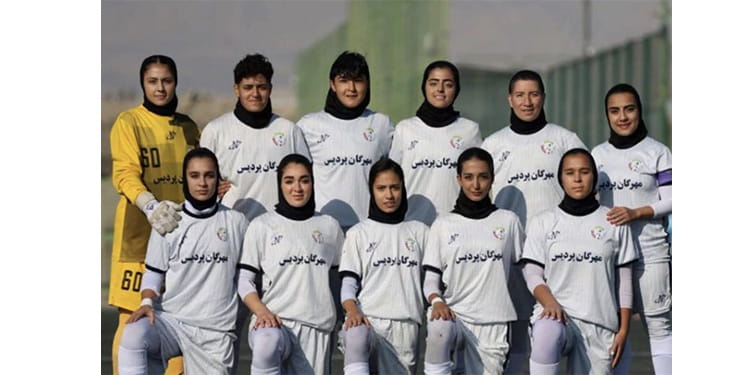
Zahra Azadpour Bridged the Green Field of Football to the Red Field of Freedom
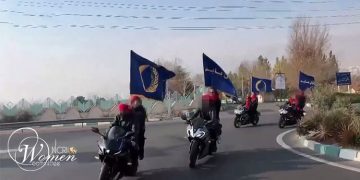
The Mehregan Pardis football club lost one of its players during the January 2026 protests in the city of Karaj. Her name was Zahra Azadpour, born on September 29, 1998. A professional footballer, she had previously played for the women’s teams Azarakhsh and Saba and aspired to join the women’s team of Esteghlal. In addition to football, Zahra had a strong passion for motorcycling.
She had also been invited to the Iranian national women’s football training camp. Beyond her football career, Zahra was an accomplished mountaineer who had successfully summited Mount Damavand and Espilet.
With the outbreak of the January protests, Zahra took to the streets, this time pursuing a different kind of championship, one defined by the liberation of her country.
On January 9, 2026, she was shot twice by forces of the Revolutionary Guard Corps and killed. Her family found her body three days later among rows of black body bags. She was laid to rest in Islamshahr, in Tehran Province.
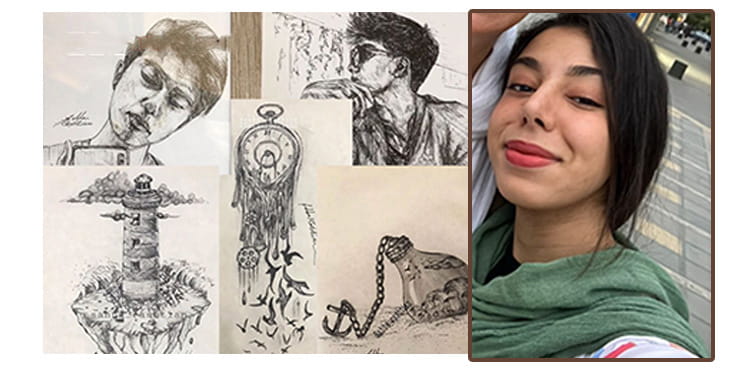
Sahba Rashtian, a Football Assistant Referee in Isfahan
Sahba Rashtian, a 23-year-old assistant referee in women’s football, was shot by forces of the Revolutionary Guard Corps on January 9, 2026, during protests in the city of Isfahan. She was struck in the side and later died from her injuries.
Sahba Rashtian had officiated in provincial football competitions in Isfahan and participated in youth national talent identification programs. She was also active in athletics and physical fitness. She held a bachelor’s degree in animation from a state university and worked professionally as an animator. Passionate about painting, she aspired to work at Disney and to officiate matches at the FIFA World Cup. Opportunities that remained out of reach under a system that excludes women from refereeing at the highest levels of the sport.
Her sister described the moment Sahba was shot: “We left home at 8:00 p.m., and by 8:10 she had been hit. I carried her myself to the hospital. I was trying to keep her breathing and checking her pulse. When we arrived and placed her on the bed, I saw my hands were covered in blood. That was when I realized the bullet had struck her right side. They drained blood from her lung. She told me not to be afraid, that she was fine. She squeezed my hand. Those were her last words. She was taken into resuscitation, and she never came back.”
Her family laid her to rest on January 15. At the ceremony, her father cried out in grief, repeating, “Long live Sahba.” On the fortieth day after her death, her friends gathered at her gravesite with yellow sunflowers, honoring her memory.
Sakineh Akbari, a Life Among Mountain Peaks
Sakineh Akbari was a 35-year-old mountaineering instructor and rescue worker. She was killed in Ardabil during the January 2026 uprising after being directly shot by regime forces.
Sakineh had devoted her life to the mountains and to saving others. Over the years, she had summited numerous peaks. In the end, her final and highest ascent became an act of sacrifice for the freedom of her country and its people.
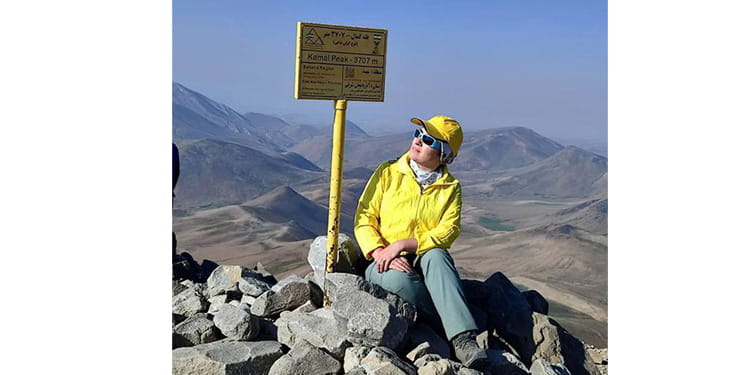
Sara Behboodi, a Climber Who Reached the Summit of Freedom
Sara Behboodi had a deep passion for sports, particularly mountaineering.
Among the peaks she had summited were Mount Kamal, rising approximately 3,700 meters in the Sahand mountain range in East Azerbaijan Province, and Shah Moallem Peak, standing at 3,050 meters in Gilan Province.
In the streets of Rasht, she stood her ground to demonstrate that freedom is the highest summit worth conquering.
A 45-year-old mountaineer from Rasht, Sara Behboodi was killed on January 9, 2026, during nationwide protests after being shot by regime security forces. She had been among a crowd of demonstrators chanting in the streets when she was targeted.
Her mountaineer friends of Sara installed a photo of the champion athlete atop a summit to mark the fortieth day since her martyrdom.
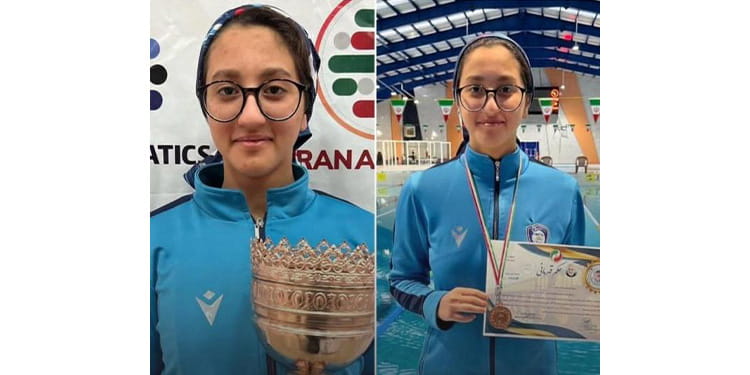
You Brought Us a World Medal: Arnika Dabbagh, Swimming Champion
Arnika Dabbagh was shot in the heart by Revolutionary Guard Corps forces during the January protests and killed. The 15-year-old swimming champion from Gorgan was one of the country’s rising talents in swimming, holding a silver medal and two bronze medals in national championships, along with seven top titles in the national under-13 girls’ festival.
Arnika had dreamed of becoming a world swimming champion. In addition to swimming, she had achieved success in several other sports.
When Arnika was shot, a complete communications blackout imposed by the authorities prevented any contact with emergency services. She could not be transported to a hospital in time and died from the severity of her injuries.
Witnesses reported that armed motorbike units fired at her from close range on Golshahr Boulevard in Gorgan. She lost a significant amount of blood. At the time of the shooting, she was standing beside her mother when the assailants approached from behind and opened fire.
Her parents later covered the spot where she was shot with flowers and wrote her name on the pavement. Her sister paid tribute to her memory, writing, “This year, you wanted to break the national record and become the country’s top swimmer. You did not, but you brought us a world medal.”
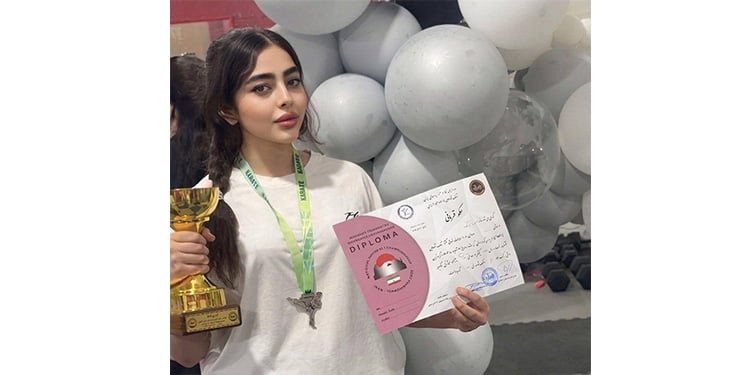
Mahna Dokoshani, Taekwondo Champion
Mahna Dokoshani, an 18-year-old from Kermanshah, was a professional martial artist who had won multiple championship medals.
Mahna was shot and killed by forces of the Revolutionary Guard Corps on January 8, 2026, in the Saadi neighborhood of Kermanshah.
According to some reports, authorities demanded a payment of between 700 million and one billion tomans from her family in exchange for the return of her body.
Her funeral took place on January 16, 2026, at Bagh-e Ferdows cemetery in Kermanshah, attended by local residents.
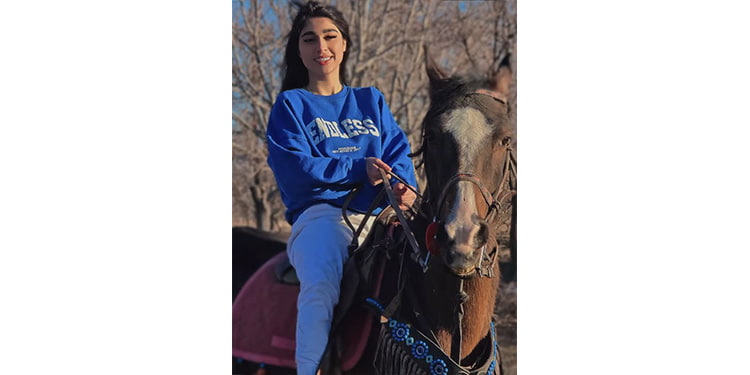
Parastoo Jarrahian: No Mercy for a Wounded Body
Parastoo Jarrahian, 24, had a strong interest in sports and was active in boxing and horseback riding.
She was killed in the January 2026 nationwide protests in the city of Arak.
On January 8, 2026, at approximately 7:00 p.m., she was shot in the side by Revolutionary Guard Corps forces in Showra Square. After being transferred to a hospital, she was quickly moved to the intensive care unit while still conscious.
Security forces removed her family from the hospital. According to reports, authorities completed the murder inside the hospital after failing to do so in the street. Later that same night, her lifeless body was transferred to the Bagh-e Jannat cemetery morgue in Arak.
The authorities prevented her family from holding a fortieth-day memorial ceremony and closed the city’s main cemetery for a week to block any public gathering.
Expel Iran’s Athlete-Killing Regime
The medieval dictatorship of the mullahs is a murderer of athletes. A brilliant convoy of Iranian athletes have laid down their lives during the resistance and nationwide uprisings, while countless others have been brutally suppressed.
The time has come for the International Federation of Association Football (FIFA) to expel the clerical regime, just as it did with the apartheid regime in South Africa during the 1960s. FIFA must not allow this regime to abuse the World Cup tournaments to legitimize its crackdowns on the Iranian people, including athletes and, in particular, Iranian footballers.