
Tuesday, March 17, 2026
  • English
  • Français
  • فارسی
  • عربى
PODCASTS
NCRI Women Committee Women Resistance Freedom
  • Home
  • NEWS
    • Women’s News
    • Articles
    • Statements
  • PUBLICATIONS
    • Monthlies
    • Documents
    • Reference Library
  • ABOUT US
    • The NCRI Women’s Committee
    • Gender Equality
    • Women’s Platform
  • MARYAM RAJAVI
    • Maryam Rajavi
    • Maryam Rajavi Speeches
    • The Plan on Women’s Rights and Freedoms
    • Ten-Point Plan for the future of Iran
  • VANGUARDS
    • The Fallen for Freedom
    • Heroines in Chain
    • Women of Iranian Resistance
    • Famous Women
    • Women in History
  • EVENTS
    • IWD Conferences
    • Activities
    • IWD Speeches
    • Solidarity
  • VIDEO
    • Videos
    • IWD Videos
  • PODCAST
  • DONATE
  • CONTACT US
No Result
View All Result
NCRI Women Committee Women Resistance Freedom
  • Home
  • NEWS
    • Women’s News
    • Articles
    • Statements
  • PUBLICATIONS
    • Monthlies
    • Documents
    • Reference Library
  • ABOUT US
    • The NCRI Women’s Committee
    • Gender Equality
    • Women’s Platform
  • MARYAM RAJAVI
    • Maryam Rajavi
    • Maryam Rajavi Speeches
    • The Plan on Women’s Rights and Freedoms
    • Ten-Point Plan for the future of Iran
  • VANGUARDS
    • The Fallen for Freedom
    • Heroines in Chain
    • Women of Iranian Resistance
    • Famous Women
    • Women in History
  • EVENTS
    • IWD Conferences
    • Activities
    • IWD Speeches
    • Solidarity
  • VIDEO
    • Videos
    • IWD Videos
  • PODCAST
  • DONATE
  • CONTACT US
No Result
View All Result
NCRI Women Committee
No Result
View All Result
Home Activities
Vanity Fair Italia Interviews Azar Karimi

Vanity Fair Italia Interviews Azar Karimi: The Courage and Resilience of Iranian Women in the Face of Repression

February 16, 2026
in Activities

The Italian magazine “Vanity Fair Italia” published an interview with Azar Karimi, spokesperson for the Iranian Youth Association in Italy, in its issue dated 14 February 2026. The interview, conducted by Monica Coviello, focuses on recent developments in Iran and the role of women in the nationwide protests.

The full English translation of this interview is presented below.

Iranian women’s courage against violent repression: “They stand in front of cannons, block roads and refuse to retreat. But they pay the highest price”

Since December 28, 2025, Iran has been experiencing a new wave of widespread protests, which broke out against the backdrop of a serious economic crisis and quickly spread to hundreds of cities. The response of the authorities was a fierce large-scale repression. On the orders of Ali Khamenei, the security forces opened fire: the snipers targeted the heads, hearts and eyes of the protesters. From rooftops and bridges they fired volleys at unarmed civilians, young and old, hitting indiscriminately. According to the Resistance network inside the country, 2,270 victims have been confirmed since January, including 250 women and 170 children between 13 and 18 years old, but the real number would be much higher. Over 50,000 people were arrested and more than 330,000 injured.

Iranian women are playing a central and courageous role, standing side by side with men and often on the front lines. Young and old, mothers and daughters, from 13 to 66 years old, women from every region and from all walks of life participate in the protests. Some even brought their young children with them.

We talked about it with Azar Karimi, spokesperson for the Iranian Youth Association in Italy.

Women are at the forefront of the protests. What role are they really playing?

“They chanted slogans such as ‘Death to Khamenei’, ‘Death to the dictator’ and ‘This is the year of sacrifice to overthrow Khamenei. They repeatedly confronted and repelled the Revolutionary Guard and other repressive forces. They lined up in front of the water cannons, blocked the roads and refused to back down. For this courage, many have paid the highest price.”

How does the repression against those who take to the streets translate into practice?

“The heroic uprising of Iranian women and men was met with extreme brutality. Protesters are massacred and women suffer double repression. On the one hand, they are persecuted as part of the protest movement, on one hand, they are harassed as part of the protest movement, on the other, they are targeted as women challenging a system built on their legal and social subjugation. The theocratic regime bases its ideological legitimacy on the control of the female body and role. For this reason, the active participation of women in the uprising is perceived as a direct threat to the architecture of power. Arrests, physical violence, sexual intimidation and serious religious charges are used to break their will.”
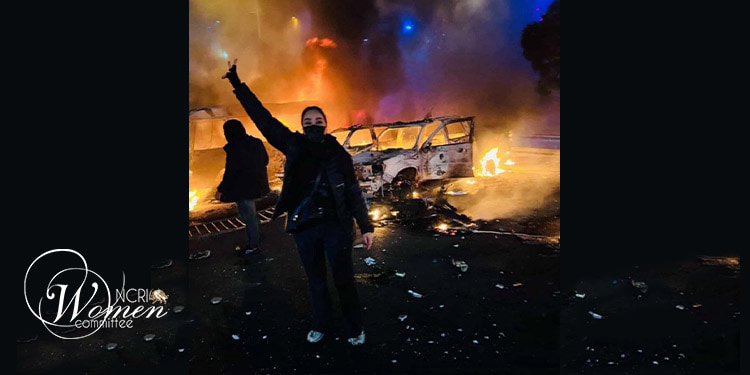
Why Iran’s Nationwide Uprising Continues Despite Brutal Repression

Why have women become the symbol of this uprising?

“Because their rebellion calls into question the ideological foundation of the regime. In a misogynistic theocracy, female leadership and participation represent a cultural revolution even before a political one. The National Council of Resistance of Iran has placed gender equality at the center of its Ten-Point Plan, presented by its president Maryam Rajavi: equality in all fields, abolition of discriminatory laws, freedom of choice on clothing, full political participation. The presence of a woman as president-elect for the transition is not symbolic, but programmatic: it shows that a concrete and organized alternative exists.”

What tools does the regime use to specifically target women?

“Arbitrary arrests and detention in solitary confinement, summary trials without legal guarantees, accusations of ‘mohareb‘, i.e. waging war against God, physical and psychological violence, pressure on families, selective and punitive application of the laws on the veil and morality”.

What does the accusation of “mohareb“, enemy of God, concretely entail?

“It is a particularly serious accusation. It serves to turn political dissent into a religious crime and is one of the heaviest charges in the regime’s legal system: it can lead to capital punishment. It is a political instrument disguised as divine justice. The increase in executions, 327 since the beginning of the year, shows that the regime uses the death penalty to instill fear and prevent new waves of protest.”

What do we know today about the fate of the prisoners arrested during the protests?

“Information is fragmented due to the Internet blackout, but Resistance units confirm thousands of female arrests. Many detainees are held in inhumane conditions, without access to lawyers or family members. In general, many patients hospitalized with gunshot wounds have disappeared after being dragged away by security forces. Sources in Iran have also revealed that doctors involved in treating injured protesters have been arrested. According to witnesses, the bodies of those killed were thrown into mass graves or thrown from moving vehicles. Others would have been burned with fire and acid, so that no trace remains for the families”.

This is an advertisement

How does the regime also exert pressure on the families of the victims?

“Families are summoned by the security services and threatened with arrest or retaliation at work. In many cases they are forced to have controlled funerals. The regime fears funeral ceremonies because in Iran they often turn into political demonstrations, and for this reason it tries to limit or control them. However, collective mourning continues in new forms, with messages spread clandestinely and sudden gatherings. More than 5,000 euros are demanded in exchange for the delivery of the bodies and in many cases, the poorest families do not have the opportunity to pay. This strategy aims to break social solidarity but often has the opposite effect. The economic situation has deteriorated significantly compared to before the uprising of 28 December and the outlook remains bleak. By now, almost every family in Iran has been directly affected, having lost a relative, friend or colleague killed, injured or missing during the protests.”

What role are the mothers and sisters of those killed or disappeared playing?

“Many have become moral symbols of the uprising. Despite threats and pressure, they denounce publicly, participate in clandestine commemorations and keep the memory of their loved ones alive. Maryam Rajavi called these women “the living conscience of the nation”, because they turn pain into resistance and prevent the regime from erasing its victims.”

How are the Iranians managing to let the world know what is happening despite censorship and control of information?

“Even though the regime has imposed internet blackouts and digital restrictions to block the spread of information, resistance units and the Iranian diaspora continue to surface news, names of victims, images and direct testimonies. For us it is essential that these names and faces are published. Mrs.Maryam Rajavi stressed that the information battle is an integral part of the resistance. Although the regime invests enormous resources in propaganda and disinformation, it has not been able to prevent the truth from emerging. Every confirmed name and every face published represents a defeat for censorship (here is the list of women who have lost their lives, with their photographs)”.

Despite the repression, the protest continues. Where do they find the strength to go on?

“ It stems from the total absence of prospects inside the regime: economic collapse, inflation, systemic corruption, political repression. But it also arises from the existence of an organized alternative with a concrete plan for the transition. Mrs. Rajavi stated that when people lose fear, no dictatorship can survive for long. The regime’s killings and crimes are not a sign of strength, but of weakness of a bloody dictatorship whose days are numbered. Despite thousands of deaths and tens of thousands of arrests, the uprising has not been suppressed and continues in the form of “hit and run”. The uprising is going through ups and downs, but it continues.”

Does fear or hope for real change prevail today?

“The fear is real, but it has not extinguished the desire for change. The cyclical uprisings of recent years show that Iranian society no longer accepts the status quo. Conditions will never return to those prior to December 28. The Iranian people have made it clear: they will accept nothing less than the overthrow of the regime and the establishment of a democratic republic based on the separation of religion and state. There is a clear red line against any form of dictatorship, both the current clerical regime and the monarchical system associated with the Pahlavi family.

The future Iran will be a democratic republic, following the path of Mohammad Mossadegh. The Constitution will be drafted by a Constituent Assembly elected within six months of the overthrow of the regime. As Mrs. Maryam Rajavi says: “The question is no longer whether the regime will fall, but when. History shows that dictatorships can seem invincible until the day they collapse. In Iran, that day is approaching.”
Tags: Generation EqualityProtestsWomen's Leadership
ShareTweetPinShareSendShare

Related Posts

Vida Nik Talean at IWD 2026: PMOI Women’s Leadership: The Union of Individual Courage and Collective Strength

March 16, 2026
Vida Nik Talean at IWD 2026: PMOI Women’s Leadership: The Union of Individual Courage and Collective Strength

On Saturday, February 21, 2026, on the eve of March 8, International Women’s Day, the NCRI Women’s Committee hosted an international conference in Paris entitled “Women’s Leadership: An...

Read moreDetails

Soodeh Abbasi at IWD2026: The fight of Iranian women has always been connected to the 120-year struggle of the Iranian people for freedom

March 15, 2026
Soodeh Abbasi at IWD2026: The fight of Iranian women has always been connected to the 120-year struggle of the Iranian people for freedom

On Saturday, February 21, 2026, on the eve of International Women’s Day, the NCRI Women’s Committee hosted an international conference in Paris entitled “Women’s Leadership: An Imperative for...

Read moreDetails

Anneli Jäätteenmäki at IWD 2026: Iranians Have Led Protests That Challenge the Regime and Weaken the Foundations of Dictatorship

March 14, 2026
Anneli Jäätteenmäki at IWD 2026: Iranians Have Led Protests That Challenge the Regime and Weaken the Foundations of Dictatorship

On Saturday, February 21, 2026, on the eve of March 8, International Women’s Day, the NCRI Women’s Committee hosted an international conference in Paris entitled “Women’s Leadership: An...

Read moreDetails

Azadeh Akhbari at IWD2026: Iran has sought freedom and self-determination for 100+ years

March 13, 2026
Azadeh Akhbari at IWD2026: Iran has sought freedom and self-determination for 100+ years

On Saturday, February 21, 2026, on the eve of International Women’s Day, the NCRI Women’s Committee hosted an international conference in Paris entitled “Women’s Leadership: An Imperative for...

Read moreDetails

Zinat Mirhashemi at IWD 2026: Women’s Courage in the January Uprising Opened a New Chapter in Iran’s Struggle

March 13, 2026
Zinat Mirhashemi at IWD 2026: Women’s Courage in the January Uprising Opened a New Chapter in Iran’s Struggle

On Saturday, February 21, 2026, on the eve of March 8, International Women’s Day, the NCRI Women’s Committee hosted an international conference in Paris entitled “Women’s Leadership: An...

Read moreDetails
Next Post
Death of Robabeh Masouri, Mother of Prominent Political Prisoner Saeed Masouri

Death of Robabeh Masouri, Mother of Prominent Political Prisoner Saeed Masouri

Documents

A Report to CSW70: Gender-Based Discrimination Under Iranian Law

A Report to CSW70: Gender-Based Discrimination Under Iranian Law

March 8, 2026

Structural Inequality and State-Sanctioned Oppression of Women Gender-Based Discrimination Under Iranian Law” is the title of the NCRI Women’s Committee’s...

Annual Report 2026: From Protests, to Uprising, and the Role of Iranian Women

Annual Report 2026: From Protests, to Uprising, and the Role of Iranian Women

March 3, 2026

On the eve of International Women’s Day 2026, the NCRI Women’s Committee presents its Annual Report 2026, offering a recap...

Iranian women Who Lost Their Lives in Iran’s January 2026 Uprising

Iranian Women Who Lost Their Lives in Iran’s January 2026 Uprising

January 25, 2026

Names That Must Not Be Forgotten Iranian women played a central and courageous role in the January 2026 uprising, standing...

Monthlies

January 2026 Report: Women at the Core of the Uprising
Monthlies

January 2026 Report: Women at the Core of the Uprising

January 31, 2026
December 2025 Report: A Year in Review: Iranian Women’s Resistance Against Religious Dictatorship
Monthlies

December 2025 Report: A Year in Review: Iranian Women’s Resistance Against Religious Dictatorship

January 5, 2026
November 2025 Report: Under the Clerical Regime, Nowhere Is Safe for Women in Iran
Monthlies

November 2025 Report: Under the Clerical Regime, Nowhere Is Safe for Women in Iran

November 30, 2025
October 2025 Report: Death Sentence for a Female Political Prisoner The Resistance of Female Political Prisoners Inspires Iranian Women and Girls in Their Struggle Against the Regime of Executions and Massacre
Monthlies

October 2025 Report: Death Sentence for a Female Political Prisoner

October 31, 2025

Articles

The People of Iran Are Determined to Achieve Change and Establish a Democratic Republic

The People of Iran Are Determined to Achieve Change and Establish a Democratic Republic

March 12, 2026

Demonstration in Washington in Front of the U.S. Congress in Support of a Democratic Republic in Iran On March 7,...

Qarchak Prison: Around 80 Women detained During January Uprising Held in Harsh Conditions

Qarchak Prison: Around 80 Women detained During January Uprising Held in Harsh Conditions

March 11, 2026

Approximately 80 women detained during the January uprising are currently being held in Qarchak Prison, according to informed sources. The...

Iranians Rally in Paris, Back NCRI’s Provisional Government, Maryam Rajaiv’s Ten-Point Plan

Iranians Rally in Paris, Back NCRI’s Provisional Government, Maryam Rajavi’s Ten-Point Plan

March 10, 2026

Supporters of the Iranian Resistance rallied in Paris, voicing support for the NCRI’s provisional government to transfer sovereignty to the...

The Fallen for Freedom

Sonya Salehi-Rad was killed on January 8, 2026, during the nationwide popular protests in Shiraz
The Fallen for Freedom

Sonya Salehi-Rad

February 10, 2026
Arezoo Abedi was killed on January 9, 2026, during the nationwide popular protests
The Fallen for Freedom

Arezoo Abedi

February 10, 2026
Arnika Dabbagh, from Gorgan, was killed on January 9, 2026
The Fallen for Freedom

Arnika Dabbagh

February 7, 2026
Maedeh Moradi Kia, a resident of Tehran, was killed on January 9, 2026
The Fallen for Freedom

Maedeh Moradi Kia

February 7, 2026

ABOUT US

NCRI Women Committee

We work extensively with Iranian women outside the country and maintain a permanent contact with women inside Iran. The Women’s Committee is actively involved with many women’s rights organizations and NGO’s and the Iranian diaspora.
The committee is a major source of much of the information received from inside Iran with regards to women. Attending UN Human Rights Council meetings and other international or regional conferences on women’s issues and engaging in a relentless battle against the Iranian regime’s misogyny are part of the activities of members and associates of the committee.

CATEGORIES

  • Activities
  • Articles
  • Documents
  • Famous Women
  • Heroines in Chain
  • IWD Conferences
  • IWD Speeches
  • IWD Videos
  • Maryam Rajavi
  • Maryam Rajavi Speeches
  • Monthlies
  • Podcast
  • Reference Library
  • Solidarity
  • Statements
  • The Fallen for Freedom
  • Videos
  • Women in History
  • Women in Leadership
  • Women of Iranian Resistance
  • Women's News

BROWSE BY TAG

Child marriage coronavirus education execution forced hijab Gender Gap Generation Equality Honor killings Iran Teachers Maryam Akbari Monfared Nurses Plan on Women's Rights and Freedoms Poverty Prisoners Protests rural women Saba Kord Afshari The girl child Violence against women Women's Leadership Women Heads of Household Zeinab Jalalian

The copyright of all the material published on this website has been registered under © 2016 the Women’s Committee of the National Council of Resistance of Iran. To obtain permission to copy, redistribute or publish the material published on this website, you should write to the NCRI Women’s Committee. Please include the link of the original article on our website, women.ncr-iran.org.

Welcome Back!

Login to your account below

Forgotten Password?

Retrieve your password

Please enter your username or email address to reset your password.

Log In

Add New Playlist

No Result
View All Result
  • Home
  • News
    • Women’s News
    • Articles
    • Statements
  • Publications
    • Monthlies
    • Documents
    • Reference Library
  • About Us
    • The NCRI Women’s Committee
    • Gender Equality
    • Women’s Platform
  • Maryam Rajavi
    • Maryam Rajavi
    • Maryam Rajavi Speeches
    • Ten Point Plan for Iran
    • The Plan on Women’s Rights and Freedoms
  • Vanguards
    • The Fallen for Freedom
    • Heroines in Chain
    • Women of Iranian Resistance
    • Famous Women
    • Women in History
  • Events
    • IWD Conferences
    • Activities
    • IWD Speeches
    • Solidarity
  • Video
    • Videos
    • IWD Videos
  • Podcast
  • Donate
  • Contact us
  • فارسی
  • عربی
  • Français

The copyright of all the material published on this website has been registered under © 2016 the Women’s Committee of the National Council of Resistance of Iran. To obtain permission to copy, redistribute or publish the material published on this website, you should write to the NCRI Women’s Committee. Please include the link of the original article on our website, women.ncr-iran.org.